Irrigation Systems for Home Gardens: Planning Guide
Choose irrigation systems for home gardens by matching emitters to roots and pressure: drip lines for beds and shrubs, pressure-compensating drippers for containers, micro-sprays for dense plantings, and sprinklers for turf when pressure is adequate. Get that match wrong and you waste water, drown shallow roots, leave pots dry, and buy parts your pressure cannot run. This guide covers sizing zones, checking flow and pressure, planning layouts, and avoiding clogging and maintenance traps before you buy.
Choose by garden type, pressure, and maintenance tolerance


Map beds, containers, turf, and shrubs before picking any hardware
Irrigation means applying measured water to soil for crops, ornamental beds, and lawns. In a small yard, that broad idea matters less than where each plant sits. A raised vegetable bed, a strip of lawn, and ten patio pots do not want the same spray pattern, runtime, or pressure.
Start with a sketch. Mark full-sun beds, part-shade beds, shrubs, turf, and all containers. Then mark the water source: hose bib, dedicated line, well, or rain barrel. Irrigation water can come from groundwater, springs, wells, rivers, lakes, or reservoirs, but most home gardens run from a spigot or stored rainwater.
Put sun exposure on the map too, because it changes how fast each zone dries. Containers in full sun usually dry first. Shaded shrub beds usually dry last. If both go on one zone, one side gets stressed or the other stays wet too long.
Why available pressure and flow matter more than product category
The mistake I see most is buying a drip kit or sprinkler kit before checking water delivery. A small home system lives or dies by two limits: pressure and flow. Sprinkler irrigation throws water through overhead devices that need relatively high pressure to spread it evenly. Micro-irrigation runs at lower pressure and lower flow than sprinkler irrigation.
That difference decides what can run at once. A hose bib that runs a few container drippers well may still be too weak for a lawn sprinkler layout that needs even coverage. A strong spigot can burst cheap drip fittings if there is no pressure regulator on the drip zone.
Run length matters too. Long small-diameter laterals lose pressure as water moves down the line. That is why end plants often run dry while the first emitters flood.
How maintenance tolerance changes the best system choice
Maintenance tolerance should shape the system. Gardeners who will clean screens, flush lines, and swap emitters can run finer drip layouts. Gardeners who want less upkeep should keep zones simple, avoid tiny spray openings near soil splash, and use fewer device types per zone.
Well water and hard water can raise risk. Sediment blocks emitters. Mineral buildup shrinks small openings. Rain barrels add bits of roof grit and organic matter unless screened well. A layout that looks efficient on paper can turn into weekly repair work if the filter choice is weak.
A quick decision path for small yards and mixed plantings
- Put turf on its own zone and plan sprinklers only there.
- Put beds and shrubs on drip or another micro-irrigation zone.
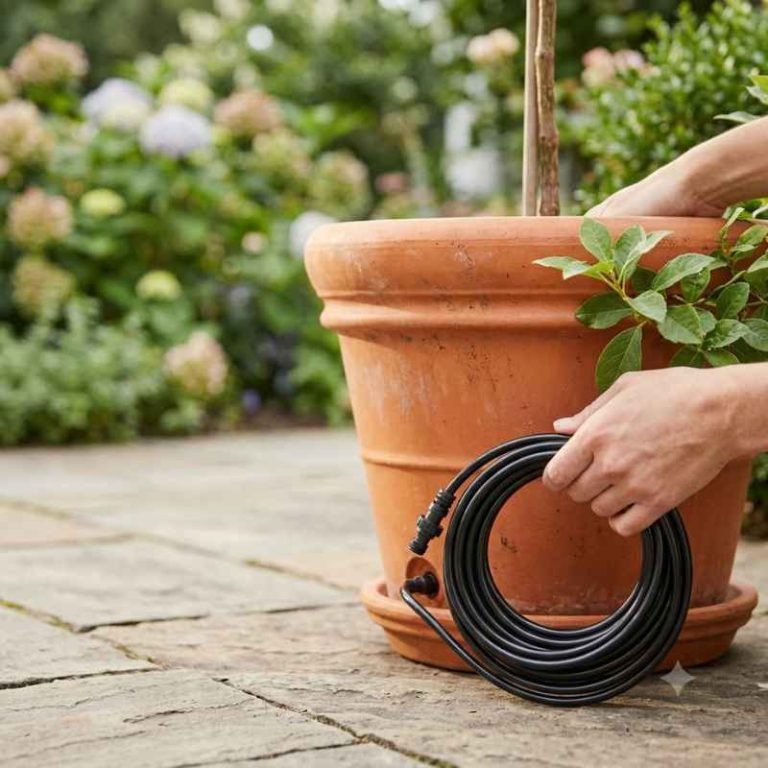
- Put containers and hanging baskets on a separate drip zone with individual emitters.
- If using a rain barrel, reserve it for short, low-flow bed runs.
- If pressure is unknown, measure before buying heads, tubing, or emitters.
- If maintenance tolerance is low, skip micro-sprays in dusty or hard-water spots.
According to Irrigation – Wikipedia — By 2023, 23% of all croplands were equipped for irrigation. (source)
What is the best watering system for a home garden?
For most home gardens, the best watering system is a zoned layout: drip for beds and shrubs, pressure-compensating drippers for containers, and sprinklers only for turf or broad groundcover. One system rarely fits every planting type. The best choice depends on pressure, flow, sun exposure, and how much maintenance the owner will actually do.
Best fit for vegetable beds and raised beds
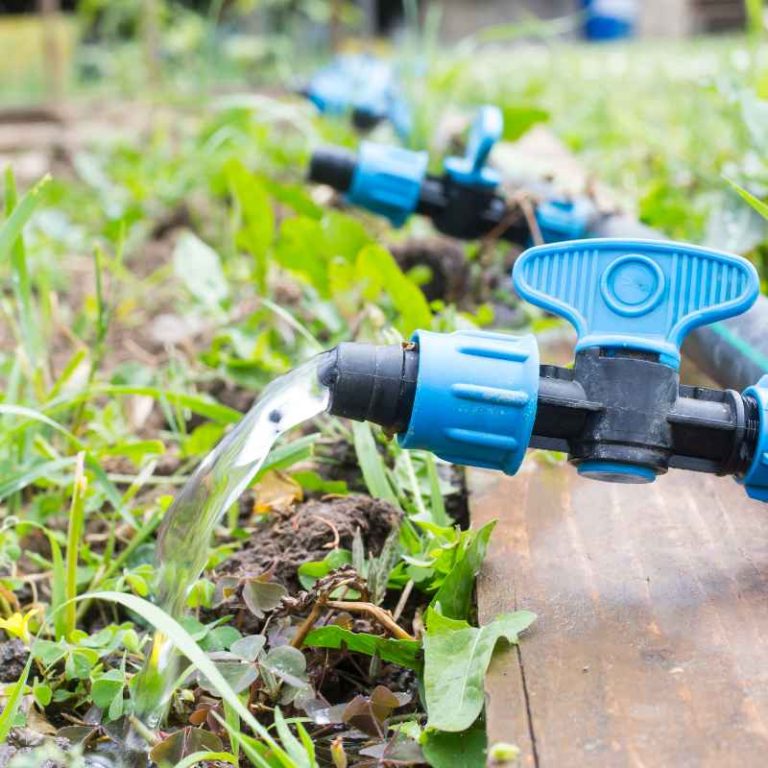
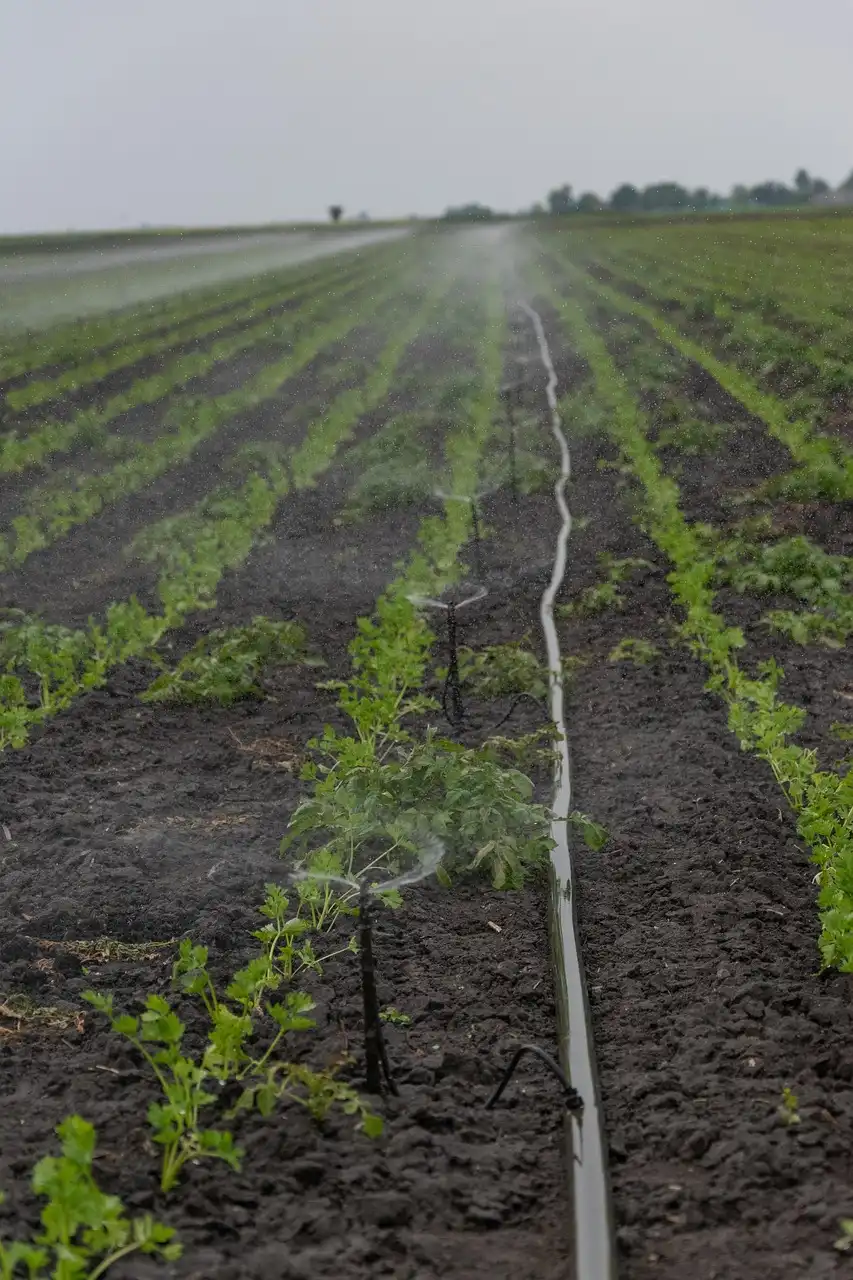
Drip irrigation usually fits best here because it puts water at the root zone instead of spraying the whole bed. Beds benefit from steady root-zone wetting instead of overhead spray on paths and leaves. Inline drip tubing works well for close spacing. Individual emitters work better when plants are spaced farther apart.
Raised beds also expose layout mistakes quickly. If the bed is long and the tubing is undersized, the far end dries first. I have had better results with a short mainline feeding shorter laterals than with one long serpentine run.
Best fit for containers and hanging baskets
Containers need their own zone. Potting mix dries faster than garden soil, and hanging baskets dry faster still. Pressure-compensating emitters help because they keep more even output across short elevation changes and across a line with several pots.
This is also where clogged emitters show up first. One blocked outlet can kill a basket in hot weather while the rest of the zone looks fine. For that reason, filtration and regular inspection matter more on pots than on in-ground beds.
Best fit for turf and wide groundcover areas
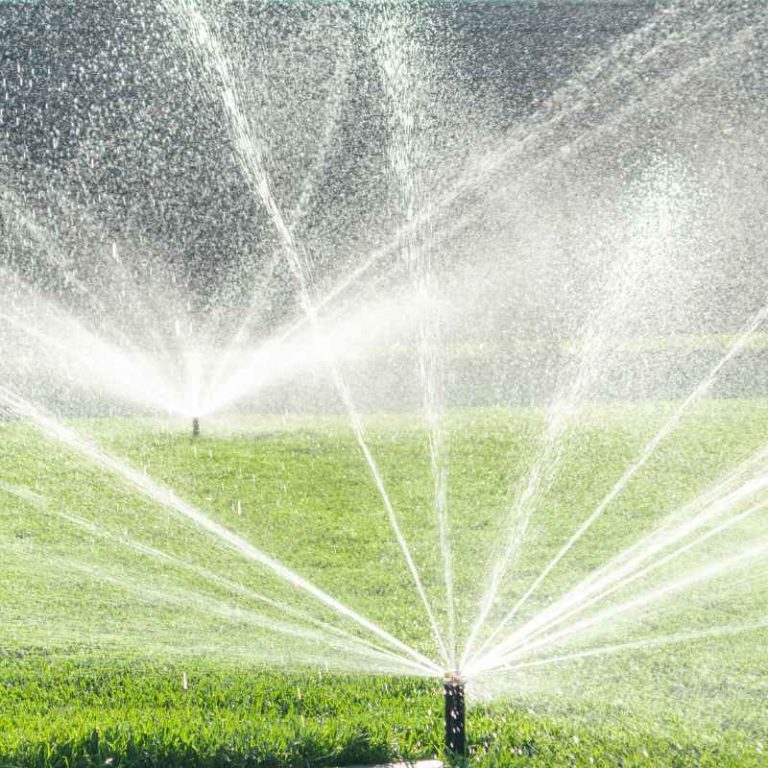
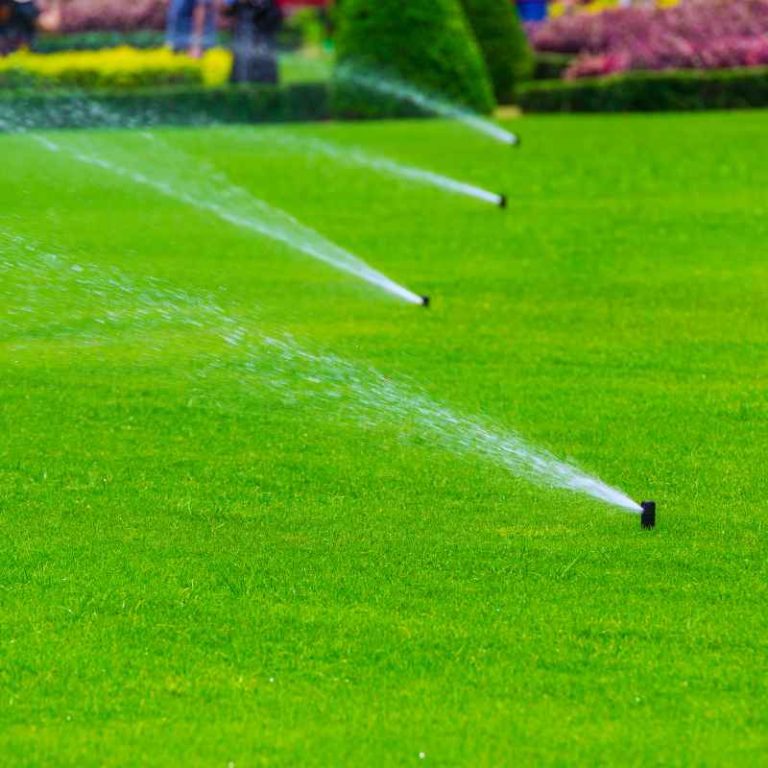
Sprinklers suit lawn and other wide, continuous coverage areas. Sprinkler irrigation is built around overhead distribution and broader throw, but it works best when pressure is adequate and head spacing is planned for uniformity. Random hose-end patterns leave crescents of dry turf and soaked strips near the heads.
Small lawns often fail because too many heads are placed on one zone, or mixed spray patterns are used in odd corners without adjusting runtime. Turf needs matched coverage. Broad area means broad planning.
Best fit for mixed gardens with lawn, beds, and pots
Mixed gardens need separate zones. The clean version is simple: one sprinkler zone for lawn, one drip zone for beds and shrubs, and one drip zone for pots. A controller then schedules each zone by plant need instead of forcing everything onto one compromise runtime.
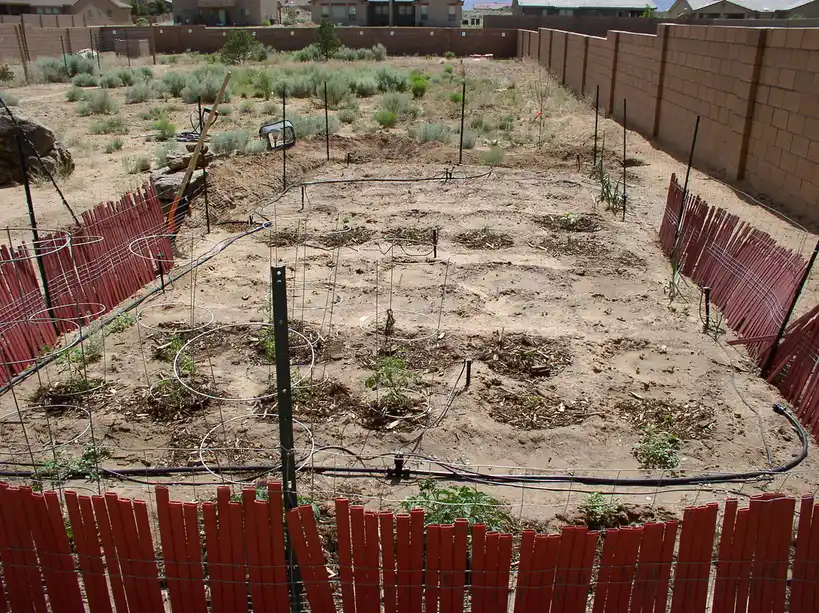
How do I choose between drip and sprinkler irrigation?
Choose drip when the goal is root-zone watering, lower flow, and plant-by-plant control in beds, shrubs, or pots. Choose sprinklers when the goal is broad overhead coverage across turf or continuous groundcover. Most home failures happen when coverage needs and pressure needs are mixed on one zone.
Coverage pattern, root-zone wetting, and evaporation tradeoffs
Drip wets a smaller area on purpose. Sprinklers wet a larger area by design. In a vegetable bed, root-zone watering is usually the better fit because paths and weed seeds stay drier. On turf, narrow root-zone strips would be inefficient and hard to manage evenly.
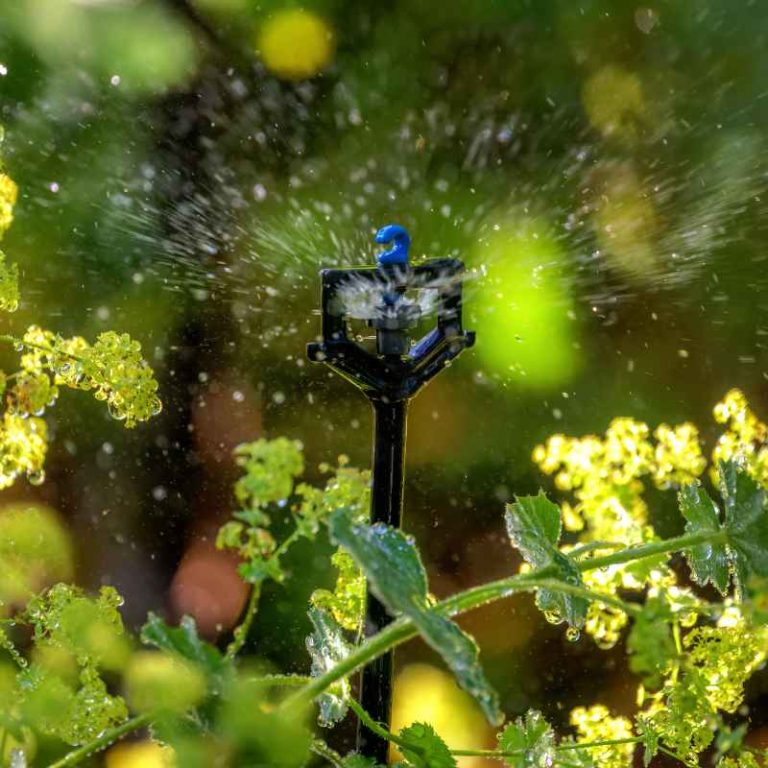
Micro-irrigation works through a piped network that applies water as a small discharge to each plant. That category includes drip and micro-sprays. Micro-sprays can suit dense annual beds or young shrub masses where one emitter per plant becomes tedious.
Pressure requirements and why home systems fail when they are mismatched
Pressure mismatch breaks small systems fast. A sprinkler zone on low pressure gives weak throw and dry edges. A drip zone on unregulated house pressure can blow fittings, split thin tubing, or force too much water through emitters near the start of the line.
This is why sprinklers and drip should not share a zone. They want different operating conditions. Mixed-pressure layouts look cheaper at install time and cost more in frustration later.
Uniformity problems: overspray, dry edges, and blocked emitters
Sprinklers fail visibly. The signs are overspray onto paths, runoff at the low side of a slope, and dry arcs between poorly spaced heads. Drip fails quietly. The signs are one dry plant at the end of a long run, one clogged emitter, or one container that never gets enough.
Neither system is forgiving when layout is sloppy. Uniformity comes from spacing, zone sizing, and pressure control, not from the product label.
When micro-sprays make sense and when they create extra maintenance
Micro-sprays fit broad, closely planted beds where a single drip point per plant would be too slow to install. They also help where some surface wetting is useful for shallow-rooted annuals. They are a poor fit in windy spots, dusty gardens, or hard-water setups where small nozzles crust over.
Plan zones first so watering rates actually match plants
Separate turf, beds, and containers into different irrigation zones
Zones are the real system. Hardware comes second. Turf wants a different precipitation pattern than shrubs. Containers want shorter, more frequent runs than in-ground beds. The controller should reflect that split instead of hiding bad design behind more schedule entries.
Match precipitation rate and runtime to plant demand
A lawn sprinkler zone applies water across a surface. A drip bed zone applies water at points or lines. Those rates are different enough that one shared runtime makes little sense. Full-sun containers may need daily checks in hot weather while a shaded shrub zone may need much less frequent irrigation.
Irrigation can be supplementary to rainfall or full irrigation. In a small garden, that means the schedule should change by season and by weather rather than staying fixed all year.
Avoid mixed-pressure zones with sprinklers and drip together
This is one of the most common small-garden mistakes. The first half of the zone may be a spray head line that needs stronger pressure. The second half may be drip tubing that needs regulation. The result is poor sprinkler performance, blown drip lines, or both.
Separate valve, separate tubing path, separate schedule. That is the fix.
Use controllers and timers without letting scheduling hide design mistakes
Smart irrigation controllers can help with weather-based adjustments and zone scheduling. They are useful in small home gardens with at least two or three distinct zones. They do not correct poor head spacing, clogged filters, or undersized tubing.
For a simple bed-only setup, a basic timer often does enough. Automation should fit the system size. It should not be asked to rescue a bad layout.
How do I plan a garden irrigation system that will work on day one?
Plan a home garden irrigation system by measuring spigot flow and pressure first, separating plant types into zones, and then sizing tubing and emitters to those limits. Build the layout on paper before buying kits. Most day-one problems come from guessing pressure, overloading one zone, or running one line too far.
Measure spigot flow and pressure before you buy parts
Pressure tells you what category can work. Flow tells you how much can run at once. Both matter. A strong pressure reading with weak flow can still leave a zone starved if too many devices open at once.
Take those measurements at the point where the system will connect. Hose-bib performance can differ from another outlet on the same property.
Choose water source: hose bib, dedicated line, well, or rain barrel
Most small gardens start from a hose bib. A dedicated line gives more flexibility for buried valves and permanent zones. Well water demands extra attention to sediment. Surface irrigation is also known as gravity irrigation, and a rain barrel is the small-garden version of that idea.
Rain barrels are useful, but low pressure can limit what they can do. They are best for short runs and simple bed watering, not for broad sprinkler use.
Lay out mainline and lateral runs with tubing diameter that fits the length
Use larger tubing for longer main runs, then branch to smaller laterals near plants. Common home-garden sizes often include 16 mm, 20 mm, 1/2 inch, and 3/4 inch. In practice, 3/4 inch or 20 mm usually makes more sense as a short mainline than as a plant-level lateral.
Undersized mainline is a hidden problem. The first plants look fine, so the issue goes unnoticed until the far end of the bed dries out.
Place emitters or heads for even coverage instead of hopeful coverage
Sprinklers should overlap coverage patterns enough to avoid dry seams. Drip should place water where roots will actually be, not wherever tubing happens to land. Containers often need one emitter size, beds another, and baskets a closer check interval than both.
Parts that decide whether the system stays reliable
Pressure regulators: where they go and how they prevent emitter blowouts
A pressure regulator usually belongs on drip and other low-pressure garden setups near the zone start, after the connection and often after filtration. Its job is simple: keep downstream pressure within a range the tubing and emitters can handle.
Without one, house pressure spikes can pop fittings, split drip line, or force uneven output. This is the part that saves many small systems from self-destruction.
Filters: sediment, hard water, screen cleaning, and replacement intervals
A filter protects emitters from sediment. It matters on every drip system and matters even more on well water or stored rainwater. Hard water adds another issue: mineral deposits can slowly narrow small passages even when visible sediment is low.
Cleaning interval depends on source water. A barrel-fed setup may need frequent checks during leaf-drop season. A cleaner municipal supply may need less attention. The practical rule is to inspect the screen early and often, then set a routine based on what shows up.
Emitters: flow rate, pressure-compensating versus non-compensating, and clog risk
Emitters are where system choice becomes plant choice. Pressure-compensating emitters often fit containers, hanging baskets, and longer lateral runs better because they help keep output steadier as conditions vary. Non-compensating emitters can work in short, flat, simple layouts where pressure stays fairly consistent.
Clog risk rises as openings get smaller and water quality gets worse. Beds can tolerate a little variation. Containers usually cannot.
Tubing sizes: 16 mm, 20 mm, 1/2 inch, and 3/4 inch for mainline and laterals
These sizes are common, but they are not interchangeable in effect. Larger tubing carries more flow and usually suits the mainline or the longer trunk section. Smaller tubing is better for lateral branches near the planting area.
Run length and emitter count should drive the choice. If a design asks a small tube to feed a long bed, expect weak performance at the end.
Home-garden irrigation decision table and DIY cost checklist
Decision table: plant type, water source, pressure, and maintenance tolerance
| Planting type | Sun exposure | Water source | Available pressure | Maintenance tolerance | Best system | Key parts | Main risk to avoid |
|---|---|---|---|---|---|---|---|
| Raised vegetable beds | Full sun | Hose bib or dedicated line | Low to moderate | Low | Drip line or short drip laterals | Filter, pressure regulator, flush end | Long undersized runs causing dry bed ends |
| Shrub border | Part sun to shade | Hose bib, dedicated line, or well | Low to moderate | Medium | Drip with individual emitters or inline tubing | Filter, regulator, larger mainline | Mixing shrubs with lawn on one zone |
| Containers on patio | Full sun | Hose bib | Moderate | Medium | Pressure-compensating drippers | Filter, regulator, distribution tubing, stakes | One clogged emitter drying a pot fast |
| Hanging baskets | Full sun and wind | Hose bib | Moderate | High | Dedicated drip zone with pressure-compensating emitters | Filter, regulator, checkable emitters | Sharing runtime with in-ground beds |
| Small lawn area | Full sun | Dedicated line or strong hose bib | At least 30 psi | Low | Sprinkler irrigation | Matched heads, separate zone, controller | Uneven coverage from weak pressure or poor spacing |
| Dense annual bed | Full sun | Hose bib | Low to moderate | High | Micro-sprays or close-spaced drip | Filter, regulator, accessible nozzles | Nozzle clogging and wind drift |
| Simple bed from rain barrel | Part sun | Rain barrel | Very low gravity pressure | Medium | Short gravity-fed drip run | Screened inlet, barrel filter, short lateral | Expecting long runs or sprinkler performance |
Parts checklist for a simple drip, micro-spray, sprinkler, or gravity-fed setup
- Bed drip zone: connection fitting, filter, pressure regulator, mainline tubing, laterals, emitters or drip line, end flush.
- Container zone: filter, pressure regulator, mainline, small distribution tubing, pressure-compensating emitters, stakes.
- Small sprinkler zone: separate valve or timer outlet, pressure-capable supply, matched heads, swing joints or risers, fittings.
- Rain barrel drip zone: screened barrel inlet, outlet filter, short mainline, low-pressure-compatible drip layout, overflow plan.
- Control layer: timer or smart irrigation controller with separate schedules by zone.
DIY cost ranges for beds, containers, and small lawn zones
Exact pricing moves by region and material choice, so the safest approach is a rough DIY bracket rather than a false precision claim. In a typical small-garden build, a basic bed-only drip setup often lands in the lower bracket, container-heavy systems rise because of extra emitters and tubing, and a small lawn sprinkler zone usually costs more because spacing and hardware are less forgiving.
As a practical shopping frame, many gardeners should expect a simple single-zone bed drip project to feel like a modest hardware-store trip, a mixed beds-and-pots system to feel like a larger weekend project, and a true sprinkler zone to push into the range where installed help starts to look sensible. Complexity, not square footage alone, drives cost.
When installed cost makes more sense than DIY
DIY makes sense for beds, shrubs, containers, and straightforward timer setups. Installed work makes more sense when the project includes buried lines, multiple valves, backflow requirements, lawn head spacing across odd shapes, or low supply performance that needs troubleshooting before any design is finalized.
Can a rain barrel or smart controller work in a small garden?
Yes, but each solves a different problem. A rain barrel suits short, low-pressure drip runs for beds. A smart controller suits multi-zone gardens where weather-based adjustments and separate schedules save manual changes. Neither tool fixes poor zone design, clogged filters, or a layout that asks weak pressure to cover too much.
Gravity-fed drip limits: head pressure, barrel height, and short-run design
Gravity irrigation depends on height. Raise the barrel and flow improves. Keep it low and many emitters may barely run. Short runs are the safe choice. Long laterals and spray devices ask for more pressure than a barrel usually provides.
That makes rain barrels best for simple bed watering, especially close to the storage point.
Combining rain barrels with filters and low-pressure drip
This setup can work well if expectations stay small. Screen debris before water enters the barrel. Add filtration at the outlet. Use a short mainline, few branches, and low-pressure drip rather than micro-sprays. Check filters more often than on municipal water because stored water changes over time.
Where smart controllers help in small home gardens
They help when the garden has real zone differences: lawn, shrub bed, and containers. A smart irrigation controller can adjust for weather and keep runtimes from staying fixed after a cool spell or rain event. That is useful, especially where irrigation is supplementary to rainfall rather than full irrigation.
Cases where a simple timer is the better choice
One or two zones, stable plantings, and easy access usually point to a simple timer. Fewer settings mean fewer mistakes. If the actual issue is clogged emitters or poor pressure, a smarter controller only adds another layer between the gardener and the real fault.
Frequently asked questions
what is the best home sprinkler system
The best home sprinkler system is a separate turf zone with matched heads, even spacing, and enough supply to maintain coverage across the whole area. For small yards, the winning setup is rarely the one with the most heads. It is the one that fits the available pressure and avoids dry edges and overspray.
how to make an irrigation system for garden
Start by mapping beds, pots, shrubs, and lawn separately. Measure pressure and flow at the water source. Put drip on beds and containers, sprinklers on turf only, then add a filter and pressure regulator where low-pressure devices are used. Buy parts after the sketch works, not before.
how to plan a garden irrigation system
Plan from plant type, sun exposure, and pressure limits. Separate zones so turf, beds, and containers each get their own schedule. Use larger tubing for the main run, smaller tubing for laterals, and place emitters or heads for even coverage. The plan should prevent pressure mismatch before installation starts.
are lawn irrigation systems worth the money
They are worth it when the property has enough lawn area to justify uniform overhead coverage and the water supply can support proper head spacing. They are poor value when used to water mixed beds or tiny irregular patches. For many small gardens, drip solves more problems at lower cost.
how much does a small irrigation system cost
A small irrigation system can be inexpensive when it is one drip zone for a bed, and noticeably more expensive when it includes containers, multiple zones, or any sprinkler work. The main cost drivers are zone count, filtration, pressure control, tubing length, and whether buried lines or professional installation are needed.
how do I choose between drip and sprinkler irrigation
Choose drip for root-zone watering in beds, shrubs, and containers where lower pressure and lower flow fit the space. Choose sprinklers for turf and broad continuous coverage where overhead distribution is needed. If the garden includes both, use both, but never on the same pressure setup or schedule.