3 Best Clay Soil Irrigation Methods (2026): research shows
For clay soil gardens, drip irrigation is often my first pick for smaller beds or any slope. Soaker hose works best for flat, narrow rows, and smart control matters most when you need exact scheduling to keep runoff down. Water pushed too fast across clay runs off, pools, and leaves roots short on oxygen. This guide compares drip, soaker hose, and smart timers by infiltration speed, bed size, and setup simplicity.
This guide is part of our Irrigation systems for home gardens series.
Quick comparison
| Product | Badge | Best for | Price | ||
|---|---|---|---|---|---|
 | Gilmour 50′ Black Flat Weeper Soaker Hose for Garden Beds,GILMOUR | Also great | 50 ft flat weeper soaker hose | $16.99 Price as of 1 Oct 2026 | View |
 | 1/2 GPH Netafim Woodpecker Jr Pressure Compensating DripperHabitech | Our pick | 1/2 GPH pressure compensating drip emitters | $17.99 Price as of 1 Oct 2026 | View |
 | Rachio 3 Smart Sprinkler In-Ground WiFi IrrigationRachio | Upgrade pick | 8-zone WiFi smart irrigation controller | $196.22 Price as of 1 Oct 2026 | View |
 | Raindrip 016010T 1/4-Inch Drip Irrigation Supply Tubing,Raindrip | Pair with it | 1/4-inch 100-foot drip irrigation tubing | $9.98 Price as of 1 Oct 2026 | View |
For flat clay beds with modest plant spacing, I usually start with a soaker hose. For sloped beds, raised beds, or any area that tends to pond after watering, drip with cycle-soak control is the safer default.
For gardeners who want hands-off scheduling, smart control earns its price when runoff changes with weather, shade, or mixed plant water use. It matters less when a simple timer and a moisture meter already keep the bed in range.
How we chose
The choice starts with soil behavior. Clay soil has fine particles that pack closely together, holds water well, drains slowly, and is easily compacted, so the irrigation method has to match infiltration speed instead of pushing water in faster than the bed can absorb it.
Setup fit matters too. Bed size, slope, and whether the bed is in-ground or raised all affect whether water stays where roots can use it or runs off before it soaks in.
Watering control is the third filter. The more a system can shorten run time, split watering into cycles, and adjust for rain or heat, the less likely the bed is to sit saturated.
Cost and maintenance come last. A system that is cheap but constantly clogs, ponds, or dries unevenly is no practical bargain for clay.
Drip irrigation: best for precise control
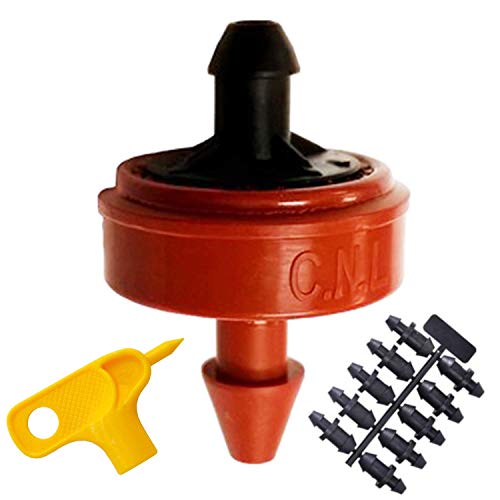
- Pressure compensating design ensures constant flow rate
- Continuous self-flushing system resists clogging
- Includes tube punch tool and goof plugs
Drip irrigation is the default pick for most clay beds because it sends water straight to plant roots, cuts evaporation, and helps keep waterlogging in check. I reach for it in heavy clay, loam-over-clay, or any bed where runoff starts before the surface darkens evenly.
For heavy clay, start with wider emitter spacing and shorter run times so water has time to move sideways without flooding one point. In loam-over-clay or amended clay, closer spacing can work better because the surface layer takes water faster while the lower clay layer still slows drainage.
Cycle-soak watering can be a useful trick here. Run the zone briefly, wait for the surface to absorb, then run it again instead of trying to push the full amount at once. That approach helps when water beads, channels, or leaves wet patches beside dry ones.
The drawback is maintenance. Small emitters can clog, and a too-fast output on tight clay can still saturate one spot if the line layout is careless. Drip also needs more planning than a hose laid across the bed.
Soaker hose: best for simple, low-cost beds
- 100% recycled vinyl with clog-resistant fabric cover
- Heavy-duty materials for UV resistance and seasons
- Flexible and lightweight for easy storage
Soaker hose fits flat beds and narrow planting runs where a gardener wants easy installation and even distribution without much hardware. Because it releases water slowly along its length, it can work well on clay when the run is short and the soil surface is level enough to absorb evenly.
This option makes the most sense in small vegetable rows, flower beds, and areas where a full drip manifold would be more setup than needed. It is also useful when the budget is tight and the goal is simply to keep water off the leaves and out of the walkway.
The weak point is slope and length. On slanted clay, water often moves downhill before it soaks in, and long hose runs can create dry sections at one end and wet patches at the other. Shorten watering sessions if puddles form, and check the root zone with a moisture meter instead of guessing from the surface alone.
Compared with drip, a soaker hose gives less control over exact placement. It is a practical choice, but it asks for more attention when the soil is compacted or when the bed has mixed textures.
Smart irrigation systems: best for hands-off control
- Automatic weather intelligence skips unnecessary watering
- Manage zones and schedules from mobile app
- Adaptive schedules help conserve water year-round
Smart irrigation helps most when a clay bed changes behavior with weather, shade, or plant mix. These systems can automate scheduling, adjust by weather conditions, and use remote monitoring and control, which makes them useful when overwatering is the main problem rather than simple hose placement.
Clay gardens benefit from that extra control during wet spells and heat waves. After rain, a smart controller can skip a cycle; during a stretch of dry weather, it can cut guesswork without forcing the gardener to track every zone by hand.
The features that matter most are zone control, soil-moisture input, and cycle-soak support. Clay rarely absorbs water evenly if a single long run is left unchanged all season, so a controller that can shorten run time and split watering is more useful than one that only starts and stops on a clock.
The drawback is cost and complexity. If the bed is small, flat, and already easy to manage with a timer and moisture meter, a smart controller may be more system than the garden needs.
Drip tubing: best for building a custom layout
- Compatible with main lines and micro fittings
- Durable layering method for sun exposure
- Easy to use for small drip systems
Drip tubing fits when a gardener wants to build a small, custom system for mixed beds or add lines to an existing setup. It pairs well with drip emitters in clay because the tubing can route water where the roots actually live instead of soaking the whole surface.
It is a practical choice for raised beds, small orchard rows, and any area where main lines, micro fittings, or separate plant groups need different coverage. Because the tubing is easy to use for small drip systems, it works as the backbone for a layout that can be adjusted as the bed changes.
The drawback is that tubing alone is not the whole system. It still needs compatible fittings, emitters, and a plan for pressure and clog control. If the layout is sloppy, clay will expose the mistakes quickly by ponding in one place and staying dry in another.
For gardeners who like to tune each zone, tubing gives flexibility. For gardeners who want a ready-made solution, it can feel like assembly work.
Which one should you buy
Buy drip irrigation first if the bed is sloped, holds water after rain, or has a mix of clay and improved topsoil. It is the safest default because slow delivery and direct root watering reduce runoff and saturation risk.
Choose a soaker hose if the bed is flat, narrow, and low cost matters more than precise placement. It is a good fit for short rows and straightforward beds where even distribution along the hose is enough.
Choose smart irrigation if you need weather-based scheduling, several zones, or remote monitoring because the garden changes a lot through the season. It makes the most sense when the main goal is to stop overwatering without babysitting every cycle.
Mix methods when the bed is uneven. Drip can serve sloped or high-risk zones, while soaker hose can cover flat sections where absorption is more forgiving.
Decision checklist and setup matrix
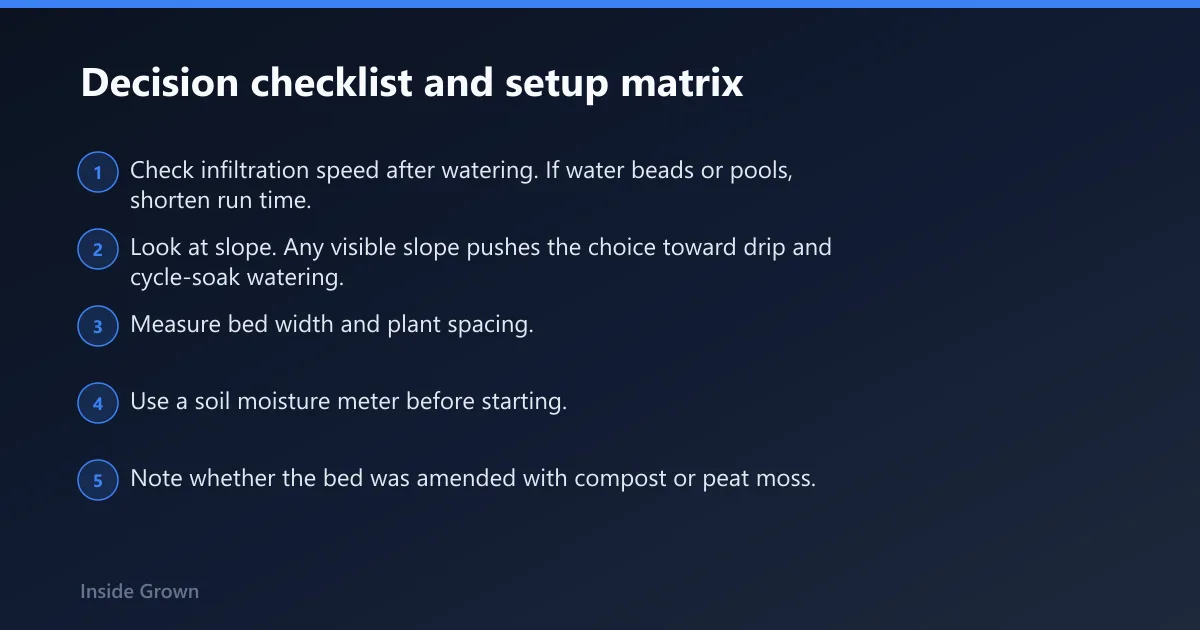
Start with the soil, then the slope, then the plant spacing. If the surface seals over quickly, water is pooling, or the bed stays wet for days, the irrigation method needs to slow down and may need to split watering into cycles.
Organic matter amendments such as compost and peat moss can improve drainage over time, but they do not remove the need for slow watering. Raised beds can also help drainage, and they often pair well with drip or soaker lines.
Decision checklist
- Check infiltration speed after watering. If water beads or pools, shorten run time.
- Look at slope. Any visible slope pushes the choice toward drip and cycle-soak watering.
- Measure bed width and plant spacing. Wider, mixed beds usually need drip; narrow rows can use soaker hose.
- Use a soil moisture meter before starting. If the root zone is still moist, delay watering.
- Note whether the bed was amended with compost or peat moss. Newly amended clay often takes water a little faster at the top and still slows deeper down.
- After rain or cool weather, cut run time and recheck the soil instead of keeping the same schedule.
| Bed type | Method to start with | Setup note | When to shorten run time | When to split into cycles |
|---|---|---|---|---|
| Flat clay bed | Soaker hose or drip | Keep lines short and evenly placed | After rain, in cool weather, or if the surface stays glossy | If the top layer ponds before the line finishes |
| Sloped clay bed | Drip irrigation | Run along contours, not straight downhill | When water moves downhill before soaking in | Almost always, if the slope is noticeable |
| Raised bed | Drip or soaker hose | Raised beds improve drainage, so both can work | When the mix is newly filled or the weather cools | If one corner stays wetter than the rest |
| Newly amended clay soil | Drip with a moisture meter | Compost or peat moss can change surface intake, but the lower clay still drains slowly | After the amendment is watered in and the soil darkens fast | If the surface accepts water faster than the root zone can move it |
What irrigation method works best for clay soil gardens?
Drip irrigation is usually the strongest default because it sends water slowly to the root zone, cuts evaporation, and lowers runoff risk on clay. Soaker hose can be a better low-cost choice for flat, narrow beds, while smart control helps most when the garden needs exact scheduling and weather-based adjustments.
Clay soil has fine particles that pack closely together, so the method has to match the soil’s slow intake rather than fight it. The more the bed ponds or seals at the surface, the more a slow, targeted system matters.
Is drip irrigation better than sprinklers for clay soil?
Yes, drip is usually better than sprinklers for clay soil because it puts water at the root zone instead of spraying a wide area that the soil cannot absorb quickly. Sprinklers raise runoff risk, waste water on paths and leaves, and can leave the bed wet at the surface while the root zone still needs water.
On clay, the problem is not just waste. Fast application can saturate the top layer before deeper soil gets enough water, which is exactly where drip has an advantage.
Can I use soaker hoses in clay soil beds?
Yes, soaker hoses can work well in clay soil beds when the bed is flat, relatively short, and not badly compacted. They release water slowly along their length and provide even distribution, which makes them a simple option for rows, small beds, and gardens that do not need exact emitter placement.
They are less reliable on slopes or long runs. If water starts moving downhill or pooling at one end, shorten the watering session and check the root zone with a soil moisture meter.
How often should I water clay soil without overwatering it?
Water clay soil deeply but infrequently, then check the moisture before watering again. The right interval changes with heat, rain, plant size, and whether the bed is amended or raised, but the rule stays the same: let the root zone decide, not the calendar alone.
In hot weather, the bed may dry faster at the top while the lower clay stays wet. In cool weather, cut run time and wait longer between irrigations so the soil does not stay saturated.
How do I keep clay soil from becoming waterlogged?
Use slow delivery, shorten run times, and split watering into cycles so water can soak in before the next dose arrives. Drip irrigation does this well, and a moisture meter helps confirm whether the root zone still needs water before another cycle starts.
Improve drainage with organic matter over time, and consider raised beds where standing water is a persistent problem. If the bed still ponds, the issue may be application speed, not just soil texture.
Should clay soil gardens be watered deeply or frequently?
Clay soil gardens should usually be watered deeply but infrequently. Frequent light watering keeps the surface damp while the lower root zone can stay dry, and clay often responds better when water is applied slowly enough to penetrate without runoff.
That approach also reduces compaction stress and helps avoid the cycle of wet surface, dry root zone, and repeated overcorrection. A moisture meter is useful here because the top layer can mislead you.
Can smart irrigation help with clay soil drainage problems?
Yes, smart irrigation can help by preventing water from arriving too fast or too often. Weather-based adjustment, remote monitoring, and soil-moisture input are useful when clay soil stays wet after rain or dries unevenly in heat.
It cannot fix poor drainage by itself, but it can cut overwatering while you improve the bed with compost, peat moss, or a raised-bed setup. For mixed plantings, zone control is especially useful.
What plants need different watering in clay soil beds?
Plants with shallow roots, new transplants, and vegetables in active growth often need closer monitoring than established perennials in the same clay bed. Their water use can differ enough that one irrigation schedule leaves one group too dry and another too wet.
That is where zones help. Put thirstier plants on a separate drip line or shorten the run time for the area that holds moisture longer, then confirm the root zone with a moisture meter before adding more water.