5 Best Emitters for Containers and Hanging Baskets: research shows
For many containers, a common starting point is about 0.5 GPH for small pots, around 1 GPH for 10–14 inch containers, and about 2 GPH for larger or thirstier plants; pressure-compensating emitters are often helpful for hanging baskets and longer tubing runs. Pick the wrong flow and you get dry centers, runoff, root stress, and wasted water. This guide compares the best irrigation emitters for containers and hanging baskets by pot size, plant thirst, and gravity or pressure conditions.
This guide is part of our Irrigation systems for home gardens series.
Best irrigation emitters for containers and hanging baskets
The top pick is a pressure-compensating 1 GPH emitter, because container watering is usually about steady output, not maximum flow. Once the flow matches the pot, the rest of the system gets simpler.
According to The Best Drip Irrigation Systems, Reviewed and Ranked — Drip irrigation can reduce water bills by up to 30 percent.
Quick comparison
| Product | Badge | Best for | Price | ||
|---|---|---|---|---|---|
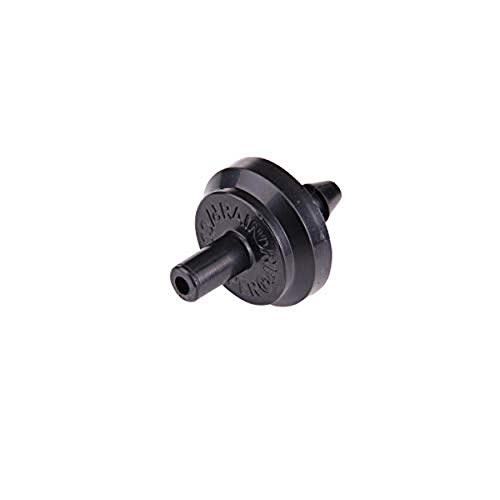 | Raindrip PC4010B 1 GPH Pressure Compensating Drippers, DripRaindrip | Our pick | 1 GPH pressure compensating · 10-pack | $5.98 Price as of 28 Sep 2026 | View |
 | Soilagua Large Terracotta Plant Watering Spikes, AutomaticSoilagua | Also great | Terracotta clay spikes · 6-pack | $24.99 Price as of 28 Sep 2026 | View |
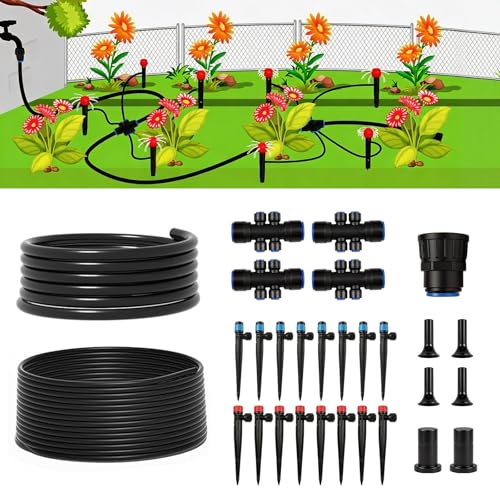 | 100FT Drip Irrigation System Kit, Quick Connect GardenSMIDOLE | Upgrade pick | 100 ft kit with dual emitters | $9.49 Price as of 28 Sep 2026 | View |
 | Rain Bird BUE20-25S Drip Irrigation Button Dripper/Emitter,Rain Bird | Budget pick | 2 GPH button dripper · 25-pack | $16.93 Price as of 28 Sep 2026 | View |
 | (25-Pack) – 1/4" Inch 360 Degree Drip Emitter On 6" StakeOne Stop Outdoor | Pair with it | Adjustable 360° spray · 25-pack | $10.99 Price as of 28 Sep 2026 | View |
This comparison starts with emitter behavior, then kit extras. If a basket dries at the center or a small pot puddles at the rim, the issue is usually flow choice or pressure mismatch, not the plant.
For mixed container setups, keep output consistent across the line, not the brand name. A good emitter with the right flow rate beats a flashy kit that dumps water too fast.
How we chose
The picks below were compared on flow consistency at 0.5, 1, and 2 GPH, how well each style handles pressure changes and line length differences, clog resistance, and how easy it is to match output to pot diameter and basket size.
That matters more in containers than in beds. Pots have a fixed root zone, less soil, and less room to recover from overwatering or dry spots.
- Flow control: steady output at the rate the container actually needs.
- Pressure behavior: useful when runs are uneven or gravity-fed.
- Maintenance burden: small openings clog faster, especially with hard water or well water.
- Fit for the container: basket coverage, pot diameter, and plant thirst.
Raindrip PC4010B 1 GPH pressure-compensating drippers: best for mixed pots and baskets
- Maintains constant 1 GPH flow despite pressure changes
- Self-cleaning turbulent design flushes out sediments
- Color-coded for easy identification of flow rate
This is the safest default for most container gardeners because it keeps output steady even when line lengths vary. Based on the spec sheet and review patterns, the 1 GPH rate is a clean middle ground for many 10–14 inch pots and for baskets that need a slower, more even soak.
It fits mixed container runs well, especially when some pots sit closer to the water source than others. The self-cleaning turbulent design also helps where sediment is a concern.
The drawback is simple: 1 GPH is not enough for every setup. Very large containers, heavy feeders, or hot, windy basket locations may need two emitters or a higher-flow style.
Rain Bird BUE20-25S 2 GPH button drippers: best for larger containers and thirsty plants
- High flow rate of 2.0 GPH
- Self-piercing design for easy installation
- Durable UV and chemical-resistant materials
This one fits large pots, established shrubs in containers, and plants that dry out fast. A 2 GPH button dripper delivers more water per point, so it can shorten run time when the root zone is bigger and the soil mass holds more demand.
Based on specs and reviews, it is also a practical choice when one emitter is not enough and you want a simple, fixed-output part. The self-piercing style makes installation straightforward.
The tradeoff is runoff risk. In small containers or shallow baskets, 2 GPH can flood the surface before the center catches up, so it needs careful timing or split placement.
One Stop Outdoor adjustable 360° emitters: best for fine tuning mixed containers
- Adjustable flow rate from 0 to 20 GPH
- Stable barb design prevents tubing slip
- Eco-friendly direct watering without overspray
This style is useful when container size varies and the user wants to tune each outlet by hand. Adjustable emitters handle mixed plantings, odd-shaped pots, and temporary setups where the final flow is still being dialed in.
Based on the spec sheet, the wide adjustment range is the appeal. It can replace trial-and-error with one part type across several containers.
The drawback is user error. If left too open, these can push far more water than a small pot or basket can absorb, which leads to runoff and shallow rooting.
SMIDOLE 100FT adjustable emitter kit: best for budget mixed systems
- Quick-connect design prevents leaks
- Includes vortex and stream emitters
- Easy DIY installation in under 30 minutes
This is the budget-friendly option for gardeners building a mixed container line from scratch. It includes tubing and adjustable emitters, so it can cover more than just pots without forcing a separate parts hunt.
Based on the listing and review patterns, it is attractive for simple DIY installs and for gardeners who want quick-connect parts rather than a pieced-together setup.
The drawback is that adjustable emitters are only as good as their setting. They are less forgiving than fixed pressure-compensating drippers in long or uneven runs.
Soilagua terracotta watering spikes: best for very small containers and vacation watering
- Made of high-fire pottery clay
- Slow release promotes root growth
- Conserves water by targeting roots directly
These are for slow, root-zone watering in small pots, patio containers, and short-term absences. The clay body releases moisture gradually, which can help keep the root zone from swinging between dry and soaked.
Based on the product type, the biggest strength is direct root targeting. That can be useful in very small containers where drip emitters may wet the surface too fast.
The drawback is control. Terracotta spikes are less precise than drip emitters, and they are not the best choice when you need repeatable output across many hanging baskets.
Which one should you buy
If you want the lowest-risk choice for ordinary containers and mixed basket runs, buy the Raindrip 1 GPH pressure-compensating drippers. If your pots are large or your plants are especially thirsty, move up to the Rain Bird 2 GPH button drippers.
If you are tuning a mixed collection, adjustable emitters make sense, but they need attention. For a bare-bones, budget-first setup, the SMIDOLE kit gives you tubing and emitters in one purchase. For small pots that need slow release rather than active drip control, the Soilagua spikes fit a different problem entirely.
For hanging baskets, pressure-compensating drippers are usually better than generic adjustable parts because baskets dry faster and are more sensitive to runoff from wind and evaporation. Orbit’s hanging basket kit, Raindrip’s automatic kit, Vego Garden’s kit, and Drip Depot’s container kit are all worth comparing by output range and layout, but the right emitter still comes first.
What emitter flow rate is best for hanging baskets?
For most hanging baskets, start at 0.5 GPH and move up only if the basket dries too fast or has dense plantings. Pressure-compensating emitters are the safer bet because baskets often sit higher, run longer, and lose more moisture to wind and evaporation than upright pots.
Very small baskets with light plantings usually need less than a large, densely planted basket. If the basket has several thirsty plants packed close together, two lower-flow emitters often work better than one oversized emitter.
How many emitters do containers need?
Small pots often do fine with one emitter, but that only works when the soil can spread water evenly from a single point. Once the pot gets wider, deeper, or heavily planted, two emitters reduce the chance of a dry core and wet rim.
A good rule is to think in zones, not just volume. One point may cover a compact herb pot; a large decorative container or mixed annual planter usually needs multiple points around the root mass.
Are pressure-compensating emitters better for baskets and pots?
Yes, when the line lengths are uneven or the setup includes several containers at different heights. Pressure-compensating emitters keep output steadier as pressure changes, which helps prevent one basket from flooding while another stays dry.
They are especially useful with 1 GPH and 2 GPH options because those rates are common starting points for containers. The main downside is cost, but the payback is fewer dry spots and fewer run-time guesses.
Can I use the same emitters for containers and raised beds?
Sometimes, but they are not the same problem. Raised beds spread water through a larger horizontal root zone, while containers have a contained soil mass and a much higher risk of runoff or surface saturation.
A 1 GPH emitter may work in both settings, yet the placement and count are different. Beds often use longer runs and more spaced outlets; containers usually need fewer points with tighter control.
What’s the difference between adjustable and fixed drip emitters?
Fixed emitters give one known output, such as 1 GPH or 2 GPH, so they are easier to trust in repeatable setups. Adjustable emitters let you turn the flow up or down, which helps when containers vary a lot or when the planting plan is still changing.
The risk with adjustable emitters is overcorrection. If one is opened too far, it can overpower a small pot and send water out of the root zone before the soil has time to absorb it.
How to size emitters by pot diameter and basket size
Use container diameter and plant thirst together. A wider pot or a denser basket needs either more flow, more emitters, or both, while a shallow pot with a modest plant usually does better with a single low-flow outlet.
Container-and-basket sizing table
| Container size | Typical use case | Recommended emitter type | Flow rate | Emitter count | Pressure regulator? | Filter? |
|---|---|---|---|---|---|---|
| Up to 8 in pot | Herbs, small annuals | Fixed or pressure-compensating | 0.5 GPH | 1 | Yes, if line pressure is high | Yes, if using small openings |
| 10–14 in pot | Mixed annuals, medium foliage | Pressure-compensating or fixed | 1 GPH | 1 to 2 | Recommended | Recommended |
| 16 in and larger pot | Large decorative containers, shrubs | Pressure-compensating or bubbler | 2 GPH | 2 or more | Recommended | Recommended |
| Small hanging basket | Light basket planting | Pressure-compensating or spray/mister | 0.5 to 1 GPH | 1 to 2 | Yes | Yes |
| Medium hanging basket | Mixed flowers, moderate thirst | Pressure-compensating or spray/mister | 1 to 2 GPH | 2 | Yes | Yes |
| Large, dense basket | Thirsty mixed planting, hot exposure | Bubbler or spray/mister with care | 2 GPH or higher | 2 or more | Yes | Yes |
How many emitters each container needs
One emitter is enough when the pot is small and the plant is not a heavy drinker. Two emitters make sense when the container is wider, the plant mass fills the pot, or a single stream would leave one side wet and the other side dry.
For baskets, multiple points are usually better than a single strong outlet. That spreads water more evenly across the hanging soil mass and lowers the chance of a dry center.
When to add a pressure regulator or filter
Add a pressure regulator when the line is long, the source pressure is high, or you are using small emitters that can overdeliver under pressure. Add a filter when the source water carries sediment, mineral scale, or debris that can clog small openings.
That matters most with pressure-compensating and fixed drippers, because the small internal passages are part of what keeps output controlled. A filter is cheap insurance when the system runs on well water or hard water.
How to test for runoff, dry spots, and even wetting
- Run the system long enough to wet the root zone, not just the surface.
- Check the soil a few inches below the top layer near the center and near the edge.
- Look for runoff at the drainage holes or basket bottom.
- Adjust only one variable at a time: flow rate, emitter count, or run time.
- Recheck after the next dry-down cycle.
If the rim is wet and the center stays dry, add a second emitter or reduce the flow and extend the run time. If water exits the pot too quickly, move down a flow rate or switch from bubbler-style delivery to a slower dripper.
What tubing and fittings do I need for a container drip setup?
Most container systems start with 1/2-inch mainline tubing and 1/4-inch branches to each pot or basket. Tees split the line, end caps close the run, and stakes hold emitters where you want them instead of letting them flop over the pot rim.
If the layout is mixed, keep the mainline simple and make the branches as short as practical. Shorter branches usually mean less pressure loss and easier balancing between containers at different heights.
How do I prevent overwatering in small containers?
Use lower flow first, then increase only if the soil dries too fast. Small containers have little buffering capacity, so a 2 GPH outlet can flood them quickly, especially if the potting mix is fine-textured or the plant is still small.
For small pots, pressure-compensating or fixed 0.5 GPH emitters are often safer than adjustable emitters left partially open. The goal is even wetting through the root zone, not a fast surface soak.
Common failure cases to watch
Runoff: usually a sign that the emitter is too strong or the run time is too long.
Dry centers: often caused by one-point watering in a pot that needs two points or more.
Clogged emitters: more likely with small openings and unfiltered water.
Wind and evaporation loss: especially important in hanging baskets and exposed patios.
Overwatering small containers: often comes from choosing flow by guesswork instead of pot size.
Frequently asked questions
What emitter flow rate is best for hanging baskets?
Start with 0.5 GPH for smaller hanging baskets and move to 1 GPH or 2 GPH only when the basket is larger, denser, or exposed to strong sun and wind. Baskets dry fast, so pressure-compensating emitters help keep output stable as lines run upward or branch unevenly.
How many emitters do containers need?
One emitter works for compact pots, but wider containers and mixed plantings often need two. The goal is even moisture through the root zone, not just a wet spot near the tubing entry point. Large or thirsty containers usually need more than one outlet to avoid dry centers.
Are pressure-compensating emitters better for baskets and pots?
Yes, especially when the setup includes different line lengths, heights, or multiple containers sharing one supply line. They keep output steadier, which helps baskets and pots water at a consistent rate instead of changing as pressure shifts. That consistency matters more than raw flow in container systems.
Can I use the same emitters for containers and raised beds?
You can, but the layout should change. Containers usually need tighter control, shorter branch lines, and fewer gallons per point, while raised beds often use more spread-out coverage. A 1 GPH emitter may work in both places, but the placement and count are rarely identical.
What’s the difference between adjustable and fixed drip emitters?
Fixed emitters deliver one known flow rate, such as 1 GPH or 2 GPH, which makes them easier to match to a specific pot. Adjustable emitters let you tune output across different container sizes, but they are easier to set too high, which can cause runoff or shallow rooting.
What tubing and fittings do I need for a container drip setup?
Use 1/2-inch mainline tubing to carry water from the source, then branch to containers with 1/4-inch tubing. Add tees for splits, end caps for closures, stakes to hold emitters in place, plus a filter and pressure regulator when the system uses small openings or long runs.