How to Use Recycled Rainwater in a Garden Irrigation System
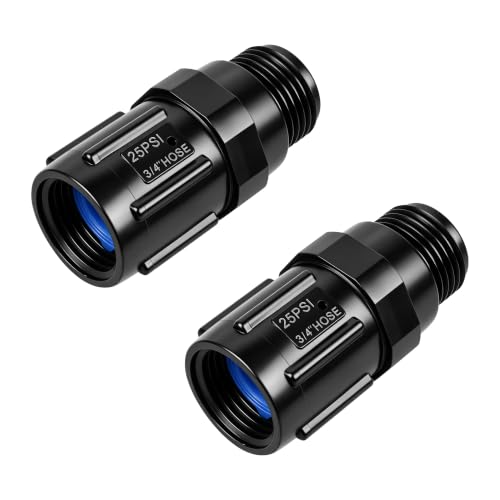
Use recycled rainwater in a garden irrigation system by feeding filtered roof runoff into gravity drip lines or a pump-fed low-pressure zone, and keep emitter pressure under about 25 psi. If filtration is weak or pressure climbs, emitters clog, tanks overflow, and beds water unevenly. This guide covers storage, filtration, pressure control, layout choices, and maintenance for edible and ornamental beds.
Can you use recycled rainwater outdoors?


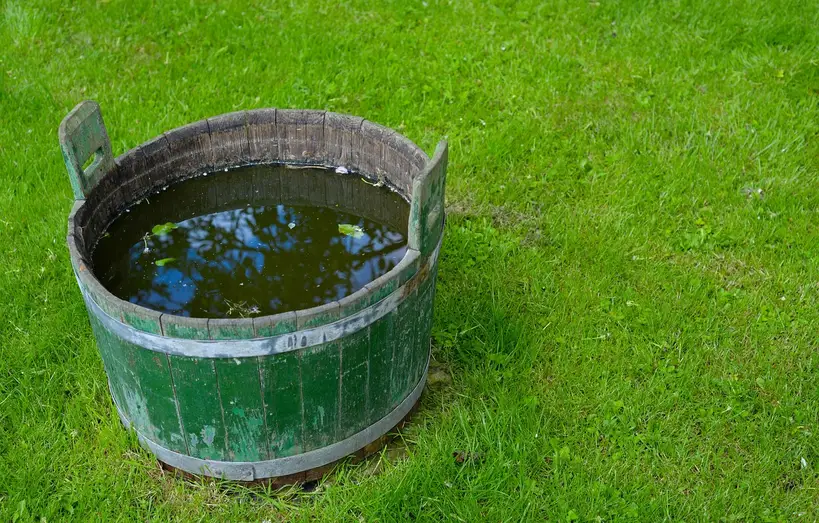
Recycled rainwater is commonly used as a non-potable outdoor water source, so it can fit garden irrigation well when kept separate from drinking-water use. A basic system can be gravity fed from a downspout into a rain barrel, with a spigot at the base for access and screens to keep debris out.
That boundary matters. Rainwater can work for beds, containers, and other outdoor plantings, but you should never treat it as safe for drinking without treatment. For garden watering, the goal is simple: keep leaves, grit, and insects out of storage, then deliver water at a pressure your hardware can handle.
Rainwater harvesting has a long history, and the garden setup is straightforward. Roof runoff enters a barrel, you draw from the spigot, and you connect that outlet to drip tubing or a short low-pressure zone. If one barrel does not hold enough for your layout, link additional barrels to expand storage.
Where garden use fits safely
Outdoor non-potable use is the right category for most garden irrigation. That includes ornamentals, vegetable beds, and container plantings, as long as the water path stays separate from any drinking-water plumbing. The system works best when the source, storage, and emitters are all chosen for low pressure and sediment control.
Where to stop short of drinking-water claims
Do not treat a rain barrel as a potable source. Screens, filters, and closed lids reduce contamination and clogging, but they do not turn runoff into drinking water. If your area has rules for recycled water, follow them before you connect it to an irrigation line.
How rainwater moves from roof to barrel
Rainwater can move from roof to gutter, then through a downspout diverter into a rain barrel, where a base spigot can provide access for irrigation. Roof catchment area determines how much water you can harvest, and barrel placement matters because gravity-fed flow depends on elevation difference and short, efficient plumbing runs.
A simple estimate helps. One inch of rainfall over a 1,000 square foot roof yields around 623 gallons of water. A simpler collection formula is 0.623 gallons per square foot per inch of rain. That means roof size and rainfall depth both shape your supply, not just the number of barrels you own.
Roof catchment area and harvest potential
Measure the roof area that drains into the gutter system, then multiply by rainfall depth. For example, a smaller roof collects much less than a larger one in the same storm, even if the barrel setup is identical. This is why a barrel that feels undersized in one yard may be more than enough in another.
Downspout diverters and barrel placement
A downspout diverter routes roof runoff into storage and should match the existing downspout size. Place the barrel on a firm, level base so the spigot can feed tubing without pulling in sediment from the bottom. Keep the inlet screened so leaves and insects do not enter storage.
Base spigots and barrel-to-barrel expansion
The spigot at the base of the barrel is the usual feed point for irrigation tubing. If one barrel cannot hold enough for your beds, connect additional barrels to increase storage capacity. That helps larger gardens, but it does not change the low-pressure limits of gravity-fed delivery.
Do you need a filter before drip irrigation?
In most drip systems, it is common to use at least a screen, and often a finer filter, before rainwater reaches emitters. Debris and sediment are the main reason a gravity-fed setup stops performing well. The smaller the emitter opening, the more important filtration becomes.
Rainwater can carry roof grit, pollen, shingle residue, and small leaf fragments. Those particles settle in the barrel or move into the line and clog emitters. If the water is going to drip tubing, filter it before the tubing, not after the first clog.
Screen vs. filter
A debris screen keeps larger material out of the barrel. A filter adds finer protection before the drip line. Many home systems need both because a screen alone does not stop the smaller sediment that causes emitter blockage, especially in point-source emitters.
What sediment does to emitters
Emitters are built for controlled flow, so sediment narrows that path fast. Once flow drops, some plants get less water while others keep receiving more, especially on longer runs. Inline emitters and point-source emitters both need clean water if you want consistent output.
When extra filtration is worth it
Extra filtration is worth it when the roof sheds heavy debris, when the barrel sits through long dry periods, or when the drip line uses very small emitters. It is also worth adding a flush point so you can clear the first dirty water before it reaches the bed.
What pressure do you need for gravity-fed rainwater irrigation?
Gravity-fed irrigation depends on elevation difference, so the available pressure is usually low and can vary. That is why low-pressure drip tubing and low-flow emitters work better than hardware that expects a stronger supply. If pressure is too low, far ends of the bed water poorly or not at all.
For practical use, keep the layout short and the emitters matched to the source. A barrel sitting just a little above the bed can move water through a short drip run, but long lines, many elbows, and high-flow devices create losses the source cannot replace.
Why elevation difference matters
The more height you have between the water level in the barrel and the emitters, the more force is available. Less height means less pressure. That is why a barrel on a stand usually performs better than one sitting at ground level, especially if the bed is long.
Low-pressure tubing and emitters
Choose drip irrigation tubing designed for low-pressure use, then match emitters to the actual supply. Low-flow emitters are the safer choice for gravity-fed setups. High-flow emitters can starve the first few plants and leave the last section dry.
Short runs versus longer beds
Short runs behave predictably. Long perimeter beds are harder because friction, slope, and sediment all compound the pressure loss. If a bed is long, split it into shorter zones or feed it from more than one point rather than forcing one barrel to do all the work.
Which rainwater irrigation setup fits your garden?
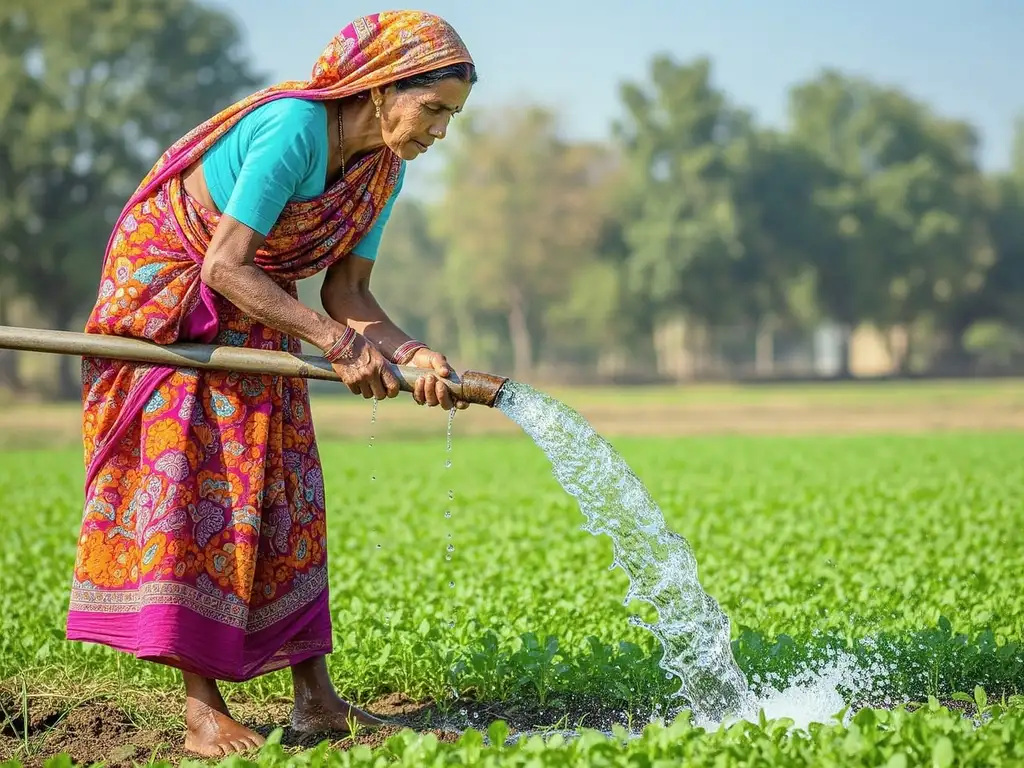
The best setup depends on pressure, filtration, and layout. Raised beds and containers usually work with the simplest gravity-fed systems. Vegetable rows and long perimeter beds need more care because they expose pressure loss and flow imbalance faster.
| Garden type | Expected pressure | Recommended tubing/emitter choice | Filtration needs | Common failure mode |
|---|---|---|---|---|
| Raised beds | Low, often gravity fed | Short drip tubing with low-flow emitters | Screen plus basic filter before the line | Uneven watering at the far end |
| Containers | Low to very low | Point-source emitters or short micro-lines | Fine filtration to protect small openings | Emitter clogging in small passages |
| Vegetable rows | Low, with pressure drop over distance | Drip irrigation tubing with matched low-flow emitters | Better filtration and easy flush access | Uneven flow across the row |
| Long perimeter beds | Low and inconsistent at the far end | Split zones, shorter runs, or feed from both ends | Fine filtration plus regular flushing | Pressure loss and dry sections |
Raised beds
Raised beds are one of the easiest matches for rainwater because the run is short and the planting area is compact. A barrel close to the bed can feed drip tubing with limited loss. If the bed is broad, use two lines instead of one long loop.
Containers
Containers need careful control because the emitter opening is small and soil volume is limited. That makes clogging more visible and overwatering easier if the flow is uneven. A clean filter and low-flow emitters keep the system predictable.
Vegetable rows
Vegetable rows work well when the line length stays modest and the supply stays clean. A common mistake is to run one long line from the barrel and assume every plant will get the same amount. The first plants often do fine; the last ones may not.
Long perimeter beds
Long perimeter beds are often less forgiving because pressure can drop as water moves farther from the source. Use shorter zones, more than one feed point, or a layout that lets you flush each section separately. Otherwise, the bed may look watered near the barrel and dry at the far end.
How do you connect a rain barrel to a drip?
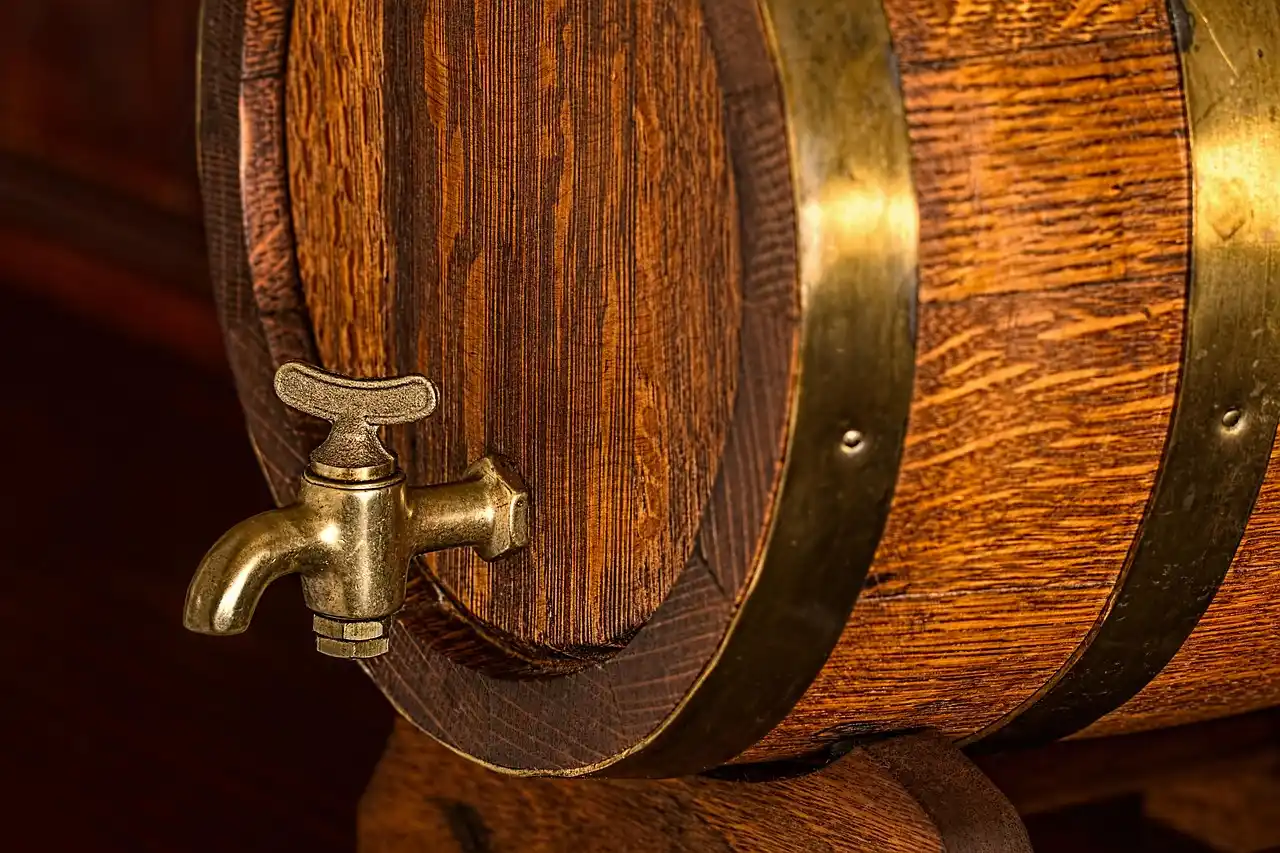
Start with a barrel that has a screened inlet, a base spigot, and a stable stand if you need more gravity. From the spigot, run a short connection to a filter, then to drip irrigation tubing sized for low pressure, then into the bed. Keep the route short and simple.
That basic chain gives you control. The barrel stores water, the filter protects the line, and the tubing delivers it where roots can use it. If the bed is long, split the line or add another feed point rather than stretching one weak run too far.
Basic parts list
- Rain barrel with a screened inlet
- Base spigot for outlet access
- Downspout diverter matched to the gutter size
- Debris screen or filter before the drip line
- Drip irrigation tubing sized for low pressure
- Low-flow emitters or emitter tubing matched to the bed
- End cap or flush point for line cleaning
Simple layout steps
- Place the barrel on level ground or a stable stand near the bed.
- Attach the downspout diverter so roof runoff feeds the barrel.
- Keep the inlet screened and the lid closed to reduce debris and mosquito entry.
- Run the outlet from the spigot through a filter before the drip line.
- Lay the tubing with the shortest practical path to the plants.
- Flush the line, then check for even flow from the first emitter to the last.
How to keep flow even across a bed
Keep runs short, avoid unnecessary bends, and match emitters to the available pressure. If one section waters better than another, shorten the line or divide the bed into separate zones. In gravity-fed systems, layout choices matter as much as the barrel itself.
Say your barrel sits beside a 4-by-8-foot raised bed and the first half of the bed looks wet while the last plants stay dry. The usual fix is not a stronger sprinkler; it is a shorter run, a cleaner filter, or a second feed point so the far end gets the same low-pressure supply.
What can go wrong with recycled rainwater?
The main problems are clogging, sediment settling, mosquito entry, and uneven watering. Those failures usually come from the same source: water that is not filtered enough for drip hardware, or a layout that asks too much of gravity-fed pressure. The fix is usually mechanical, not chemical.
Maintenance matters because rainwater systems sit idle between storms. Screens collect debris, sediment settles in the barrel, and lines dry out. Before peak season, clean the system so the first irrigation run does not push old grit into every emitter.
Clogging and sediment settling
When sediment settles in the barrel, the first flush often carries the dirtiest water. If that water goes straight to emitters, clogging risk rises fast. Clean the screen, empty settled debris from the barrel bottom when practical, and flush the lines before relying on the system for steady watering.
Mosquito control and closed storage
Keep the barrel covered and screened so insects cannot get inside. A closed system is easier to manage and less likely to become a breeding site. Any opening, including the inlet and overflow path, should be controlled so pests do not get a free route in.
Uneven watering and flow drops
Uneven watering shows up most clearly at the far end of a long bed or in the last containers on a line. Flow drops when tubing is too long, pressure is too low, or sediment narrows the emitters. If the pattern is inconsistent, simplify the layout before adding more hardware.
Suppose a long perimeter bed looks fine near the barrel after a short rain, then dries out along the last 10 feet during a dry spell. That pattern usually points to low pressure plus line loss, not a plant problem. Splitting the bed into shorter runs is the practical fix.
Frequently asked questions
Can I use recycled rainwater in a garden irrigation system?
Yes. Recycled rainwater is a practical non-potable water source for outdoor irrigation when you keep it filtered and separate from drinking-water use. A basic roof-to-barrel setup can feed drip tubing, and it may reduce reliance on municipal or groundwater supplies for garden watering.
Do I need a filter before running rainwater through drip irrigation?
Usually, yes. A screen keeps large debris out of the barrel, but drip emitters are sensitive to fine sediment. If you want reliable flow, add a filter before the line and plan to flush the tubing regularly, especially after the first dirty runoff of a storm.
Is rainwater safe for vegetable gardens and edible plants?
For outdoor non-potable irrigation, rainwater is commonly used on edible plants, provided the system keeps debris out and does not mix with potable plumbing. Do not assume it is safe to drink or wash produce with unless it has been treated for that purpose and local rules allow it.
How much rainwater can I collect from my roof?
Use roof catchment area and rainfall depth to estimate yield. One inch of rainfall over a 1,000 square foot roof yields around 623 gallons of water. A simpler formula is 0.623 gallons per square foot per inch of rain, adjusted for the area that actually drains to the barrel.
Will recycled rainwater clog drip emitters?
It can, especially if the water is not screened or filtered before it reaches small emitter openings. Sediment, roof grit, and leaf fragments are the main problems. Gravity-fed systems are most vulnerable when runs are long, because small flow losses and debris combine quickly.
Do I need permits or special rules to use recycled water on my garden?
Sometimes. Local code, HOA rules, and state water rules can apply, and some U.S. states restrict rainwater recovery for this use. Check your area before installing a larger system, especially if you plan to connect multiple barrels, alter gutters, or add pumps and valves.