Drip Irrigation vs Soaker Hose for Vegetable Beds Guide
In many garden setups, drip irrigation is a better fit for longer rows, mixed spacing, or wider beds, while a soaker hose may work better for short, uniform beds with consistent spacing and steady low pressure. A bad match leaves dry corners, wet crowns, and plenty of time spent adjusting flow. This guide compares layout, crop spacing, pressure reliability, and maintenance so you can pick the system that wets the root zone evenly.
Drip irrigation vs soaker hose for vegetable beds
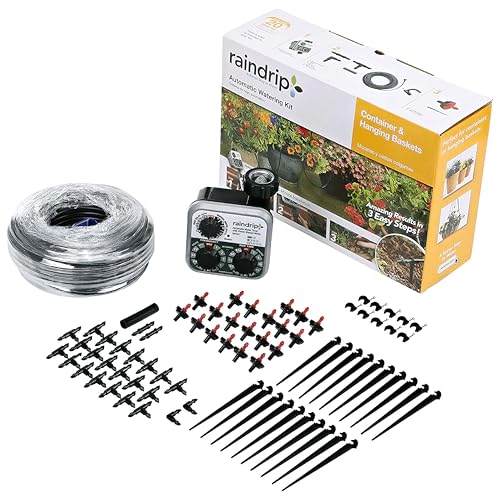

The trade-off is simple: soaker hoses are easier and cheaper to start with, while drip irrigation gives tighter control and more consistent placement. Both send water to the root zone, and both waste less water than sprinklers, but they act very differently once bed shape, spacing, and pressure stop being ideal.
| Decision factor | Drip irrigation | Soaker hose for vegetable beds | Winner |
|---|---|---|---|
| Upfront cost | Usually higher because it needs tubing, emitters, fittings, and often a filter and regulator | Lower cost and simpler to buy and lay out | Soaker hose |
| Watering precision | Emitters deliver water directly into the soil at plant bases | Water seeps along the hose length, so placement is less exact | Drip irrigation |
| Pressure sensitivity | Can be tuned with pressure regulation | Can struggle with inconsistent water pressure and weak reach | Drip irrigation |
| Clog risk | Needs filtration to protect emitters | Prone to clogging, especially with sediment or hard water | Drip irrigation |
| Best layout fit | Mixed spacing, wide beds, and irregular planting patterns | Short, straight rows and simple beds | Depends on bed shape |
| Maintenance | More parts to check, but easier to tune once built | Less setup, but more likely to need replacement when wear and clogging appear | Drip irrigation |
What each system does at the root zone
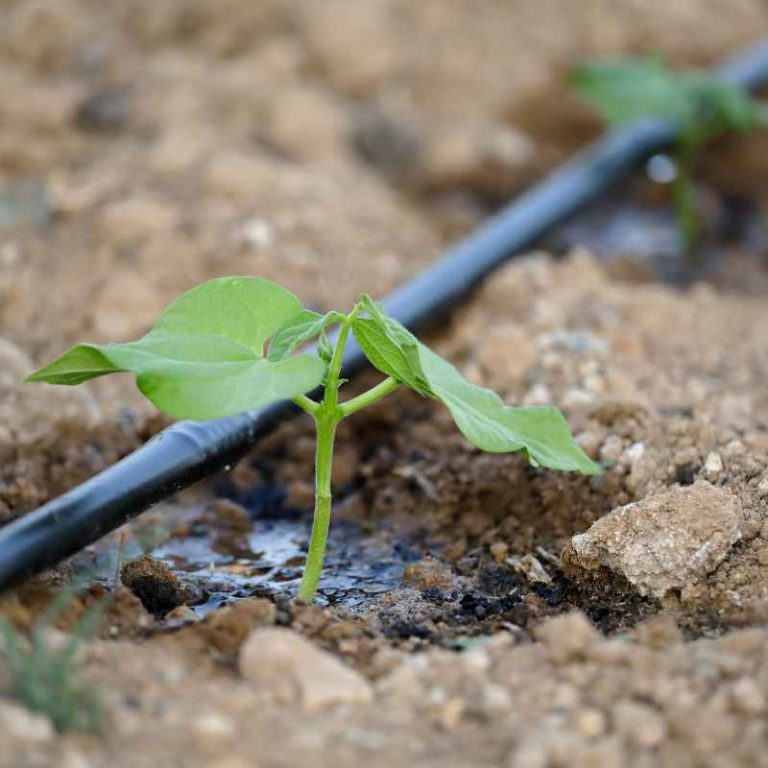
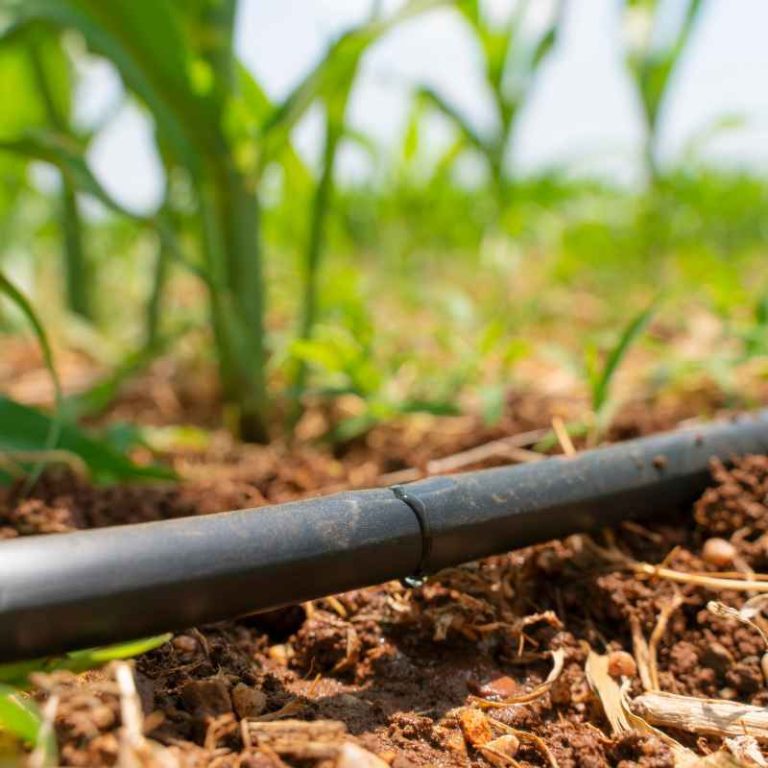
Soaker hoses are porous hoses with tiny holes that seep water along their length. That makes them easy to set up and budget-friendly, and they can work well in smaller gardens with straight rows. Drip irrigation heads emit water directly into the soil, so the system can place water beside each plant with more precision.
That difference matters in vegetable beds because roots do best with deep, even moisture. Both methods keep foliage drier than overhead watering, which helps limit fungal disease pressure around crops like tomatoes and squash.
What a soaker hose does best in vegetable beds
A soaker hose works best when the bed is simple: one straight run, steady water pressure, and plants spaced evenly along the line. It is easy to install, cheap to replace, and often good enough for short rows where the whole hose can wet soil at nearly the same rate.
How porous hose wets a straight row
In a straight vegetable row, a soaker hose can run along the plant line and keep the root zone damp without soaking the leaves. This is useful for beans, lettuce, onions, and other crops planted in a uniform pattern. It is also easy to mulch over, as long as the hose stays visible enough to inspect.
Where soaker hose loses evenness: long runs, weak pressure, and uneven beds
Soaker hoses are less exact than drip emitters, and that becomes obvious when the run gets longer or the pressure drops. Ends can stay dry while the inlet area gets wetter, especially if the hose is kinked, buried too deeply, or asked to cover a bed with uneven width.
That is why pressure reliability matters so much. Inconsistent pressure can reduce performance, and low pressure often shows up as short reach, weak seepage, and patchy moisture in the far half of the run.
Common failure signs: dry ends, splits, and mineral buildup
When a soaker hose is failing, the signs are usually easy to spot. Dry sections at the far end, cracking in sun-exposed hose, and crusty buildup at openings all point to a line that is aging out or clogging. Sediment and hard water make that worse.
Soaker hoses are prone to clogging, and that is one reason they often stop fitting the bed well before the hose itself looks worn out.
What a drip irrigation system does best in vegetable beds
Drip irrigation is better for beds that change shape, spacing, or crop type from one section to the next. It takes more planning and more parts, but it puts water where each plant can use it, which is a better match for mixed beds, wide raised beds, and fruiting crops that need consistent root moisture.
Emitters at plant bases and why that matters in mixed spacing
Drip irrigation is more exact because each emitter can sit near a plant base instead of wetting the whole line. That matters when tomatoes are spaced far apart, peppers sit closer together, and herbs fill the gaps. The layout can be adjusted zone by zone instead of forcing one wetting pattern across the bed.
This is the main reason drip systems are more versatile than soaker hoses. They fit complex layouts without asking every plant to live at the same spacing.
Pressure regulator and filter basics
Drip systems usually need pressure regulation and filtration to stay consistent. A regulator helps keep flow even, and a filter blocks sediment that can clog emitters. That extra hardware is part of the cost, but it also explains why drip systems can keep performing when a soaker hose would start acting uneven.
That 2020 cassava study on moisture-sensor-controlled drip systems suggests the same general idea: drip can be managed more precisely when the layout and soil conditions call for more control. The garden version is simpler, but the logic is the same.
Common failure signs: blocked emitters, loose fittings, and layout mistakes
When drip fails, the problem is usually specific. One blocked emitter leaves a plant dry, a loose fitting leaks at a connection, and a poor layout puts emitters too far from crowns or too close together. Those problems are easier to diagnose than a weak soaker hose, but they do require a filter and periodic checks.
Which system fits your bed shape and crop spacing?
Bed shape and plant spacing decide the winner faster than price does. A short, straight row with evenly spaced crops can work with either system, but the wider the bed gets and the more the spacing changes, the stronger the case for drip irrigation.
Narrow rows
Narrow rows favor soaker hose when the bed is short, straight, and planted evenly. The hose can sit beside the row and wet the root zone without extra fittings. If the row is long or the soil pulls water unevenly, drip starts to make more sense.
Wide raised beds
Wide raised beds often need even coverage along the bed length and across the width, which can expose pressure inconsistencies in a soaker hose. Drip lines can be run in parallel and matched to plant positions, which gives better control in beds over 3 feet wide and in beds with multiple crop types.
Mixed-spacing beds
Mixed-spacing beds are a drip job. When lettuce, basil, peppers, and tomatoes share one bed, a single soaker hose treats all of them the same. Drip lets the gardener place emitters at each plant base and skip spots that do not need water every time.
Pressure, slope, mulch, and soil: where each system breaks down
Pressure, slope, mulch depth, and soil texture can turn a decent setup into a poor one. The system that looks simpler on paper is not always the one that stays even after the first hot week, especially in beds that drain fast on one end and slow on the other.
Low or inconsistent pressure
Low pressure affects soaker hoses first. If pressure is weak or uneven, the hose may wet only the first part of the run well enough, then fade out. Drip systems still need pressure control, but they can be tuned with regulators and laid out in shorter zones to avoid that problem.
Clay soil and slow infiltration
Clay soil holds water longer, so both systems need slower delivery and more patience. A soaker hose can over-wet the surface while the lower root zone stays patchy if the water spreads sideways too slowly. Drip emitters placed at plant bases usually give better control in heavy soil because the gardener can space them around the root ball and watch infiltration more closely.
Slopes, long runs, and heavy mulch
Slopes and long runs expose unevenness fast. Water may run downhill or lose output before the end of a long soaker hose. Heavy mulch can also hide leaks, trap wetness near crowns, and make inspection harder, so both systems need test runs before planting and again after mulch is added.
Bed-by-bed decision table: narrow rows, wide raised beds, and mixed-spacing beds
| Bed scenario | Use this system | Setup notes | Failure risks to watch for | Maintenance trigger |
|---|---|---|---|---|
| Narrow rows | Soaker hose for short, uniform rows; drip for longer rows | Run the hose beside the row, not across it; test before planting | Dry far end, kinks, sun wear | If the end stays lighter in color or soil feels dry after a full cycle, shorten the run or switch to drip |
| Wide raised beds | Drip irrigation | Use two runs or emitters spaced to match plant rows; add filter and regulator | Uneven coverage across the bed, pressure drop, clogged emitters | If one side stays drier than the other, add another line or split the zone |
| Mixed-spacing beds | Drip irrigation | Place emitters at plant bases and adjust spacing crop by crop | Wrong emitter placement, blocked emitters, loose fittings | If one crop wilts while neighboring plants stay wet, re-map the emitter layout |
Installation checklist for beginners
- Measure bed width, length, and plant spacing before buying parts.
- Choose soaker hose only for short, straight, even rows.
- Choose drip tubing if the bed has mixed crops or more than one planting line.
- Add a filter and pressure regulator for drip irrigation.
- Lay tubing on the soil surface first and test every run before covering it with mulch.
- Watch for dry corners, puddling, or weak end flow during the first watering cycle.
Choose soaker hose if… / Choose drip irrigation if…
Choose a soaker hose if your beds are short, straight, and planted with the same spacing from end to end. It is the simpler path when budget is tight, the water pressure is steady, and the hose can sit in one clean row without lots of bends or branches.
Choose drip irrigation if your beds are wide, mixed, or irregular, or if pressure varies from one part of the system to another. It is the better pick when you need placement control, want to water different crops differently, or need a setup that stays even after the bed layout changes.
Frequently asked questions
drip irrigation vs soaker hose for raised beds
Raised beds usually favor drip irrigation when the bed is wide, has more than one crop type, or needs water placed at several points along the length. A soaker hose can work in a narrow raised bed with uniform spacing, but uneven pressure and long runs make the output less reliable.
soaker hose vs drip irrigation for garden
For a general garden, the deciding factor is layout. Soaker hose is easier and cheaper for simple rows. Drip irrigation is better when the garden includes mixed crops, uneven spacing, or any bed where one watering pattern will not fit every plant.
how to use soaker hose in vegetable garden
Lay the soaker hose along the root zone of a straight row, keep the run short, and test it before mulching over the line. Use it in beds with steady pressure and uniform crop spacing. Check the far end often, because weak flow usually shows up there first.
soaker hose vs drip irrigation
Soaker hose is the simpler system and usually the cheaper one to install. Drip irrigation is more exact and more adaptable. If the bed is simple, soaker hose can be enough. If the bed changes shape or spacing, drip usually gives better results and fewer dry spots.
how to set up soaker hose for vegetable garden
Set the hose beside the plants, not down the center of a wide bed, and keep the run as straight as possible. Test for even wetting before covering it with mulch. If the pressure is weak or the hose starts clogging, shorten the run or switch to drip.
how to use soaker hose in raised beds
In raised beds, place the soaker hose where the roots can reach the wet zone without covering too much bed width at once. It works best in narrow beds with simple spacing. Wider beds often need two lines or a switch to drip irrigation for more even coverage.
is a soaker hose drip irrigation
No. A soaker hose is a porous hose that seeps water along its length, while drip irrigation uses emitters to place water directly into the soil at set points. They both water at the root zone, but drip is more controlled and better suited to varied planting patterns.