How Far From A Spigot Will A Drip Irrigation System Work?
This isn’t just about distance. It’s about getting water where your plants need it. You want to avoid dry spots.
For watering and moisture setup, How to Add Drip Irrigation to Your Existing Sprinkler System gives a useful next step.
For watering and moisture setup, How to Determine Irrigation Time for a Drip Sprinkler System gives a useful next step.
For watering and moisture setup, Do Different Drip Irrigation System Brands Work Together? gives a useful next step.
You also don’t want to waste water. Let’s break down what affects how far your drip system will go. We’ll look at the science behind it.
We’ll also talk about real-world results you can expect.
A drip irrigation system can typically work effectively up to 100-200 feet from the spigot, depending on water pressure, tubing size, and the type of emitters used. However, optimal performance is usually achieved within shorter distances, closer to 50-100 feet, especially for consistent watering.
Understanding Your Drip System’s Reach
Think of your garden hose. If you turn it on full blast, water goes pretty far. But if you add a sprinkler head, the spray might not reach as far.
Drip irrigation is even more controlled. It’s designed to deliver water slowly and directly to the roots.
This controlled delivery is its superpower. It means less water is lost to wind or evaporation. But it also means the system relies on water pressure and flow.
These two things are key to how far your drip lines can go.
Water pressure is like the push behind the water. Water flow is how much water is moving. Both need to be right for your system to work.
If the pressure drops too much, the water won’t reach the end of the line. Or it will come out too slowly to do any good.

The Science of Water Flow and Pressure
When water leaves your spigot, it has a certain pressure. As it travels through pipes and tubes, it meets resistance. This resistance is called friction loss.
The longer the tubing, the more friction there is. The smaller the tubing, the more friction there is.
Imagine trying to push water through a tiny straw versus a big pipe. It takes more effort to get the same amount of water through the straw. The same applies to your drip lines.
Wider tubing has less friction. It allows water to travel further.
Also, think about how many drippers are on a line. Each dripper uses some of the water. If you have too many drippers on one long line, the water pressure will drop at the end.
The first drippers will get more water than the last ones.
Factors Affecting Drip System Reach
Primary Driver: Water Pressure (PSI)
Key Influences:
- Tubing Diameter: Larger is better for distance.
- Tubing Length: Shorter runs mean less friction.
- Emitter Type: Drippers use less flow than sprayers.
- Number of Emitters: Too many reduce flow to the end.
- Elevation Changes: Water flows downhill easily, uphill with difficulty.
What is Water Pressure (PSI)?
PSI stands for pounds per square inch. It’s a measure of force. For most home drip systems, you want around 15 to 30 PSI.
Most spigots provide much more, maybe 40-60 PSI. This is why you need a pressure regulator. It’s a small device that screws onto your spigot.
This regulator is crucial. It lowers the high pressure from your house water to a safe level for your drip system. Too much pressure can blow out fittings or damage the tubing.
Too little pressure means water won’t flow properly.
If your home’s water pressure is already low, your drip system’s reach will be limited. You might only get a good flow for 20-30 feet. If you have strong pressure, you can push water further.
Tubing Size Matters a Lot
Drip irrigation tubing comes in different sizes. The most common are 1/2-inch and 1/4-inch tubing. Think of 1/2-inch as the main highway.
It carries water from the spigot to different parts of your garden.
The 1/4-inch tubing is like a side street. It branches off the 1/2-inch tubing. It brings water to individual plants.
Or it runs to a cluster of small emitters.
For long runs from the spigot, 1/2-inch tubing is your best friend. It can carry more water with less friction loss. A run of 1/2-inch tubing might go 100 feet or more without much trouble.
A 1/4-inch tube, however, will lose pressure much faster. It’s best for shorter, localized watering.
Emitter Types and Their Impact
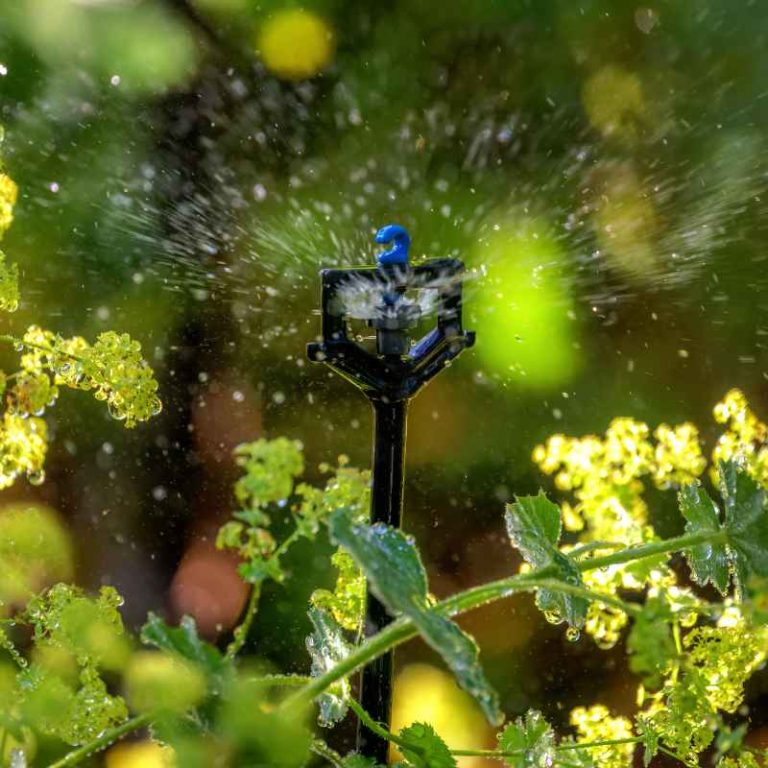
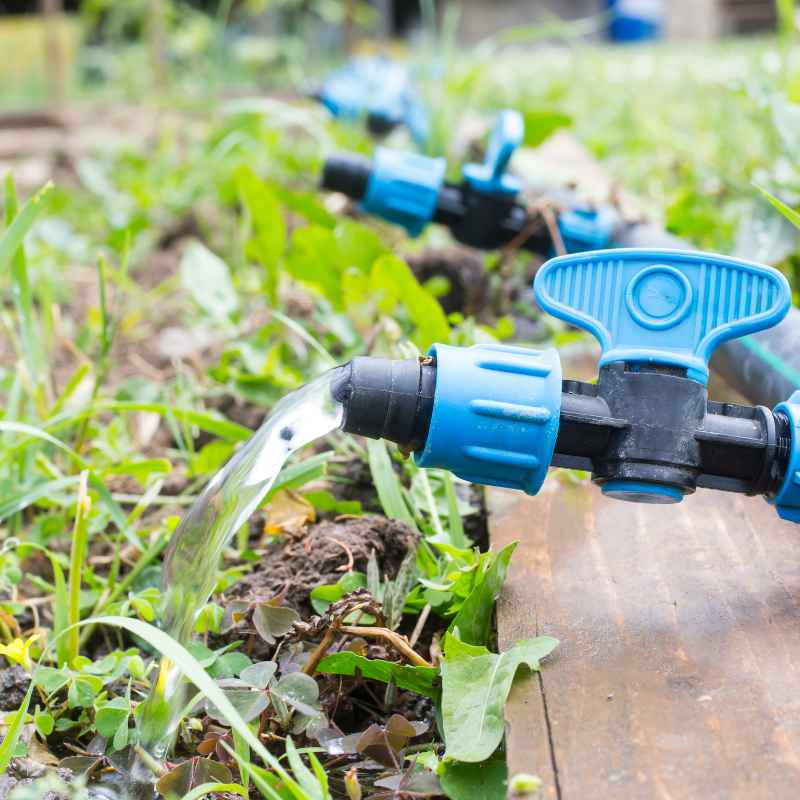
Emitters are the devices that actually release water. They come in many forms. Some are simple drip emitters that provide a slow, steady drip.
Others are micro-sprayers or bubblers that cover a wider area.
The type of emitter affects how much water is delivered and how far it spreads. A simple drip emitter might output 0.5 gallons per hour (GPH). A micro-sprayer could output 10 GPH and cover a 3-foot radius.
If you use many high-flow emitters on a long line, the pressure will drop quickly. The emitters at the end will get less water than those near the start. This can lead to uneven watering.
You might need to use pressure-compensating emitters for long runs. These emitters deliver a consistent amount of water regardless of pressure changes.
Understanding Emitter Flow Rates
Low Flow (Drippers):
- 0.5 GPH: Very slow drip, ideal for single plants or seedlings.
- 1 GPH: Gentle watering, good for small shrubs or pots.
- 2 GPH: Common for most garden plants, provides steady moisture.
Higher Flow (Sprayers, Bubblers):
- 10-30 GPH: Covers a wider area, good for ground cover or larger beds. Needs more pressure.
Key Point: Higher flow rates combined with longer tubing drastically reduce system reach.
My Own Drip System Struggle
I remember setting up my first big drip system for my vegetable garden. I had this fantastic idea to run a single long line of 1/2-inch tubing from the outdoor spigot, all the way down the row of tomato plants. I figured it would be easy.
I bought plenty of tubing and a box of standard 2 GPH emitters. I spaced them out, punched the holes, and turned on the water. The first few tomato plants got a nice, steady drip.
But by the time the water reached the last five plants, it was barely a trickle. The soil was still dry there!
I felt so frustrated. All that work, and it wasn’t watering evenly. I thought maybe my spigot pressure was terrible.
But then I checked it. It was fine! What I hadn’t fully understood was the cumulative effect of friction loss.
Plus, I had put too many emitters on that single, long run. The water just couldn’t make it all the way with consistent force. It was a good lesson in not overestimating how far a system can stretch without proper planning.
Real-World Performance and Expectations
So, what’s a realistic expectation for how far your drip system will work? For most homeowners, especially those with standard water pressure and using common 1/2-inch tubing, you can expect reliable watering for about 50 to 100 feet from the spigot.
If you have excellent water pressure and use larger diameter tubing (like 3/4-inch or 1-inch for main lines), you might push it to 150 or even 200 feet. However, you’ll likely need more advanced components, like flow-regulating valves, to keep things consistent.
For smaller gardens or container plants, you might only need tubing that runs 10-20 feet. In those cases, pressure loss is rarely an issue. It’s the larger, more complex setups where distance becomes a real factor.
Quick-Scan Table: Drip System Reach Factors
| Factor | Impact on Reach | Recommendation |
| Water Pressure | High pressure = longer reach | Use a pressure regulator (15-30 PSI) |
| Tubing Size (Main Line) | Larger diameter = less friction = longer reach | Use 1/2-inch for most runs, 3/4-inch for very long ones |
| Tubing Length | Shorter runs = less friction = more consistent flow | Design your system in zones if runs exceed 100 feet |
| Emitter Flow Rate | Higher flow = more pressure drop over distance | Use low GPH emitters for long runs; consider pressure compensating |
| Number of Emitters | More emitters = more water demand = lower pressure at end | Avoid overloading single lines; branch out |
Designing for Maximum Reach (When You Need It)
If you have a large property and need your drip system to go the distance, there are smart ways to design it. The most important thing is to break your system into zones. You don’t want one single line running hundreds of feet.
A zone is basically a section of your irrigation system that is controlled by one valve. You might have a valve for your front lawn, another for your vegetable garden, and a third for your flower beds. This way, you only water one area at a time.
Each zone should have its own main supply line coming from the spigot (or a manifold connected to the spigot). Then, run your tubing within that zone. This keeps the tubing runs for each zone much shorter.
For example, a zone might only have 1/2-inch tubing runs of 50-75 feet, which is well within a good performance range.
The Role of Elevation Changes
You might not think about it, but the shape of your land plays a role. If your drip line runs downhill, gravity will help the water flow. This means you can often get water to go further downhill without losing much pressure.
However, if your line runs uphill, gravity works against the water. It takes more pressure to push water up. If you have a significant uphill slope, you’ll need to shorten your tubing runs within that zone.
You might also need higher water pressure to begin with.
This is why it’s always good to walk your property. Observe where water naturally flows. Try to design your drip zones to work with, not against, the land’s natural contours.
For most flat gardens, this isn’t a huge concern. But for sloped yards, it’s a critical design element.
When to Worry: Signs of Trouble
How do you know if your drip system isn’t reaching far enough or is struggling? Look for these signs:
- Dry Spots: The most obvious sign is seeing areas of dry soil where you expect moisture.
- Uneven Watering: Some plants are healthy and green, while others nearby look wilted or stressed.
- Weak Drips: Emitters at the far end of a line are barely dripping, or not dripping at all.
- Low Pressure at the Spigot: If you have a sudden drop in pressure even when the system is on, something is wrong.
- Fittings Leaking: Constant leaks can indicate the system is working too hard or is improperly installed.
If you see these issues, it’s time to investigate. It could be a kink in the tubing, a clogged emitter, a faulty pressure regulator, or simply that your tubing runs are too long for your water pressure and setup.
Simple Checks for System Performance
1. Walk Your Lines:
- Look for kinks or damage in the tubing.
- Observe emitter flow rates from start to end.
2. Check Pressure:
- Install a pressure gauge at the spigot after the regulator.
- Measure pressure when the system is running.
3. Inspect Emitters:
- Are they clogged with dirt or mineral deposits?
- Are they the right flow rate for your plants and distance?
Quick Fixes and Tips for Better Reach
If you’re having trouble with distance, here are a few things you can try:
- Reduce Emitter Count: If a long line is overloaded, remove some emitters to let more water reach the end.
- Upgrade Tubing: Switch from 1/4-inch to 1/2-inch tubing for longer runs. Or use 3/4-inch for very long main lines.
- Add a Second Zone: If a run is consistently too long, split it into two shorter zones with separate valves.
- Use Pressure-Compensating Emitters: These help maintain consistent flow even with pressure drops.
- Check for Leaks: A small leak can significantly reduce pressure at the end of the line.
- Improve Water Pressure: Ensure your home’s main water supply is adequate. Sometimes, just opening the spigot fully helps.
Remember, the goal is to deliver the right amount of water. Sometimes, this means rethinking your layout rather than just trying to force water further.

Frequently Asked Questions About Drip System Reach
How far can 1/2-inch drip tubing reach?
With good water pressure and standard emitters, 1/2-inch tubing can reliably water up to 100-150 feet. For longer distances, consider using larger diameter tubing or splitting the run into multiple zones.
Will a drip system work if the spigot is far away?
Yes, but the distance from the spigot is a key factor. You need to account for friction loss. Using 1/2-inch tubing and planning your zones wisely will help ensure water reaches plants far from the faucet.
What is considered a long run for drip irrigation?
A run over 100 feet is often considered long for standard 1/2-inch tubing, especially if it has many emitters. Runs over 200 feet almost always require careful planning with larger pipes, pumps, or multiple zones.
How does a pressure regulator affect drip system reach?
A pressure regulator ensures your system operates at its designed pressure (usually 15-30 PSI). This is essential for consistent flow and reach. Too high a pressure can cause issues; too low a pressure limits reach.
Can I use different types of emitters on the same drip line?
It’s generally best to use the same type and flow rate of emitters on a single line, especially a long one. Mixing high-flow and low-flow emitters will lead to uneven watering because the pressure will vary significantly from start to finish.
Do I need a backflow preventer for drip irrigation?
Yes, most local plumbing codes require a backflow preventer. This prevents contaminated water from your irrigation system from flowing back into your home’s potable water supply. It’s a crucial safety device.
Conclusion: Smart Watering, Smart Distances
Understanding how far your drip irrigation system can work is about more than just guessing. It’s about knowing your water pressure. It’s about choosing the right tubing and emitters.
And it’s about smart design, like creating zones.
Most homeowners find that 50-100 feet of reliable watering is plenty. For larger areas, planning in zones is the secret. You can achieve efficient watering anywhere in your yard.
Just take it step by step.