Best smart irrigation controllers for small gardens: we compared
For most small home gardens, Orbit B-hyve is the safest default because it fits common 4-, 6-, 8-, and 12-zone layouts without forcing you into an oversized system. Buy a hose timer for one faucet and one bed, and only move to multi-zone control when the garden already has separate valves or mixed watering needs.
Quick comparison
| Product | Badge | Best for | Price | ||
|---|---|---|---|---|---|
 | Rachio 3 Smart Sprinkler In-Ground WiFi IrrigationRachio | Our pick | 8-zone WiFi smart controller with weather intelligence | $196.22 Price as of 1 Oct 2026 | View |
 | Orbit B-hyve Smart Indoor/Outdoor Sprinkler Controller –Orbit | Budget pick | 12-zone app-controlled indoor/outdoor smart controller | $131.58 Price as of 1 Oct 2026 | View |
 | Gardena 13401-20 Micro Drip Sprinkler System for BalconyGardena | Also great | Micro drip system for up to 15 potted plants | $60.16 Price as of 1 Oct 2026 | View |
 | Hunter Hydrawise X2-800 8 Station Hydrawise ControllerSPW | Upgrade pick | 8-zone WiFi smart controller with included WiFi module | $247.99 Price as of 1 Oct 2026 | View |
 | GoveeLife H5901 Smart WiFi Sprinkler Timer with Gateway, 1GoveeLife | Pair with it | 1-outlet WiFi smart timer with weather adaptation | $59.99 Price as of 1 Oct 2026 | View |
This comparison is about fit, not brand popularity. In small yards, the wrong controller wastes money fast, especially when it has more zones than the garden can use or when a hose timer has to manage beds, containers, and lawn areas at the same time.
How we chose
We compared each option against the layout first, then the controller type. The main filters were zone count, drip compatibility, weather-based scheduling, install format, and how much network setup it needs.
We also looked at failure points that matter in small yards: weak Wi-Fi, hub dependence, and whether the system still makes sense if the weather feed is wrong. A good controller for a tiny garden should do less, not more.
Quick picks
| Best for | Pick | Zone fit | Install style | Price |
|---|---|---|---|---|
| Flexible small yards with more than one valve | Orbit B-hyve Smart Controller | 4, 6, 8, or 12 zones | Indoor or outdoor versions | From $131.58 |
| Small yards that need weather-based control and room to grow | Rachio WiFi Smart Sprinkler Controller | 8-zone or 16-zone | Indoor install focus | $196.22 |
| Water-focused gardens that want conservation features | Rain Bird ARC8 Smart WiFi Controller | 8 zones | Indoor or outdoor compatibility | Varies by listing |
| One faucet, one bed, or patio containers | Smart hose timer | Single outlet | Hose-mounted, no full controller | $59.99 to $60.16 |
Small-garden fit matrix
The right controller depends on the watering shape, not the square footage. A tiny lawn with separate beds can need more zones than a larger but simple patio garden.
| Garden layout | Best controller type | Zone count or outlet count | Connectivity need | Setup complexity |
|---|---|---|---|---|
| One hose bed | Smart hose timer | 1 outlet | Bluetooth backup control is enough; Wi-Fi is optional but useful | Low |
| Two drip beds | 4- to 6-zone smart controller | 4 or 6 zones | Wi-Fi helps with app control and weather skips | Moderate |
| Patio containers | Smart hose timer or micro-drip starter set | 1 outlet, often manual water runs | Bluetooth backup control is useful when the signal drops | Low |
| Mixed lawn plus beds | 8-zone smart controller | 8 zones | Wi-Fi plus weather-based scheduling | Moderate to high |
Rachio WiFi Smart Sprinkler Controller: best for small yards with more than one zone
- Automatically adjusts watering for rain, wind, or freeze
- Flexible scheduling with grow-in options for new gardens
- Remote control via app for precise zone management
Rachio fits a small yard that already has separate irrigation zones and wants weather-based control without going all the way to a large commercial-style setup. The 8-zone model is the cleaner fit for most compact lawns with beds, while the 16-zone version only makes sense when the yard is already split into many valves.
What stands out is the weather logic. It adjusts for rain, wind, or freeze, and it supports app-based zone management, which is useful when lawn and bed schedules need to stay separate. The drawback is simple: it is easy to overbuy for a small garden that only needs one or two watering circuits.
Rachio also has an indoor installation focus, so it works best where the controller lives in a protected utility space rather than outside on an exposed wall. If the yard is mostly hose-fed or mostly one-bed watering, this is more controller than the garden needs.
Orbit B-hyve Smart Controller: best overall for flexible small yards
- Supports versatile multi-zone irrigation for varied layouts
- Weatherproof design for outdoor installation
- Customizable schedules via app for precise control
Orbit B-hyve is often a strong default choice for small home gardens because it comes in several zone variants. That range makes it easier to match the controller to the garden instead of redesigning the garden around the controller.
It fits the common small-yard problem: one part lawn, one part drip bed, maybe a side strip or patio zone. The 6-zone model is especially practical for compact yards, and the 12-zone version adds indoor/outdoor installation for people who need a weatherproof mounting option. App control and weather adjustments are part of the package.
The drawback is that the larger versions can be too much for a tiny setup, and the app is only worth it if the yard truly has separate watering needs. The budget 4-zone version is fine for simpler layouts, but it can run out of room quickly once you add a second bed or a dedicated drip line.
Rain Bird ARC8 Smart WiFi Controller: best for water-focused gardens
Rain Bird ARC8 fits a small yard that cares more about controlled water use than about having the most features on the box. Its 8-zone coverage gives enough room for a mixed garden, and its WaterSense certification makes it the strongest conservation-first option in this group.
It supports indoor and outdoor compatibility, so it works for both utility-room installs and more exposed mounting spots. That matters in small yards where the controller location is sometimes dictated by where the old timer already lives. The main drawback is that it does not solve a simple one-faucet garden better than a hose timer.
ARC8 makes more sense when the yard already has irrigation valves and you want a smarter schedule, not when the whole watering job is a pair of raised beds and a pot line.
Smart hose timer: best for one faucet and one bed
- Auto-adjusts watering based on real-time weather data
- Long-range connectivity (up to 1640 ft) for large gardens
- Tracks water usage with clear app-based charts
A smart hose timer is the best fit when the garden has one faucet, one bed, or a small container run that does not justify rewiring the yard. It is the simplest option here, and the right answer for patio containers, a single raised bed, or a temporary growing setup.
This type may use Bluetooth backup control, rain delay, manual watering, and 2.4GHz Wi‑Fi. That mix helps when the signal is weak or the app is not the primary way you want to water. The drawback is obvious: one outlet cannot replace a real multi-zone controller once the yard splits into separate beds, lawn, and drip lines.
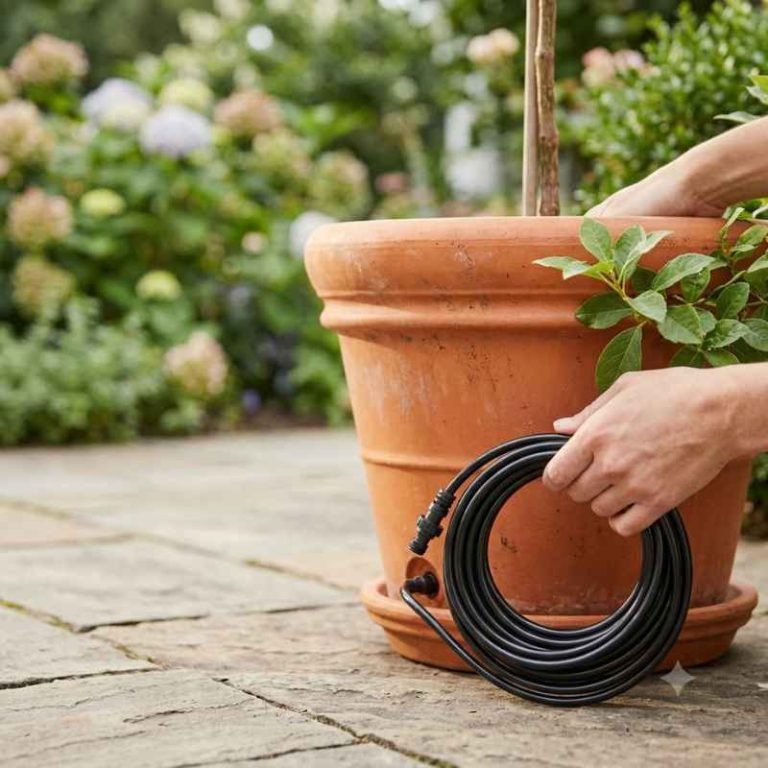
For a tiny patio or balcony, the hose-timer route is often the least annoying choice. The Gardena micro-drip starter set also belongs in that same conversation when the goal is simple plant-by-plant watering rather than full-yard control.
Which one should you buy?
Choose Orbit B-hyve if the garden is small but has varied watering needs. It is the best default because the 4-, 6-, 8-, and 12-zone options let the controller fit the layout instead of forcing a bigger system than you need.
Choose Rachio if you already know the yard needs smart, weather-based scheduling for more than one zone and you want strong app control. The 8-zone version is the cleaner small-yard pick; the 16-zone model is for larger zone counts than most home gardens need.
Choose Rain Bird ARC8 if water conservation is the main goal and the yard already has an in-ground valve setup. It is a better match than a hose timer when you need real zone control, but you still want a small-garden controller rather than a large commercial unit.
Choose a smart hose timer when there is one faucet, one bed, or a small set of containers. Do not buy a multi-zone controller just to water a patio. That is the fastest way to overspend and underuse the system.
How to choose
Start with the layout, not the brand. Count watering methods first: hose, drip, sprinkler valve, or a mix. Then match the controller type to the number of separately watered areas.
- Count your actual watering zones, not your plants. One valve for beds, one for lawn, one for drip lines usually means at least a 4- or 6-zone controller.
- Use a hose timer if the whole garden runs from one faucet and does not need separate schedules.
- Pick indoor installation if the controller can stay protected. Use an outdoor weatherproof case or an outdoor-rated model only when the mounting spot requires it.
- Check Wi-Fi strength before buying. Weak Wi-Fi makes app control annoying, and hub dependence can turn a simple timer into a troubleshooting project.
- For drip irrigation, confirm low-flow compatibility, pressure regulation, and separate schedules for beds versus containers.
- Use weather-based watering adjustments for rain skip, freeze skip, wind skip, seasonal adjustment, and local weather integration. They help, but they should not be the only thing keeping plants alive.
If weather data is wrong, the system should still be usable. Manual watering and rain delay matter because small gardens can dry out fast after a missed cycle, especially in raised beds and shallow containers.
Can a smart controller save water in a small yard?
Yes, but only when the watering pattern is already split up well. In a small yard, the savings usually come from stopping unnecessary watering after rain, changing schedules by season, and keeping drip beds on different cycles from lawn areas that need deeper soak times.
That is why weather-based watering adjustments matter more than app control alone. Rain skip, freeze skip, wind skip, and seasonal adjustment all cut waste when they match the actual site. If the yard has one hose bed, the simpler timer can still save water without paying for extra zones.
Do I need a multi-zone controller or a simple hose timer?
Use a hose timer if one faucet covers the whole job. If all you are doing is a single raised bed or a container run, a single-zone timer is enough and easier to live with.
Choose a multi-zone controller when beds, lawn, and drip lines need different schedules. The moment one area wants deeper watering and another needs frequent short runs, separate zones become worth the cost and setup time.
Which smart irrigation controller works with drip irrigation?
Orbit B-hyve, Rachio, and Rain Bird ARC8 can all work with drip irrigation when the zone plan is correct. The real question is whether the controller can handle low-flow beds, pressure regulation, and separate scheduling for containers versus in-ground beds.
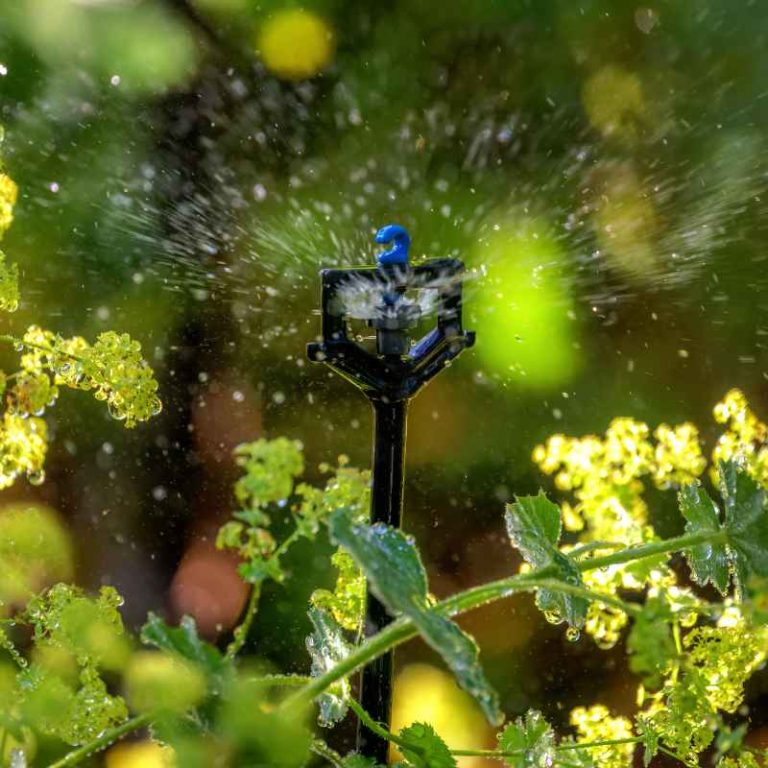
Drip systems usually need more careful run times than sprinklers. If the garden is all drip and hose-fed pots, a hose timer or a micro-drip starter set can be better than a full controller, because it keeps the system simple and avoids unused zones.
How many watering zones do I need for a small garden?
Most small gardens need fewer zones than people expect. One hose bed needs one outlet, two drip beds often fit into 4 or 6 zones, and a mixed lawn plus beds setup usually justifies 8 zones. A 12-zone controller is only for small yards that are surprisingly split up.
Zone count should follow watering behavior. Different plant types, pressure needs, and sun exposure are the real reasons to add zones. If everything gets watered the same way, the extra zones become dead weight.
Which controllers work with Alexa or Google Assistant?
Smart home compatibility is common, but it is only useful if you already use voice control or app-based routines. In this group, smart controllers are expected to support app control, and one listed controller supports Alexa and Google Assistant alongside its Bluetooth setup.
Voice control is convenient for starting a manual cycle, not for replacing a proper schedule. For a small garden, app control and reliable weather-based scheduling matter more than asking a speaker to water the beds.
Do I need Wi-Fi for a smart irrigation controller?
Not always. A smart hose timer can still be useful with Bluetooth backup control, rain delay, and manual watering, which makes it a workable choice when Wi-Fi is weak or absent. For full multi-zone controllers, Wi-Fi matters more because the weather data and remote app control depend on it.
If the signal is poor, hub or gateway dependence becomes the weak point. That is why a simple hose timer often beats a feature-heavy controller in a small patio garden with unreliable connectivity.
What is the easiest smart watering system to install for a garden?
The easiest system is a smart hose timer on a single faucet. It avoids valve rewiring, works well for one bed or container group, and gives you rain delay and manual watering without changing the rest of the yard.
If you already have an existing sprinkler timer and multiple valves, an indoor smart controller can still be straightforward. Outdoor installations take more planning, and drip systems need the most care because low-flow routing and pressure settings have to be right from the start.
Frequently asked questions
What is the best smart irrigation controller for a small home garden?
For most small home gardens, Orbit B-hyve is the best default because its 4-, 6-, 8-, and 12-zone options fit common layouts without pushing you into a larger system than the yard needs. If the garden is just one faucet and one bed, a smart hose timer is the better fit.
Do I need a multi-zone controller or a simple hose timer?
Use a hose timer for one faucet, one bed, or a simple container run. Move to a multi-zone controller when different areas need different run times, such as lawn versus drip beds, or when the yard already has separate valves you want to manage from one app.
Which smart irrigation controller works with drip irrigation?
Orbit B-hyve, Rachio, and Rain Bird ARC8 can all work with drip irrigation, but the system has to be set up for low-flow watering and separate schedules. For very small drip-only spaces, a hose timer or micro-drip starter set can be the simpler choice.
How many watering zones do I need for a small garden?
One hose bed usually needs one outlet. Two drip beds often fit a 4- or 6-zone controller, while a mixed lawn plus beds layout often needs 8 zones. A 12-zone controller only makes sense when the small yard is divided into many separate watering areas.
Can a smart controller save water in a small yard?
Yes, especially when it uses rain skip, freeze skip, wind skip, seasonal adjustment, and local weather integration. The biggest savings come from matching schedules to the actual layout instead of watering every area the same way, which is common in small yards with mixed plant types.
What is the easiest smart watering system to install for a garden?
A smart hose timer is the easiest to install because it mounts at a single faucet and does not replace a full sprinkler controller. It is the simplest option for patio containers and one-bed gardens, while multi-zone controllers take more planning and wiring but give more control.