Why Drip Irrigation Is the Most Water-Economical Method Explained
Drip irrigation is widely regarded as the most water-economical method for delivering water directly to plant roots with minimal waste. This post explains exactly how drip systems achieve up to 95% water efficiency, how they compare to sprinklers and flood irrigation, and what makes them the smart choice for farms, gardens, and landscapes worldwide.

SMIDOLE
50FT Drip Irrigation Kit, 360° Adjustable Garden…
- 🌿 Complete 50FT Irrigation Kit – Ready to Install Includes 50FT tubing, 12 brass misting nozzles, 12 three-port connectors, faucet…
- 🟡 Heavy-Duty Brass Nozzles – Rustproof & High Performance Built with premium brass, the nozzles are durable, explosion-proof, and…
- 🔄 360° Bendable Spray Heads for Precision Each nozzle features a flexible metal tube that bends freely and stays in place, allowin…
As an Amazon Associate I earn from qualifying purchases.
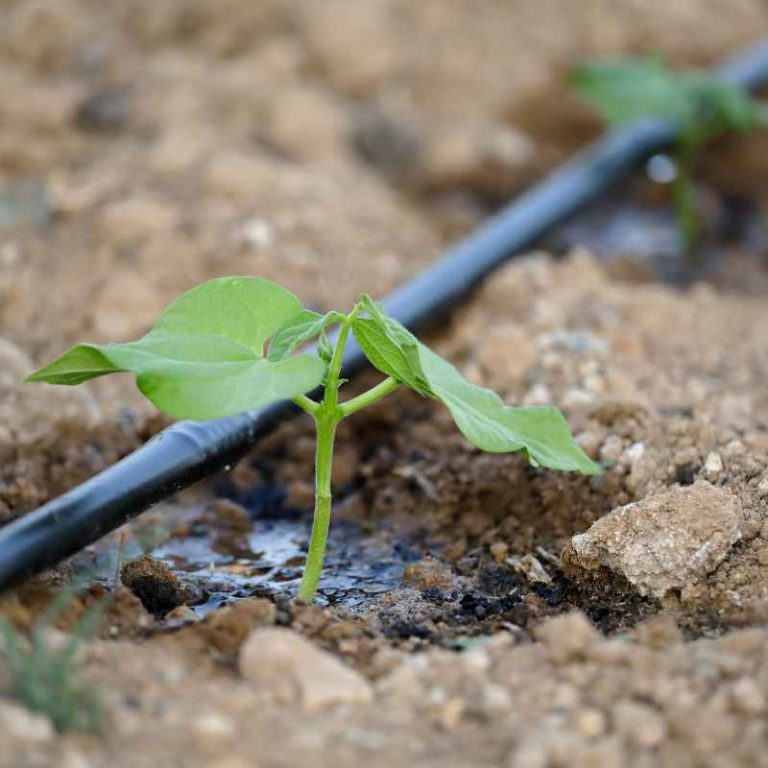
Simply put, drip irrigation delivers water drop-by-drop directly to the root zone, cutting evaporation and runoff nearly to zero. It uses 30–50% less water than sprinkler systems and 50–70% less than flood irrigation, making it hands-down the most water-efficient method available today.
Key Takeaways
- Drip irrigation achieves 90–95% water application efficiency, the highest of any irrigation method.
- It reduces water use by 30–70% compared to sprinklers and flood irrigation, depending on climate and crop type.
- Water-economical benefits come from targeted root-zone delivery, minimized evaporation, and near-zero runoff.
- Drip systems also improve crop yields by 20–50% while using less water, fertilizer, and labor.
- Proper design, filtration, and maintenance are essential to realize full water savings.

What Is Drip Irrigation and How Does It Work?
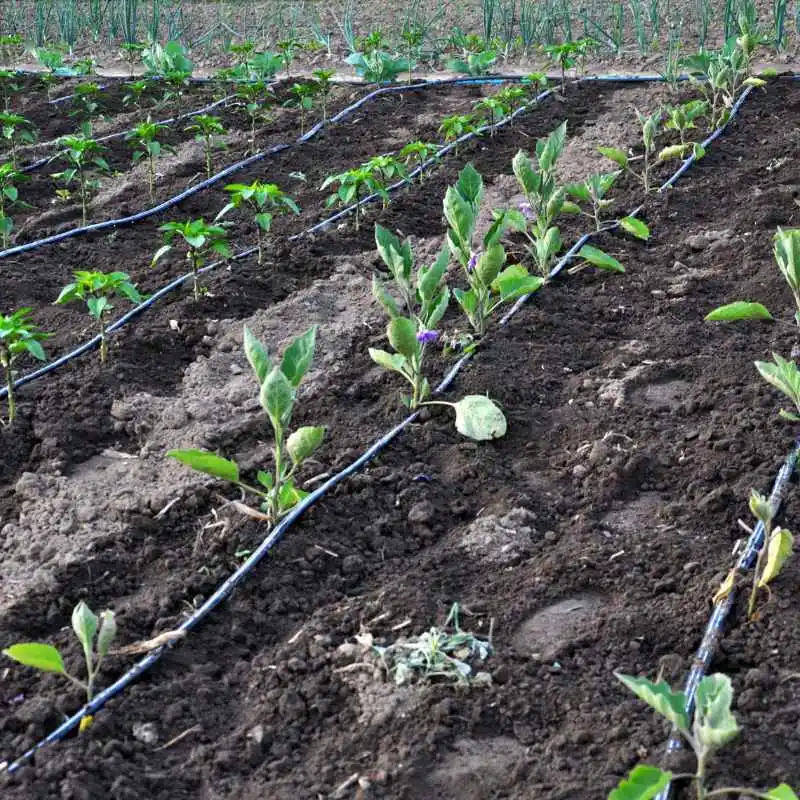
Drip irrigation is a low-pressure, precision watering system that applies water slowly and evenly to the soil near a plant’s root zone. Instead of spraying water into the air or flooding entire fields, drip systems use a network of tubes, emitters, valves, and filters to release water one drop at a time.
The core principle is simple: deliver water exactly where it’s needed, when it’s needed, and in the exact amount needed. This eliminates the two biggest sources of water waste in traditional irrigation — evaporation and runoff.
Key Components of a Drip System
- Mainline & lateral tubing — carries water from the source to the plants
- Emitters (drippers) — control the flow rate, typically 0.5–4 gallons per hour
- Pressure regulator — maintains consistent pressure for even distribution
- Filter system — prevents clogging from sediment and organic matter
- Backflow preventer — protects the water supply from contamination
- Timer or controller — automates scheduling for optimal efficiency
- Fertilizer injector — allows precise fertigation through the system
The USDA reports that properly designed drip systems can achieve water application efficiencies of 90–95%, compared to 75–85% for sprinklers and just 50–60% for surface or flood irrigation. That difference translates to massive water savings, especially in arid and semi-arid regions.
Tip: For home gardens, start with a basic drip kit from a garden center. You’ll see the water savings on your bill within the first growing season.
How Drip Irrigation Compares to Other Irrigation Methods
To understand why drip irrigation is the most water-economical method, it helps to see how it stacks up against the alternatives. Each irrigation type has a different efficiency profile, and the differences are dramatic.
According to the Food and Agriculture Organization (FAO), global irrigation accounts for roughly 70% of all freshwater withdrawals. Improving irrigation efficiency is one of the most impactful steps we can take for water conservation.
Efficiency Comparison Table
| Irrigation Method | Water Efficiency | Evaporation Loss | Runoff Risk | Typical Water Savings vs Flood |
|---|---|---|---|---|
| Drip Irrigation | 90–95% | Very Low | Minimal | 50–70% |
| Sprinkler Irrigation | 75–85% | Moderate | Moderate | 20–40% |
| Flood / Surface Irrigation | 50–60% | High | High | Baseline |
| Center Pivot | 75–90% | Moderate | Low | 30–50% |
As the table shows, drip irrigation leads every category. The combination of low evaporation, minimal runoff, and high precision makes it the clear winner for water conservation.
Important: Drip irrigation efficiency depends on proper design. A poorly maintained system with clogged emitters can drop to 70% efficiency or lower.
Why Drip Irrigation Minimizes Water Loss at the Source
Drip systems tackle water loss from three angles: evaporation, runoff, and deep percolation. Each of these is a major source of waste in conventional irrigation, and drip addresses all of them simultaneously.
Evaporation happens when water sits on the soil surface or is sprayed into the air. Sprinklers can lose 20–30% of water to evaporation before it even reaches the ground, especially on hot, windy days. Drip irrigation eliminates this entirely by delivering water below the canopy or directly onto the soil.
Three Ways Drip Irrigation Cuts Water Loss
- Eliminates wind drift — water is applied at ground level, so wind has zero effect on distribution
- Reduces soil surface evaporation — water moves directly into the root zone, not sprayed across bare soil
- Eliminates runoff — low flow rates allow water to infiltrate completely before the next drop arrives
The University of California Cooperative Extension found that drip irrigation reduces evaporative losses by 30–50% compared to sprinkler systems in California’s Central Valley. For a typical 100-acre farm, that translates to millions of gallons saved per season.
Warning: In sandy soils, drip irrigation can still lose water to deep percolation if run times are too long. Always match run time to soil type and root depth.
How Soil Type and Root Zone Targeting Boost Efficiency
Not all soils are created equal when it comes to irrigation. Drip irrigation’s big advantage is that it adapts to the soil’s natural properties rather than fighting them. By applying water slowly at low pressure, the system lets the soil’s capillary action pull water horizontally and vertically through the root zone.
This targeted delivery means that drip irrigation uses the soil itself as a reservoir, storing water exactly where roots can access it. No water is wasted wetting areas between rows or deep below the root zone.
Soil Type and Drip Efficiency
| Soil Type | Infiltration Rate | Drip Suitability | Recommended Emitter Flow |
|---|---|---|---|
| Sandy | Fast | Excellent | 0.5–1 GPH (low) |
| Loam | Moderate | Excellent | 1–2 GPH |
| Clay | Slow | Good (with care) | 0.5–1 GPH (low, longer run) |
Sandy soils benefit most from drip’s slow application, which prevents water from draining past the root zone before plants can use it. Clay soils also benefit because drip avoids the surface ponding and runoff that plague sprinkler systems on heavy soils.
What Does the Research Say About Drip Irrigation Water Savings?
The data supporting drip irrigation as the most water-economical method is extensive and consistent across multiple continents and crop types. Peer-reviewed studies from agricultural research institutions around the world all point to the same conclusion: drip irrigation saves water while maintaining or increasing yields.
Here are some key statistics from published research:
- A 5-year study by the International Water Management Institute (IWMI) found that drip irrigation reduced water use by 40–60% compared to flood irrigation for tomato and pepper crops in India.
- Research from the University of Florida’s Institute of Food and Agricultural Sciences showed that drip-irrigated strawberries used 45% less water than overhead sprinkler systems while producing 15% higher marketable yields.
- The USDA Agricultural Research Service reported that subsurface drip irrigation in cotton fields reduced water application by 35% and increased yield by 10% compared to furrow irrigation.
- A meta-analysis published in Agricultural Water Management analyzed 78 studies across 25 countries and found that drip irrigation improved water productivity by an average of 50% across all crops.
- In Israel, where drip irrigation was pioneered, national agricultural water use has remained flat for 40 years while agricultural output has increased fivefold.
- The World Bank estimates that transitioning from flood to drip irrigation could save 30–50% of irrigation water in developing countries, enough to meet growing food demands without depleting aquifers.
These numbers aren’t theoretical — they come from real farms, real fields, and real water districts. The consistency across climates, soils, and crops is what makes the case for drip irrigation so compelling.
How to Set Up a Water-Economical Drip Irrigation System
Getting the full water-saving benefits of drip irrigation requires proper design, installation, and operation. A poorly designed system wastes water just like any other method. Here’s a step-by-step approach to building a highly efficient drip system.
Step 1: Assess Your Water Source and Pressure
Measure your available flow rate (gallons per minute) and static water pressure (PSI). Drip systems work best at 15–30 PSI. If your pressure exceeds 40 PSI, you’ll need a pressure regulator to avoid damaging emitters.
Step 2: Design the Layout for Maximum Coverage
Space your drip lines according to crop row spacing. For row crops, one drip line per row is standard. For trees and vines, use loops or multiple emitters per plant.
The goal is to wet 40–60% of the root zone area — any more wastes water, any less stresses plants.
Step 3: Choose the Right Emitters
- Pressure-compensating emitters — maintain consistent flow regardless of elevation changes, critical for slopes
- Non-pressure-compensating emitters — cheaper but less accurate, suitable for flat terrain
- Adjustable emitters — allow flow rate changes per plant, good for mixed plantings
- Inline drip tubing — built-in emitters every 12–24 inches, ideal for row crops
Step 4: Install Filtration Properly
Clogged emitters are the #1 cause of drip system failure and water waste. Install a 120–200 mesh filter at the system inlet. For well water or surface water, consider a sand media filter or disk filter as primary filtration.
Step 5: Automate with a Smart Controller
Soil moisture sensors, rain sensors, and evapotranspiration (ET) based controllers can reduce water use by an additional 20–30% compared to manual timers. These systems adjust watering based on actual conditions rather than fixed schedules.
Pro Tip: Add a fertigation injector to your drip system. You can apply liquid fertilizer directly through the emitters, cutting fertilizer use by 30–40% while improving plant uptake.
Common Mistakes That Reduce Drip Irrigation Efficiency
Even the best-designed drip system can underperform if common mistakes creep in. Being aware of these pitfalls helps you keep your system running at peak efficiency from season to season.
- Running the system too long — overwatering defeats the purpose of drip. Use soil moisture sensors or a simple timer to avoid this.
- Ignoring filter maintenance — a clogged filter reduces pressure and causes uneven water distribution across the field.
- Using the wrong emitter flow rate — too high a flow rate on clay soil causes runoff; too low on sandy soil leaves roots dry.
- Failing to flush the system — debris accumulates in laterals over time. Flush monthly during the growing season.
- Installing on steep slopes without pressure-compensating emitters — gravity causes uneven water delivery on hillsides.
- Not accounting for root growth — as plants grow, their root zone expands. Adjust emitter placement or add additional emitters for perennials.
- Leaving drip lines exposed to sunlight — UV degradation can crack tubing. Use UV-resistant tubing or cover with mulch.
The good news is that all of these mistakes are avoidable with basic planning and regular maintenance. A well-cared-for drip system can last 10–15 years while maintaining 90%+ efficiency.
Who Benefits Most from Drip Irrigation?
Drip irrigation is not a one-size-fits-all solution, but its benefits extend across a wide range of users and applications. Here’s a breakdown of who sees the biggest return on investment from switching to drip.
Commercial Farmers
Large-scale growers of high-value crops like tomatoes, strawberries, grapes, almonds, and citrus see the fastest payback. The combination of water savings, yield increases, and reduced labor costs often pays for the system in 1–3 seasons. California’s almond growers, for example, have converted over 80% of acreage to drip or micro-sprinkler systems.
Home Gardeners
For backyard vegetable gardens, flower beds, and container plants, drip irrigation eliminates the guesswork of hand watering. Homeowners typically reduce outdoor water use by 30–50% and see healthier plants with fewer disease issues.
Greenhouse and Nursery Operators
In controlled environments, drip irrigation delivers precise water and nutrient management. Greenhouse growers report water savings of 50–70% compared to overhead misting or hand watering, along with reduced fungal diseases.
Landscapers and Golf Courses
Drip irrigation for shrubs, trees, and flower beds in commercial landscapes reduces water bills and maintenance time. Subsurface drip for turf is also gaining popularity, though it requires careful design.
Regions with Water Restrictions
In drought-prone areas, drip irrigation is often the only way to maintain productive gardens and farms within strict water allocations. Many water districts offer rebates for drip system conversions.

Frequently Asked Questions
How much water does drip irrigation save compared to sprinklers?
Drip irrigation typically saves 30–50% more water than sprinkler systems. The exact savings depend on climate, soil type, crop, and system design. In hot, windy conditions, the savings can reach 60% because drip eliminates wind drift and evaporation losses.
Is drip irrigation cost-effective for small home gardens?
Yes. Basic drip kits for small gardens cost between $30 and $100 and pay for themselves in water savings within one or two growing seasons. Homeowners also benefit from less time spent hand watering and healthier plants with fewer disease problems.
Can drip irrigation work on sloped land?
Yes, but you must use pressure-compensating emitters on slopes. These emitters deliver a consistent flow rate regardless of elevation changes. Without them, the lower end of the slope gets too much water and the upper end gets too little.
What is the typical lifespan of a drip irrigation system?
With proper maintenance, drip tubing lasts 8–15 years. Polyethylene tubing is UV-resistant and can handle multiple seasons. Emitters may need replacement every 3–5 years if clogging occurs.
Filters and pressure regulators need annual inspection.
Does drip irrigation reduce fertilizer use as well?
Yes. When combined with fertigation, drip irrigation reduces fertilizer use by 30–40% because nutrients are delivered directly to the root zone. This eliminates runoff and leaching that occur with broadcast fertilization followed by sprinkler or flood irrigation.
Final Thoughts
Drip irrigation is the most water-economical method available today, backed by decades of research and real-world results showing 30–70% water savings. By delivering water directly to the root zone with minimal evaporation, runoff, or deep percolation, it sets the standard for efficient water use in agriculture and landscaping. Whether you manage a commercial farm or a backyard garden, switching to drip is one of the most impactful steps you can take to conserve water, save money, and grow healthier plants.
The technology is proven, the benefits are clear, and the time to adopt it is now.
Related pick: Check today's price on Amazon