Does Drip Irrigation Prevent Salinization? What You Should Know
Does drip irrigation prevent salinization? The short answer is yes—when designed and managed correctly, drip irrigation can significantly reduce the risk of soil salinization compared to flood or sprinkler systems. This post explains how drip irrigation works against salt buildup, its limitations, and best practices to keep your soil healthy.
SMIDOLE
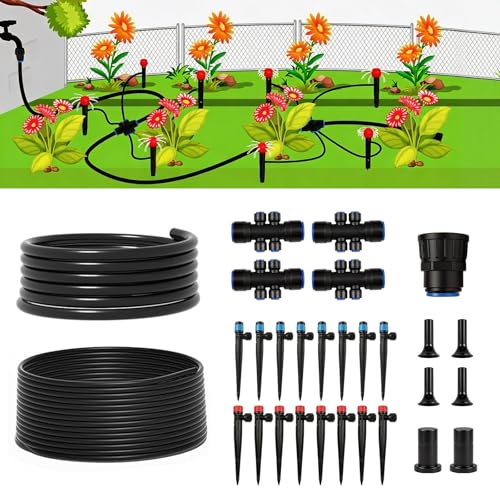
100FT Drip Irrigation System Kit, Quick Connect…
- TRUE QUICK CONNECT – NO LEAKS, NO STRUGGLE: Unlike traditional kits that require twisting and force-fitting, our quick-connect des…
- COMPLETE 100FT SYSTEM FOR MEDIUM GARDENS: Includes 25FT of 1/2" main tubing + 75FT of 1/4" distribution tubing for efficient water…
- DUAL EMITTER TYPES FOR CUSTOM WATERING: Comes with 8 vortex drip emitters and 8 stream emitters to match different plant needs. Ea…
As an Amazon Associate I earn from qualifying purchases.
For the broader gardening context, Are The Botanical Gardens On Kauai Open On Thanksgiving Day? gives readers a useful next step on the same topic.
Simply put, drip irrigation prevents salinization by delivering small, frequent amounts of water directly to the plant root zone, minimizing deep percolation and keeping salts from accumulating near the surface. It’s not a cure-all—but with proper management, it’s your best defense.
Key Takeaways
- Drip irrigation prevents salinization by applying water slowly and precisely, reducing salt buildup in the root zone.
- Flood and sprinkler irrigation are far more likely to cause salinization due to excessive water use and poor drainage.
- To prevent salinization with drip, you must also manage irrigation scheduling, water quality, and leaching fractions.
- Even with drip, saline water sources require additional treatment or crop selection.

What Is Salinization and Why Does It Matter?
Soil salinization is the accumulation of soluble salts in the soil to levels that harm plant growth. When irrigation water contains dissolved salts, or when water evaporates from the surface leaving salts behind, salinity increases. The United Nations Food and Agriculture Organization (FAO) estimates that over 20% of irrigated land worldwide is already salt-affected, leading to crop yield losses of up to 50% in severe cases.
Salinization doesn’t just reduce yields—it can render farmland completely unusable. Common signs include white crust on the soil, stunted plant growth, and leaf burn. Crops like wheat, tomatoes, and cotton are moderately sensitive, while beans and strawberries are highly sensitive.
- Primary causes: poor drainage, high evaporation, use of saline water, over-irrigation.
- Secondary causes: capillary rise of salty groundwater, insufficient leaching.
- Impact: FAO reports that salt-affected soils cover about 1.5 billion hectares globally.
- Economic loss: estimated $27.3 billion per year in lost crop production.
- Crops most at risk: vegetables, fruit trees, and grains.
How Drip Irrigation Helps Prevent Soil Salinization
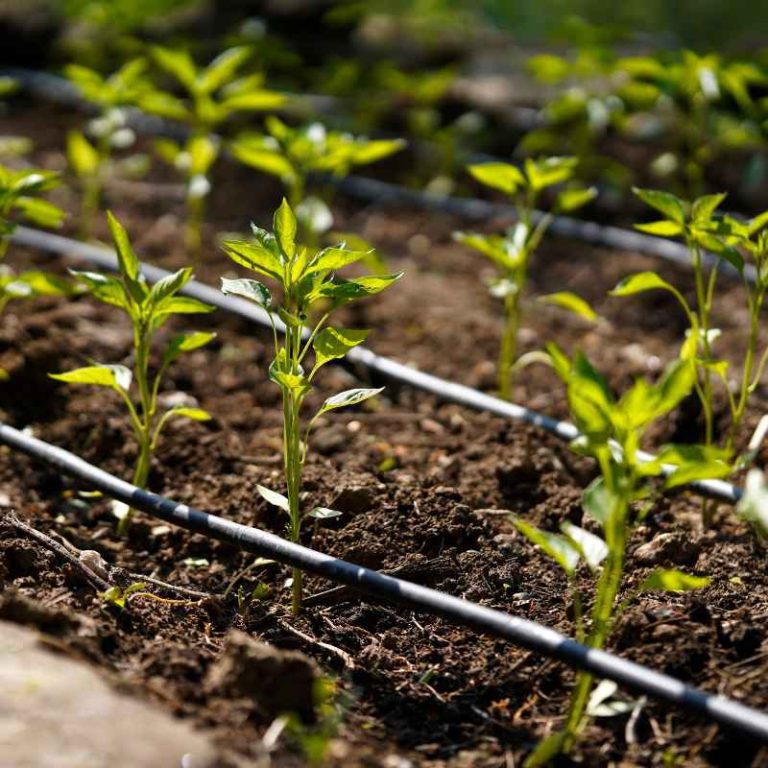
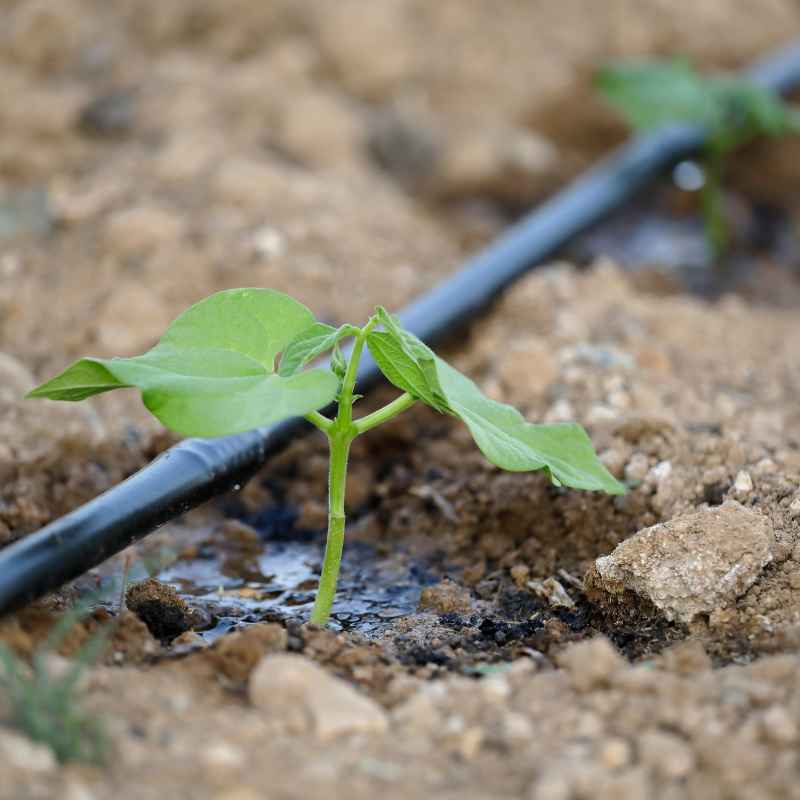
Drip irrigation prevents salinization through its unique water application method. Instead of flooding the entire field, drip systems deliver water drop by drop directly to the root zone. This keeps the soil surface drier, reduces evaporation, and prevents salts from migrating upward.
According to the USDA, drip irrigation can use 30–50% less water than flood irrigation while maintaining similar yields.
Because water moves slowly and precisely, salts are pushed downward and away from the roots, accumulating in a “salt fringe” below the root zone. This leaching effect is more effective with drip than with sprinklers, which often wet leaves and increase evaporation.
- Prevents salt buildup at the surface by keeping soil moisture constant.
- Reduces evaporation loss, meaning less salt concentration in the soil.
- Allows for precise fertigation, avoiding fertilizer-associated salinity.
- Drip irrigation prevents salinization when combined with proper leaching fractions (typically 10–20% extra water).
- Works well with mulching to further reduce evaporation.
Tip: Install a pressure-compensating emitter to ensure even water distribution—uneven water application can create localized salt hotspots.
How Does Drip Irrigation Compare to Other Methods?
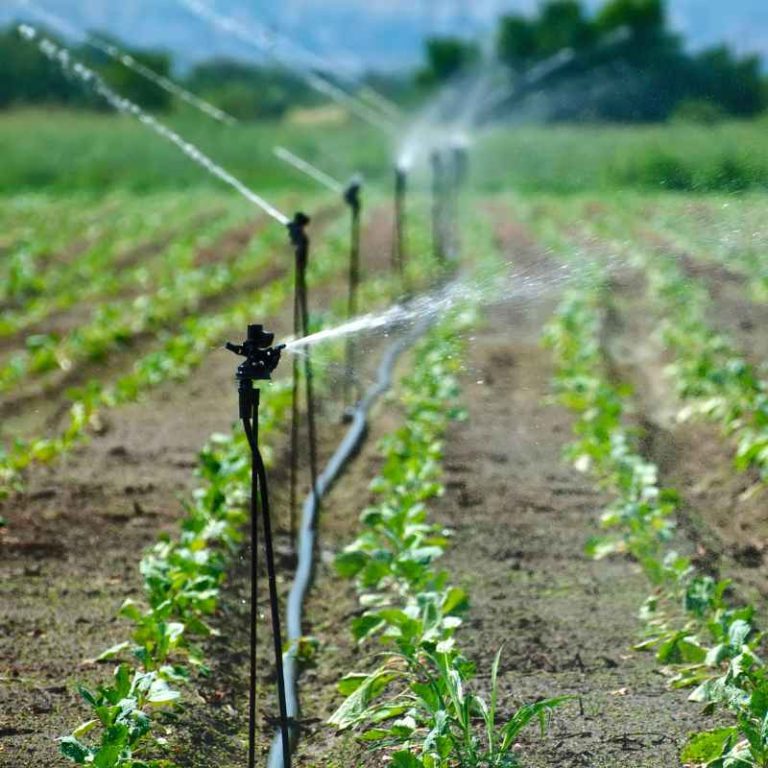
Not all irrigation methods handle salinity the same way. Flood irrigation often causes waterlogging and pushes salts into the root zone. Sprinklers wet foliage, increasing evaporation and salt deposition on leaves.
Drip delivers water directly to roots, minimizing those issues.
| Irrigation Method | Salinization Risk | Water Efficiency | Leaching Ability |
|---|---|---|---|
| Flood (surface) | High | 40–60% | Poor (uneven) |
| Sprinkler | Moderate–High | 70–80% | Fair |
| Drip | Low | 90–95% | Excellent |
As the table shows, drip irrigation not only prevents salinization better than other methods, but also uses water more efficiently—critical in regions where saline water is the only option.
What Are the Limitations of Drip Irrigation for Salinity?
While drip irrigation can prevent salinization, it’s not a silver bullet. If the water itself is highly saline (EC > 3 dS/m), salts can still build up over time. Also, if the system isn’t designed with adequate drainage, salts may accumulate in the soil profile.
Drip emitters can also clog if water has high calcium or iron content, leading to uneven application and localized salinity.
- Water quality matters most. Drip does not desalinate water—it only distributes it efficiently.
- In arid regions with high evaporation, salts can accumulate in the wetted bulb edges.
- Clogged emitters cause dry spots where salts concentrate.
- Drip alone cannot fix existing salinity; you need leaching or soil amendments.
- Initial installation cost is higher, though offset by water savings.
Warning: Using water with salinity above 2.5 dS/m for drip irrigation on sensitive crops can still cause yield loss. Always test your water source before planting.
Who Should Use Drip Irrigation to Manage Salinity?
Drip irrigation is especially beneficial for growers in arid and semi-arid regions where water scarcity and salinity go hand in hand. Farmers growing high-value crops like tomatoes, peppers, strawberries, and citrus get the most return from the investment. It’s also ideal for greenhouse and raised-bed systems where soil space is limited and salt management is critical.
- Farmers with saline groundwater and limited freshwater supply.
- Growers of high-value vegetable crops (e.g., lettuce, cucumbers).
- Orchards and vineyards where long-term soil health matters.
- Small-scale urban farmers using recycled or brackish water.
- Operations in coastal areas affected by saltwater intrusion.
Important: Even with drip, you must monitor soil electrical conductivity (EC) regularly. A target EC below 1.5 dS/m is safe for most crops.
Best Practices for Using Drip Irrigation to Prevent Salinization
To maximize the benefit of drip irrigation, follow these proven practices. The key is to create a slight downward salt movement while avoiding overwatering.
- Use a leaching fraction of 10–20%. Apply slightly more water than the crop needs to push salts below the root zone.
- Schedule irrigation frequently. Short, frequent cycles keep soil moisture constant and prevent salt spikes between irrigations.
- Test water quality monthly. Know your water’s EC, sodium absorption ratio (SAR), and specific ion levels.
- Install filters. Sand or screen filters prevent emitter clogging from algae, sand, or precipitates.
- Combine with mulching. Organic or plastic mulch reduces evaporation and helps keep salts in the lower soil layers.
- Monitor soil EC at multiple depths. Use sensors to track the salt front and adjust leaching accordingly.
How to Monitor Soil Salinity Levels
You can’t manage what you don’t measure. Soil salinity is measured by electrical conductivity (EC). For drip systems, you should sample the soil in the wetted bulb area—both near the emitter and at the edge—to get an accurate picture.
- Use an EC meter for quick field checks (e.g., handheld probe).
- Send soil samples to a lab for detailed analysis (including SAR).
- Test at the beginning of the season, mid-season, and after heavy rains.
- Dig a small pit to see salt crust patterns—white residue on the furrow edges indicates poor distribution.
- Track yield decline as a lagging indicator of salt buildup.
| EC Level (dS/m) | Salinity Class | Effect on Crops |
|---|---|---|
| < 1.5 | Non-saline | No effect |
| 1.5–3.0 | Slightly saline | Sensitive crops affected |
| 3.0–6.0 | Moderately saline | Many crops show yield loss |
| > 6.0 | Strongly saline | Only salt-tolerant plants survive |
Regular monitoring helps you catch salinity buildup early, before it causes irreversible damage.
Frequently Asked Questions
Does drip irrigation prevent salinization in all soil types?
Drip irrigation works best in well-drained, sandy or loamy soils. In heavy clay soils with poor drainage, salts may still accumulate because water moves slowly and evaporates from the surface. Adding organic matter improves drainage and enhances the effect.
Can drip irrigation fix already salty soil?
Drip irrigation alone won’t remove existing salts. You need to apply a leaching fraction—extra water that flushes salts below the root zone—and ensure good subsurface drainage. In severe cases, gypsum or other amendments help displace sodium.
How often should I run drip irrigation to prevent salt buildup?
Frequent, light irrigation (every 1–3 days depending on crop and climate) keeps soil moisture steady and prevents salt concentration from evaporation. Heavy, infrequent watering is more likely to cause salinization.
Can I use saline water with drip irrigation?
Yes, but only up to certain EC levels (generally < 2.5 dS/m for sensitive crops, < 4 dS/m for tolerant crops). Higher salinity requires blending with freshwater, using salt-tolerant crops, or adding leaching fractions. Drip prevents leaf burn from saline sprinkler water.
Does drip irrigation prevent salinization better than subsurface drip?
Both are effective. Subsurface drip places water deeper, further reducing evaporation and salt buildup at the surface. However, surface drip is easier to monitor and maintain.
For salt management, subsurface drip is often superior in arid regions.
Final Thoughts
Drip irrigation is a powerful tool to prevent salinization, especially when combined with proper scheduling, water testing, and drainage. It cuts water use by nearly half and delivers salts away from the root zone. But remember: no system works without monitoring and maintenance.
If you manage your drip system wisely, you’ll keep your soil productive for years to come.
Related pick: Check today's price on Amazon