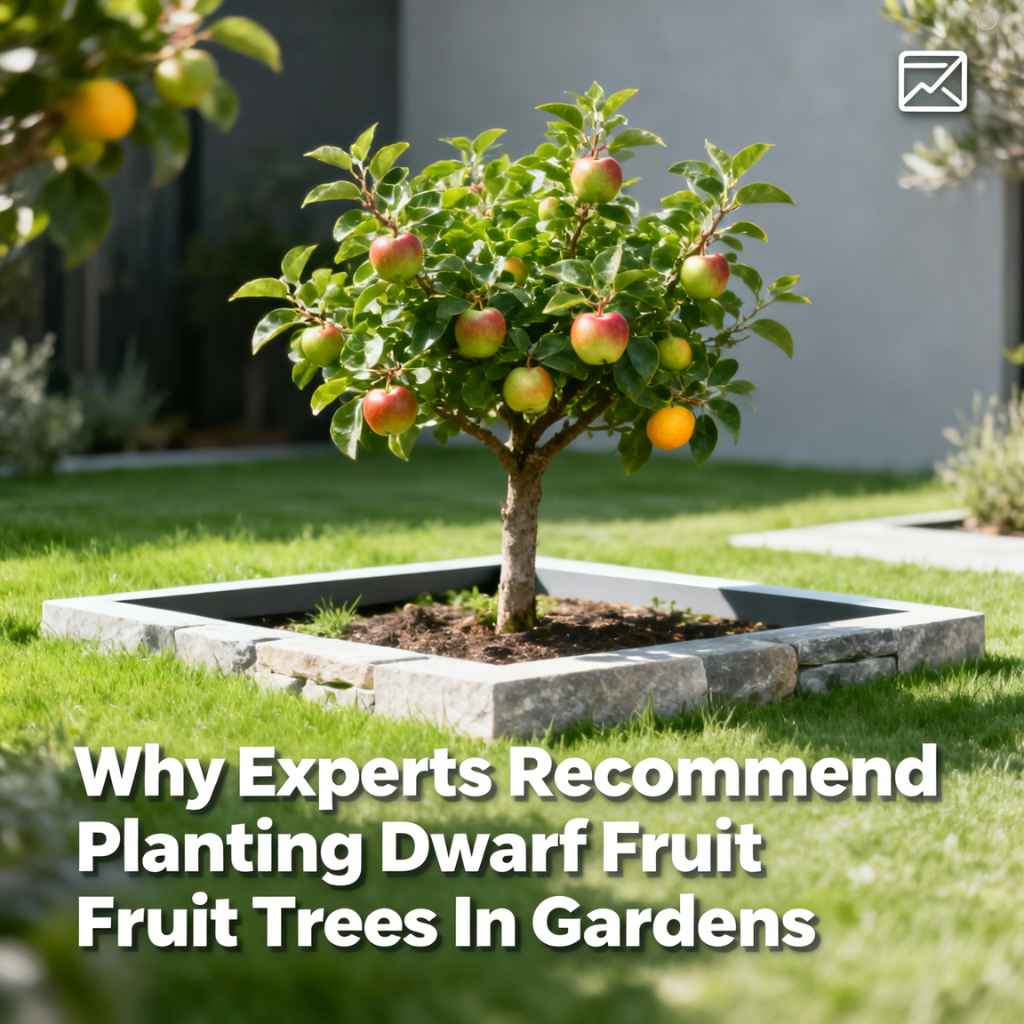

Dwarf fruit trees are recommended by experts for home gardens because they stay small, making them perfect for limited spaces. They produce fruit sooner and are easier to care for. This allows even beginners to enjoy fresh, homegrown fruit with less hassle.
What Are Dwarf Fruit Trees?
Let’s talk about what makes a fruit tree “dwarf.” It’s not really a different species of fruit. Instead, it’s all about how the tree is grown. Think of it like a special type of grafting.
For another seed or bulb question, Where To Buy Large Bulb Planting Boxes For Gardening helps compare the next planting choice.
For a related vegetable-garden decision, Exotic Vegetables And Fruits You Can Grow In California Gardens adds another practical check before you choose materials or treatments.
For another bonsai-specific follow-up, How To Grow Bonsai Trees From Seed Like A Pro Gardener gives readers a related care or selection angle.
A regular fruit tree is made by joining two parts. One part is the fruiting wood (like a branch from an apple tree you love). The other part is the rootstock.
This is the system of roots that the tree grows from. For dwarf fruit trees, a special rootstock is used. This rootstock is naturally smaller.
It holds back the growth of the main tree. This keeps the overall size of the tree much smaller. So, you get the same delicious fruit, but in a more manageable package.
The key here is that the fruit itself is often just as large and tasty as from a full-sized tree. The difference is the tree’s structure and ultimate height. Instead of reaching 20 or 30 feet tall, dwarf varieties typically stay between 6 and 10 feet.
Some might even be a bit smaller. This makes a huge difference for home gardens. You don’t need a huge orchard.
A patio, a corner of your yard, or even a large pot can be enough. This makes growing your own fruit accessible to so many more people.
Why Experts Love Dwarf Fruit Trees for Home Gardens
There are many good reasons why gardening experts, horticulturalists, and experienced growers often point to dwarf fruit trees for home gardens. It’s not just about saving space, though that’s a big one. These trees offer a suite of benefits that make them incredibly practical and rewarding for anyone looking to grow their own food.
One of the most exciting aspects is the speed at which they start producing fruit. Unlike their larger cousins that might take 5 to 10 years to bear fruit, dwarf trees can start fruiting in just 2 to 5 years. Imagine planting a tree and enjoying your first harvest in just a couple of seasons!
This quicker payoff is very motivating for home gardeners. It means you get to experience the joy of picking and eating your own fruit much sooner.
The smaller size also makes care much, much easier. Think about picking fruit from a tall tree. It often requires ladders, special equipment, and can be quite a chore.
With a dwarf tree, most of the fruit is within easy reach. You can pick apples or peaches without a ladder. Pruning is simpler too.
You can shape the tree easily to maintain its size and health. This makes it much less intimidating for beginners. You don’t need years of experience to successfully grow and harvest from a dwarf fruit tree.
Pest and disease management can also be more straightforward. Because the trees are smaller, it’s easier to inspect them closely for any issues. Spraying for pests or diseases, if needed, covers a smaller area.
This means less product is used, and it’s easier to ensure thorough coverage. This practical advantage contributes to healthier trees and a more successful harvest.
Another benefit is variety. You can often fit several different types of dwarf fruit trees in a space that would only hold one large tree. This means you can have a small “orchard” with apples, pears, cherries, and even citrus trees all in the same area.
This diversity adds interest to your garden and gives you a wider range of fruits to enjoy throughout the growing season.
The Space-Saving Superstar
Tiny Footprint, Big Harvest: Dwarf fruit trees are specially grafted onto rootstock that limits their size. This means they stay small, often under 10 feet tall.
Ideal for: Small yards, urban gardens, patios, and even large containers. You don’t need a sprawling estate to grow your own fruit.
Understanding Dwarf, Semi-Dwarf, and Miniature Varieties
It’s helpful to know that “dwarf” isn’t a single category. There are actually a few different sizes that growers refer to. This helps you pick the perfect tree for your specific needs.
The main differences are determined by the rootstock used.
Dwarf Fruit Trees: These are the smallest. They typically reach a mature height of about 6 to 10 feet. They are fantastic for containers or very tight spaces.
They also tend to be the earliest to produce fruit.
Semi-Dwarf Fruit Trees: These are a bit larger than dwarf trees. They usually grow to be between 10 and 15 feet tall. They offer a good compromise.
They are still much more manageable than full-sized trees but give a slightly larger yield. They are great for most average-sized yards.
Miniature or Columnar Fruit Trees: These are often a special category. Miniature trees are bred to be very small, sometimes only 3-4 feet tall. Columnar trees grow very upright, like a column, and don’t spread much.
They are incredibly space-efficient and perfect for very small gardens or even balconies.
When you’re looking at fruit trees for sale, the tag will usually tell you the size category. It’s important to check this. You want to make sure the mature size fits your garden.
You don’t want a tree that will quickly outgrow its spot. Knowing these categories helps you make an informed choice. It ensures you’ll be happy with your tree for years to come.
Size Matters: Choosing Your Dwarf Type
Dwarf: 6-10 feet tall. Best for containers and tight spots.
Semi-Dwarf: 10-15 feet tall. Good for most yards, balances size and yield.
Miniature/Columnar: 3-5 feet tall or very upright. Excellent for balconies and extremely small spaces.
My Own Experience: The Surprise Peach Tree
I remember one summer, my neighbor, Mrs. Gable, was moving. She had a lovely little peach tree in a large ceramic pot on her patio.
It wasn’t a huge tree, maybe only 7 feet tall, but it was absolutely loaded with fuzzy, blushing peaches. She told me she was sad to leave it behind. On a whim, I asked if she’d consider giving it to me.
She gladly agreed!
I wasn’t sure what to expect. I had always thought of fruit trees as needing a lot of space and fuss. But this little tree, already in a pot, seemed perfect for a sunny corner of my deck.
I dug a slightly larger hole in the deck soil, moved the pot, and hoped for the best. That first year, I was stunned. The tree was easy to care for.
Watering was simple because it was in a pot. I even managed to prune it a little, just trimming back some stray branches. And the peaches!
They were so sweet and juicy. It felt like magic, having such delicious fruit appear from this compact tree. It completely changed my mind about what was possible in a small garden.
I realized that with the right kind of tree, like this dwarf peach, you could have a real harvest without needing a huge yard. It was a moment of pure gardening joy and a lesson in how smart plant choices can make a big difference.
Ideal Growing Conditions and Care Tips
Even though dwarf fruit trees are easier to manage, they still need the right conditions to thrive and produce lots of fruit. Think of it like giving them a happy home. Providing these basics will help your tree stay healthy and give you the best possible harvest.
Sunlight is Key
Most fruit trees, including dwarf varieties, need a lot of sun. They generally require at least 6 to 8 hours of direct sunlight each day. The more sun they get, the better they will flower and set fruit.
So, pick the sunniest spot in your yard for planting. If you’re planting in a pot, make sure that spot gets plenty of sun throughout the day.
Soil Matters
Fruit trees prefer well-draining soil. This means water shouldn’t sit around the roots for too long. If your soil is very heavy clay, you might need to improve it.
You can do this by mixing in compost or other organic matter. This helps the soil drain better and adds nutrients. For potted trees, use a good quality potting mix.
Ensure the pot has drainage holes. This is super important to prevent root rot.
Watering Wisely
Young trees need consistent watering to help them establish their roots. Once established, they need less frequent watering, but it’s still important, especially during dry spells or when the fruit is developing. The soil should be moist, but not soggy.
Stick your finger about an inch or two into the soil. If it feels dry, it’s time to water. Container-grown trees will dry out faster than those planted in the ground, so check them more often.
Feeding Your Tree
Dwarf fruit trees benefit from regular feeding. Use a balanced fertilizer formulated for fruit trees. You can usually start fertilizing in early spring, just as new growth begins.
Follow the package directions carefully. Over-fertilizing can be harmful. It’s better to feed moderately than too much.
Quick Care Checklist
- Sun: 6-8 hours of direct sun daily.
- Soil: Well-draining, amended with compost if needed.
- Water: Consistent moisture, especially when young or fruiting.
- Fertilizer: Balanced fruit tree fertilizer in spring.
Pruning for Health and Yield
Pruning is vital for dwarf fruit trees. It helps maintain their small size. It also encourages better fruit production and allows sunlight to reach all parts of the tree.
The best time to prune depends on the type of fruit tree. For most deciduous fruit trees (like apples and pears), winter is the best time. This is when the tree is dormant.
For stone fruits (like peaches and cherries), you might prune in late winter or early spring. You’re usually looking to create an open, vase-like shape. This allows air circulation and light penetration.
Remove any dead, damaged, or crossing branches. Don’t be afraid to prune; a dwarf tree can handle it. Just be sure to use clean, sharp pruning tools.
When you prune, aim to remove about a third of the new growth each year. This encourages the tree to put its energy into fruiting rather than just growing more branches. You’re essentially guiding the tree’s growth.
You want to encourage strong fruiting wood. It’s a skill that gets easier with practice. Many local garden centers or university extension offices offer pruning workshops.
These can be incredibly helpful.
Pollination Needs
Some fruit trees are self-pollinating. This means one tree can produce fruit on its own. Others need a second, different variety of the same type of fruit tree nearby to produce fruit.
This is called cross-pollination. Dwarf varieties often fall into both categories. For example, many dwarf apple trees are self-pollinating.
However, some might need a pollinator partner. Similarly, some dwarf cherry trees are self-fruitful, while others are not. It’s really important to check the specific variety you’re buying.
If it needs a pollinator, you’ll need to plant another compatible variety within range. Bees and other insects are the usual pollinators. Planting a variety that attracts pollinators can also help.
Understanding this requirement is crucial for a successful harvest. If you have limited space and only want one tree, choosing a self-pollinating variety is key. If you have room for two, you can plant a compatible pair.
This is often how you get the best fruit set. A good nursery or garden center will be able to advise you on pollination needs. They can help you select compatible varieties.
Popular Dwarf Fruit Tree Varieties for Your Garden
There’s a huge world of delicious fruit waiting for you! Here are some of the most popular dwarf fruit trees that do exceptionally well in home gardens. Each offers unique flavors and growing characteristics.
Dwarf Apple Trees
Why they’re great: Apples are a backyard classic. Dwarf apple trees come in countless varieties, from sweet Fuji to tart Granny Smith. They are often self-pollinating, but planting two different varieties can increase your yield.
They typically stay around 8-10 feet tall.
Experience: I planted a ‘Honeycrisp’ dwarf apple tree a few years ago. It’s a joy to watch it blossom in spring and to harvest those crisp, sweet apples in the fall. Pruning it is easy, and the fruit is just perfect for snacking.
Consider: Varieties like ‘Fuji’, ‘Gala’, ‘Honeycrisp’, ‘Granny Smith’, and ‘McIntosh’ are popular dwarf options.
Dwarf Peach Trees
Why they’re great: Who doesn’t love a fresh, ripe peach? Dwarf peach trees produce incredibly flavorful fruit and often bear fruit in their second or third year. Many are self-pollinating.
They usually reach 6-8 feet tall.
Experience: My neighbor’s peach tree (the one I mentioned earlier!) was a game-changer. The aroma of ripe peaches in summer is unforgettable. They are perfect for canning, pies, or just eating fresh off the tree.
Consider: ‘Elberta’, ‘Redhaven’, and ‘Reliance’ are well-known dwarf peach varieties.
Dwarf Cherry Trees
Why they’re great: Sweet or tart, cherries are a delightful addition to any garden. Dwarf cherry trees are often quite ornamental with beautiful spring blossoms. Some are self-pollinating, but many need a second variety.
They grow to about 8-10 feet tall.
Experience: My first harvest from a dwarf sweet cherry tree was a small bowl of perfect, dark red cherries. It felt like a true luxury. They are so much tastier than anything you find in a store.
Consider: For sweet cherries, ‘Stella’ and ‘Lapins’ are often self-pollinating. For tart cherries, ‘Montmorency’ is a classic.
Dwarf Pear Trees
Why they’re great: Pears offer a delicate, sweet flavor. Dwarf pear trees are sturdy and reliable producers. Like apples, they often benefit from a pollinator partner, though some are self-fertile.
They typically grow to 10-12 feet tall.
Experience: I have a dwarf ‘Bartlett’ pear tree. It’s a consistent producer. The pears ripen in late summer, and the tree is quite forgiving with its care needs.
The scent of pear blossoms in spring is lovely.
Consider: Popular dwarf pears include ‘Bartlett’, ‘Anjou’, and ‘Kieffer’.
Dwarf Citrus Trees
Why they’re great: If you live in a warmer climate or can provide winter protection, dwarf citrus trees are fantastic. You can grow lemons, limes, oranges, and grapefruits. They are perfect for containers and can be brought indoors during colder months.
They stay very small, often 4-6 feet.
Experience: Growing a dwarf Meyer lemon tree on my patio was a wonderful experience. I had fresh lemons year-round! The fragrant blossoms made my whole porch smell amazing.
It’s a bit more work in winter, but so worth it.
Consider: Meyer Lemon, Dwarf Valencia Orange, and various lime varieties are excellent choices.
Top Dwarf Fruit Choices
Apples: ‘Honeycrisp’, ‘Gala’, ‘Fuji’ (many are self-pollinating)
Peaches: ‘Elberta’, ‘Redhaven’ (usually self-pollinating)
Cherries: ‘Stella’ (sweet, self-pollinating), ‘Montmorency’ (tart, self-pollinating)
Pears: ‘Bartlett’, ‘Anjou’ (may need a pollinator)
Citrus: Meyer Lemon, Dwarf Orange (ideal for pots, may need indoor space in winter)
Real-World Context: Where and How They Thrive
Dwarf fruit trees are incredibly versatile. They fit into many different home environments. Let’s look at where and how they tend to do best.
This can help you visualize them in your own space.
Urban Gardens and Small Yards
This is where dwarf trees truly shine. In a city lot or a small suburban backyard, space is at a premium. A dwarf apple tree can fit into a corner where a standard tree would overwhelm the area.
They can be planted near fences or walls, maximizing usable garden space for other plants. A row of dwarf fruit trees can even create a beautiful, edible hedge.
Patios and Balconies
For those with no yard at all, container gardening with dwarf fruit trees is the answer. Dwarf citrus trees are especially popular for this. They can be moved around to catch the best sun.
In colder climates, they can be brought indoors for the winter. This allows people in apartments or condos to experience growing their own fruit. The key is a large, sturdy pot with good drainage and regular watering.
Choosing a tree that is naturally small or specifically bred for containers is best.
Edible Landscaping
More and more people are looking to make their landscapes functional as well as beautiful. Dwarf fruit trees are perfect for this. Instead of just ornamental shrubs, you can plant a dwarf cherry tree that offers gorgeous spring blossoms and delicious summer fruit.
A fig tree or a dwarf apple can be a beautiful focal point in a garden bed. They combine aesthetic appeal with the promise of a harvest. This approach is known as edible landscaping.
Community Gardens
In community garden settings, space is often shared and limited. Dwarf fruit trees are ideal because they don’t take up much room. They allow many gardeners to participate in growing fruit without needing a large personal plot.
This fosters a sense of shared bounty and learning.
Where Dwarf Trees Work Wonders
Small Yards: Fit easily into tight corners or along fences.
Patios/Balconies: Perfect for container growing, can be moved indoors for winter.
Edible Landscapes: Combine beauty and food production in garden beds.
Community Gardens: Maximize yield in shared, limited spaces.
What This Means for You: When is a Dwarf Tree the Right Choice?
So, when should you consider bringing a dwarf fruit tree into your life? It’s a great choice if you:
- Have limited garden space: This is the most obvious reason. If your yard is small, or you live in an urban area, dwarf trees are your best bet.
- Want to start harvesting fruit sooner: The faster fruiting time means you get that rewarding experience much faster than with standard trees.
- Are new to fruit gardening: The ease of care, easier harvesting, and simpler pruning make dwarf trees more beginner-friendly.
- Want variety: You can grow multiple types of fruit in a small area, creating a diverse mini-orchard.
- Are interested in container gardening: Many dwarf varieties are perfectly suited for pots.
On the flip side, if you have a very large property and a passion for managing larger trees, or if you want to plant an orchard with very high yields that require extensive commercial-style management, a standard-sized tree might be more appropriate. But for the vast majority of home gardeners, the benefits of dwarf fruit trees make them an outstanding choice.
It’s also worth considering your climate. Ensure the specific fruit variety you choose is suited to your growing zone. A local nursery can help you select trees that will thrive where you live.
For example, if you’re in a very cold climate, you’ll want to focus on cold-hardy varieties or consider fruit that can be grown in containers and moved indoors.
Quick Tips for Success with Dwarf Fruit Trees
Here are a few quick tips to help your dwarf fruit tree flourish:
- Choose the Right Variety: Always check the mature size and pollination needs for the specific type of tree you select.
- Plant in the Right Spot: Sun, sun, and more sun! Make sure your tree gets at least 6-8 hours of direct sunlight daily.
- Water Consistently: Especially when the tree is young, and during dry spells or when fruit is developing.
- Prune Annually: This is key to maintaining size, shape, and encouraging good fruit production. Do it in the dormant season.
- Protect from Pests: Keep an eye out for common fruit tree pests and diseases. Early detection makes management easier.
- Mulch is Your Friend: A layer of mulch around the base of the tree helps retain moisture and suppress weeds. Keep it a few inches away from the trunk.
Frequently Asked Questions About Dwarf Fruit Trees
Are dwarf fruit trees truly as productive as standard-sized trees?
Yes, dwarf fruit trees can be very productive for their size. While a single dwarf tree may produce less fruit overall than a full-sized tree, you can often plant multiple dwarf trees in the space one standard tree would occupy. This allows for a higher total yield from a smaller area.
Plus, because they are easier to manage and prune, you can often maintain their health and fruiting potential more effectively.
How long do dwarf fruit trees live?
Dwarf fruit trees generally have a good lifespan, often living for 15 to 25 years, sometimes even longer. This lifespan is quite substantial for a home garden tree. Proper care, including appropriate watering, feeding, and pruning, will contribute significantly to the longevity and continued productivity of your tree.
Can I grow a dwarf fruit tree indoors?
Yes, certain dwarf fruit trees are excellent for growing indoors, especially dwarf citrus trees like lemons and limes. They need a bright, sunny spot (like a south-facing window) and may require supplemental grow lights during winter. You’ll also need to manage their watering and humidity.
Other types of dwarf fruit trees are generally too large or require a dormancy period that is hard to replicate indoors for long-term health.
What is the difference between “dwarf” and “semi-dwarf” rootstock?
The main difference lies in the size the rootstock will allow the grafted tree to reach. “Dwarf” rootstock is bred to significantly restrict the tree’s growth, resulting in trees that are typically 6-10 feet tall. “Semi-dwarf” rootstock allows for more growth, with trees usually reaching 10-15 feet.
Both are considerably smaller than standard trees.
Do I need to buy two dwarf fruit trees for pollination?
It depends on the specific variety. Many popular dwarf apple, peach, and cherry varieties are self-pollinating, meaning one tree can produce fruit on its own. However, other varieties, like some pears or certain types of cherries and apples, require a second, compatible variety to be planted nearby for cross-pollination.
Always check the description of the specific tree variety you are purchasing to understand its pollination needs.
How do I prune a dwarf fruit tree for the first time?
For first-time pruning, focus on removing any dead, damaged, or crossing branches. Aim to create an open structure, often resembling a vase, to allow sunlight and air circulation. Remove about one-third of the new growth.
Don’t be afraid to make cuts; dwarf trees are resilient. If you’re unsure, look for online guides or local pruning workshops specific to your fruit type.
Conclusion
It’s clear why experts consistently recommend dwarf fruit trees for home gardens. They bridge the gap between the desire for homegrown fruit and the reality of limited space. With their manageable size, earlier fruiting, and simpler care, they make the dream of a personal orchard accessible to nearly everyone.
Whether you have a tiny yard, a sunny patio, or are just starting your gardening journey, a dwarf fruit tree can bring immense joy and delicious rewards. Happy planting!