Storage Polysaccharide In Plants Made Entirely Of Glucose Explained
Starch is the main way plants store energy. It’s made up of many glucose units linked together. This stored energy helps plants grow and survive. For humans and animals, starch is a key source of food energy. Understanding starch helps us see how nature works and how we get our food.
What is Starch? The Plant’s Energy Bank
Starch is a special kind of carbohydrate. Think of it as the plant’s energy piggy bank. When plants make more sugar from sunlight than they need right away, they store it.
For a related plant or gardening question, Which Molecule Functions As Primary Energy Storage In Plants? gives readers a focused next step.
For a related plant or gardening question, Why Are Alpine Biome Plants Typically Low Growing? Explained gives readers a focused next step.
For watering and moisture setup, Why Were Plants Chosen for the Talking Water Gardens? Explained gives a useful next step.
They turn this extra sugar into starch. This happens mostly in roots, seeds, and fruits.
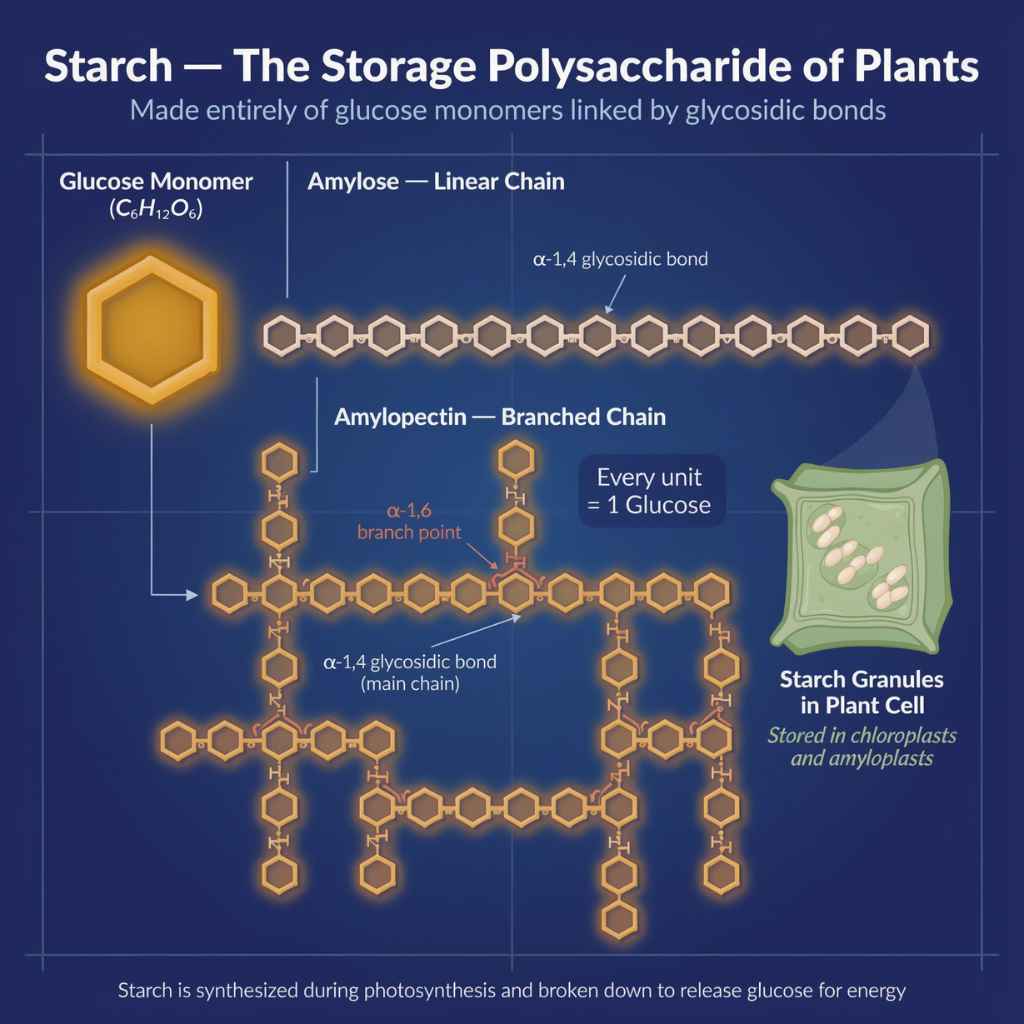
Starch is a polysaccharide. That’s a big word, but it just means it’s a long chain of sugar units. The sugar unit used is called glucose.
So, starch is a long chain of glucose molecules linked together. It’s a complex carbohydrate because it has many parts.
There are two main parts to starch. One is called amylose. Amylose is a straight chain of glucose.
The other part is called amylopectin. Amylopectin is a branched chain of glucose. This branching makes amylopectin different from amylose.
Both are needed to make up starch.
Plants make starch when conditions are good. This is when there is plenty of sunlight and water. The starch is then stored in special parts of the plant.
These parts are often where we find a lot of our food. Think of potatoes, rice, and wheat. These are all rich in starch.
How Plants Make and Store Starch
The process starts with photosynthesis. Plants use sunlight, water, and carbon dioxide to make glucose. This happens in their leaves.
This glucose is the plant’s food. It gives the plant energy to live and grow.
If the plant makes more glucose than it needs at that moment, it needs to store it. This is where starch comes in. Enzymes in the plant help link the glucose units together.
They form long chains of amylose and branched chains of amylopectin. These chains coil up to form granules.
These starch granules are then stored in plant cells. They are often found in plastids. These are small parts inside plant cells.
Different parts of the plant store starch differently. For example, seeds store starch to feed a new plant when it sprouts. Roots and tubers store starch as a reserve for tough times, like winter.
The amount of starch a plant stores depends on its type and where it lives. Some plants store a lot. Others store less.
This stored starch is a vital energy reserve for the plant. It can be broken down back into glucose when the plant needs energy again.
This cycle of making glucose, converting it to starch for storage, and then converting it back to glucose for energy is key to plant life. It allows plants to survive long periods without direct sunlight. It also helps them grow new leaves, flowers, and fruits.
Starch Facts in a Snap
What it is: A plant’s way to store energy.
Made of: Many small glucose (sugar) pieces.
Where it’s stored: Roots, seeds, fruits, stems.
Why plants store it: For energy when they need it later.
Why we eat it: It’s a main source of energy for us!
A Personal Stumble with Starch: The Forgotten Bag of Potatoes
I remember one spring, I was cleaning out my pantry. I found a bag of potatoes tucked way in the back. They had been there since last fall.
Honestly, I had completely forgotten about them. I pulled them out, and they looked… well, a bit sad. They were a little soft and had started to sprout.
My first thought was, “Can I still eat these?”
I felt a pang of annoyance at myself for being so forgetful. Then, a bit of worry. Were they safe?
What had happened to them? I remembered reading about how potatoes store energy. They are packed with starch.
This starch is what makes them filling and useful for cooking. But when they sit for too long, especially in the wrong conditions, things change.
I decided to try and salvage them. I cut off the sprouted parts and any soft bits. I then cooked them up.
They tasted okay, a little less starchy and a bit more watery than usual. It made me think about how plants manage their stored energy. That bag of potatoes was a real-life lesson on what happens when that storage system starts to break down or change over time.
Starch in Our Diet: More Than Just a Side Dish
For us humans and many animals, starch is super important. It’s one of the main ways we get energy from our food. When we eat starchy foods, our bodies break down the starch.
They turn it back into glucose. This glucose then enters our bloodstream. It’s used by our cells for energy.
Foods like bread, pasta, rice, corn, and potatoes are packed with starch. These are staples in diets all over the world. They provide a good amount of calories.
This helps us live, work, and play. Without starch, many of our favorite meals would not be as filling or provide the energy we need.
The way our bodies digest starch is pretty amazing. It starts in our mouth. Saliva has an enzyme that begins to break down starch.
Then, in our stomach and small intestine, more enzymes continue the process. They break the long chains into smaller sugars. Finally, they become glucose for our body to use.
Different foods have different types of starch. This affects how quickly our body digests them. For example, the starch in white bread is broken down quickly.
This can cause a fast rise in blood sugar. The starch in beans or whole grains is broken down more slowly. This provides a more steady release of energy.
Starch Digestion Flow
Mouth: Saliva starts breaking it down.
Stomach: Acid stops saliva enzymes.
Small Intestine: Enzymes break starch into simple sugars (glucose).
Bloodstream: Glucose is absorbed for energy.
Real-World Places You Find Starch
Starch is everywhere in the plant world. It’s a universal storage molecule for plants. You can find it in places where plants keep food for later.
This is why we tend to eat these parts of plants.
Seeds: Seeds need to store enough food to help a new plant sprout and grow. Grains like wheat, corn, rice, oats, and barley are full of starch. These are the seeds of grasses.
They are a primary food source for humans.
Roots and Tubers: Many plants store extra food underground. This helps them survive winter or dry seasons. Potatoes are a great example of a tuber.
Carrots and sweet potatoes are roots that store food. They are rich in starch (or sugars that become starch).
Fruits: Some fruits store starch. As they ripen, the starch often turns into sugar. This makes them taste sweet.
Unripe bananas, for instance, have a lot of starch. Ripe bananas have more sugar.
Stems: Some plants store starch in their stems. The sago palm, for example, produces a starchy material in its trunk. This is harvested and used as food.
Corn stalks also store some starch.
These different storage locations show how adaptable plants are. They have found many ways to save energy for future use. And we, in turn, have learned to harvest these energy stores for our own needs.
Common Starchy Foods
Grains: Rice, Wheat, Corn, Oats, Barley
Legumes: Beans, Lentils, Peas
Vegetables: Potatoes, Sweet Potatoes, Yams, Peas, Corn
Fruits: Unripe Bananas, Mangoes
Starch vs. Other Carbohydrates: What’s the Difference?
It’s easy to get sugars and starches mixed up. They are all types of carbohydrates. But they are different in how they are built and how our bodies use them.
Understanding these differences helps us make better food choices.
Sugars are the simplest carbohydrates. They are single units or two units linked together. Think of glucose (the one starch is made of) and fructose (found in fruit).
Table sugar is sucrose, which is glucose and fructose joined.
Starch, as we know, is a complex carbohydrate. It’s a long chain of many glucose units. This means it takes more work for our bodies to break down.
This slow breakdown is usually good. It gives us steady energy.
Fiber is another type of carbohydrate. It’s also made of glucose units. But our bodies can’t break down fiber into glucose.
Fiber passes through us mostly undigested. It’s very important for digestion and overall health, but it doesn’t give us energy like starch does.
So, while all are carbohydrates, their structure makes a big difference. Simple sugars give a quick burst of energy. Starch gives a longer, steadier release.
Fiber helps our gut but doesn’t provide calories.
Carbohydrate Quick Guide
Sugars: Simple (1-2 units). Quick energy.
Starch: Complex (long chains of glucose). Steady energy.
Fiber: Complex (plant material). Aids digestion, no energy.
When Starch Behavior Changes: Sprouts and Sweetness
You might have noticed that some starchy foods change over time. Potatoes that sit too long start to sprout. Bread can go stale.
What’s happening here?
Potatoes Sprouting: When potatoes are stored for a long time, they start to use up their stored starch for energy. This energy helps them grow new sprouts. The potato itself becomes a bit softer and may taste less starchy.
The sprouts are not usually harmful if removed, but they show the potato is “aging.”
Bread Going Stale: Starch molecules in bread can rearrange themselves over time. This process is called retrogradation. The starch crystals become more ordered.
This makes the bread feel dry and hard. It’s not that the starch is gone, but its texture has changed.
Ripening Fruits: As we mentioned, some fruits store starch. When they ripen, enzymes break down the starch. This creates sugars.
This is why an unripe banana is starchy and not very sweet. A ripe banana is soft and sweet because the starch has turned into sugar.
These changes show that starch isn’t static. It’s a form of stored energy that plants can access. And the way it behaves can change based on time, temperature, and plant processes.
What This Means for You: Choosing and Using Starchy Foods
Understanding starch helps you make better choices about your diet. You know that starchy foods are a good source of energy. But the type of starchy food matters.
Whole vs. Refined Grains: Whole grains (like whole wheat bread, brown rice) contain the entire grain. This includes the bran and germ, which have fiber and nutrients.
They also contain starch. Refined grains (like white bread, white rice) have had the bran and germ removed. They are mostly starch.
Whole grains generally release energy more slowly. This is often better for keeping blood sugar stable.
Cooking Methods: How you cook starchy foods can affect them. Boiling potatoes or pasta can make them easier to digest. Some research suggests that cooking and then cooling starchy foods can create something called resistant starch.
This type of starch acts a bit like fiber. It doesn’t get fully digested.
Portion Sizes: Because starchy foods are a good source of energy, paying attention to portion sizes is important. Eating too much of any food, including starchy ones, can lead to weight gain. It’s about balance.
Storage: For foods like potatoes and onions, proper storage is key. Cool, dark, and dry places help them last longer. This prevents them from sprouting or spoiling too quickly.
It helps preserve their starchy goodness.
Starch Smart Tips
Choose Whole Grains: For slower energy release and more fiber.
Watch Portions: Enjoy starchy foods in balanced amounts.
Cook and Cool: Try cooking and cooling starchy foods for resistant starch.
Store Properly: Keep potatoes and onions in cool, dark, dry spots.
Quick Tips for Starchy Foods
When you’re thinking about the starchy foods you eat, here are a few simple things to keep in mind.
Read Labels: Look at the nutrition label. See how much carbohydrate is in the food. Check for fiber content too.
This tells you a lot about what you’re eating.
Variety is Key: Don’t just eat one type of starchy food. Mix it up. Try different grains, roots, and legumes.
This gives you a wider range of nutrients.
Listen to Your Body: How do you feel after eating certain starchy foods? Do you have a lot of energy? Do you feel sluggish?
Your body can tell you a lot about what works best for you.
Don’t Fear Them: Starch is not the enemy. It’s a vital energy source. The key is to understand it and use it as part of a balanced diet.
It fuels plants and it fuels us!
Frequently Asked Questions About Starch
Is starch a sugar?
Starch is made of many glucose units, which are a type of sugar. But starch itself is a complex carbohydrate, not a simple sugar. Think of it like a long train of sugar cars, while a simple sugar is just one or two cars.
Can I eat sprouted potatoes?
Yes, you can usually eat sprouted potatoes. Just cut away the sprouts and any soft or green spots. The green parts can contain a substance called solanine, which is slightly toxic.
It’s best to remove them. Sprouting means the potato is using its stored starch to grow.
What is the difference between starch and fiber?
Both starch and fiber are made of glucose units. However, our bodies can break down starch into glucose for energy. Our bodies cannot break down fiber.
Fiber passes through our digestive system and is important for gut health.
Why do starchy foods make you feel full?
Starchy foods, especially those with fiber, can make you feel full. The fiber absorbs water and expands in your stomach. Also, the slow breakdown of starch into glucose provides a steady energy release, which can help you feel satisfied longer.
Is all starch bad for you?
No, starch is not bad for you. It’s a primary source of energy for humans. The way it’s prepared and the type of starchy food matter.
Whole, unprocessed starchy foods are generally healthier than highly refined ones.
Where is starch found in the plant besides roots and seeds?
Starch can also be stored in the stems of some plants. For example, the sago palm produces starch in its trunk. Some fruits, like unripe bananas, also store starch which converts to sugar as they ripen.
The Big Starch and Our World
So, that’s the story of starch. It’s a fundamental part of plant life. It’s how they store precious energy.
And it’s a huge part of our food supply. From the bread we eat to the potatoes we mash, starch is working behind the scenes.
Understanding starch helps us appreciate plants more. It shows how nature has amazing ways to store and use energy. It also helps us make smarter choices about what we eat.
Remember, it’s all about balance and knowing what’s on your plate.