How to Make an Automated Watering System in Your Apartment
Making an automated watering system in your apartment is a smart way to keep your plants healthy without daily attention. This guide walks you through building a simple, reliable setup using affordable components.
Simply put, an automated watering system uses a timer, pump, tubing, and drip emitters to deliver water to your plants on a set schedule. It works with any indoor plant setup and can be built for under $50 using common items.
Key Takeaways
- Making an automated watering system requires a water source, tubing, emitters, and a timer or controller.
- You can customize the system for different plant types and pot sizes in your apartment.
- DIY kits and off-the-shelf components make the project accessible for most beginners.
- Proper installation prevents leaks and ensures consistent water delivery to every plant.
- Regular maintenance like cleaning filters extends the system’s lifespan and reliability.

What You Need for an Automated Watering System
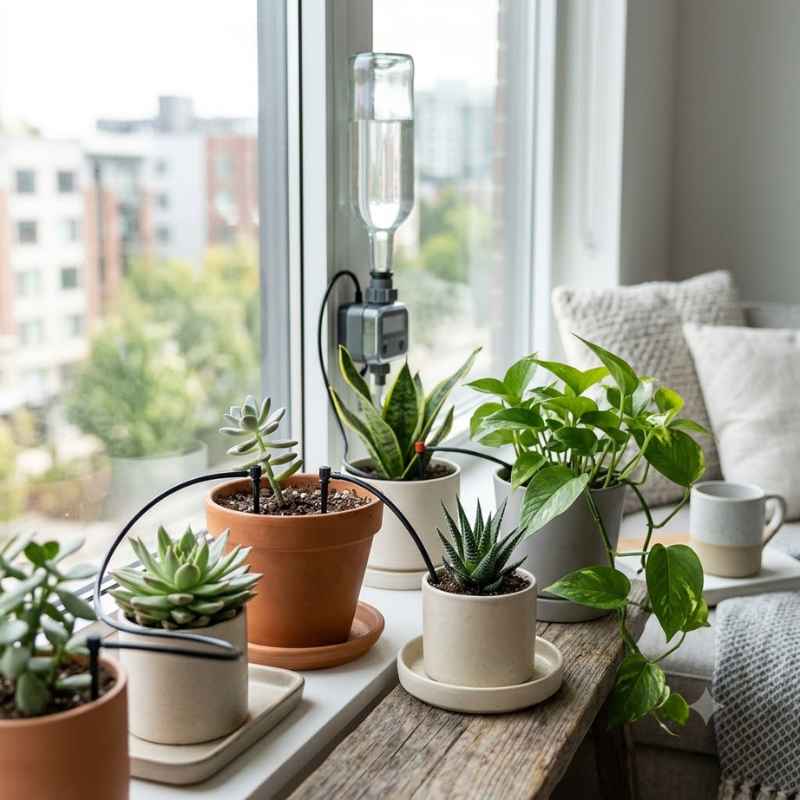
Before you start, gather the essential components. The core of your system includes a water reservoir, a pump or gravity feed, tubing, connectors, and drip emitters. Many apartment setups rely on a simple timer that plugs into a wall outlet and controls the pump.
According to a 2023 survey by the National Gardening Association, 35% of indoor plant owners use some form of automated watering to reduce maintenance. Choosing the right parts depends on your plant count and layout.
- Water reservoir: a 5-gallon bucket or large container works best
- Submersible pump: 200-400 GPH for most apartment systems
- Timer or smart plug: programmable for daily or weekly schedules
- 1/4-inch drip tubing: flexible and easy to cut
- Drip emitters: adjustable flow rates (0.5-2 GPH)
- Connectors and tees: to split tubing between plants
- End caps: to seal unused tubing ends
Tip: Use a opaque reservoir to prevent algae growth. Covering the bucket with a dark fabric or paint blocks light and keeps water clean.
Prices for basic kits start around $30 on Amazon or at hardware stores. For a custom build, expect to spend $40 to $70, depending on pump quality and timer features.
How to Build the Automated Watering System Step-by-Step
Building a functional system takes about two hours. Follow these steps for a reliable setup that waters your plants without flooding your space.
Step 1: Choose Your Water Source
Select a reservoir that fits under your sink, in a cabinet, or beside your plant area. A 5-gallon bucket provides enough water for 10-15 medium pots for several days. Place the reservoir on a stable surface to avoid tipping.
- Measure the space where the reservoir will sit.
- Test the pump’s tubing connection by running it briefly in water.
- Position the reservoir so tubing can reach all pots without kinks.
Step 2: Set Up the Pump and Timer
Connect the pump to the timer or smart plug. Program the timer to water once or twice daily, typically for 5 to 15 minutes each session. The Environmental Protection Agency notes that automated systems can reduce water waste by up to 30% compared to hand watering.
- Use a digital timer with battery backup for reliability.
- Set watering duration based on pot size and plant type.
- Place the pump at the bottom of the reservoir for maximum suction.
Important: Always use a GFCI outlet near water sources. This safety device prevents electrical shock in case of leaks or spills.
Step 3: Run the Main Tubing Line
Cut the main 1/4-inch tubing from the pump to the farthest pot. Use a single continuous line or split it with tees for multiple branches. Secure the tubing along walls or under shelves with adhesive clips.
A study from the University of Vermont Extension found that drip irrigation uses 20-50% less water than overhead watering. Proper routing ensures even distribution to all plants.
- Measure the distance from reservoir to each pot.
- Cut tubing slightly longer than needed for adjustments.
- Attach a tee at each pot location to branch off a drip line.
- Use end caps to close the main line after the last pot.
Step 4: Install Drip Emitters
Insert a drip emitter into the end of each branch line. Adjustable emitters let you control flow per plant. Succulents need minimal water, while ferns require more.
Test the system by running it for one cycle and checking each pot.
- Place emitters near the base of each plant, not on leaves.
- Use 0.5 GPH emitters for small pots, 2 GPH for large ones.
- Monitor runoff; if water pools, reduce duration or emitter size.
| Plant Type | Emitter Flow (GPH) | Watering Duration (min/day) |
|---|---|---|
| Succulents | 0.5 | 5 |
| Pothos | 1.0 | 10 |
| Ferns | 2.0 | 15 |
Adjust these values based on your apartment’s humidity and temperature. Dry climates require longer watering times.
Step 5: Test and Fine-Tune
Run the system for three days while checking soil moisture. Use a moisture meter to confirm each pot gets enough water. The University of Florida IFAS Extension recommends aiming for moist soil, not saturated.
- Check for leaks at connectors after each cycle.
- Adjust timer settings if plants show signs of over- or underwatering.
- Clean the pump filter monthly to prevent clogs.
Warning: Avoid placing the pump directly on sediment in the reservoir. Elevate it using a small platform or mesh bag to keep debris out of the system.
Common Mistakes to Avoid When Building Your System
Even experienced plant owners make errors that waste water or damage plants. Knowing these pitfalls saves time and money. A common mistake is using tubing that’s too small, which restricts flow to distant pots.
Another issue is placing the timer in a location without proper ventilation. Overheating can cause the timer to fail mid-cycle, leading to dry plants.
- Using clear tubing: encourages algae growth inside the line
- Skipping a pressure regulator: can cause emitters to pop off
- Overcrowding the reservoir: limits pump access to water
- Ignoring plant grouping: mixing high- and low-water plants on the same line
- Forgetting to winterize: freeze damage occurs in cold apartments
The American Society of Agricultural and Biological Engineers reports that improper system design leads to 15% more water waste. Planning ahead avoids these issues.
How to Maintain Your Automated Watering System
Routine maintenance keeps your system running smoothly for years. Check the pump filter every month and flush the tubing with vinegar water to remove mineral deposits. If you notice uneven watering, inspect emitters for clogs.
Replace tubing every 12-18 months if it becomes brittle from UV exposure near windows. Smart plugs with energy monitoring can track pump power usage and alert you to failures.
- Flush system with clean water every 3 months.
- Disassemble and clean emitters with a pin or brush.
- Store the pump in water during off-season to prevent seals from drying.
- Test the timer’s battery backup annually.
| Task | Frequency | Tools Needed |
|---|---|---|
| Clean pump filter | Monthly | Old toothbrush, vinegar |
| Flush tubing | Every 3 months | Vinegar, bucket |
| Replace tubing | 12-18 months | Scissors, new tubing |
Following this schedule prevents most breakdowns and keeps your plants hydrated.
Benefits of an Automated Watering System for Apartment Plants
Automated watering gives you freedom while ensuring consistent care. You can travel or work long hours without worrying about thirsty plants. The Royal Horticultural Society notes that regular moisture levels reduce plant stress and improve growth.
Additionally, automated systems save water by targeting roots directly, avoiding runoff. This efficiency is key in apartments where water conservation matters. Many renters find that a well-maintained system increases property value and indoor air quality.
- Reduces daily maintenance time to nearly zero
- Prevents overwatering and root rot issues
- Works with any pot size or material
- Scalable for larger plant collections
- Low upfront cost for long-term convenience
Tip: Pair your automated system with a moisture sensor that adjusts the schedule based on soil humidity. Smart sensors like the Xiaomi Flower Care are cost-effective and integrate with phone apps.

Frequently Asked Questions
Can I make an automated watering system without a pump?
Yes, you can use gravity-fed drip systems with a raised reservoir. Place the water container above plant level, and tubing will carry water down using gravity. This works best for plants on lower shelves or floor level.
How long does it take to install an automated watering system?
For a basic setup with 5-10 pots, installation takes about 1-2 hours. More complex systems with multiple zones may require 3-4 hours. Most of the time is spent cutting tubing and testing connections.
What size pump do I need for apartment plants?
A submersible pump with 200-400 gallons per hour (GPH) handles up to 20 pots. For larger setups over 30 plants, choose a 500 GPH pump. Always match pump capacity to tubing length and number of emitters.
How often should I water plants with an automated system?
Start with once daily for 10 minutes for most houseplants. Succulents need every 2-3 days for 5 minutes. Adjust based on plant type, pot size, and room temperature.
Monitor soil moisture with a meter for precision.
Will an automated watering system work during a power outage?
If you use a battery-backed timer, the schedule will resume after power returns. Gravity-fed systems continue working without power. For pump systems, keep a manual watering backup for extended outages.
Final Thoughts
Making an automated watering system in your apartment is a simple weekend project that delivers big rewards. You save time, reduce water waste, and keep plants healthier with consistent moisture. Start with a basic kit and expand as your plant collection grows.