Which Gardening Method Grows Plants Without Soil? Here’S How
Growing plants without soil is possible through several innovative methods like hydroponics, aquaponics, and aeroponics. These techniques provide plants with the nutrients they need through water-based systems, bypassing the need for traditional dirt.
Understanding Soil-Free Gardening: What is It?
So, what exactly is growing plants without soil all about? Think of it as giving your plants a custom-made drink. Instead of getting food from dirt, plants get their nutrients directly from water.
This is super interesting because soil does two main things for plants. It holds them up. And it feeds them.
Soil-free methods figure out ways to do both of these jobs differently.
The basic idea is simple. Plants need water, light, and food to live. Food for plants means nutrients.
We usually think of nutrients coming from the soil. But they are just minerals dissolved in water. Soil-free systems deliver these dissolved nutrients right to the plant’s roots.
They often do this faster and more directly than soil can.
This approach has a few big pluses. You can grow plants in places where soil is bad. Or where there isn’t any at all.
Like in a city apartment. Or on a rooftop. It can also help plants grow faster.
And use less water. Because the water is used over and over. It’s a smart way to garden.

My First Soil-Free Adventure: A Tiny Tomato Tale
I remember my first attempt at growing something without soil. It was a few years ago. I had a tiny balcony.
The soil there was mostly clay. And it dried out super fast. I read about hydroponics.
It seemed complicated at first. All those pipes and pumps. I decided to try a simple DIY setup.
It was a small bucket system. I put a tomato seedling in it. I mixed up the nutrient solution.
It was a strange, colored liquid. I watched it closely. Days turned into weeks.
The plant looked happy. It grew taller. Then, small yellow flowers appeared.
I was so thrilled! It was proof. Plants really can grow without dirt.
Seeing those little tomatoes start to form was a victory. It felt like I had unlocked a gardening secret.
Hydroponics at a Glance
What it is: Growing plants in water with added nutrients.
How it works: Roots are submerged in or periodically bathed with nutrient-rich water.
Key benefits: Faster growth, less water use, no soil pests.
Common types: Deep Water Culture (DWC), Nutrient Film Technique (NFT), Drip Systems.
Hydroponics: The Nutrient Water System
Let’s talk about the most popular method first: hydroponics. The word itself tells us a lot. “Hydro” means water.
“Ponics” means working. So, hydroponics is working with water. In this system, plant roots are not in soil.
They are in a special water mix. This mix has all the plant food. It has minerals and salts.
These are the things plants need from soil.
There are many ways to do hydroponics. Some systems have roots sitting right in the water. Others have the water flow past the roots.
Some mist the roots with water. All of them make sure the roots get what they need. This includes oxygen too.
That’s important for healthy roots.
Think about how plants eat in soil. Soil particles hold water. And nutrients.
Plant roots reach out to find them. In hydroponics, the nutrients are already there. They are dissolved in water.
The roots can absorb them very easily. This means the plant doesn’t have to work as hard. It can put that energy into growing bigger and faster.
This is why plants in hydroponic systems often grow quickly. And produce more fruit or flowers. You can grow things like lettuce, herbs, tomatoes, and peppers this way.
It’s very efficient.
Deep Water Culture (DWC) Explained
Concept: Plant roots hang down into a tank of nutrient-rich water.
How it’s done: An air pump adds oxygen to the water. This keeps roots from drowning.
Best for: Leafy greens like lettuce and spinach. Also herbs.
Simplicity: One of the easiest hydroponic methods to set up.
One common type of hydroponics is Deep Water Culture, or DWC. Imagine a container filled with water and nutrients. You put net pots holding your plants into holes in the lid.
The bottom of the plant roots dangle into the water. An air stone connected to an air pump bubbles air into the water. This makes sure the roots get oxygen.
It’s a very direct way to feed plants.
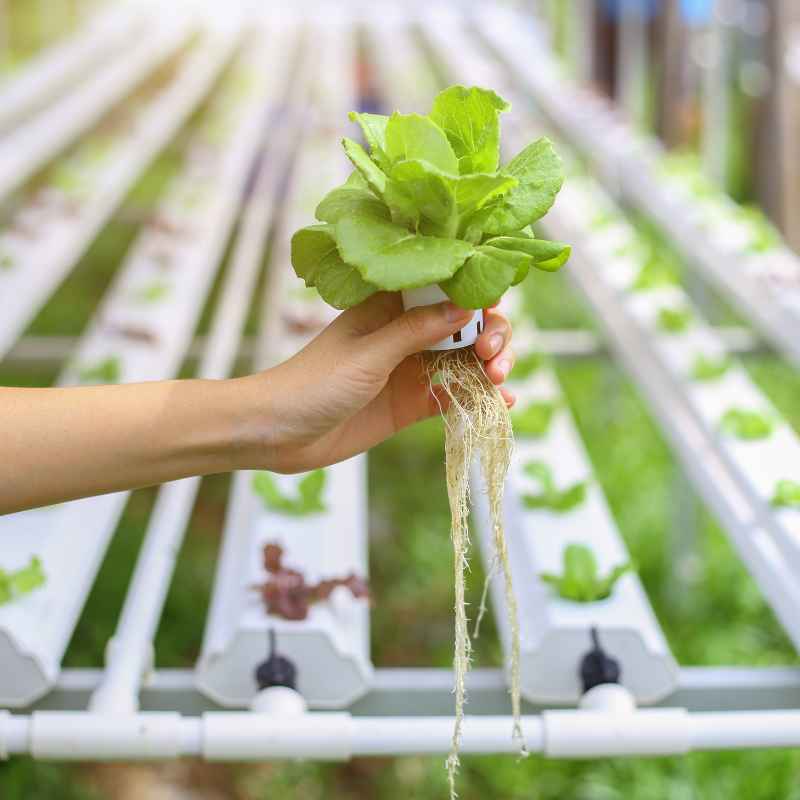
Another popular one is the Nutrient Film Technique (NFT). Here, a shallow stream of nutrient water flows over the plant roots. The roots are usually in channels.
The water flows in a loop. It gets oxygenated as it travels. This method is great for saving space.
It’s often used for growing many small plants.
Drip systems are also common. A pump sends nutrient water to the base of each plant. It drips onto the roots.
Then the extra water drains away. This can be set up in many ways. It’s quite flexible for different plants.
Aquaponics: The Fish and Plant Partnership
Now, let’s explore aquaponics. This is a really neat system. It combines farming fish with growing plants.
It’s a natural cycle. Fish live in a tank. They eat food.
They poop. Their waste contains ammonia. This ammonia is toxic to fish.
But plants love it! Well, not ammonia directly, but its breakdown products.
In an aquaponic system, the fish tank water is pumped to a grow bed. This grow bed has plants in it. The plants are often in a material like clay pebbles.
These pebbles give the roots something to hold onto. Bacteria live on these pebbles. These bacteria are like tiny helpers.
They take the ammonia from the fish waste. They turn it into nitrates. Nitrates are food for plants.
The plants soak up these nitrates. This cleans the water. The clean water then flows back to the fish tank.
So, the fish get clean water. And the plants get food. It’s a perfect team effort.
It uses way less water than traditional farming.
What’s cool about aquaponics is that it’s very sustainable. You’re not adding chemical fertilizers. The fish provide the nutrients.
You just need to feed the fish. And make sure the water is balanced. You can grow a variety of plants.
Leafy greens are very popular. Herbs and even some fruiting plants do well.
Aquaponics: A Quick Look
Concept: Growing plants and raising fish together in one symbiotic system.
How it works: Fish waste provides nutrients for plants, and plants filter the water for fish.
Key benefits: Sustainable, organic, conserves water, dual harvest (fish and plants).
Requires: Careful balancing of fish, plants, and beneficial bacteria.
Setting up an aquaponics system can range from simple to complex. Many people start with a small home setup. It might involve a fish tank.
And a grow bed above it. Or beside it. Water is pumped from the fish tank to the grow bed.
It flows through the plant roots. Then it returns to the fish tank.
There are different types of aquaponic systems too. Like media-based systems. This is where the plants are in a bed of gravel or clay pebbles.
There are also Deep Water Culture aquaponics. And Nutrient Film Technique aquaponics. They all use the same basic idea.
But the way plants are supported and watered differs.
It’s a fascinating way to garden. You get fresh produce. You can raise edible fish.
And you’re doing it in a way that’s good for the environment.
Aeroponics: Growing Plants in the Air
Now for something that sounds even more futuristic: aeroponics. In this method, plant roots hang in the air. They are in a dark chamber.
This chamber is usually sealed. But the roots are not dry. They get misted.
A special spray nozzle mists the roots. This mist is made of water and nutrients. It happens at regular intervals.
This system is very efficient. The roots get lots of oxygen. Because they are mostly in the air.
The mist delivers nutrients directly. It’s a very precise way to feed plants. Some people say aeroponics can make plants grow even faster.
Than hydroponics. Because the roots have so much air.
Aeroponics: Mist and Grow
Concept: Suspending plant roots in the air and misting them with nutrient-rich water.
How it works: A pump and misting nozzles deliver water and nutrients to exposed roots.
Key benefits: Extremely rapid growth, minimal water usage, high oxygenation for roots.
Considerations: Relies heavily on pump and timer function; power outages can be critical.
Aeroponic systems usually have a reservoir. This holds the nutrient solution. A pump pushes the solution to misting nozzles.
These nozzles spray a fine mist onto the suspended roots. A timer controls the pump. It tells it when to mist.
And for how long. It’s important to get the timing just right. Too little mist, and roots dry out.
Too much, and they might not get enough air.
This method is often used in commercial farming. Because it’s so good at producing crops quickly. But you can also build simple aeroponic systems at home.
They might look a bit like the hydroponic systems. But instead of water flowing past roots, roots are misted.
One type is called low-pressure aeroponics. This is what I described. A pump and nozzles create a mist.
High-pressure aeroponics uses very fine mists. It’s more complex. But very effective.
It’s amazing to think about. Plants thriving with just water mist. And no soil at all.
It really shows how adaptable life is.
Real-World Scenarios: Where Soil-Free Shines
These soil-free gardening methods aren’t just for hobbyists. They have real-world uses. Think about urban farming.
Cities have lots of buildings. Not a lot of open land. Hydroponic and aeroponic farms can be set up indoors.
In warehouses or shipping containers. They can grow fresh food right where people live. This reduces the need to ship food long distances.
It also means fresher produce.
Another place they shine is in areas with poor soil. Or places with very little water. Deserts, for example.
Or regions with heavy pollution. Soil-free systems can make gardening possible. They use much less water than traditional methods.
Some studies show they can use up to 90% less water. This is a huge benefit in dry climates.
We also see these methods used in research. Scientists use them to study plant growth. They can control the nutrients exactly.
This helps them understand plant needs better. Space exploration is another area. Growing food in space needs efficient systems.
Hydroponics and aeroponics are strong contenders.
Consider people with mobility issues. Or those who can’t easily do heavy digging. Soil-free systems can be set up at waist height.
Or on tables. This makes gardening more accessible. It’s about adapting gardening to people’s lives.
Soil-Free vs. Soil: A Quick Comparison
Soil Gardening:
- Pros: Natural, forgiving, wide range of plants, lower initial cost for basic setups.
- Cons: Soil quality varies, can attract soil pests and diseases, requires digging and weeding, can use more water.
Soil-Free Gardening:
- Pros: Faster growth, higher yields, less water use, no soil-borne pests, can grow anywhere.
- Cons: Can be more complex to set up, requires electricity for pumps, nutrient solutions need monitoring, higher initial cost for some systems.
My friend Sarah lives in a small apartment. She has no balcony. She built a small hydroponic system under her grow lights.
She grows all her own herbs. And some small peppers. She told me it changed her cooking.
Having fresh basil or mint anytime is wonderful. It shows how soil-free gardening can fit into any home.
What This Means for Your Garden (or Window Sill!)
So, does this mean you should give up on soil? Not at all! Soil gardening is wonderful.
It’s natural. It connects us to the earth. But knowing about soil-free methods opens up new possibilities.
When is it normal to consider these methods? If your soil is very poor. Or if you have very little space.
If you want to grow plants indoors year-round. Or if you want to grow faster. And maybe use less water.
When should you worry? With soil-free systems, you need to monitor them. If a pump fails, roots can dry out quickly.
If nutrient levels are wrong, plants won’t grow well. Or they might get sick. It’s about paying attention.
For hydroponics and aeroponics, power outages can be a big concern. For aquaponics, keeping the fish healthy is key. If the fish are stressed, the plants will be too.
A simple check for hydroponics is to look at the water level. And check the color of the nutrient solution. For aquaponics, check the fish.
Are they active? Are they eating? Are the plants looking green and healthy?
It’s not about replacing soil gardening. It’s about adding more tools to your gardening toolbox. You can even combine methods.
Imagine a small aquaponic system on your kitchen counter. It provides fresh herbs. And adds a bit of green beauty.
It’s about making gardening work for you.
Quick Tips for Trying Soil-Free Methods
If you’re inspired to try a soil-free method, here are some tips:
- Start Small: Don’t try to build a huge system right away. A small DIY kit for herbs or lettuce is a great start.
- Do Your Research: Each system has its own needs. Understand the nutrient requirements for your plants. Know how to manage pH levels.
- Get Good Lighting: If you’re growing indoors, good grow lights are essential. Plants need light to make food.
- Monitor Regularly: Check water levels, nutrient strength, and pH every few days. For aquaponics, keep an eye on your fish.
- Use Quality Nutrients: For hydroponics, buy a good nutrient mix designed for soilless growing. Don’t guess!
- Consider a Timer: For aeroponic and some hydroponic systems, a timer for pumps is crucial.
- Learn About Beneficial Bacteria: If you’re doing aquaponics, understanding the nitrogen cycle and the bacteria involved is key.
Choosing Your Soil-Free Path
For Beginners:
- Hydroponics (DWC): Simple setup, great for leafy greens.
- Aquaponics (Small Scale): Can be rewarding, provides two harvests.
For Faster Growth:
- Aeroponics: The speed king, but requires precise control.
- Hydroponics (NFT): Efficient and quick for many crops.
For Sustainability:
- Aquaponics: Uses fish waste, creating a natural cycle.
The goal is to make gardening accessible and successful. These soil-free methods offer new ways to achieve that. They are exciting developments in how we grow our food and plants.
It’s about innovation and working with nature in different ways.

Frequently Asked Questions About Soil-Free Growing
Can I really grow anything without soil?
You can grow a wide variety of plants without soil. Leafy greens like lettuce, spinach, and kale do very well. Herbs like basil, mint, and parsley are also excellent choices.
Many fruiting plants such as tomatoes, peppers, and strawberries can be grown too. Root vegetables like carrots and potatoes are trickier. They usually need a medium to grow in.
So, while not everything is ideal, many common garden plants thrive.
Is hydroponics hard to set up?
Setting up hydroponics can range from very easy to moderately complex. Many beginner kits are available. They are designed for simplicity.
You can also find many guides for DIY setups. These often use common household items. The main things to learn are about nutrient solutions and pH levels.
With a little effort, it’s very doable for most people.
How do I feed plants without soil?
Plants are fed by providing them with essential nutrients dissolved in water. In hydroponics, you mix special nutrient salts into water. In aquaponics, fish waste provides these nutrients after bacteria process them.
In aeroponics, the nutrient solution is misted directly onto the roots. These nutrients are the same minerals plants would get from soil, just delivered differently.
Do I need electricity for soil-free gardening?
Most soil-free gardening systems require electricity. This is usually for pumps that move water or for air pumps that add oxygen. Aeroponic systems rely heavily on pumps and timers.
Even simple hydroponic setups often use an air pump. If you are in an area with frequent power outages, you might need a backup power source. Or choose a very simple, passive hydroponic system.
Is aquaponics suitable for beginners?
Aquaponics can be rewarding for beginners, but it does have a learning curve. You need to manage both the fish and the plants. Understanding the nitrogen cycle and the role of beneficial bacteria is important.
Starting with a small, simple system is recommended. Many kits are designed for beginners. It’s a bit more involved than basic hydroponics, but very sustainable.
What are the main differences between hydroponics, aquaponics, and aeroponics?
The main difference is how plants get their nutrients and support. Hydroponics uses nutrient-rich water. Aquaponics uses fish waste converted by bacteria.
Aeroponics suspends roots in the air and mists them with nutrients. All three methods bypass soil. They offer ways to grow plants more efficiently and in different environments.
The Future of Soil-Free Gardens
Exploring ways to grow plants without soil is exciting. It shows us that gardening can adapt. It can fit into smaller spaces.
It can be more efficient. And more sustainable. Whether you’re in a city apartment or have a large yard, these methods offer new ways to connect with growing things.
It’s about innovation meeting nature. And finding what works best for you and your plants.