Which Soil Classification Allows For Vertical Walls? Find Out
It’s a question that pops up when you’re digging a garden, planning a foundation, or just watching a construction crew at work. Why do some holes stay neat and tidy, while others crumble in on themselves? It all comes down to the dirt, the soil beneath our feet. Understanding soil types is key to knowing what can stand up on its own. Some dirt is happy to lean, while other dirt just wants to fall down.
This might seem like a small thing, but it matters a lot. For builders, it means safer work. For gardeners, it means less frustration. We’re going to explore the different kinds of soil. We’ll see why some soil types are great for building straight up. We’ll also learn why other soils just can’t hold a vertical wall. Get ready to understand your ground like never before.
The soil classification that generally allows for vertical walls, especially in the short term and under specific conditions, is cohesive soil, particularly clays and silts. However, even these soils have limitations and often require support like shoring or reinforcement for stable, long-term vertical excavations. Clean, angular granular soils like gravel can also stand vertically if they are clean and well-graded.
Understanding Soil Types: What’s the Difference?
Soil isn’t just dirt. It’s made of tiny pieces. These pieces come from rocks and other things that break down over time. We call these pieces “grains” or “particles.” The size of these grains is a big deal. It tells us a lot about the soil. It also tells us how the soil will act.
We can group soils by how big these grains are. We have big grains and tiny grains. Big grains make up sandy soils. Tiny grains make up clay soils. In between, we have silty soils. The way these grains stick together is also important. This sticking power helps soil hold its shape.
Sand: The Gritty Explorer
Sandy soil feels rough. You can feel the little grains when you rub it between your fingers. Sand grains are pretty big. They don’t stick together very well on their own. When you try to make a vertical wall with just sand, it usually doesn’t work. The sand grains just roll away from each other.
Water also runs through sand very fast. This means sand can dry out quickly. It doesn’t hold much moisture. Because the grains are loose, it’s hard for sand to keep a straight shape. Think about a sandcastle. You need to pack it wet to make it hold. Dry sand just falls apart.
Silt: The Smooth Operator
Silty soil feels smoother than sand. It’s not as rough. It’s kind of like flour or talcum powder. Silt particles are smaller than sand but bigger than clay. Silt has a bit more “stickiness” than sand. This means it can hold together a little better.
Silt can hold some water. This helps it bind together. A wall made of pure silt might stand up for a short time. But it’s not very strong. If it gets too wet, it can become soft and wash away. If it dries out too much, it can crack.
Clay: The Sticky Star
Clay soil feels very smooth and sticky. When it’s wet, it feels like mud. When it’s dry, it can be hard like a rock. Clay particles are the smallest. They are so tiny you can’t see them easily. These tiny particles are what give clay its special power.
Clay particles cling to each other. This is because of electrical charges. This clinging is called “cohesion.” It’s what lets clay hold its shape. A wall made of clay can stand up straight, especially if it’s not too wet or too dry. This is why clay soils are the best for vertical walls.
Gravel and Rock: The Strong Holders
Gravel is made of bigger pieces of rock. These are much larger than sand. Clean, angular gravel can actually stand up quite well. The pieces lock together. They can form a stable wall. This is often used in construction for drainage or as a base.
Solid rock is the ultimate for vertical walls. It’s what bridges and skyscrapers sit on. But we’re talking about soil here. So, while rock is strong, it’s not usually what we mean by “soil classification” for this purpose.
Soil Grain Sizes at a Glance
Sand: 0.075 mm to 2 mm (Feels gritty)
Silt: 0.002 mm to 0.075 mm (Feels smooth, like flour)
Clay: Less than 0.002 mm (Feels sticky, smooth)
Note: These sizes are standard classifications.

My First Time Trying to Dig a Deep Hole
I remember being a kid, maybe eight years old. My dad was building a small fence in the backyard. He had a big pile of dirt next to the hole he was digging. I thought it would be fun to dig my own hole right next to it. I grabbed a small shovel and started digging.
My goal was to dig a hole as deep as I could. The dirt I was digging was mostly sand with some small stones. As I dug deeper, the sides of my little hole started to lean. Then, in a rush, the whole side just collapsed. Dirt spilled into my hole. I felt a bit frustrated, but also kind of amazed by how it just fell.
I kept trying, but every time I got a little depth, the walls would slide. It was clear this sand just couldn’t hold itself up straight. Dad chuckled and told me that’s why they sometimes put boards in the trenches. I didn’t fully get it then, but I saw firsthand how different dirt behaves.
Cohesion: The Secret to Standing Walls
So, what makes some soils stand up straight while others don’t? The big word here is cohesion. Cohesion is the force that holds soil particles together. Think of it like glue. Some soils have a lot of natural glue, and some don’t.
Clay soils have high cohesion. The tiny clay particles are like magnets. They attract each other. This makes the soil mass strong. It can resist the forces trying to pull it apart.
Sandy soils have very low cohesion. The sand grains just sit next to each other. They don’t really stick. They rely on friction to stay in place. But if you tilt the pile too much, that friction isn’t enough.
Cohesion: More Than Just Sticky
What it is: The attraction between soil particles.
Why it matters: Allows soil to hold its shape.
Which soils have it: Clay and silt soils have good cohesion.
Which soils lack it: Sandy and gravelly soils have low cohesion.
Understanding Soil Classification Systems
Engineers and scientists have ways to classify soils. This helps them talk about soil in a clear way. It also helps them predict how soil will behave. One common system is the Unified Soil Classification System (USCS).
USCS groups soils based on their grain size and their behavior. It uses letters to represent different soil types. For example, ‘S’ means sand, ‘M’ means silt, and ‘C’ means clay.
Pure sands are often ‘SP’ or ‘SW’ (poorly or well-graded sands). Pure silts are ‘ML’ or ‘MH’ (low or high plasticity silts). Pure clays are ‘CL’ or ‘CH’ (low or high plasticity clays). Plasticity is a measure of how much clay can be deformed without breaking. High plasticity means it’s very sticky and can be molded.
The Power of Clay and Silt Mixtures
Often, soils aren’t just one thing. They are a mix. A soil might have sand, silt, and clay all together. The amount of each matters. A soil with a lot of clay in it will behave more like clay. It will have more cohesion.
For example, a soil called “silty clay” (which might be ‘CL’ or ‘CH’ depending on plasticity) has a good amount of silt and clay. This soil can form strong walls. It has both the small particle size of clay and the somewhat binding nature of silt.
Even lean clays (clays with more sand or silt) can hold a vertical face better than clean sand. The small amount of clay acts as a binder. It holds the larger sand grains together. This gives the soil some stability.
Real-World Construction: When Walls Matter
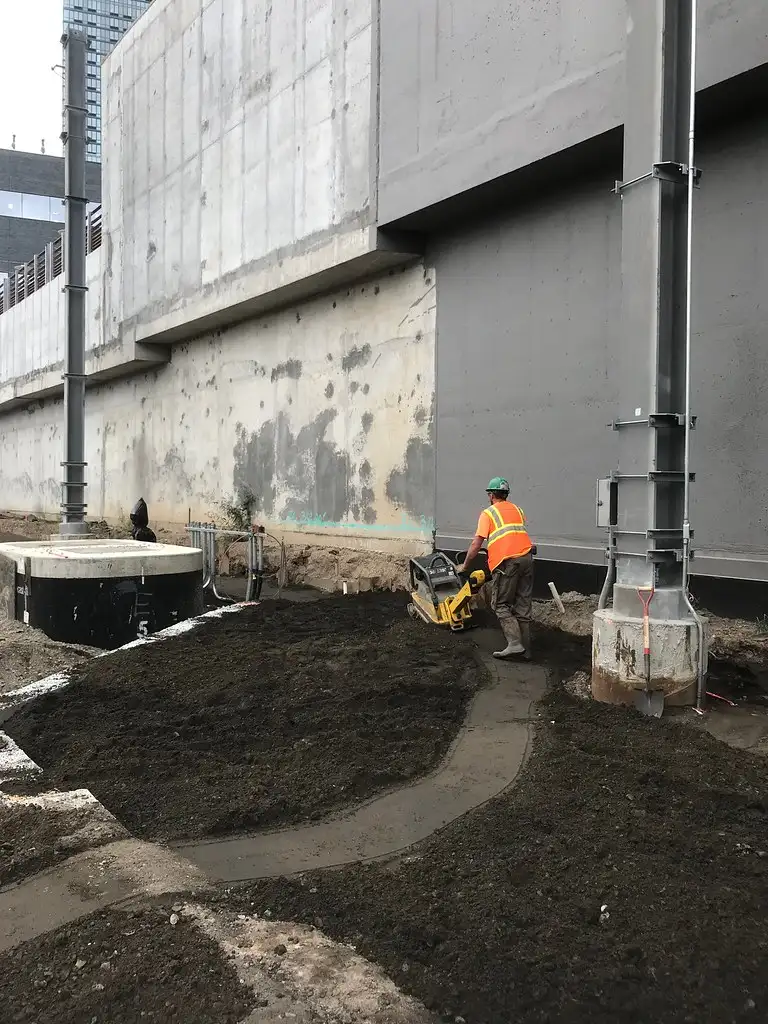
In construction, digging trenches for pipes or foundations is common. These trenches need to be safe. If the soil is not stable, the sides can collapse. This is a major danger for workers. That’s why soil classification is so important.
Construction companies use soil reports. These reports tell them what kind of soil is on the site. Based on the soil type, they decide if they need to support the walls of the excavation. They might use wooden planks, steel plates, or even concrete.
If the soil is a stable clay, they might only need to shore it up a bit. If it’s loose sand, they will need much stronger support. They might even have to dig at an angle instead of straight down.
Soil and Safety on the Job Site
- Loose Sands: High risk of collapse. Need strong support.
- Silty Soils: Moderate risk. Can be unstable when wet.
- Clay Soils: Lower risk when stable. Can stand vertically briefly.
- Mixtures: Behavior depends on the dominant type and cohesion.
Always consult an expert for site-specific safety.
What About Water? It Changes Everything
We’ve talked a lot about the soil itself. But water is a huge factor. Water can make even the best soil start to fail. For sandy soils, water can help them stick together a bit. Think about building a sandcastle. Wet sand holds its shape better than dry sand.
However, too much water is bad for all soils. For clay, when it gets saturated, it can turn into a slurry. It loses all its strength. It can flow. This is called “liquefaction” in extreme cases, but even normal saturation makes clay walls weak.
Water also adds weight. The soil particles have to hold up not just themselves, but the water between them. This extra pressure can cause a wall to fail.
When looking at soil for vertical walls, especially in excavation, the water table is very important. If the water table is high, the soil will be saturated. This makes it much harder to keep the walls up.
Water’s Impact on Soil Stability
Dry Sand: Crumbles easily.
Damp Sand: Holds shape temporarily (good for sandcastles).
Wet Sand: Can flow, less stable than damp.
Dry Clay: Can be hard, prone to cracking.
Moist Clay: Best for holding shape, good cohesion.
Saturated Clay: Loses strength, can become like mud.
Can Any Soil Hold a Perfect Vertical Wall?
In theory, very dense, cohesive clay soils can hold a vertical wall for a period. This is especially true if they are not disturbed by water or vibrations. They have the internal strength to resist gravity for a while.
However, in the real world, especially for excavations that need to last, it’s rare for soil to stand perfectly vertical without any support. There are always forces at play.
Think about frost heave in winter or the pressure from nearby buildings. Even the simple act of digging can destabilize the soil next to it. So, while clay is the best for verticality among soils, safety often means adding support.
Engineers often talk about the “angle of repose.” This is the steepest angle at which a pile of material can remain stable. For loose sand, it’s quite shallow. For clay, it can be much steeper, even close to 90 degrees in ideal conditions.
When Is a Vertical Wall Okay (and When Is It Not)?
It’s crucial to know when a vertical wall is acceptable and when it’s a big risk. This depends on the soil type, the depth of the excavation, and the expected conditions.
For shallow holes, like digging a small planting bed, the soil might hold for a bit. If you’re digging a few inches deep and the soil is clay, it might stay straight for a short time. This is usually fine.
But if you’re digging more than about 4-5 feet deep, the risks increase a lot. In the U.S., OSHA (Occupational Safety and Health Administration) has strict rules for trench safety. They require protective systems for trenches deeper than a certain point, depending on the soil.
Basically, if there’s any doubt, assume you need support. It’s better to be safe than sorry. Soil can be unpredictable.
Digging Safely: Key Factors
Depth: Deeper holes mean more pressure and higher risk.
Soil Type: Clay and silt are better than sand. Loose soil is dangerous.
Water: Saturated soil is much weaker.
Vibrations: Nearby traffic or equipment can shake soil loose.
Weather: Rain, frost, and heat can all affect stability.
What This Means for Your Garden or Project
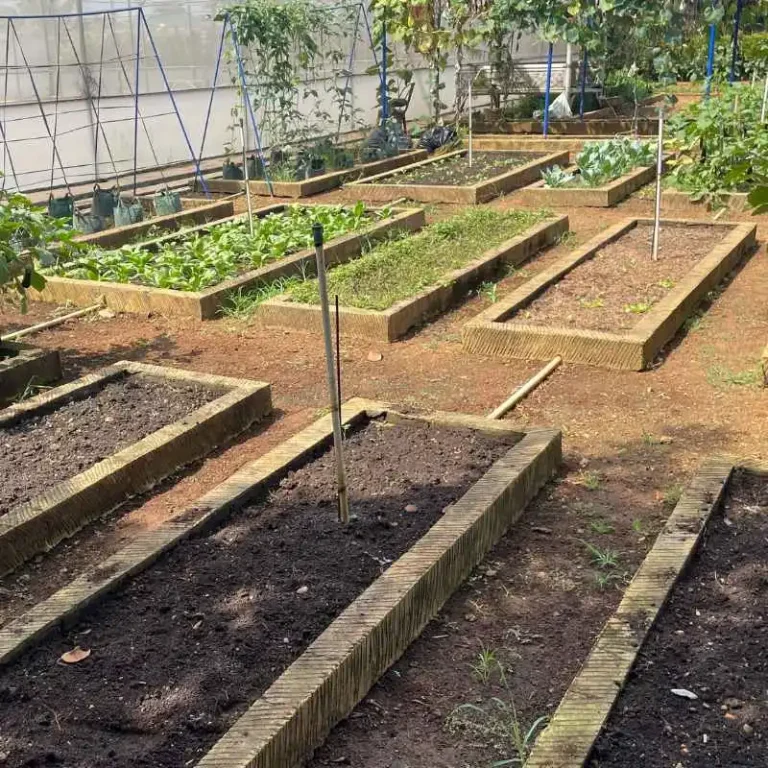
If you’re planning to dig in your yard, understanding your soil is the first step. If you have mostly clay soil, you’ll find it easier to create defined edges for garden beds. You might even be able to dig small trenches for irrigation without them collapsing immediately.
If you have sandy soil, embrace its nature. Maybe create gentle slopes or use edging materials to hold it in place. Trying to force sandy soil into sharp vertical shapes will likely lead to constant crumbling.
For any serious construction, always get a professional soil assessment. They can tell you exactly what you’re dealing with. They will advise on the best methods for stability and safety.
Quick Tips for Soil Walls
Here are some simple things to remember:
- Know Your Soil: Is it sandy, silty, or clay? A simple “jar test” can help.
- Water is Key: Too much water weakens most soils.
- Cohesion is King: Clay has it, sand lacks it.
- Depth Increases Risk: Deeper digs need more caution.
- When in Doubt, Support: Especially for excavations.

Frequently Asked Questions
What is the main soil type that allows for vertical walls?
Cohesive soils, primarily clays and silts, have the best ability to stand in vertical walls because their particles stick together.
Why can’t sandy soils hold a vertical wall?
Sandy soils have very little cohesion. The grains are too large and don’t stick to each other. They rely on friction, which isn’t enough to overcome gravity when a wall is vertical.
Does water make vertical walls weaker or stronger?
Generally, water weakens soil stability. While a little moisture helps sandy soil stick, too much water saturates both sand and clay, reducing their strength and causing them to slump or flow.
Are there any exceptions for sandy soils holding vertical walls?
Clean, angular gravel, which is a larger granular material, can stand vertically if the pieces interlock well. Also, some very specific engineered mixtures might achieve this, but typical sand does not.
How deep can a vertical excavation be before support is needed?
Regulations like OSHA’s in the U.S. typically require support for trenches deeper than about 5 feet, depending on the soil type and other conditions. Always check local rules and consult experts.
What is “cohesion” in soil, and why is it important?
Cohesion is the force that holds soil particles together. It’s like natural glue. Soils with high cohesion, like clay, can maintain their shape better and therefore support vertical faces.
Wrapping It Up
So, there you have it! The soil that generally allows for vertical walls is clay. Its tiny particles stick together really well. This gives it the strength to stand up straight. While sand and silt are important, they often need help to keep their shape.
Always remember that water and depth are big factors. And when in doubt, especially for safety, it’s best to add some support. Understanding your soil makes your projects much more successful and safer!