
Sometimes, figuring out the math behind real-world problems can feel tough. Soil erosion is a big topic, and understanding its math is key to knowing how to manage it. It’s like trying to solve a puzzle where the pieces are dirt, water, and math formulas.
You might look at a worksheet and feel a bit lost, wondering where to even start.
That’s completely normal! We’ve all been there, staring at numbers and wondering what they actually mean for the ground beneath our feet. This guide is here to help.
We’ll break down those tricky math questions. We’ll make it simple. You’ll learn how to find the answers and, more importantly, understand why they matter for controlling soil erosion.
Soil erosion is the process where soil is moved from one place to another by wind, water, or ice. Controlling it involves understanding how much soil is lost, how fast it’s lost, and what factors influence this loss, often using mathematical calculations.
What is Soil Erosion and Why Does Math Matter?
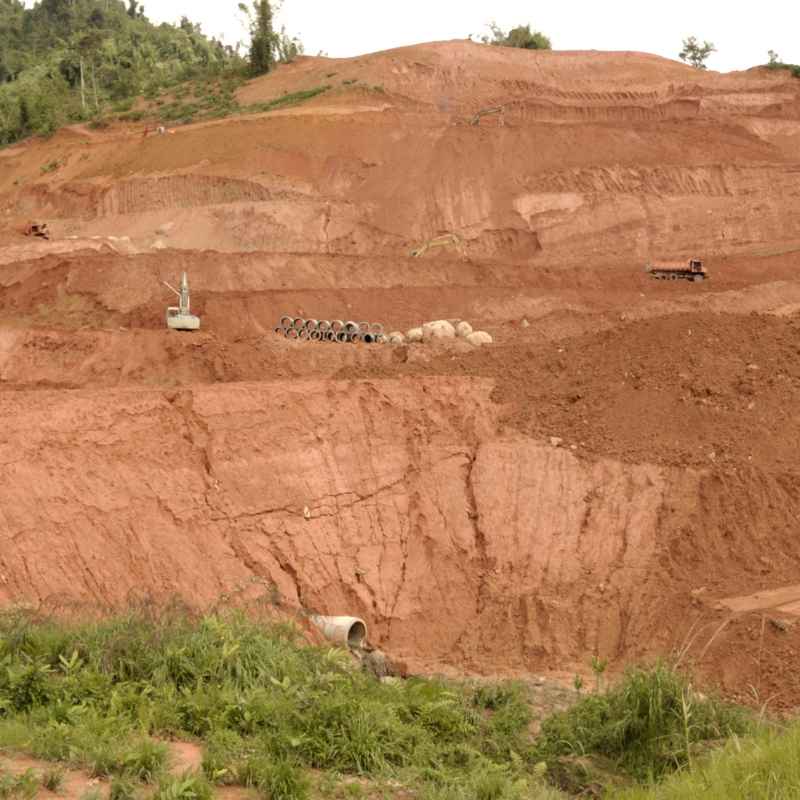
Soil erosion is a natural process. But when we remove too much ground cover, like for farming or building, it can happen much faster. This is bad for our land.
It means less fertile soil for plants. It can also lead to dirty water and floods.
Math is our tool to measure and understand this. Worksheets often ask you to calculate things like erosion rates or the amount of soil lost. They might also ask you to figure out how much a certain method could help stop erosion.
These calculations help scientists and farmers make smart choices to protect the soil.
Think of it like a doctor using a thermometer. The thermometer gives a number, but the doctor understands what that number means for your health. Math gives us numbers about soil, and we need to understand what those numbers mean for the health of our land.
Common Soil Erosion Math Problems Explained
Let’s look at some typical problems you might see on a worksheet. We’ll break down how to approach them.
Calculating Soil Loss Over Time
One common question asks how much soil is lost over a certain period. You might see something like:
“A field lost 5 tons of soil per acre in one year. How much soil was lost over 10 years?”
This is a straightforward multiplication problem. You take the amount lost per year and multiply it by the number of years.
Calculation: 5 tons/acre/year * 10 years = 50 tons/acre
Answer: 50 tons of soil per acre were lost over 10 years.
Sometimes, the question might be about the rate of loss. For example:
“A farmer’s field lost 10 inches of topsoil in 50 years. What is the average rate of soil loss in inches per year?”
Here, you need to divide the total loss by the number of years to find the yearly rate.
Calculation: 10 inches / 50 years = 0.2 inches/year
Answer: The average rate of soil loss is 0.2 inches per year.
These problems help us see how quickly soil can disappear if we’re not careful. A small amount each year adds up to a lot over time.
Understanding Erosion Factors
Erosion isn’t just about dirt. Many things make it worse or better. Math problems sometimes use formulas that include these factors.
The Universal Soil Loss Equation (USLE)
This is a famous formula used to predict soil erosion. It looks complex, but it’s just a way to combine different factors. The basic idea is:
A = R K LS C P
Where:
- A is the average annual soil loss (tons per acre per year).
- R is the rainfall-runoff erosivity factor. (How much rain and how fast it runs off).
- K is the soil erodibility factor. (How easily the soil is eroded).
- LS is the slope length and steepness factor. (How long and steep the hill is).
- C is the cover management factor. (What is growing on the land, like crops or grass).
- P is the support practice factor. (Things like terracing or contour farming).
Your worksheet might give you the values for R, K, LS, C, and P. You just need to multiply them together to find ‘A’.
Example: If R=150, K=0.3, LS=1.5, C=0.4, and P=0.8, what is the average annual soil loss?
Calculation: A = 150 0.3 1.5 0.4 0.8 = 54 tons/acre/year
Answer: The average annual soil loss is 54 tons per acre per year.
This formula shows us that we can control erosion by changing the factors. For example, planting more cover crops (lower C value) or building terraces (higher P value) can significantly reduce soil loss.
Infographic-Style Section 1: Soil’s Journey
What Happens to Soil?
Rainfall: Hits the ground, breaks up soil particles.
Runoff: Water flows downhill, carrying loose soil.
Transportation: Soil particles are moved to streams or rivers.
Deposition: Soil settles in new areas, sometimes causing problems like siltation.
Understanding Slope Length and Steepness (LS Factor)
The LS factor is important because steeper and longer slopes lose more soil. Imagine a tiny trickle of water on a flat garden. It won’t move much dirt.
Now imagine that same trickle on a steep, long hill. It picks up speed and carries more soil.
Worksheets might give you LS values directly or ask you to calculate them using other numbers. Often, there are tables or charts provided for this.
Example: If a slope has a length factor of 1.2 and a steepness factor of 1.3, what is the LS value?
Calculation: LS = Length Factor Steepness Factor = 1.2 1.3 = 1.56
Answer: The LS value is 1.56.
This means that the length and steepness of this particular slope make it 1.56 times more likely to erode compared to a standard slope.
Cover Management Factor (C Factor)
The C factor is all about what’s covering the soil. Bare soil erodes much more easily than soil covered by plants or mulch.
A field with dense grass will have a very low C factor. A bare field after harvest will have a high C factor. Different crops and farming practices have different C values.
Example: A field planted with corn has a C factor of 0.6. If the farmer switches to a cover crop of clover with a C factor of 0.2, how much does the erosion potential change?
Let’s assume R, K, LS, and P stay the same. We want to see the change in A.
Original A: A1 = R K LS 0.6 P
New A: A2 = R K LS 0.2 P
To see the change, we can look at the ratio of A2 to A1:
Calculation: A2 / A1 = (R K LS 0.2 P) / (R K LS 0.6 P) = 0.2 / 0.6 = 1/3
Answer: The new soil loss (A2) will be about one-third of the original soil loss (A1).
This shows how important it is to keep the soil covered. Changing the C factor dramatically cuts down erosion.
Infographic-Style Section 2: Factors Affecting Erosion Rate
Key Erosion Influences
Rainfall & Runoff (R)
Heavy rain, fast runoff = more erosion.
Soil Type (K)
Some soils wash away easier than others.
Slope (LS)
Longer, steeper hills = more erosion.
Cover (C)
Plants and ground cover protect soil.
Practices (P)
Terracing, contour farming help.
Support Practices Factor (P Factor)
The P factor looks at farming methods designed to reduce erosion. These practices work across the slope, not down it.
- Contour Farming: Planting crops in rows that follow the curves of the land. This slows down water runoff.
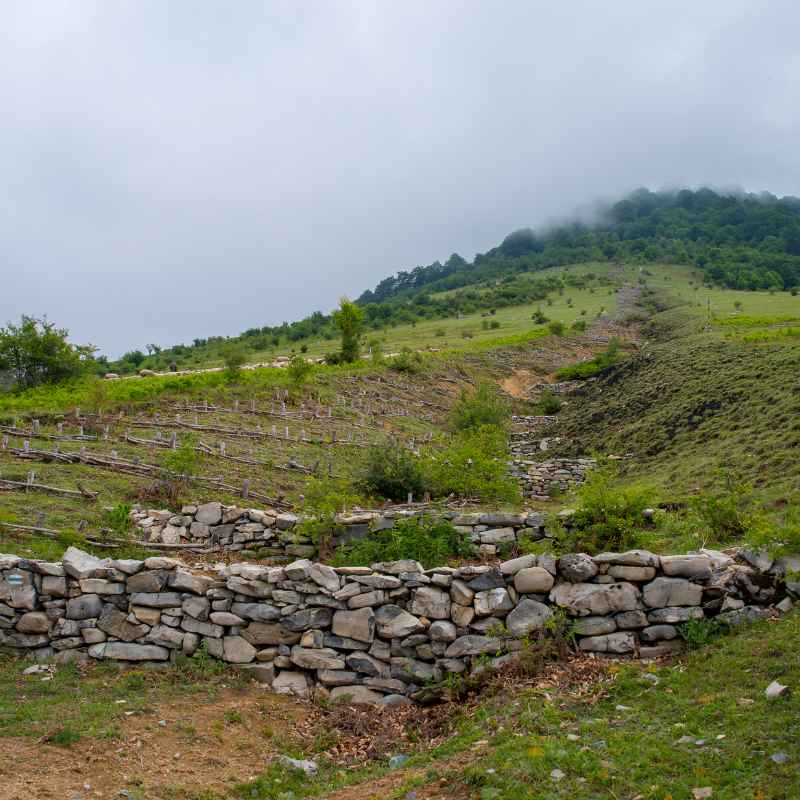
- Terracing: Building level steps on a steep slope. Each step acts like a small dam, holding water and soil.
- Strip Cropping: Planting different crops in long strips. Alternating a row crop with a close-growing crop helps catch soil.
These practices have P values less than 1. A P value of 1 means no special practices are used. A P value of 0.5 means the practice cuts erosion in half.
Example: A farmer uses contour plowing on a field. The P value for contour plowing is 0.5. If the soil loss without this practice was 20 tons/acre/year, what is the new soil loss?
Calculation: New Soil Loss = Original Soil Loss P value = 20 tons/acre/year 0.5 = 10 tons/acre/year
Answer: The soil loss is reduced to 10 tons per acre per year.
Worksheets might ask you to compare different P values. For instance, they might ask which practice is better: contour farming (P=0.5) or terracing (P=0.3).
Comparison: A lower P value means better erosion control. So, terracing (P=0.3) is more effective than contour farming (P=0.5) in this example.
Personal Experience: The Day the Creek Turned Brown
I remember visiting my uncle’s farm after a huge storm one spring. He’s always been proud of his healthy soil. But this time, the creek that ran through his property looked like chocolate milk.
It was thick with mud. I saw his kids looking sad, too. They loved playing by that creek.
He told me that the heavy rain had washed away a lot of soil from his fields. He’d been trying some new planting methods, but the storm was just too much for the soil to handle all at once. He showed me where a gully had started to form on one of the steeper hillsides.
It was a raw, brown scar on the green land. It made me realize how powerful nature is, and how important it is to work with it, not against it.
He spent the next few weeks working on the gully and adding more cover crops. Seeing the creek slowly clear up over time was a good lesson. It showed me that even when things go wrong, there are ways to fix them, and math can help us figure out the best ways.
Calculating Runoff Volume
Sometimes, math problems focus on the amount of water that runs off the land. This is important because runoff is what carries the soil away.
A simple way to think about runoff is based on rainfall. If you get 1 inch of rain, some of it soaks in, and some runs off.
Example: A 5-acre field receives 3 inches of rain. If 40% of the rain becomes runoff, how many acre-inches of runoff occur?
Calculation:
Total Rain: 5 acres * 3 inches = 15 acre-inches
Runoff Volume: 15 acre-inches 40% = 15 0.40 = 6 acre-inches
Answer: 6 acre-inches of runoff occur.
An “acre-inch” is a unit of volume. It’s the amount of water that would cover one acre to a depth of one inch. This calculation helps farmers and engineers understand the water flow and plan for drainage or retention systems.
Infographic-Style Section 3: Quick Soil Conservation Checks
Simple Soil Protectors
1. Keep it Covered
Use cover crops or mulch. Bare soil is vulnerable.
2. Slow the Water
Plant on contour lines. Build small berms.
3. Reduce Slope Length
Terraces break long slopes into shorter ones.
4. Protect Stream Banks
Plant trees and grasses along water edges.
Estimating Soil Depth
Some questions might ask you to estimate the depth of soil. This is important for understanding how much fertile topsoil you have.
Example: A farmer has 100 acres of land. They are concerned about topsoil depth. They find that on average, the topsoil is about 8 inches deep.
How many cubic feet of topsoil do they have?
First, we need to convert inches to feet. There are 12 inches in a foot.
Conversions:
Soil Depth: 8 inches / 12 inches/foot = 0.67 feet
Acres to Square Feet: 1 acre = 43,560 square feet
Total Acres in Square Feet: 100 acres * 43,560 sq ft/acre = 4,356,000 sq ft
Now, calculate the volume.
Calculation:
Total Topsoil Volume = Total Acres in Square Feet * Soil Depth in Feet
Total Topsoil Volume = 4,356,000 sq ft * 0.67 ft = 2,918,520 cubic feet
Answer: The farmer has approximately 2,918,520 cubic feet of topsoil.
This number might seem huge, but it helps visualize the amount of valuable soil. Losing even a small fraction of this can have big impacts.
Infographic-Style Section 4: Erosion vs. Soil Formation
The Slow Race: Erosion vs. Creation
Soil Formation Rate:
- It takes hundreds, even thousands, of years for nature to create just one inch of topsoil.
- This process involves rock weathering, organic matter decomposition, and soil organism activity.
Soil Erosion Rate:
- Under poor management, we can lose one inch of topsoil in just a few years, or even months during severe events.
- This loss depletes nutrients, reduces water-holding capacity, and damages ecosystems.
The Takeaway: Erosion is much, much faster than soil formation. We must protect the soil we have.
Percentage Calculations for Conservation
Worksheets often use percentages to show how much a conservation practice reduces erosion. You might be given the original soil loss and the percentage reduction.
Example: A farmer’s field loses 15 tons of soil per acre per year. A new conservation practice is implemented that reduces soil loss by 60%. What is the new annual soil loss?
First, calculate the amount of soil saved.
Calculation:
Soil Saved = Original Loss * Percentage Reduction
Soil Saved = 15 tons/acre/year 60% = 15 0.60 = 9 tons/acre/year
Now, subtract the saved amount from the original loss to find the new loss.
Calculation:
New Soil Loss = Original Loss – Soil Saved
New Soil Loss = 15 tons/acre/year – 9 tons/acre/year = 6 tons/acre/year
Answer: The new annual soil loss is 6 tons per acre per year.
Alternatively, if erosion is reduced by 60%, then 40% remains (100% – 60% = 40%).
Direct Calculation: New Soil Loss = Original Loss * (1 – Percentage Reduction)
New Soil Loss = 15 tons/acre/year (1 – 0.60) = 15 0.40 = 6 tons/acre/year
This direct method is often faster.
Real-World Context: Why These Numbers Matter in America
In the United States, agriculture is a huge industry. Protecting our soil is vital for food security and the economy. Over the years, many farmers have learned how to manage their land better.
They use practices that lower the erosion rates we calculate.
Consider the impact of wind erosion in places like the Great Plains. During the Dust Bowl in the 1930s, poor farming practices led to massive soil loss. The math from that era showed devastating rates.
Today, better methods like no-till farming and cover cropping dramatically reduce wind erosion. These methods improve the ‘C’ factor in our erosion equations.
The U.S. Department of Agriculture (USDA) provides guidance and cost-sharing programs to help farmers adopt these practices. They often use the principles behind the USLE to assess which practices will have the biggest impact.
Understanding the math helps us make informed decisions about land use and conservation efforts across the country.
Infographic-Style Section 5: Erosion Control Techniques
Fighting Soil Loss: Smart Strategies
| Technique | How it Helps | Math Link (Factor) |
|---|---|---|
| Cover Cropping | Roots hold soil, leaves protect from rain impact. | Lowers C Factor |
| Terracing | Breaks long slopes into short, level steps. | Lowers LS Factor |
| Contour Plowing | Rows run across the slope, slowing water. | Lowers P Factor |
| No-Till Farming | No soil disturbance means soil structure remains intact. | Lowers C Factor |
What This Means for You
Understanding these math problems is not just about getting a good grade on a worksheet. It’s about understanding a fundamental process that affects our planet. When you see numbers, think about what they represent in the real world.
When Erosion Calculations Are Normal
Some soil movement is natural and even necessary. The math you do on a worksheet is often predicting potential loss under certain conditions. Small amounts of erosion can happen even with good practices, especially during very intense weather.
For example, if your calculations using the USLE result in a value of less than 1 or 2 tons per acre per year, it’s often considered acceptable for many land uses, especially if the soil formation rate is higher.
When to Worry
You should worry when your calculations show high rates of soil loss. This is typically:
- More than 4-5 tons per acre per year for agricultural land.
- Any calculation showing a severe loss over a short period.
- The formation of gullies on a property.
If you’re seeing visible signs of erosion like bare patches, washed-out areas, or muddy streams, then the math behind it is telling you there’s a problem.
Simple Checks You Can Do
Look at any slopes on your property. Are they covered with plants? Does water seem to run off very fast?
Do you see streaks of soil where water has flowed?
These are visual cues that the math might be pointing to a real problem. If you’re concerned, talking to a local conservation district or agricultural extension office can provide expert advice.
Quick Fixes & Tips for Reducing Erosion
While worksheets focus on calculation, real-world solutions are about action. Here are simple tips:
- Plant More Green: The more plants and ground cover you have, the better.
- Slow Down Water: Anything that makes water move slower across the land helps. Think small ditches, berms, or just planting across slopes.
- Add Organic Matter: Compost and mulch not only feed plants but also help soil particles stick together, making them harder to move.
- Avoid Bare Soil: Try to keep soil covered year-round.
These tips are like the practical application of the math. They aim to adjust the factors in equations like the USLE to lower the predicted soil loss.
Frequently Asked Questions About Soil Erosion Math
What is the easiest way to calculate soil loss?
The easiest way is often to calculate the direct loss over time if you know the rate per year. For more complex scenarios, understanding the basic USLE factors (R, K, LS, C, P) and multiplying them is the standard approach, though calculating each factor can be complex.
How long does it take to form one inch of topsoil?
It takes a very long time, typically 100 to 500 years, or even longer, depending on the climate and soil type. This is why preventing erosion is so critical.
Can I use math to prove conservation is working?
Yes! By calculating soil loss before and after implementing conservation practices, you can use math to show the reduction. For example, comparing the ‘A’ value from the USLE before and after changes provides a quantifiable result.
What is the most important factor in soil erosion?
While all factors are important, the cover management factor (C) and support practices factor (P) are often the most controllable by humans. Keeping the soil covered and using good farming methods can drastically reduce erosion.
Are there simpler math models for erosion if USLE is too complex?
Yes, depending on the situation. For very small areas, simple runoff calculations based on rainfall intensity might suffice. For broader studies, more advanced models exist, but the USLE provides a good balance of complexity and accuracy for many educational and planning purposes.
What does an “acre-inch” mean?
An acre-inch is a unit of volume for water. It represents the amount of water that would cover one acre of land to a depth of one inch. It’s commonly used in irrigation and runoff calculations.
Conclusion: Your Math Skills for a Healthier Planet
Working through these math problems is more than just exercises. It’s about building the skills to understand and protect our environment. You’re learning the language of soil conservation.
Use this knowledge to make informed decisions. Your efforts, combined with smart practices, help keep our soil healthy for generations to come.