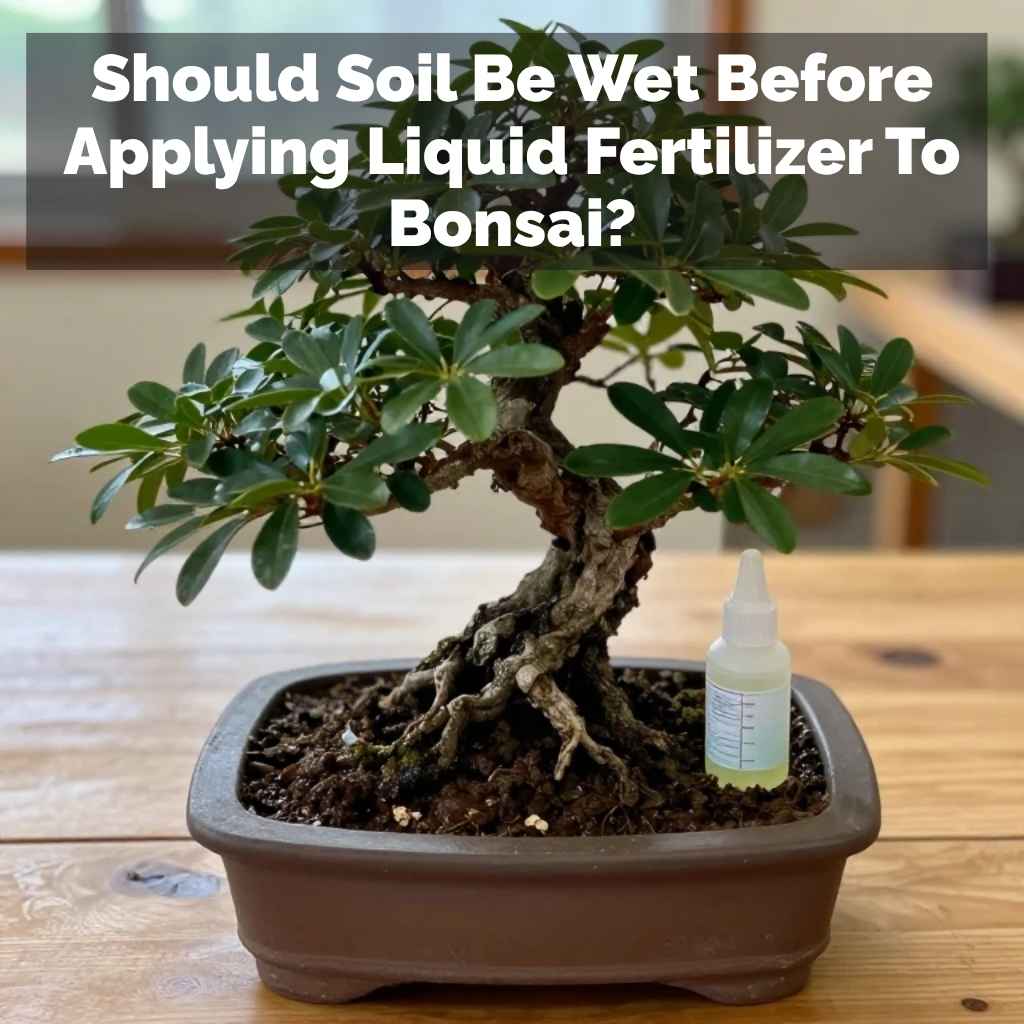
Should Soil Be Wet Before Applying Liquid Fertilizer To Bonsai?
Think of your bonsai’s soil like a tiny sponge. When it’s dry, it’s hard and doesn’t soak things up well. When it’s damp, it’s ready to hold and give.
Fertilizer is like a drink of water for your plant. It has special nutrients.
These nutrients need to dissolve. They need to be in a watery mix to get into the roots. If the soil is bone dry, the fertilizer can sit there.
It might even burn the delicate roots. That’s the last thing we want for our beloved bonsai.
Yes, your bonsai’s soil should be damp, not soaking wet, before you apply liquid fertilizer. This helps the fertilizer spread evenly and prevents root burn. The soil should be moist but not waterlogged.
Why Watering First is Key
Imagine you’re very thirsty. Someone hands you a very strong juice. If you drink it all at once, it might be too much.
Your stomach could hurt. It’s better to have some water first. Then, the juice mixes better.
Your body can use it more easily.
Bonsai roots work the same way. They are very fine. They are also quite sensitive.
Dry soil is like a harsh desert for them. If you pour strong liquid fertilizer onto dry soil, it’s like giving those roots a shock. The salts in the fertilizer can pull water out of the roots.
This process is called osmosis. It can cause the roots to shrink and die. This is root burn.
It weakens your bonsai. It can even kill it. So, a little pre-watering is like a buffer.
It protects the roots.

My Own Bonsai Wake-Up Call
I remember one spring, I was really eager to get my junipers going. The days were getting warmer. I had a new liquid fertilizer I was excited to try.
I mixed it up. I was so focused on giving them the “perfect” dose. I poured it right onto the dry soil of my Ponderosa Pine.
Within a day or two, I noticed something was wrong. The needles on the tips started to turn brown. It looked like they were crisping up.
My heart sank. I had made a mistake. I had rushed.
I hadn’t considered the soil’s condition.
I quickly looked up what could be happening. Everything pointed to fertilizer burn. The advice was clear: always water first.
I felt terrible. I had stressed my beautiful tree. From then on, I made sure to always check the soil’s moisture.
A light watering before feeding became my new routine. It made a world of difference. My trees have been happier since.
The Science Behind Pre-Watering
Why it works:
- Dilution: Water dilutes the fertilizer concentration. This reduces the risk of salts damaging roots.
- Absorption: Moist soil allows nutrients to dissolve. This makes them easier for roots to take up.
- Even Distribution: Water helps spread the fertilizer throughout the root zone. Dry spots get fertilizer too.
How to Properly Water Before Fertilizing
So, how much water is enough? You don’t want to flood your bonsai. That can wash away nutrients.
It can also lead to root rot if the drainage is poor. The goal is to make the soil moist. It should feel like a wrung-out sponge.
Gently water the soil surface. Let the water drain out of the bottom of the pot. You should see water coming from the drainage holes.
This tells you the whole root ball is getting wet. Wait for a short while. Maybe 10 to 15 minutes.
This gives the water time to soak in.
Then, you can apply your mixed liquid fertilizer. This way, the fertilizer is going into moist soil. The roots are ready to accept it.
They are protected from any harshness.
Signs of Fertilizer Burn
It’s good to know what to look for. If you accidentally over-fertilize or forget to water first, you might see signs of fertilizer burn. These are:
- Brown or crispy leaf tips: This is a classic sign. The edges of the leaves start to turn brown and dry.
- Wilting: Even if the soil is moist, the leaves might droop. The roots can’t take up water properly.
- Leaf drop: The plant might shed leaves prematurely. This is a stress response.
- Yellowing leaves: Sometimes, leaves turn yellow. This can happen before they brown.
- White crust on soil: You might see a white or salty-looking crust. This is fertilizer salts building up.
If you see these signs, stop fertilizing. Water the plant thoroughly. Let the water flush out any excess salts.
You might need to do this a few times. Remove any badly damaged leaves.
When NOT to Fertilize
It’s not just about watering first. Sometimes, it’s about not fertilizing at all.
- Sick or stressed plants: If your bonsai is dealing with pests, diseases, or shock, fertilizing can make it worse.
- New repotting: Wait at least 4-6 weeks after repotting. The roots need time to heal.
- Dormant periods: Most bonsai don’t need fertilizer when they are dormant in winter.
Bonsai Soil Types and Drainage
The type of soil you use for your bonsai is also very important. Good bonsai soil is usually a mix. It contains akadama, pumice, and lava rock.
This mix is designed to drain well. It also allows for good aeration. This means air can get to the roots.
Even with good drainage, overwatering can still be an issue. Especially if the pot has no drainage holes. Or if the soil mix is too dense and holds too much water.
That’s why checking the soil’s moisture is always step one.
A moisture meter can be helpful. But your finger is often the best tool. Stick it into the soil about an inch deep.
If it feels dry, it’s time to water. If it feels moist, you can wait. Or you can water lightly before fertilizing.
Fertilizer Types for Bonsai
There are different types of fertilizers. Liquid fertilizers are very common for bonsai. They are easy to use.
They provide nutrients quickly. You mix them with water. This is where proper dilution is crucial.
Solid or pelleted fertilizers are another option. These release nutrients slowly over time. They are often placed on the soil surface.
They release nutrients as you water. These are less likely to cause immediate burn. But you still need to be mindful of amounts.
Always follow the instructions on the fertilizer package. For bonsai, it’s often recommended to use fertilizers at half strength. Or even quarter strength.
Especially for young or delicate trees. It’s better to feed lightly more often than to feed heavily once. This is part of understanding your specific bonsai’s needs.
Fertilizer Schedule: A General Guide
This is just a starting point. Your climate and tree species matter most.
- Spring: Start feeding as new growth appears. Use a balanced fertilizer.
- Summer: Continue feeding. You might switch to a higher nitrogen fertilizer for growth.
- Fall: Reduce feeding. Switch to a fertilizer lower in nitrogen. This helps prepare the tree for winter.
- Winter: Stop fertilizing for most species.
What If the Soil is Already Wet?
What if you check your bonsai’s soil? You find it’s already quite moist. Maybe you watered it yesterday.
Or it rained. In this case, you don’t need to water it again. But you still need to be careful with the fertilizer.
If the soil is already wet, you can apply the liquid fertilizer directly. But, you must ensure it’s very diluted. Consider using a weaker solution than usual.
Or, skip fertilizing for this watering. Wait for the soil to dry out a bit more. Then fertilize normally.
The key is not to add more water than the soil can handle. Overly wet conditions can lead to other problems. Like fungal diseases.
Or root rot. So, always assess the soil’s moisture level carefully.
The Concept of “Turgidity”
Let’s talk about plant cells. They have a thing called a “cell wall.” Inside is the “cell membrane.” Between them is water. When there’s enough water, it pushes against the cell wall.
This makes the plant firm and upright. This is called turgidity.
Fertilizer, especially if it’s too strong or applied to dry soil, can mess with this. The salts in fertilizer can draw water out of the plant cells. This is plasmolysis.
The cells lose their turgor. The plant wilts. The leaves might curl or brown.
This is why a hydrated cell structure, achieved by moist soil, is crucial for nutrient uptake.
When the soil is moist, the plant’s cells are already turgid. They are ready to absorb nutrients. The water in the soil helps the fertilizer move into the root hairs.
It’s a much gentler process. It leads to better growth. It’s a healthy cycle.
Quick Check: Your Bonsai’s Thirst Level
Feeling dry? Your finger comes out clean and dry from the soil. Time to water!
Feeling damp? Soil sticks to your finger slightly. It’s moist. Good.
You can fertilize after a light watering.
Feeling soggy? Soil is very wet and muddy. Your plant may be overwatered already. Avoid adding more water or fertilizer.
Species-Specific Needs
It’s also worth noting that different bonsai species have different needs. Some trees, like junipers and pines, prefer to dry out a bit more between waterings. Others, like elms and ficus, like consistently moist soil.
Research your specific bonsai species. Learn its watering preferences. This will help you decide when and how to fertilize.
For example, a Ficus might tolerate more frequent feeding. A mature pine might need very little. Always err on the side of caution.
It’s better to under-feed than over-feed.
The general rule of watering before fertilizing applies to most species. But understanding their individual water needs will help you fine-tune the process. This leads to a healthier, more vibrant bonsai.
Can You Fertilize Dry Soil Without Risk?
In very specific, controlled situations, some professionals might use a highly diluted liquid fertilizer on slightly dry soil. However, for the average hobbyist, this is risky. The margin for error is very small.
The risk of root burn is significantly higher. The fertilizer salts can concentrate quickly in dry soil. They can then be absorbed by the roots.
This damages them. It’s not worth the gamble with your precious bonsai.
Always think about the plant’s well-being. A little extra care upfront, like a quick watering, prevents a lot of potential problems later. It’s a simple practice that builds trust with your tree.
Contrast: Fertilizing Dry Soil vs. Moist Soil
| Dry Soil Fertilizing | Moist Soil Fertilizing |
|---|---|
| Risk: High | Risk: Low |
| Fertilizer salts concentrate easily. | Water dilutes fertilizer salts. |
| Can cause severe root burn. | Protects roots from damage. |
| Nutrient uptake is difficult. | Nutrient uptake is efficient. |
| Plant stress is likely. | Plant growth is encouraged. |
The Role of Drainage Holes
We’ve talked about soil moisture. Drainage holes in your bonsai pot are equally important. They allow excess water to escape.
This prevents the soil from becoming waterlogged. Waterlogged soil suffocates roots.
When you water before fertilizing, you want to see water come out of the drainage holes. This confirms the entire root ball is hydrated. It also helps to flush out any accumulated salts from previous fertilizer applications.
If your pot doesn’t have drainage holes, or if they are blocked, this is a major problem. It makes controlling soil moisture very difficult. It significantly increases the risk of root rot and fertilizer issues.
Always ensure your bonsai pot has adequate drainage.
When to Skip Fertilizer Altogether
It’s important to know that fertilizer isn’t always needed. There are times when giving your bonsai a break is the best course of action. This is especially true if your plant is showing signs of stress.
If your bonsai has recently been repotted, wait. Give its roots time to recover. Usually, about four to six weeks is a good period.
Fertilizing too soon can hinder healing. It can even damage new root growth.
Also, if your bonsai is sick or infested with pests, hold off on fertilizing. The plant is already struggling. Adding fertilizer can be an extra stressor.
Focus on treating the underlying issue first. Once the plant is healthy again, you can resume a normal feeding schedule.
The Long-Term Benefits of Proper Fertilizing
Following these simple guidelines—especially watering before fertilizing—has long-term benefits for your bonsai. It helps build a strong, healthy root system. This is the foundation of any thriving plant.
Strong roots mean better nutrient and water uptake. This translates to more vigorous leaf growth. It leads to better branch development.
It also helps your bonsai resist pests and diseases. Over time, your bonsai will look more robust and beautiful.
It’s a process of consistent care. Each step, no matter how small, contributes to the overall health and longevity of your miniature tree. This patient approach is what bonsai is all about.
Things to Watch For After Fertilizing
- Positive Signs: Lush new growth, vibrant leaf color, steady development.
- Negative Signs: Crispy leaf edges, wilting, leaf drop, white crust on soil.
- Action: If negative signs appear, stop fertilizing immediately. Flush the soil with plain water. Assess the situation carefully.
When is Fertilizer “Too Much”?
The idea of “too much” fertilizer is key. It’s not just about the type of fertilizer. It’s about frequency and concentration.
Even a good fertilizer can harm your bonsai if used incorrectly.
Over-fertilizing often happens when people try to speed up growth. They use higher concentrations. Or they fertilize too often.
They think more is better. But for bonsai, less is often more. Their small pots have limited soil volume.
This soil can easily become saturated with nutrients.
A common mistake is using the same concentration as for regular houseplants. Bonsai have unique needs. They are grown in special soil.
They are often root-pruned. They have limited space to store nutrients. Always dilute fertilizers for bonsai.
Stick to the recommended feeding schedule.
Understanding Nutrient Needs
Plants need several key nutrients. The main ones are Nitrogen (N), Phosphorus (P), and Potassium (K). These are often listed on fertilizer bags as N-P-K ratios.
Nitrogen helps with leafy green growth. Phosphorus aids root development and flowering.
Potassium supports overall plant health and disease resistance. Your bonsai’s needs change throughout the year. In spring, when growth is active, a balanced fertilizer or one slightly higher in Nitrogen is good.
In the fall, you might switch to a lower Nitrogen, higher Phosphorus and Potassium blend. This helps the tree harden off for winter.
The liquid fertilizer you choose should match the current growth phase of your bonsai. Always read the label. Ensure it’s suitable for ornamental plants or trees.
And remember, dilute it!
Final Thoughts on Soil Moisture and Feeding
It’s clear that soil moisture plays a huge role. Watering your bonsai before applying liquid fertilizer is not just a good idea. It’s a crucial step for plant health.
It protects delicate roots. It ensures nutrients are absorbed properly. It helps create a thriving environment for your miniature tree.
Take a moment to check your soil. Feel its texture. If it’s dry, give it a gentle watering.
Wait a bit. Then, feed your bonsai. This simple habit will pay off.
Your bonsai will thank you with its beauty and vitality.

Frequently Asked Questions
What is the best time of day to fertilize bonsai?
The best time to fertilize bonsai is usually in the morning. This allows the plant to absorb the nutrients throughout the day. Avoid fertilizing in the hot afternoon sun.
This can stress the plant. Also, avoid fertilizing when the plant is already stressed or dry.
How often should I fertilize my bonsai?
The frequency depends on the species, season, and type of fertilizer. Generally, during the growing season (spring through fall), you might fertilize every 2-4 weeks with a diluted liquid fertilizer. Solid fertilizers may last longer.
Always follow product instructions and observe your plant’s response.
Can I use houseplant fertilizer for my bonsai?
You can use fertilizers formulated for houseplants, but it’s often best to use a specific bonsai fertilizer. If you use houseplant fertilizer, dilute it to half or quarter strength. Bonsai have unique needs due to their small pots and restricted root systems.
What happens if I fertilize too much?
Over-fertilizing can lead to fertilizer burn. This shows up as brown, crispy leaf tips or edges. It can cause wilting, leaf drop, and stunted growth.
In severe cases, it can kill the plant. It’s better to under-fertilize than to over-fertilize.
Should I fertilize my bonsai in winter?
Most bonsai species go dormant in winter and do not need fertilizer. Fertilizing during dormancy can harm the plant. Some tropical species that grow year-round might need light feeding, but always use very diluted fertilizer and observe the plant.
What does “half strength” fertilizer mean?
“Half strength” means you mix the fertilizer with twice the amount of water recommended on the package. For example, if the label says to mix 1 teaspoon per gallon of water, for half strength, you would mix 1 teaspoon per 2 gallons of water. Always check the label for specific instructions.
Conclusion
Making sure your bonsai’s soil is pleasantly moist before you add liquid fertilizer is a simple yet powerful step. It’s a way to show your tree you care. It helps ensure it gets the food it needs without harm.
This practice builds healthy roots. It leads to a beautiful, long-lived bonsai.