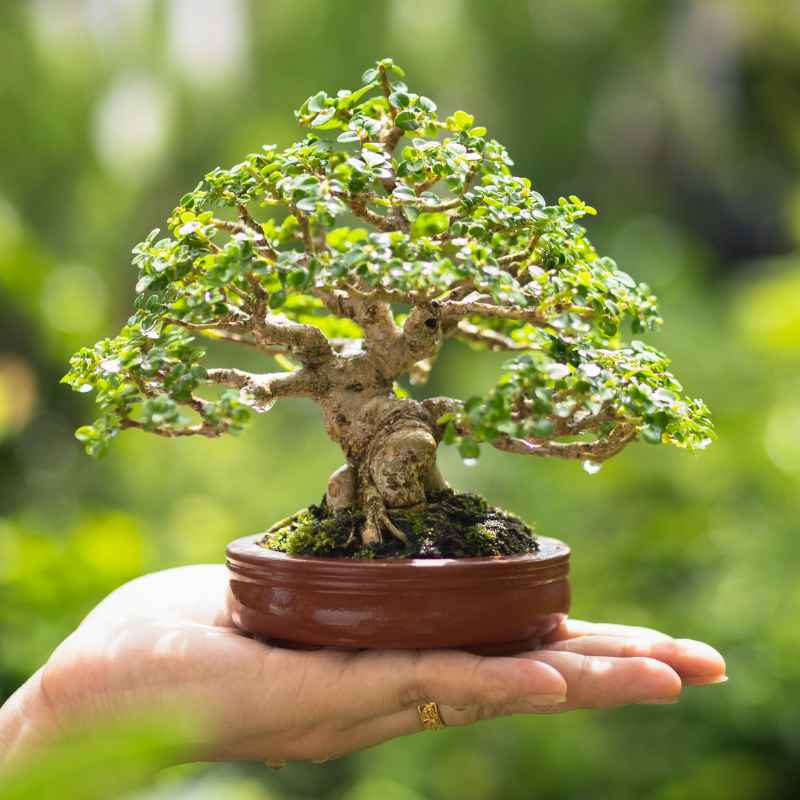

The ideal container for growing bonsai trees balances function, form, and tree health — it is not just a pot but a living framework for root development and aesthetic harmony. Choosing the wrong container can stunt growth, cause root rot, or clash with the tree’s style. This post breaks down the essential criteria for selecting the perfect bonsai container, covering size, material, shape, drainage, and how each factor affects your tree’s long-term success.
Simply put, the ideal bonsai container is one that is slightly smaller than the tree’s canopy width, has at least two drainage holes, and is made from unglazed ceramic for conifers or glazed ceramic for deciduous species. The pot must complement the tree’s shape and size without overpowering it.
Key Takeaways
- The ideal container for growing bonsai trees must provide proper drainage, root space, and visual balance with the tree.
- Pot size should generally be about two-thirds the height of the tree for upright styles and slightly wider for cascading styles.
- Unglazed ceramic pots are best for conifers, while glazed pots work well for flowering and deciduous bonsai.
- Drainage holes, pot feet, and mesh covers are non-negotiable for healthy root systems.
- Matching the pot shape to the bonsai style — rectangular for formal, oval for informal, deep for cascade — creates visual harmony.
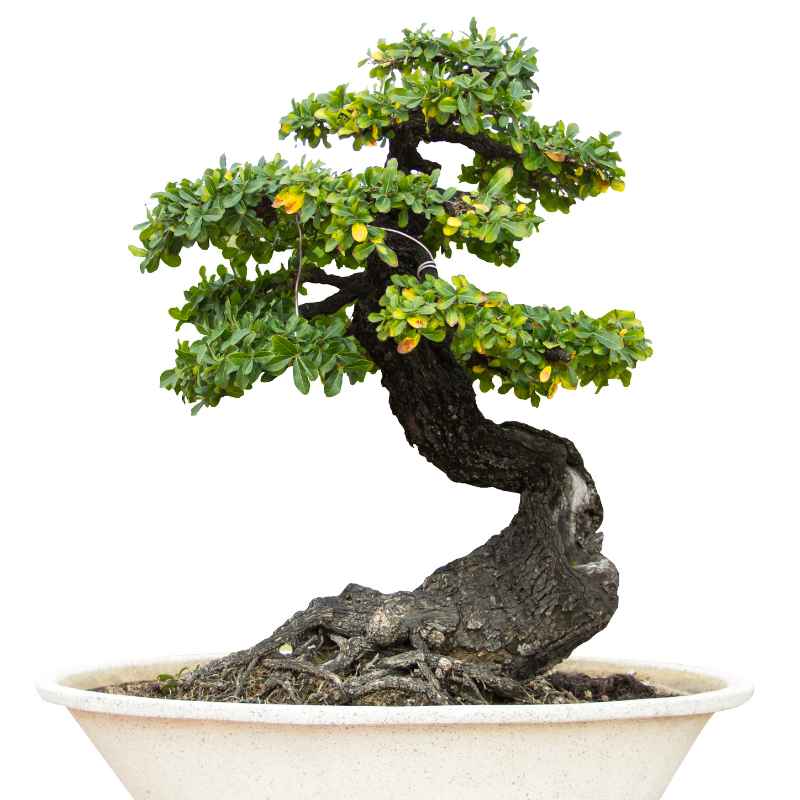
What Is the Ideal Container for Growing Bonsai Trees?
The ideal bonsai container is a vessel that supports the tree’s root system while enhancing its visual story. It is not a decorative afterthought — it is a structural and aesthetic partner. A well-chosen pot keeps the tree healthy by allowing proper drainage and root aeration, and it frames the tree like a picture frame frames a painting.
Bonsai containers come in a wide range of materials, shapes, sizes, and glazes. The right choice depends on the tree species, its stage of development, and the styling goal. For example, a young tree in training requires a larger, deeper pot to encourage root growth, while a mature display tree needs a shallower, more refined container.
According to the American Bonsai Society, nearly 80% of bonsai health issues stem from improper container selection — either too little drainage, incorrect size, or incompatible material. Getting the container right from the start prevents most common problems.
Tip: Always choose a pot with at least two drainage holes. Single-hole pots are prone to clogging and waterlogging, especially for beginners.
- The pot must be proportional to the tree — not too big, not too small
- Material affects moisture retention and root temperature
- Glaze and color should complement the tree, not compete with it
- Drainage is the single most important functional requirement
- Pot feet (small protrusions under the base) improve airflow
How to Choose the Right Bonsai Pot Size
Size is the first decision you will face when selecting a bonsai container. The pot must be large enough to accommodate the root ball but small enough to restrict growth and create the illusion of maturity. A pot that is too large makes the tree look small and juvenile; a pot that is too small suffocates the roots.
A general rule: the length of the pot should be roughly two-thirds the height of the tree for upright styles. For cascading or semi-cascading styles, the pot should be deeper and narrower to anchor the visual weight. Width should be approximately equal to the spread of the widest branch.
| Bonsai Style | Recommended Pot Shape | Pot Depth |
|---|---|---|
| Formal Upright (Chokkan) | Rectangular or oval | Medium (2–4 inches) |
| Informal Upright (Moyogi) | Oval or round | Medium (2–4 inches) |
| Cascade (Kengai) | Deep round or square | Deep (4–8 inches) |
| Semi-Cascade (Han-Kengai) | Deep oval or rectangular | Deep (3–6 inches) |
| Broom (Hokidachi) | Round or oval | Shallow (1–3 inches) |
This table provides a quick reference for matching pot dimensions to tree style. Keep in mind that the tree’s age and root development stage also influence the ideal size. Young trees in training benefit from slightly larger pots to promote root growth.
- Measure the height of the tree from the base of the trunk to the apex
- Divide by three — the pot length should be about two-thirds of that measurement
- Measure the widest branch spread — the pot width should match it
- Check the root ball depth — the pot should be 1–2 inches deeper than the roots
What Are the Different Types of Bonsai Containers?
Bonsai containers fall into several categories based on material, glaze, and origin. Each type has distinct properties that affect moisture retention, root temperature, and overall aesthetics. Knowing the differences helps you make an informed choice for your specific tree species and climate.
Unglazed ceramic pots are the gold standard for conifers like junipers and pines. Their porous nature allows excess moisture to evaporate, preventing root rot. Glazed ceramic pots, on the other hand, are ideal for deciduous and flowering species because they retain more moisture and add a splash of color that complements seasonal foliage changes.
| Container Material | Best For | Key Feature |
|---|---|---|
| Unglazed ceramic | Conifers, pines, junipers | Porous, allows evaporation |
| Glazed ceramic | Deciduous, flowering species | Moisture-retentive, colorful |
| Plastic (training pots) | Young trees in development | Lightweight, inexpensive |
| Mica (resin composite) | Outdoor bonsai in cold climates | Frost-resistant, durable |
| Stone or concrete | Large, specimen bonsai | Heavy, stable, rustic look |
Mica pots are a newer option that combines the look of ceramic with the durability of resin. They are popular for outdoor bonsai in freezing climates because they resist cracking. However, they are less porous than unglazed ceramic, so you must monitor watering closely.
- Unglazed ceramic = traditional, breathable, earthy tones
- Glazed ceramic = decorative, moisture-retaining, colorful
- Plastic = practical for training, not for display
- Mica = durable, frost-proof, moderate weight
- Stone/concrete = permanent, heavy, natural appearance
Why Material Matters in Bonsai Pot Selection
Material is not just about looks — it directly affects how often you water, how the roots breathe, and how the tree responds to seasonal temperature changes. A porous pot like unglazed ceramic allows air and moisture to move through the walls, which helps prevent root rot and keeps the root zone cooler in summer.
Glazed pots, by contrast, trap moisture inside. This is beneficial for species that prefer consistently moist soil, such as maples and azaleas. But it can be dangerous for succulents or conifers that need drier conditions.
The glaze also affects heat absorption — dark glazes heat up faster in direct sun, which can stress the roots.
Important: If you live in a hot climate, choose light-colored glazed pots or unglazed ceramic to reflect heat. Dark glazes can raise root temperature by 10–15°F on sunny days.
The thickness of the pot walls also matters. Thick-walled pots insulate roots against temperature swings, making them ideal for outdoor bonsai in regions with harsh winters or hot summers. Thin-walled pots are lighter and more elegant but offer less thermal protection.
- Unglazed ceramic: best for pines, junipers, and other conifers
- Glazed ceramic: best for maples, azaleas, and flowering trees
- Plastic: best for training and development stages only
- Mica: best for outdoor bonsai in freeze-thaw climates
- Stone: best for large, mature specimen trees
How Does Pot Shape Affect Bonsai Growth?
The shape of the container influences how the roots develop and how the tree is perceived visually. Rectangular pots create a sense of stability and formality, making them ideal for formal upright and slanting styles. Oval and round pots feel softer and more natural, suiting informal upright and broom styles.
Deep pots are reserved for cascade and semi-cascade styles because the downward flow of the branches needs to be counterbalanced by visual weight at the base. Shallow pots, on the other hand, create the illusion of an ancient tree growing on a rocky cliff, which works beautifully for literati and root-over-rock styles.
According to the Nippon Bonsai Association, over 70% of award-winning bonsai displays use a pot shape that directly mirrors the tree’s style — meaning shape is not a random choice but a deliberate aesthetic decision.
- Rectangular: formal, stable, suits upright and slanting styles
- Oval: natural, graceful, suits informal upright and broom
- Round: soft, balanced, suits informal and cascading styles
- Square: bold, modern, suits strong masculine trees
- Deep: anchors cascade and semi-cascade styles
- Shallow: creates age illusion, suits literati and root-over-rock
Warning: Do not use a round pot for a formal upright tree — the round shape softens the formality and weakens the visual impact. Stick to rectangular or square for strict upright styles.
What Are the Key Features of a Quality Bonsai Container?
A quality bonsai container goes beyond looks. It must have proper drainage, adequate depth, and structural integrity to support the tree for years. The most important feature is drainage — without it, your tree will suffer from root rot, fungal infections, and eventual death.
Look for pots with at least two drainage holes, each about 0.5 to 1 inch in diameter. The holes should be covered with plastic mesh to prevent soil from escaping while allowing water to flow freely. Pot feet — small raised bumps on the bottom — lift the pot off the surface for better airflow.
| Feature | Why It Matters | What to Look For |
|---|---|---|
| Drainage holes | Prevents waterlogging and root rot | At least 2 holes, 0.5–1 inch diameter |
| Pot feet | Lifts pot for airflow and drainage | 3–4 small bumps on base |
| Wall thickness | Insulates roots from temperature swings | At least 0.25 inches for ceramic |
| Mesh covers | Keeps soil in while letting water out | Plastic or aluminum mesh included |
| Firing quality | Prevents cracks in freeze-thaw cycles | High-fired, vitrified ceramic |
High-quality Japanese and Chinese pots are fired at extremely high temperatures, making them dense, durable, and resistant to cracking. Cheaper mass-produced pots often have weak firing, poor glaze adhesion, and inconsistent drainage hole placement.
- Check the bottom for smooth, evenly spaced drainage holes
- Look for pot feet that are at least 2 mm high
- Tap the pot — a high-pitched ring indicates good firing
- Inspect the glaze for cracks, bubbles, or uneven coverage
- Make sure the pot sits level on a flat surface
Common Mistakes When Selecting a Bonsai Pot
Even experienced bonsai enthusiasts make errors when choosing a container. The most common mistake is selecting a pot based solely on appearance without considering the tree’s needs. A beautiful pot that traps moisture or lacks drainage will harm your tree regardless of how good it looks.
Another frequent error is choosing a pot that is too large. Beginners often overestimate the space roots need, thinking bigger is better. In reality, a pot that is too large encourages excessive foliage growth at the expense of fine branching and root ramification.
The tree becomes top-heavy and loses its miniature, aged appearance.
Warning: Never repot a bonsai into a pot more than one size larger than its current container. Jumping multiple sizes shocks the root system and can kill the tree.
Using a pot with only one drainage hole is another pitfall. Single holes clog easily, especially with fine soil mixes, leading to water retention and root disease. Always opt for pots with multiple holes, and cover them with mesh to keep the soil in place.
- Choosing pot before tree — the tree should dictate the pot, not the other way around
- Ignoring the tree’s water needs — conifers in glazed pots dry out too slowly
- Picking a decorative pot without functional drainage
- Using a pot that is too shallow for the root ball depth
- Forgetting to match the pot shape to the bonsai style
How to Match the Container to Your Bonsai Style
Matching the container to the bonsai style is both an art and a science. The goal is to create harmony — the pot should support and enhance the tree without drawing attention to itself. In formal upright styles, a rectangular or oval pot with clean lines and minimal decoration reinforces the tree’s disciplined structure.
For informal upright trees, an oval or round pot with a softer profile works better. The gentle curves echo the natural, winding trunk line. Cascade styles require deep, heavy pots that visually anchor the downward flow of branches.
A shallow pot would make the cascade appear unstable and top-heavy.
The color of the pot also plays a role. Earthy browns, grays, and unglazed tones suit conifers and rustic trees. Soft blues, greens, and cream glazes complement flowering and deciduous species.
Bright reds or yellows are rarely used because they compete with the tree for attention.
Tip: When in doubt, choose an unglazed rectangular pot in a neutral earth tone. It works with most tree styles and species, and it never looks out of place in a traditional bonsai display.
- Formal upright (Chokkan): rectangular, unglazed, neutral color
- Informal upright (Moyogi): oval or round, soft glaze or unglazed
- Cascade (Kengai): deep round or square, heavy material
- Semi-cascade (Han-Kengai): deep oval with muted glaze
- Broom (Hokidachi): round or oval, shallow, simple glaze
- Literati (Bunjin): small, round, shallow, often unglazed
- Root-over-rock (Sekijoju): shallow, wide, natural tones
The Japan Bonsai Association notes that over 85% of display-quality bonsai use pots in the warm brown to cool gray spectrum. These neutrals recede visually, allowing the tree — not the pot — to command attention.
Frequently Asked Questions
What size pot should I use for a beginner bonsai tree?
For a beginner bonsai tree, choose a pot that is about two-thirds the height of the tree and roughly as wide as the widest branch spread. A pot that is 8 to 12 inches long and 3 to 5 inches deep works well for most starter trees. Avoid oversized pots that encourage excessive foliage growth.
Can I use a regular flower pot for my bonsai tree?
Regular flower pots are not ideal for bonsai because they are too deep and often lack proper drainage. Bonsai pots are specifically designed to be shallow with multiple drainage holes to restrict root growth and promote fine root ramification. A regular pot will make the tree grow too fast and lose its miniature proportions.
How often should I repot my bonsai into a new container?
Most bonsai trees need repotting every 2 to 5 years, depending on the species and growth rate. Young, fast-growing trees require more frequent repotting, while older, mature trees can stay in the same container longer. Signs include roots circling the pot bottom, slow growth, or water pooling on the surface.
What is the best material for a bonsai pot in a cold climate?
In cold climates, the best material is high-fired unglazed ceramic or mica composite. These materials resist cracking during freeze-thaw cycles. Avoid low-fired clay or glazed pots with hidden flaws, as they can crack when moisture inside freezes and expands.
Should I use a glazed or unglazed bonsai pot for an indoor tree?
For indoor bonsai, unglazed ceramic pots are generally better because they allow more air exchange and help prevent waterlogging. Indoor environments often have lower light and airflow, so the breathability of an unglazed pot reduces the risk of root rot. Glazed pots are acceptable if you monitor watering carefully.
Final Thoughts
Choosing the ideal container for growing bonsai trees is a decision that affects both the health and beauty of your tree. Focus on drainage, size, material, and shape — in that order — before considering color or decoration. A well-chosen pot supports strong root development and frames your tree in its best light.
Take your time, observe your tree’s growth habits, and remember that the pot is a partner, not just a container.