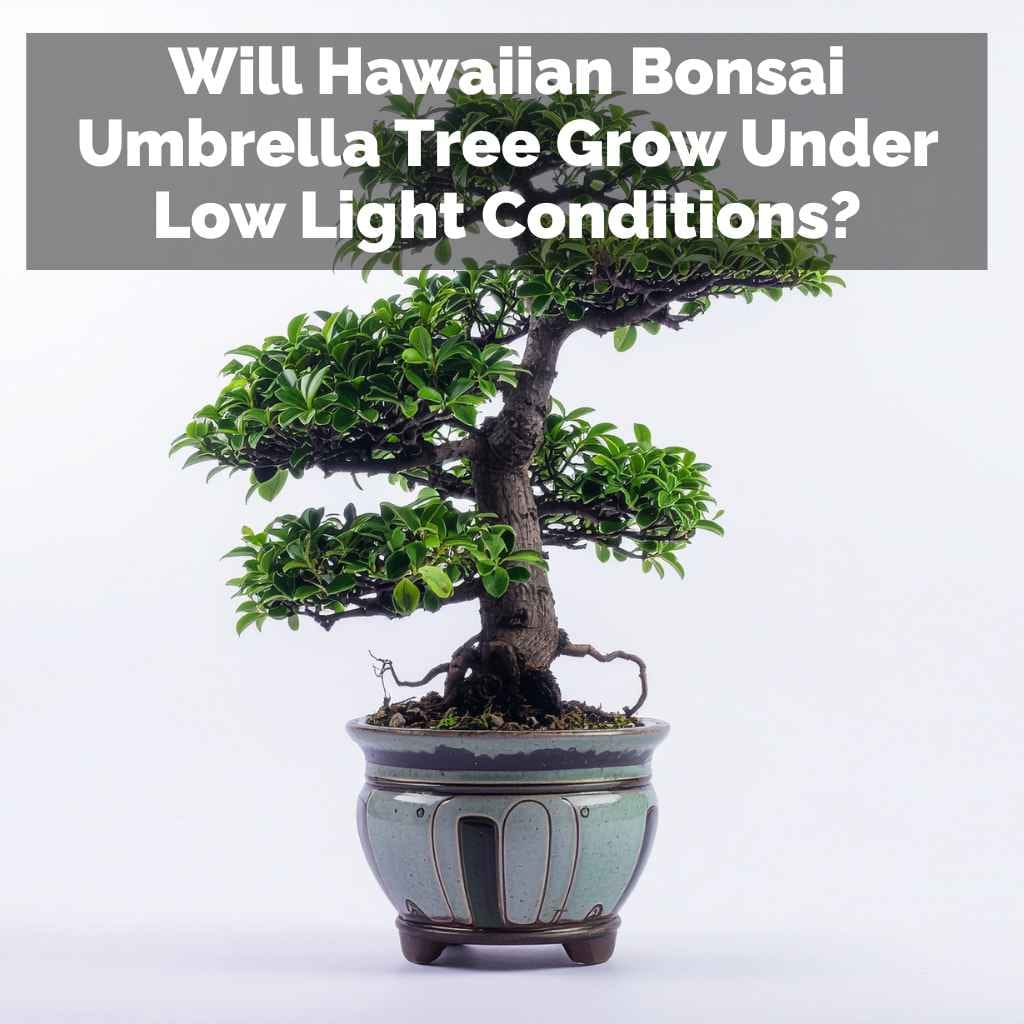
Will Hawaiian Bonsai Umbrella Tree Grow Under Low Light Conditions?
A Hawaiian Bonsai Umbrella Tree can survive in low light conditions, but it may not thrive. It prefers bright, indirect light. Growth will likely be slower, leaves might be smaller, and it could become leggy if kept in very dim areas for too long. Occasional placement in brighter spots helps.

Brussel's Bonsai
Brussel's Bonsai Live Hawaiian Umbrella Bonsai Tree…
- CONTENTS: Bonsai, Decorative Container (Assorted Colors & Styles), Soil, Care Instructions.
- SPECIES: Glossy green leaves are delicately divided and upright umbels produce orange-red to black berries. The leaves are miniatu…
- AGE/SIZE/CARE: Your small 3 year old bonsai will arrive at 5" to 8" tall in a 6" container and will perform best indoors (see deta…
As an Amazon Associate I earn from qualifying purchases.
Readers comparing bonsai options may also find What Kind of Bonsai Will Grow in Northern Minnesota? Top Picks useful before choosing a tree or pot.

Understanding Your Hawaiian Bonsai Umbrella Tree’s Light Needs
Hawaiian Bonsai Umbrella Trees, scientifically known as Schefflera arboricola, are popular for their striking appearance. They look like little umbrellas with their leaves fanning out from stems. In their natural habitat, these trees grow in tropical forests.
This means they are used to dappled sunlight. Think of the light that filters through a thick canopy of larger trees.
This type of light is called bright, indirect light. It’s not harsh sunlight that can scorch leaves. It’s also not the dark gloom of a windowless room.
It’s somewhere in between. This gentle light helps them photosynthesize effectively. Photosynthesis is how plants make their food.
When you bring a Schefflera indoors, this is the kind of light they generally prefer. An east-facing window is often ideal. You can also place them a few feet back from a south or west-facing window.
This helps avoid direct, hot sunbeams. These beams can damage the delicate leaves.
So, what does “low light” really mean for a plant? It usually means a spot that doesn’t get direct sun for most of the day. It might be a north-facing window.
Or it could be a room with no windows at all, relying only on artificial light. Some plants can do okay in these spots. Others will really struggle.
For the Umbrella Tree, “low light” is pushing its limits. It’s more about survival than vibrant growth. The plant won’t die immediately.
But it will show signs that it’s not getting enough of what it needs. Recognizing these signs is key to keeping your tree healthy.
Low Light Survival vs. Thriving
Survival: The plant stays alive. It might look okay but won’t grow much. It can endure less-than-ideal conditions for a while.
Thriving: The plant grows well. Leaves are full and bright. It looks healthy and robust.
It gets the resources it needs.
An Umbrella Tree in low light is usually in survival mode. It needs more light to truly thrive and show its best growth.

My Experience with Schefflera in Different Light
I remember when I first got my own little Schefflera bonsai. It was so cute and full of life. I lived in a smaller apartment back then.
The best spot I had that wasn’t in direct sun was a corner near a north-facing window. It was pretty dim in there, especially in the winter months.
At first, the tree looked fine. The leaves were still green. I was so happy I had found a plant that seemed to tolerate my less-than-perfect lighting.
But after a few months, I started noticing changes. The new leaves that came out were smaller than the older ones. The stems began to stretch, reaching out towards the window.
It looked a bit awkward, almost like it was trying to escape the dimness.
I remember feeling a little worried. Was I killing it? I did some reading and realized I was asking it to do something it wasn’t built for.
While it survived, it certainly wasn’t happy. It wasn’t growing new branches or getting bushier like I’d hoped. It just sort of.
existed. That’s when I learned about the importance of bright, indirect light for these trees. I eventually moved it to a spot that got more morning sun, and within a few weeks, I saw a big difference.
New, healthy leaves started to unfurl, and the leggy growth seemed to stop.
Signs Your Umbrella Tree Needs More Light
Your plant is a great communicator. It will tell you when something is wrong. For a Schefflera in low light, watch out for these common signals.
They are your plant’s way of saying, “Hey, I need more sunshine here!”
One of the first things you might notice is reduced growth. If your tree normally puts out new leaves every few weeks, and suddenly it stops, that’s a big clue. Even in its natural habitat, plants grow actively when they have enough light.
Low light means less energy to build new parts.
Another common sign is leaf color changes. The leaves might become a duller green instead of a vibrant one. Sometimes, variegated types of Umbrella Trees might lose their white or yellow patterns.
The plant tries to maximize the green chlorophyll it has to capture any bit of light available. This can make the white parts fade.
You might also see the plant becoming “leggy.” This means the stems between the leaves get longer. The plant is stretching its branches to try and reach a light source. The leaves will be farther apart on the stem.
It makes the plant look sparse and less full. This is a clear sign of insufficient light.
Falling leaves can also happen. If the plant isn’t getting enough light, it might start dropping older leaves. This is its way of conserving energy.
It can’t support all the foliage it has. So, it lets go of the leaves that are least efficient at making food.
Common Low Light Symptoms
Symptom: Slow or No New Growth
Meaning: Plant lacks energy to build new leaves or stems.
Symptom: Smaller New Leaves
Meaning: Not enough light to produce full-sized foliage.
Symptom: Leggy, Stretched Stems
Meaning: Plant reaching desperately for a light source.
Symptom: Dull Green Leaves
Meaning: Chlorophyll adaptation to low light.
Symptom: Variegation Fading
Meaning: Plant prioritizing green parts for light capture.
Symptom: Leaf Drop
Meaning: Plant shedding leaves to conserve energy.
How “Low Light” Affects Growth and Health
When your Hawaiian Bonsai Umbrella Tree is in low light, its entire life cycle is affected. Photosynthesis is the engine of plant growth. Less light means a weaker engine.
The process starts with light hitting the leaves. Chlorophyll, the green pigment, captures this light energy. This energy is used to turn carbon dioxide from the air and water from the soil into sugars.
These sugars are the plant’s food. They fuel everything: growing new leaves, making stems stronger, and developing roots.
In low light, the plant simply can’t make enough sugars. This has several consequences.
First, growth slows down. You won’t see that exciting spurt of new leaves. The plant might even go dormant, especially if the light is very poor.
It’s like someone not eating enough – they won’t have the energy to run around and play.
Second, the plant’s structure can change. To try and capture more light, the plant will stretch. The stems grow longer and thinner.
This is called etiolation. It makes the plant look weak and unbalanced. It’s not a sign of healthy growth, but a sign of stress.
Third, the plant becomes more vulnerable to problems. A stressed plant has a weaker defense system. It can be more susceptible to pests like spider mites or mealybugs.
These tiny invaders often target weak plants. Also, too much water in low light conditions can lead to root rot. The soil stays wet longer because the plant isn’t using water as quickly.
Overwatering is a common killer of houseplants. In low light, it’s an even bigger risk.
So, while your tree might technically “live” in low light, it’s not living its best life. It’s a survival situation. For a bonsai, which is meant to be a miniature, healthy specimen, this is far from ideal.
The goal of bonsai is to create a beautiful, miniature representation of a mature tree. This requires good health and growth, which needs adequate light.
Think of it like this: if you had to eat only a small snack once a day, you’d survive, but you wouldn’t be able to do your best work or feel your best. Your plant is in a similar situation with light.
Contrast: Normal Growth vs. Low Light Growth
Normal Growth (Bright, Indirect Light):
- Vibrant, healthy green leaves.
- Leaves are well-spaced on sturdy stems.
- New growth is robust and frequent.
- Plant has a full, bushy appearance.
- Overall strong and healthy look.
Low Light Growth:
- Dull or pale green leaves.
- Stems are long and thin (leggy).
- New leaves are smaller and fewer.
- Plant may appear sparse or unbalanced.
- Increased risk of pests and diseases.
Can You Help Your Tree in Low Light?
If moving your tree to a brighter spot isn’t an option, there are things you can do. These won’t magically make it love low light, but they can help it cope better. They can minimize the negative effects.
Supplement with Artificial Light: This is the most effective way to help. You can use a grow light. Many affordable LED grow lights are available.
You don’t need a fancy setup. A simple clip-on grow light or a small desk lamp with a grow bulb can make a big difference. Position the light so it shines on the tree for 10-12 hours a day.
This mimics natural daylight hours.
Rotate Your Tree: Even in low light, some parts of the plant might get slightly more light than others. Turn your tree a quarter turn every week or so. This ensures all sides get a chance to receive what little light is available.
It helps prevent the plant from growing too lopsided.
Adjust Watering: Because the plant uses less water in low light, you need to water less often. Always check the soil moisture before watering. Stick your finger about an inch or two into the soil.
If it feels dry, then water. If it still feels moist, wait longer. Overwatering is a huge risk in low light conditions.
Keep it Clean: Dust on the leaves can block even the limited light that is available. Gently wipe the leaves with a damp cloth every month or so. This helps the leaves absorb light more efficiently.
Avoid Fertilizing Too Much: A plant that isn’t growing much doesn’t need a lot of fertilizer. In fact, over-fertilizing can harm it. Fertilize only during the growing season (spring and summer).
Use a diluted liquid fertilizer. And only fertilize when the plant is showing signs of active growth. If it’s in low light and not growing, skip the fertilizer.
Prune Carefully: If your tree becomes very leggy, you might consider pruning. However, prune sparingly. Removing too many leaves from a plant already struggling for light can stress it further.
Focus on removing dead or weak branches. You can also prune to shape it if it’s getting too wild. But remember, pruning encourages new growth, which needs light.
It’s important to be realistic. These tips will help your tree survive and perhaps show some modest improvement. But they won’t transform it into a lush, fast-growing specimen if the light is truly insufficient.
The best solution is always to provide the right environment.
Quick Fixes for Low Light Stress
What to Do: Use a small LED grow light.
Why: Provides necessary light energy.
What to Do: Rotate the plant weekly.
Why: Ensures even light exposure.
What to Do: Water only when soil is dry.
Why: Prevents root rot from slow drying.
What to Do: Wipe leaves clean.
Why: Improves light absorption.
What to Do: Fertilize sparingly, if at all.
Why: Plant has low energy needs.
Real-World Scenarios: Where Does Low Light Happen?
Let’s talk about where these low light situations commonly occur in American homes. Understanding these spots can help you assess your own home for your Hawaiian Bonsai Umbrella Tree.
North-Facing Windows: These windows receive very little direct sunlight. In the summer, you might get a bit of indirect light. In the winter, it can be quite dark.
If your Umbrella Tree is right against a north-facing window, it’s likely in low light.
Interior Rooms: Any room far from windows, like hallways, bathrooms without windows, or bedrooms on the interior of the house, will have low light. Even a room with windows but deep interior corners will be considered low light.
Behind Blinds or Curtains: If you keep blinds or curtains closed most of the time, even a window that gets good light can become a low light spot. The material of the curtains can filter out a lot of the light intensity.
Underneath Other Plants: Sometimes people arrange plants together. If your Umbrella Tree is placed under a larger, bushier plant that blocks most of the light, it will be in a low light situation.
South or West-Facing Windows with Obstructions: Even if you have a bright window, if there’s a tall building, large tree, or overhang outside that blocks the sun for most of the day, the light inside might be significantly reduced. This can create a low light environment even with a “good” window.
Consider your home’s layout. The orientation of your windows matters. A north-facing window gets different light than a south-facing one.
The amount of direct versus indirect light is key. Observe the light in your home throughout the day. See where the sun hits and where it doesn’t.
This will give you a good idea of the light levels your plant is experiencing.
For instance, I once had a client whose home had beautiful large windows. But they faced directly south, and the homeowner kept heavy, light-blocking drapes closed all day to protect their furniture from fading. The room was bright enough for us to see, but for a plant, it was a low light spot.
This is a common mistake people make – thinking “bright room” equals “enough light for plants.”
What This Means for Your Bonsai
For a bonsai, the stakes are a bit higher. Bonsai enthusiasts aim for perfection in miniature. This means creating a plant that looks healthy, vigorous, and ancient, all in a small pot.
If your Hawaiian Bonsai Umbrella Tree is in low light, it will struggle to achieve this. Its growth will be stunted. The leaves might not have that glossy sheen.
The structure might become weak and stretched, which is the opposite of what you want in a bonsai. A well-trained bonsai should have a strong, well-proportioned trunk and branches.
When it’s normal: It’s normal for a plant to have slower growth in winter. It’s also normal for growth to slow down a bit as a plant matures. However, if your tree consistently shows signs of legginess, small leaves, or lack of new growth throughout the year, it’s likely due to light.
When to worry: You should worry if your tree is dropping a significant number of leaves, if the stems are becoming very thin and weak, or if you see pests appearing. These are clear signs that the plant is under stress and can’t cope with the low light environment.
Simple checks: The easiest check is to observe the light. Does the spot where your tree sits get any direct sun? If not, how bright is it when the sun is at its peak?
If you can easily read a book in that spot without needing to turn on a lamp, it might be okay. If it’s quite dim, it’s probably too low.
Another check is to look at the plant itself. Are the new leaves growing smaller? Are the stems stretching out?
Are the leaves a dull, pale green? These are all red flags indicating insufficient light.
If you’re committed to keeping it in that low light spot, understand that it will likely never reach its full potential as a bonsai. You’ll be managing it to keep it alive, rather than encouraging it to flourish and develop the classic bonsai aesthetic.
Bonsai Health in Low Light: Quick Scan
Indicator: Leaf Size
Normal: Full, proportionate size.
Concerning: Consistently smaller than previous leaves.
Indicator: Stem Growth
Normal: Sturdy, compact growth.
Concerning: Long, thin, stretched stems (leggy).
Indicator: Leaf Color
Normal: Rich, vibrant green.
Concerning: Pale, dull, or yellowing green.
Quick Tips for Better Light Exposure
Even if you can’t provide ideal light, you can make small changes that help your Hawaiian Bonsai Umbrella Tree do better. These aren’t drastic fixes, but gentle adjustments.
Move it Closer to a Window: Even a foot or two closer to a window can make a difference. If it’s across the room, try bringing it closer. Be mindful of drafts or direct, harsh sunbeams if the window is very strong.
Use a Light Meter App: Many smartphone apps can measure light intensity in lux or foot-candles. While not perfectly accurate, they give you a comparative idea of light levels in different spots in your home.
Consider a Grow Light: As mentioned, a simple LED grow light is a game-changer for low light plants. You can get full-spectrum bulbs that mimic natural sunlight. Place it above or to the side of your tree for several hours a day.
Clean Your Windows: Dirty windows can block a surprising amount of light. Give your windows a good cleaning, inside and out. This allows more natural light to enter your home.
Trim Away Dense Foliage (Carefully): If parts of the plant are so dense that light can’t penetrate to the inner stems, very light pruning might help. But again, be extremely cautious. You don’t want to remove too much greenery.
Accept Limitations: Sometimes, the best tip is to accept that a plant is not suited for a particular spot. If you’ve tried everything and your tree is still unhappy, it might be best to find it a new home with more appropriate lighting. This is not a failure, but rather an act of care for the plant.

Frequently Asked Questions
Can my Hawaiian Bonsai Umbrella Tree survive outdoors in full sun?
No, typically not. While they love bright light, full, direct sun, especially in the hot afternoon, can scorch their leaves. They prefer bright, indirect light or morning sun.
If moving outdoors, acclimate it gradually to prevent sunburn.
How often should I water my Umbrella Tree in low light?
You should water less often than you would in bright light. Always check the soil moisture first. Stick your finger about an inch or two into the soil.
If it feels dry, then water thoroughly. If it still feels moist, wait longer. Overwatering is a major risk in low light.
What are the best companion plants for a low light Umbrella Tree?
For a low light environment, consider plants that also tolerate shade, such as Snake Plants (Sansevieria), ZZ Plants (Zamioculcas zamiifolia), or Cast Iron Plants (Aspidistra elatior). However, ensure they don’t completely block any light from your Umbrella Tree.
Will my Umbrella Tree bloom in low light?
Umbrella Trees do bloom, but it’s rare indoors. Blooming requires optimal conditions: good light, proper nutrients, and maturity. In low light, the plant is focused on survival, not flowering.
You’re unlikely to see blooms if it’s not getting enough light.
How can I tell if my Umbrella Tree is getting enough light?
Signs of enough light include consistent new growth, healthy vibrant green leaves, and a compact, bushy appearance. The leaves will be well-spaced on sturdy stems. Variegated types will retain their patterns.
It will generally look robust and actively growing.
Is it okay for my Schefflera to lean towards the window?
While it’s natural for plants to lean towards light, it’s a sign your Hawaiian Bonsai Umbrella Tree isn’t getting enough. Ideally, you want it to grow upright and balanced. Rotating the plant regularly can help prevent extreme leaning, but it’s a signal that the overall light level might be too low.
Final Thoughts on Light for Your Tree
So, can your Hawaiian Bonsai Umbrella Tree grow under low light? Yes, it can survive. But to truly thrive and maintain that beautiful bonsai form, it really needs more.
Think of it as a plant that can get by on a very small meal, but it won’t be its healthiest or most energetic self. Providing bright, indirect light is the best way to ensure your tree stays happy, grows well, and looks its best.
Related pick: Check today's price on Amazon