How to Water Botanical Garden Plants Efficiently
Water botanical garden plants by bed type: use drip or soaker hoses for dense beds, spot-water containers and specimen plants, and deep soak on a schedule that matches each bed’s moisture demand. Wrong timing or method wastes water, encourages shallow roots, and can push disease in crowded collections. This guide shows how to match watering method to plant density, soil, and collection type so you cut waste and keep mixed beds evenly moist.
What you’ll need


- Drip irrigation system for planted beds that need slow, direct root watering
- Soaker hose for borders and mixed collections
- Watering can with rose attachment for small beds and containers
- Hose with spray gun attachment for variable reach and flow
- Water butt for captured roof runoff
- Mulch, organic or paper-based
- Water-retaining granules for pots and hanging baskets at planting time
- Simple moisture check tool, or your hand, for checking the root zone
Start with the bed type
Match the tool to the planting, not to a fixed schedule. Dense collections usually need slow delivery at the root zone; open borders can take a soaker hose; containers need close control; slopes need slower delivery to stop runoff. The first job is to predict the main failure mode: runoff, splash, poor soak-in, or overwatering.
Drip irrigation system works best when you want water delivered directly to roots in planted beds. It applies water slowly, cuts runoff and evaporation, and can save time and water. Soaker hose is a strong alternative to hand watering for borders and mixed beds. A watering can with a rose attachment suits small beds and containers because it directs flow more gently.
Use a spray gun hose attachment only when you need variable reach or mixed bed access. Keep the output low enough to avoid washing water onto paths and hardscape. A water butt stores roof runoff from houses, garages, sheds, and greenhouses, which reduces reliance on mains water. Captured rainwater is often warmer than mains water, but not always, so treat that as a useful tendency rather than a rule.
How do you water botanical garden plants efficiently?

Water at the base, soak the root zone, and apply water slowly so it can move down instead of running off. Deep watering beats light sprinkling because it drives moisture into the active root zone, where plants can use it. In hot weather, some beds may need a good soak every two or three days.
Start at the soil surface and work downward. If the top looks damp but the root zone is still dry, stop relying on surface wetting. The point is not to wet every leaf or top inch of soil; the point is to get moisture where roots are feeding.
- Check the bed type and root depth before you turn anything on.
- Set the delivery method for that bed: drip, soaker hose, watering can, or spray gun.
- Water at the base, not over foliage, to limit fungal disease.
- Apply water slowly until it has time to soak in.
- Pause and check below the surface; if the root zone is still dry, add 5 minutes or another 2 litres, then check again.
- Stop when the moisture is even at root depth, not only at the surface.
Say your tropical border has broad leaves, a dense canopy, and fine feeder roots near the surface. Drip lines placed along the base can keep foliage drier while feeding the root zone. Suppose a shallow splash from a hose wets the leaves instead; the bed may still dry out underneath, while disease pressure rises on crowded growth.
What is the best time of day to water garden plants?

Water in the early morning or in the evening. Those cooler windows cut evaporation losses, which matters most in hot weather. Midday watering wastes more water because heat and air movement pull moisture away before it can sink into the soil.
Use hot-weather triggers instead of a fixed weekly habit. Dry topsoil is only a starting clue. Check deeper, because shade, wind, mulch, slope, and pot size all change how quickly a bed dries. A shaded woodland bed may hold moisture far longer than a raised annual display beside a paved path.
Watering tools by bed type
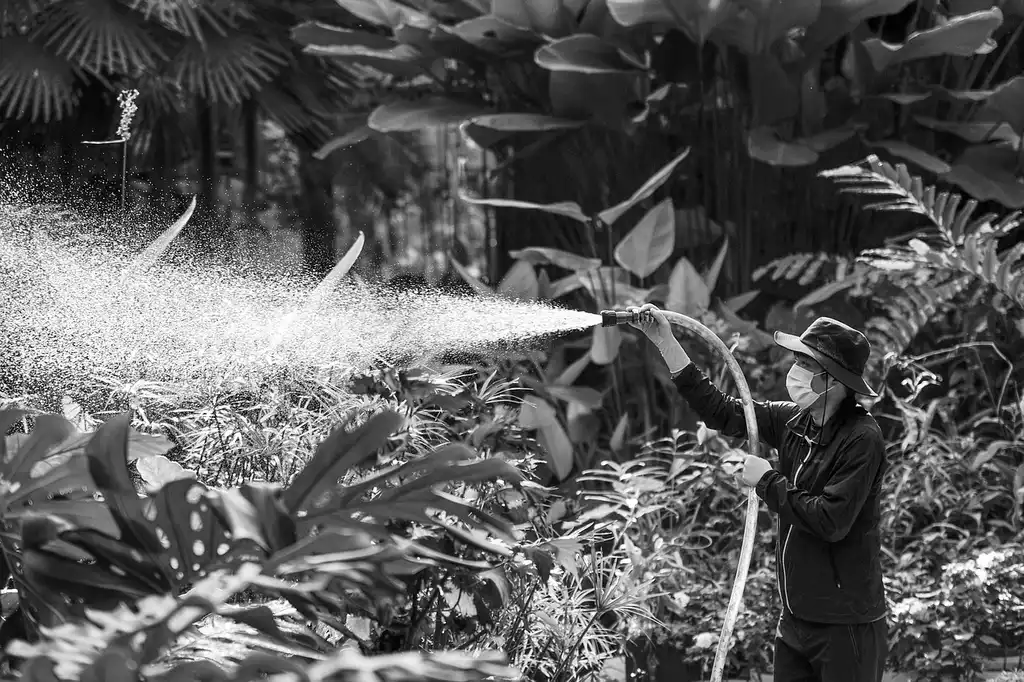
Choose the tool that matches spacing, access, and the need for control. Botanical gardens often mix plant groups in one route, so the least wasteful tool is the one that can reach roots without spraying paths, signs, or foliage.
| Bed type | Root depth | Delivery method | Watering frequency trigger | Common failure mode | Water-saving note |
|---|---|---|---|---|---|
| Tropical border | Moderate | Drip irrigation or soaker hose | Top inch dries and leaves start to lose turgor | Runoff at the surface | Slow delivery keeps water at the base and limits spray on foliage |
| Drought-tolerant bed | Deep | Soaker hose or targeted watering can | Soil is dry several inches down | Overwatering | Deep soak less often beats frequent shallow watering |
| Container display | Shallow to moderate | Watering can with rose attachment | Pot feels lighter and mix is dry below the surface | Dry pockets in potting mix | Water slowly until the whole root ball is evenly moist |
| Newly planted specimen | Shallow at first | Hand watering or drip ring | Roots have not yet spread beyond the original ball | Surface-only wetting | Frequent base watering helps roots establish in place |
| Slope | Variable | Drip irrigation on a slow cycle | Water starts to move downhill before soaking in | Channeling and runoff | Short pulses with rest periods give water time to infiltrate |
| Shade bed | Often moderate | Soaker hose or targeted hand watering | Surface looks dry but deeper soil is still moist | Overwatering from habit | Lower evaporation means you can check less often, not ignore the root zone |
| Raised bed | Moderate | Drip irrigation or watering can | Topsoil dries quickly after wind or sun | Fast drying at the edge | Mulch reduces evaporation and keeps the root zone steadier |
| Seasonal annual display | Shallow | Soaker hose or watering can with rose attachment | Daily heat and wind dry the top layer fast | Shallow rooting plus surface wetting | Even moisture matters more than heavy soaking in one pass |
Should I water the soil or the leaves of plants?
Water the soil, not the leaves. Base watering puts moisture where roots can use it and lowers the chance of fungal disease in crowded beds. Leaf wetting is slower to help the plant and more likely to waste water through evaporation or runoff.
That rule matters most in dense botanical collections where plants touch or nearly touch. It is also useful around display paths, where splashing can stain paving and send water outside the bed. If the foliage is dusty or hot, that still does not make the leaves the main target.
Botanical bed watering matrix
Use this decision matrix before you water. It pairs bed type with delivery method, trigger, and the most common waste point so you can choose the least wasteful setup first.
| Bed type | Root depth | Delivery method | Watering frequency trigger | Common failure mode | Water-saving note |
|---|---|---|---|---|---|
| Tropical border | Moderate | Drip irrigation | Surface dries and stems begin to droop by afternoon | Leaf wetting and runoff | Direct root delivery reduces waste in dense planting |
| Drought-tolerant bed | Deep | Soaker hose | Soil dry several inches down | Too-frequent watering | Deep soaking supports deeper rooting and fewer watering visits |
| Container display | Shallow to moderate | Watering can with rose attachment | Mix is dry below the top layer | Dry pockets in compost | Gentle flow prevents mix from blowing out of the pot |
| Newly planted specimen | Shallow at first | Hand watering at the base | First weeks after planting, then by root-zone moisture | Roots never spread outward | Frequent root-zone checks prevent early stress |
| Slope | Variable | Drip irrigation | Water begins to run downhill | Channeling | Slow application lowers runoff and helps absorption |
| Shade bed | Moderate | Soaker hose | Deeper soil is dry, not just the surface | Watering by habit | Lower evaporation means longer intervals between checks |
| Raised bed | Moderate | Drip irrigation or watering can | Topsoil dries fast after wind | Fast edge drying | Mulch helps the bed hold moisture longer |
| Seasonal annual display | Shallow | Soaker hose or watering can with rose attachment | Daily heat pulls moisture from shallow roots | Uneven wetting | Even coverage matters more than a heavy one-time soak |
What goes wrong most often
Runoff is a common loss point on slopes, compacted beds, and dry potting mix. If water beads and slides away, slow the flow, split the watering into two passes, or move to drip. Clogged emitters cause the opposite problem: some plants stay dry while others flood.
Water-retaining granules belong in compost at planting time for pots and hanging baskets. Do not add them to an already waterlogged container; extra water-holding material will not fix a pot with poor drainage. Popular Science warns that pots without drainage can cause root rot and death within two weeks.
A common first-timer mistake is to water a 40 cm container until the top looks wet, then stop. If the mix is hydrophobic, the water may run down a side channel. In that case, pour more slowly, pause for absorption, and recheck the lower half of the pot.
How do I know if I have watered plants enough?
Check moisture at root depth, not only on the surface. A good target is an even, wrung-out-sponge feel in the root zone, with no dry pocket and no standing water. If the top looks damp but the lower soil is dry, the plant still needs more water.
For containers, lift the pot and feel the weight, then check the mix a few centimetres below the surface. For beds, probe with a hand trowel or your finger at the base of the plant. If the soil is wet at the top and still dry below, keep watering slowly until the lower zone changes.
If that didn’t work
Try a slower delivery method, not more volume at once. For beds, switch from hose spray to drip or soaker hose. For containers, water in two passes with a short pause between them. That pause gives dry compost time to absorb water instead of repelling it.
- Turn the water down until it moves steadily without splashing.
- Apply about 5 minutes more for a bed zone, then recheck at root depth.
- For a container, add about 2 litres, wait about 2 minutes, and check again.
- If water still runs off, break the session into two cycles instead of one long burst.
Prevention is simple: mulch exposed beds and keep emitters clear. A mulch layer, organic or paper-based, helps soil stay moist longer and reduces evaporation, which cuts how often you need to water.
Frequently asked questions
Is drip irrigation better than hand watering for garden plants?
For dense beds and longer borders, yes. Micro-drip irrigation systems deliver water directly where plants can use it, and that usually cuts waste. Hand watering still makes sense for containers, small displays, and specimens that need a close check before you stop.
How often should newly planted botanical garden plants be watered?
Water them more often than established plants until roots spread into surrounding soil. In hot weather, that may mean a good soak every two or three days for some beds. Use the root zone as the trigger, not a fixed weekly calendar.
Can rainwater be used for botanical garden plants?
Yes. A water butt collects roof runoff from houses, garages, sheds, and greenhouses, which can reduce mains use. Rainwater is often a practical choice for garden plants, but use it as part of a wider watering plan rather than as the only answer.
What watering tools waste the least water in garden beds?
Drip irrigation usually wastes the least water because it applies moisture slowly at the roots. Soaker hose is the next best fit for many borders. A watering can with a rose attachment is useful for small spaces, while a spray gun should be kept low and controlled.
Is bottled water good for plants?
It is rarely the right choice for botanical beds when tap water, rainwater, or captured runoff is available. Bottled water adds cost and waste without offering a watering advantage for most garden plants. For efficient irrigation, put the water budget into delivery method and timing instead.
Why is water good for plants?
Plants need water to move nutrients and keep cells functioning, so the goal is to deliver it where roots can absorb it. Watering the root zone, deeply and at the right time, helps plants use less energy coping with stress and more energy on growth.