Can You Visit a Botanical Garden with a Service Animal?
Yes, a botanical garden must generally allow a service dog, and in some cases a miniature horse, in public areas. A wrong assumption can mean denied entry, a shortened visit, or a confusing conversation at the gate. This guide covers access rules, common exceptions, arrival planning, and what to do about therapy animals, emotional support animals, and disruptive behavior.
Service animal access basics
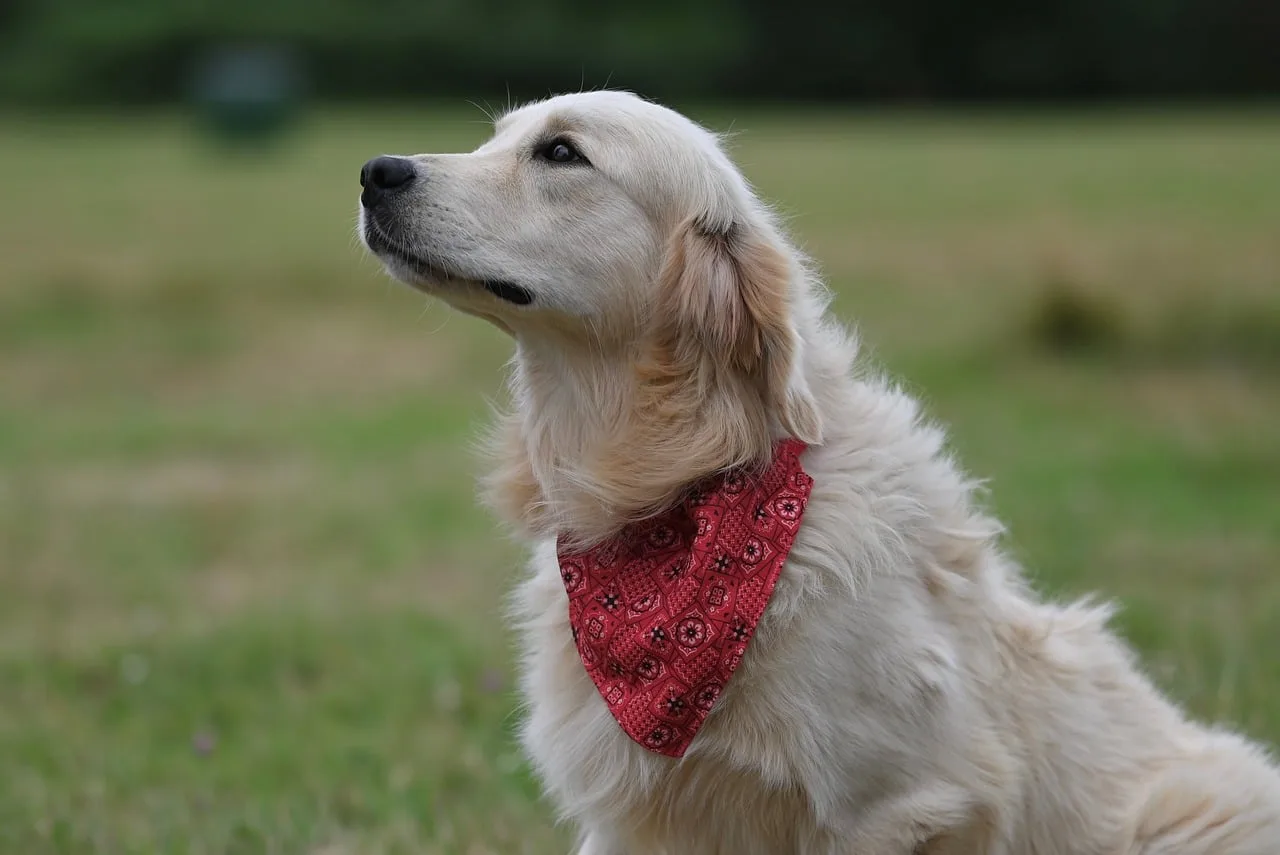
Botanical gardens generally allow service animals under ADA-style rules, while pets are usually excluded. The key question is simple: is the animal individually trained to do work or perform tasks for a disabled handler? If yes, the garden should treat it differently from a pet, and usually differently from a therapy animal too.
What a service animal is under ADA-style rules
A service animal is individually trained to do work or perform tasks. That training, not the species label alone, is what matters. The handler should keep the animal under control, and the animal should be housebroken. Those are the baseline access rules gardens commonly use.
Some gardens use the term assistance dog for the same idea: a trained dog supporting a disabled handler. The wording can vary, but the access question stays the same. Is the animal trained for the handler’s disability, and can the handler maintain control in public spaces?
Why pets and service animals are treated differently
Pets are generally excluded because they are not working under a disability-related task. That distinction matters at the gate and inside the garden. Staff can usually enforce a pets-not-allowed policy without treating a service animal as a pet, but they can still step in if the service animal is out of control or not housebroken.
What botanical garden admission policies usually say
Many botanical gardens say service animals are welcome and pets are not. Some also state the rule in ADA and local human rights law terms, which can matter if the garden is public, private, or university-run. The policy language may also mention behavior standards, accessible routes, and where to ask questions before arrival.
Can you bring a service animal to a botanical garden?
Usually yes, if the animal qualifies as a service animal and the garden is open to the public. That answer changes if the animal is a pet, an emotional support animal, or a therapy animal. Specific garden rules and local law still matter, especially where the site has rough paths, limited entrances, or strict behavior standards.
When the answer is usually yes
If the animal is individually trained to do work or perform tasks, and the handler can keep it under effective control, the usual answer is yes. Brooklyn Botanic Garden welcomes visitors using service animals, while also saying pets are not allowed. That kind of policy is common across botanical gardens.
When a garden may raise access concerns
Access concerns usually come up when the animal is not clearly a service animal, cannot stay controlled, or cannot fit the route. A rough slope, narrow bridge, or historic path may make movement harder, but that does not cancel service-animal access by itself. It does mean you should plan the route before you arrive.
Say your 45-pound service dog is trained to guide you, but the garden map shows a steep gravel shortcut to the main conservatory. The dog may still enter, but you should choose the paved route and avoid a section that is too narrow or unstable for safe movement.
How local rules and site policy can affect entry
Botanical garden access can be shaped by local human rights law, facility rules, and the garden’s own admission policy. Some sites are strict about entrances, accessible parking, and where animals may pause. Others provide a clearer contact email for unusual needs. When the route or the animal’s role is unusual, use that contact before you go.
What staff can ask or enforce
Garden security staff can enforce behavior rules. They may ask for correction, and in some cases they may ask for removal. They can usually focus on conduct, not diagnosis. That means control, housebroken behavior, and disruption are the key issues, not proof of disability or a certification document.
Control, leash, harness, or tether rules
A service animal must be harnessed, leashed, or tethered unless that interferes with the work or the handler’s disability. The handler must maintain control through voice, signal, or other effective controls. If the animal repeatedly pulls the leash, wanders off, or ignores commands, staff may treat that as a control problem.
Housebroken and behavior standards
The animal must be housebroken. That is a direct admission standard in many policies. Staff can also enforce no barking, whining, biting, growling, jumping, scratching, leash pulling, or sniffing other visitors in one policy. Those are behavior-based rules, and they are often the first reason a visit becomes complicated.
A common first-timer mistake is assuming “well-behaved most of the time” is enough. If a dog keeps barking near a quiet glasshouse or repeatedly sniffs other visitors in a narrow path, staff may tell the handler to correct the behavior or leave the area.
When removal can happen
A service animal may be removed if it is out of control or not housebroken. That is the practical limit many gardens use. Once removed, the handler may still be allowed to return without the animal, if the garden permits that, or may need to make a different visit plan.
Therapy and emotional support animals
Therapy animals and emotional support animals are often not permitted, even when a true service animal is allowed. That is one of the biggest access mistakes visitors make. A friendly, calming animal is not the same thing as a trained service animal, and many garden rules say so plainly.
Why therapy animals are often excluded
Therapy animals are often excluded because they are not individually trained to do disability-related work for a handler in the public-access sense. Cambridge University Botanic Garden says only trained guide and assistance dogs are permitted, and no other animal is allowed, including therapy animals. That is a clear example of a narrower access rule.
Why emotional support animals are usually not covered
Emotional support animals are usually not covered because emotional support alone is not the same as a trained task. If a garden allows service animals under ADA-style rules, that still does not mean an ESA has the same access. Unless the site policy says otherwise, expect exclusion.
How assistance dog wording can differ by garden
Some gardens say “assistance dog” instead of “service animal.” That wording can be helpful, but it does not widen access to pets or therapy animals. It usually means a trained dog supporting a disabled handler. The practical question remains control, task-related training, and compliance with the site’s admission policy.
Can a botanical garden ask a service animal to leave?
A botanical garden can ask a service animal to leave if the animal is out of control or not housebroken. Removal is usually about behavior, not status. If the problem can be corrected quickly, staff may allow the visit to continue. If not, the animal may have to exit.
Out-of-control behavior
Out-of-control behavior includes repeated barking, lunging, jumping, biting, growling, scratching, or persistent leash pulling. Some garden policies also mention sniffing other visitors. Staff can request correction first. If the handler cannot regain effective control, removal can follow.
Non-housebroken animals
If the animal is not housebroken, staff can remove it. That issue is not solved by a leash, a vest, or a handler explanation. A service animal still has to meet the basic sanitation standard. If there is an accident, the visit may end immediately, depending on the garden’s rules and the severity of the problem.
What happens after removal
After removal, the handler may still be able to continue the visit without the animal, or may need to leave and return another time. Some gardens will direct the handler to an accessibility contact or guest services desk for future planning. If the issue was route-related, ask about a different entrance or a shorter path next time.
Can my animal enter this botanical garden?
Use this checklist before you leave home. It helps you decide whether the animal fits service-animal access rules, whether the route is realistic, and whether you need to contact the garden first. A final “go” only makes sense if every core access point is a yes, or clearly covered by an accommodation plan.
| Check | Yes or no | Why it matters |
|---|---|---|
| Trained service task | Yes / No | The animal must be individually trained to do work or perform tasks. |
| Handler control | Yes / No | You must maintain effective control through voice, signal, or another method. |
| Leash, tether, or harness compatibility | Yes / No | The animal must be harnessed, leashed, or tethered unless that interferes with the task or disability. |
| Housebroken | Yes / No | Unclean behavior can lead to removal. |
| Non-aggressive behavior | Yes / No | No barking, whining, biting, growling, jumping, scratching, leash pulling, or sniffing other visitors. |
| No pet or ESA status | Yes / No | Pets and emotional support animals are usually not allowed under service-animal rules. |
| Path access check | Yes / No | Confirm paved, hardscape, or otherwise workable routes; rough or steep sections may be difficult. |
| Restroom plan | Yes / No | Plan where the handler can use restrooms and where the animal can wait. |
| Contact email used | Yes / No | Use the accessibility contact or email if your needs are unusual or the route is uncertain. |
| Final result | Go / No-go | If any core rule is no, or the route is not workable, adjust the plan before arrival. |
Planning your visit
Plan the visit around access, not just admission. Botanical gardens can have paved paths, hardscape walkways, rough gravel, steep grades, narrow turns, and historic sections that feel very different from one another. The more complex the layout, the more important it is to map entrances, restrooms, shade, and an exit route.
Accessible routes, entrances, and rough terrain
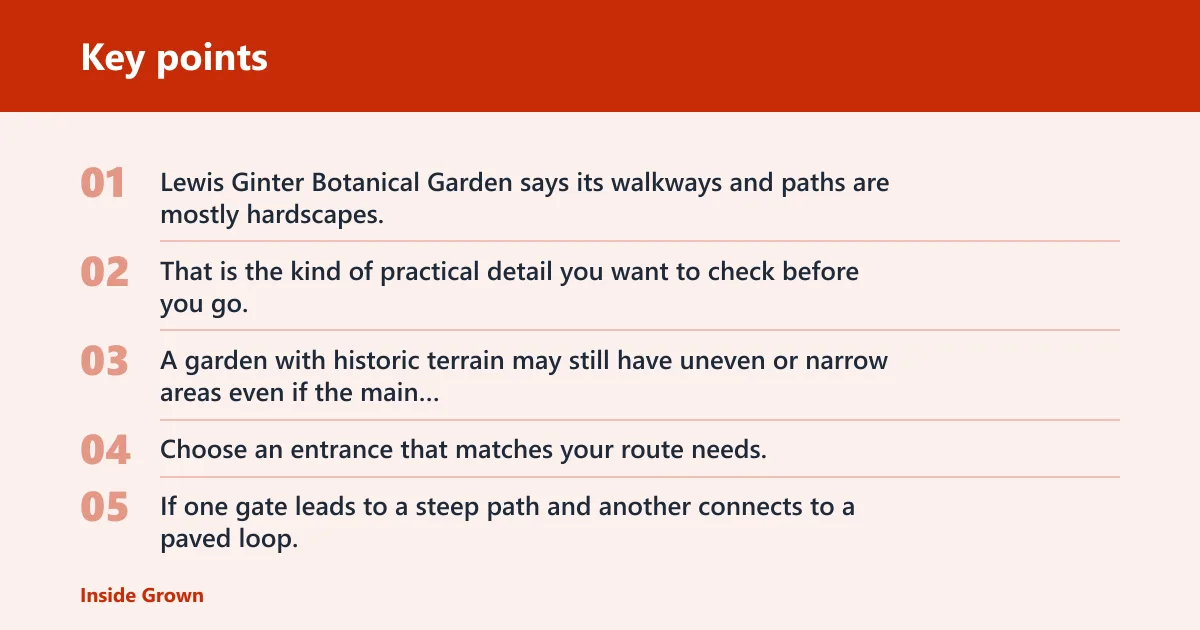
Lewis Ginter Botanical Garden says its walkways and paths are mostly hardscapes, and it has accessible parking spaces in all parking lots. That is the kind of practical detail you want to check before you go. A garden with historic terrain may still have uneven or narrow areas even if the main route is accessible.
Choose an entrance that matches your route needs. If one gate leads to a steep path and another connects to a paved loop, use the easier one. If the garden map is unclear, ask the accessibility contact or email before arrival, especially for wheelchairs, mobility aids, or a service animal that needs room to work.
Restrooms, water, shade, and quiet exits
Think about the animal as part of the visit plan. You may need a restroom stop, a water break, a shaded rest area, and a quiet exit if the dog becomes stressed. Those small choices can keep a visit from turning into a control problem halfway through.
Personal care attendants and companion access
Do not confuse service-animal access with companion access. Some gardens admit a personal care attendant free of charge, which can help with mobility or supervision needs. That does not change the service-animal rule, but it can change how you plan the visit if a handler also needs human assistance.
Frequently asked questions
What counts as a service animal at a botanical garden?
A service animal is individually trained to do work or perform tasks for a disabled handler. The species and the training matter more than labels like “support” or “comfort.” Some gardens also use the term assistance dog for a trained dog supporting a disabled handler.
Do botanical gardens allow emotional support animals?
Usually no. Emotional support animals are not the same as service animals under ADA-style access rules, and many gardens exclude them. If the garden’s policy allows only trained service animals or assistance dogs, an ESA will usually not qualify for entry.
What rules can staff enforce for a service animal in the garden?
Staff can enforce control and behavior standards. They may require the handler to keep the animal leashed, harnessed, or tethered unless that interferes with the task or disability. They can also respond to barking, whining, biting, growling, jumping, scratching, leash pulling, or sniffing other visitors.
What should I do if my service animal needs an accommodation at a garden?
Contact the garden’s accessibility email or other policy contact before arrival if the route, the timing, or the animal’s needs are unusual. Ask about entrances, restrooms, shade, and any rough sections. If the garden has a personal care attendant policy, ask about that too, since it can affect the visit plan.