Can you bring a camera tripod to a botanical garden?
Yes, you can bring a camera tripod to many botanical gardens, but the rule changes by space: open outdoor paths often allow it, glasshouses and crowded display areas often ban it, and commercial or posed shoots may need a permit. If you ignore the rules, staff can turn you away, fine you, or stop the shoot mid-way. This guide breaks down where tripods are usually allowed, where they are restricted, and when you need permission first.
This guide is part of our Botanical garden guide series.
Can you bring a camera tripod to a botanical garden?
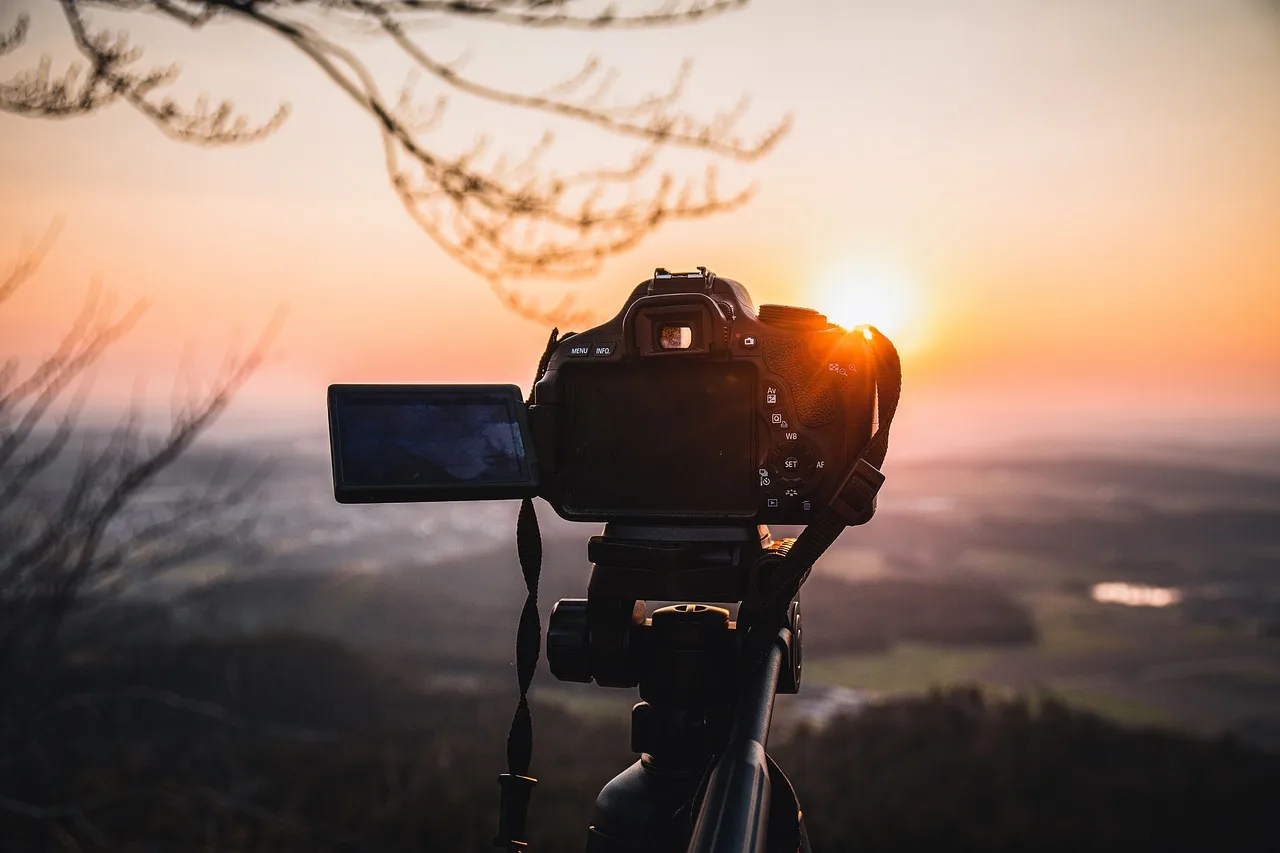


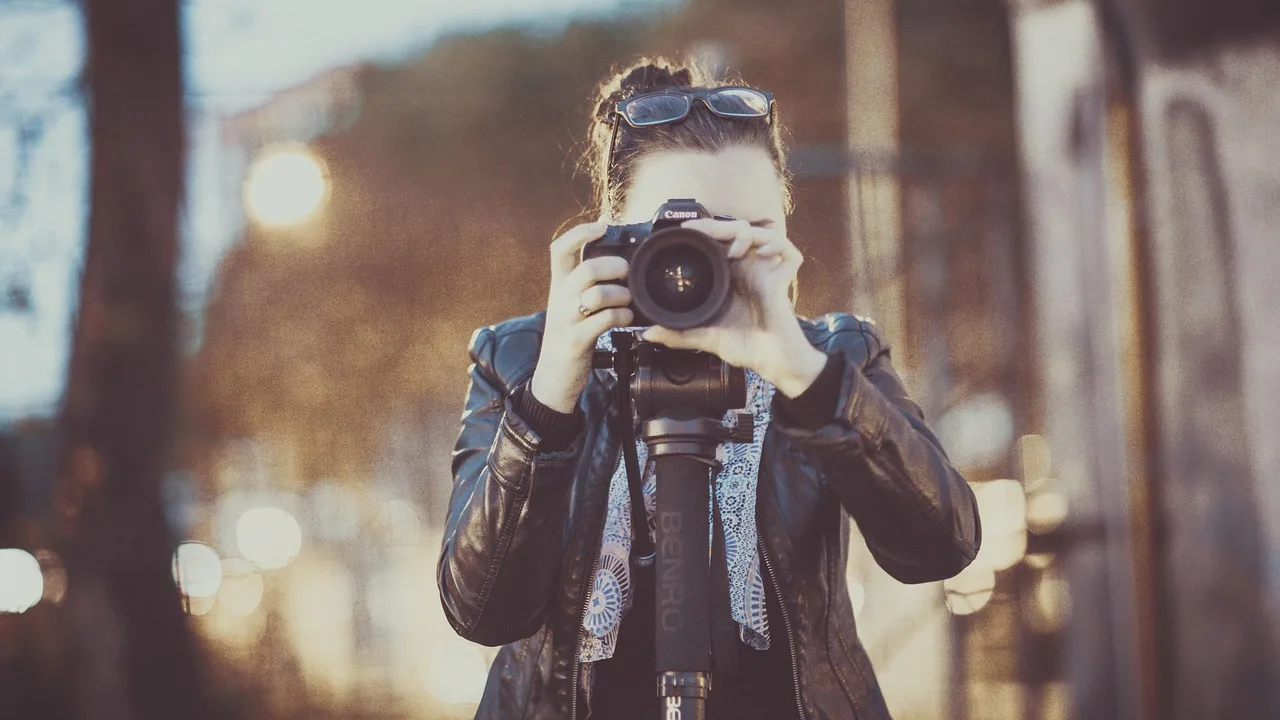
Usually yes outdoors. Often no indoors. Botanical garden visitor policy is site-specific, so separate open-air grounds from conservatories, exhibit halls, and event spaces before you pack gear. A tripod is a portable camera support used for stability, long exposure, and heavier lenses, and compact models are easier to carry through a garden visit. (en.wikipedia.org)
Why garden policies split by space type
Many gardens treat outdoor photography differently from indoor display areas because the risks differ. On paths, the concern is traffic flow and plant protection. In glasshouses and galleries, the issue is closer spacing, crowding, and the chance that a tripod leg blocks movement or touches collections.
New York Botanical Garden is a clear example. Its outdoor photography for personal use is allowed under specific limits, but its Conservatory does not permit tripods. That split is common enough that the safest rule is simple: check the exact space, not just the garden name.
Where tripods are usually allowed
Outdoor paths and open garden areas are often the places most likely to allow a tripod, especially for personal photography. Even there, stay on paths and avoid disturbing plants and collections. If your tripod needs a wider footprint than a narrow walkway allows, skip it or move to a quieter spot.
Say your tripod has three legs spread across half the path and a stroller approaches from behind. That is the kind of setup that turns a routine photo stop into a blockage. A compact travel tripod or monopod may be easier to move, but the policy still controls the answer.
What to do if the garden is crowded
If the garden is crowded, keep the tripod folded until you find a clear space. Crowds make small gear feel bigger. A narrow path, a queue at an exhibit, or a busy bench area can leave no safe room to set up without interrupting other visitors or a staff-managed line.
Choose low-crowd times when possible, arrive early, and keep the tripod ready to fold fast. If staff or security gives instructions, follow them even if the general policy seems to allow tripods. On-site directions can override broad rules for a specific event or room.
📊 NYBG says the Garden’s 250 acres are open in all weather conditions. Source: Visitor Tips & Policies.
Are tripods allowed in conservatories or indoor exhibits?
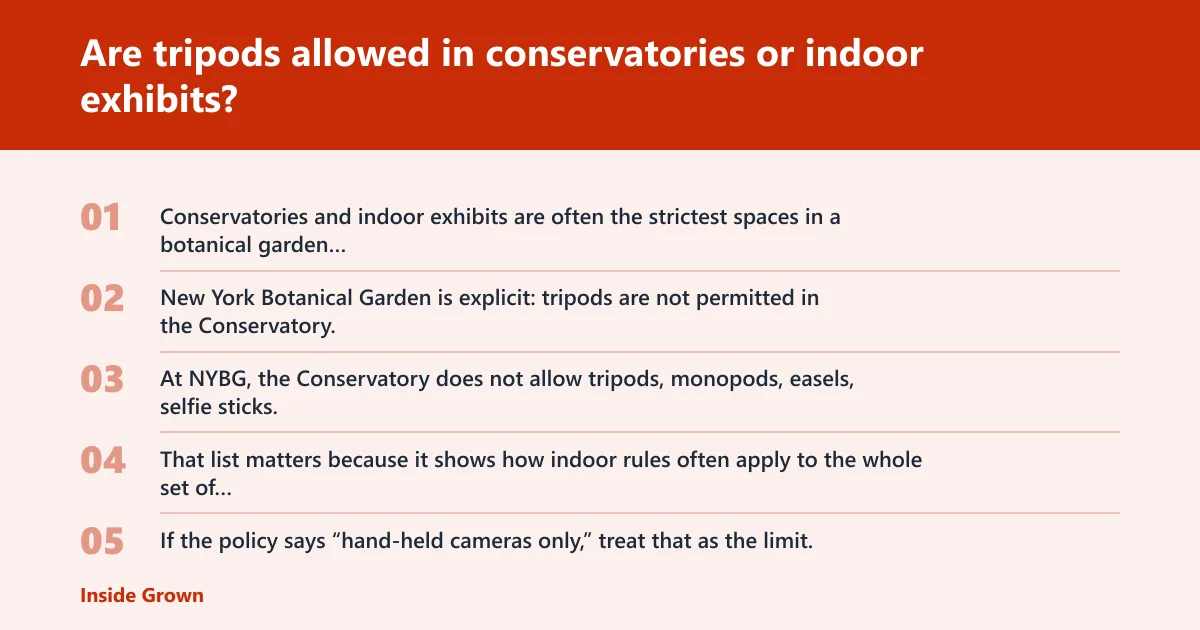
Often no. Conservatories and indoor exhibits are often the strictest spaces in a botanical garden because they are enclosed, busier, and easier to obstruct with a tripod leg or bag. New York Botanical Garden is explicit: tripods are not permitted in the Conservatory, and hand-held cameras are the narrower allowed option there.
NYBG’s conservatory rule as a clear example
At NYBG, the Conservatory does not allow tripods, monopods, easels, selfie sticks, or lighting equipment. That list matters because it shows how indoor rules often apply to the whole set of support and staging gear, not only to tripods. If the policy says “hand-held cameras only,” treat that as the limit.
Indoor rules also tend to be enforced more tightly than outdoor rules because a single setup can affect a whole corridor, display bed, or visitor line. The safer assumption is that any support equipment needs explicit approval unless the policy says otherwise.
How tripods compare with monopods and selfie sticks
Many policies group tripods, monopods, selfie sticks, easels, and lighting equipment together because they all change the footprint of a photo setup. At NYBG, monopods are treated alongside tripods in the Conservatory language, and lighting gear is restricted there too. That means a “small” support device is not automatically allowed indoors.
What matters is not just size. It is whether the gear extends beyond a hand-held camera and starts occupying shared floor space, creating a setup point, or adding a stand that can be bumped by other visitors.
Do botanical gardens require a photography permit for tripods?
Sometimes yes, especially for commercial photography or filming. Personal outdoor photography is often allowed, but once a session becomes commercial, staged, or production-like, the garden may require written approval before you arrive. At NYBG, commercial photography or filming is prohibited without written permission.
When do you need a photography permit?
Look for permit language when the shoot involves models, products, paid assignments, lighting, reflectors, or a larger setup that takes time to arrange. NYBG requires a permit request form for specific commercial projects, and that is the kind of process many gardens use for organized shoots.
A posed portrait session can fall into a gray area if it looks commercial, uses extra gear, or needs extended setup time. The safest move is to read the garden’s policy for terms such as “commercial photography,” “filming,” “posed photography,” “portrait session,” or “special permission.”
What approval language to look for in visitor policies
Check for phrases like “written permission,” “permit request form,” “Marketing & Communications,” and “prior approval.” Those words usually mean the garden wants advance notice before any shoot that goes beyond casual visitor snapshots. If the policy names a department, that is the office that handles the request.
Do not mix up a personal visitor photo rule with a production rule. A camera tripod can be fine for a family photo on an open path and still require permission for a staged portrait with extra lights and time blocks.
How to use a tripod without causing problems
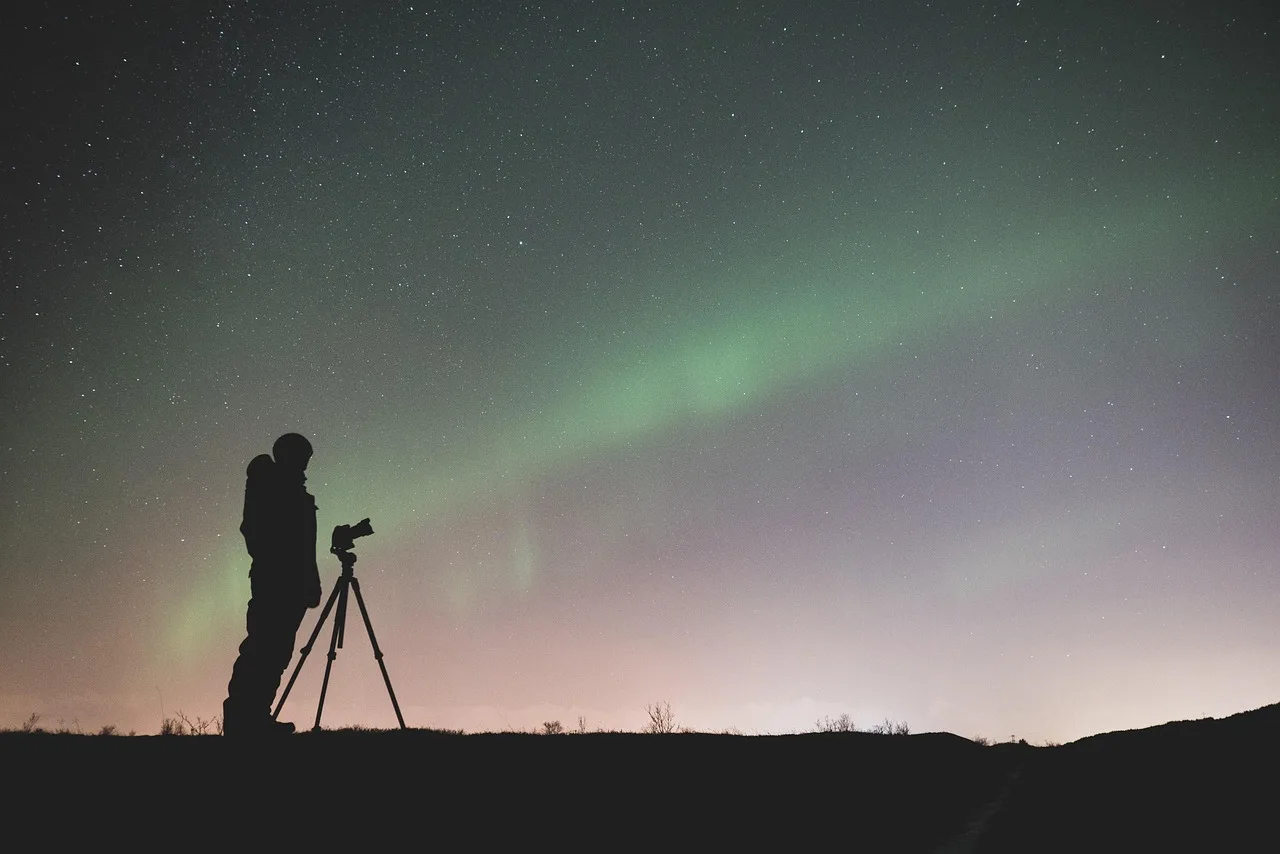
Use the tripod where it fits, not where it technically squeezes in. Stay on paths, keep clear of collections, and move your setup if people begin to bunch around it. Compact or travel-sized tripods are easier to carry into a garden, and they are easier to fold fast when space gets tight.
Practical etiquette for paths, strollers, and wheelchairs
Give way to strollers and wheelchairs. If a route is busy, set up off to the side only if the side is truly clear and still outside planted beds. Never step into a display area to get a cleaner angle, because that is exactly the sort of movement garden rules are trying to prevent.
Suppose a narrow lane between beds is the only view of a pond. If your tripod forces other visitors to wait behind you, the shot is not worth it. Move, shorten the legs, or choose another angle.
Carry-in limits and packing checklist
Some gardens do not offer coat-check facilities and do not accept luggage or store personal items, so pack as if you must carry everything yourself. A tripod that folds small is easier to manage than a full-size model with a wide head and loose accessories.
- Check the official visitor policy for outdoor and indoor rules.
- Choose a compact tripod or travel-sized support when possible.
- Pack only the gear you can carry through the entire visit.
- Keep the tripod folded until you reach an open space.
- Stay on paths and keep clear of plant beds and display edges.
- Watch for staff direction, crowding, and posted signs.
Space-by-space tripod rules at a glance
The answer depends on where you are standing, what you are carrying, and whether the shoot is personal or organized. Outdoor paths are the most likely to allow a tripod. Indoor exhibit spaces are the most likely to restrict it. Special events and commercial shoots often need advance approval or a permit.
| Space | Allowed equipment | Likely restrictions | What to confirm before arrival |
|---|---|---|---|
| Outdoor paths | Tripod for personal photography is often allowed; compact or travel-sized models are easiest to carry | Stay on paths; do not disturb plants, collections, or visitor traffic | Whether personal outdoor photography is allowed, and whether any path-specific limits apply |
| Conservatory / indoor exhibits | Hand-held camera only at NYBG | Tripods, monopods, easels, selfie sticks, and lighting equipment are not permitted at NYBG | Whether the indoor space allows any support gear at all, or limits photography to hand-held use only |
| Special events | Often depends on the event’s posted rules and staff directions | Tripods may be limited by crowds, staging, or temporary closures | Whether the event has separate photography rules and whether setup time is restricted |
| Commercial shoots | Only with advance permission at sites that allow it | May require written approval, a permit request form, and coordination with staff | Whether commercial photography or filming is allowed and which office approves it |
What photography equipment is usually not allowed in botanical gardens?
Items like tripods, monopods, selfie sticks, easels, and lighting equipment are often restricted, especially indoors. Some gardens also limit bags, carts, stands, or anything that creates a blocking footprint. The exact list changes by garden and by space, so the rule is always policy first, assumptions second.
Are monopods, selfie sticks, and lighting gear treated the same as tripods?
Often yes in indoor spaces. NYBG’s Conservatory policy groups tripods, monopods, easels, selfie sticks, and lighting equipment together, which is a useful clue for reading other gardens’ rules. If one of those items is banned, the others may be as well, even if they are smaller or lighter.
How to read the policy before you go
Look for a visitor policy page that separates outdoor and indoor rules. Then scan for language about personal photography, commercial photography, filming, equipment, and special events. If the policy uses broad wording such as “limited equipment” or “hand-held only,” treat that as a hard stop for tripods unless the garden says otherwise.
Are there special rules for commercial or staged photo shoots?
Yes. Commercial and staged shoots are usually treated differently from personal photography, and they are much more likely to require advance permission or a permit. At NYBG, commercial photography or filming is prohibited without written permission, and a permit request form is required for specific commercial projects.
Staged portraits and larger setups
A portrait setup with a tripod, external light, assistant, or product styling is more likely to trigger permit rules than a visitor taking a few still images. Gardens need to manage access, protect collections, and keep walkways open. The more your setup looks planned, the more likely it is to need approval.
Picture a small two-person shoot in a glasshouse with a reflector, tripod, and repeated poses. Even if the gear is light, the session can block a narrow aisle long enough to draw a staff response. That is the point where permission matters more than equipment size.
What to ask the garden before a paid or posed session
Ask whether the shoot counts as commercial, whether a permit is required, whether a tripod is allowed in the intended space, and whether indoor or outdoor locations are treated differently. If the garden uses a permit request form, submit it before arrival rather than waiting to negotiate on site.
What should you check on the garden’s visitor policies before bringing a tripod?
Check the official policy for three things: where tripods are allowed, what indoor spaces prohibit, and whether your shoot crosses into commercial or staged territory. That one review can save you from carrying gear you cannot use. It also helps you plan around crowding, indoor access, and event closures.
Quick policy checklist
- Outdoor photography rules for personal use
- Indoor exhibit or conservatory restrictions
- Tripod, monopod, selfie stick, easel, and lighting gear rules
- Commercial photography or filming approval steps
- Permit request form requirements for specific projects
- Any event-day or crowd-control limits
Common failure cases to watch for
The most common problems are simple: a crowded path, a narrow gallery, or a staff member telling you to move. Other trip hazards are less obvious, like trying to set up in an exhibit area where strollers are allowed outside but not inside. NYBG, for example, allows strollers on the grounds but not in exhibition areas like the Conservatory, which can change how much floor space is available.
Using timing and access rules to your advantage
NYBG’s Garden is open Tuesday through Sunday, and its 250 acres are open in all weather conditions. That does not mean every space is equally usable for tripod work, but it does mean weather alone is not the deciding factor there. Early or quieter times generally make outdoor tripod use easier, especially near paths that narrow around beds or displays.
Frequently asked questions
Can you bring a camera tripod to a botanical garden?
Usually yes, but not everywhere inside the same garden. Outdoor paths often allow tripods for personal photography, while indoor exhibits and conservatories may ban them. Always check the garden’s official visitor policy first, because equipment rules can change by space, event, and crowd level.
Are tripods allowed in conservatories or indoor garden buildings?
Often no. Conservatories are commonly stricter than outdoor areas because they are enclosed and easier to block. NYBG is a clear example: tripods are not permitted in the Conservatory, and hand-held cameras are the narrower allowed option there. Similar spaces often limit support gear for the same reason.
Do botanical gardens require a photography permit for tripods?
Not for every visitor snapshot, but they often do for commercial or staged shoots. At NYBG, commercial photography or filming is prohibited without written permission, and a permit request form is required for specific commercial projects. If your setup looks organized or paid, check permit rules before arrival.
What photography equipment is usually not allowed in botanical gardens?
Tripods are the most common issue, followed by monopods, selfie sticks, easels, and lighting equipment, especially indoors. Some gardens also limit larger staging gear or anything that interferes with visitor movement. The exact list depends on the garden, so read the space-specific policy rather than guessing.
What should you do if the garden is crowded and you want to set up a tripod?
Keep the tripod folded until you find a clear, safe space, and move quickly if the area starts to fill up. Crowded paths make even small setups disruptive. If staff gives directions or a line forms nearby, collapse the gear and choose another location or time.
What should you check on the garden’s visitor policies before bringing a tripod?
Check whether outdoor photography is allowed, whether indoor exhibits ban support gear, and whether commercial or posed shoots need written approval. Also look for separate rules about monopods, selfie sticks, and lighting equipment. If the policy names a permit form or a specific office, follow that process before you go.