Gardening Techniques for Drought-Prone Gardens That Work
Use the least-watering method that fits your worst limit: drip or hand-watering for severe drought, deep soak for sandy soil, and wider spacing plus mulch for young plants; mature plants in clay often need fewer, deeper waterings. Get the match wrong and roots stay shallow, leaves scorch, and plants fail in heat. This guide shows how to choose the right gardening techniques for drought-prone gardens by drought severity, soil type, and plant age.
What you’ll need
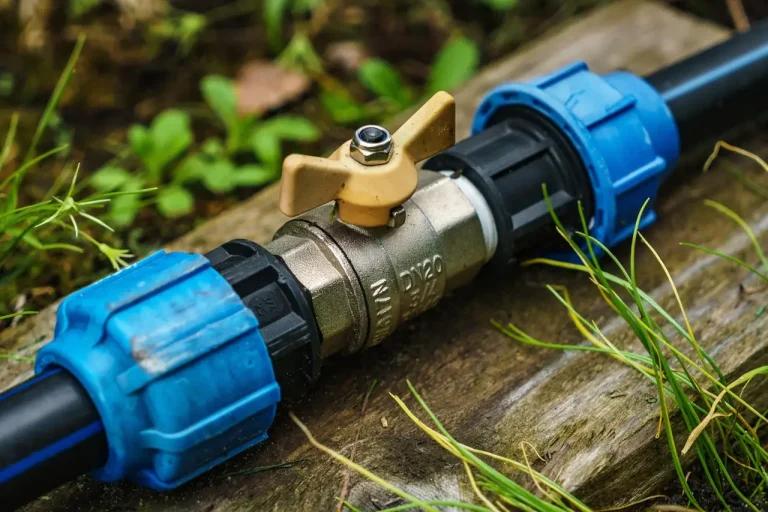
- Drip irrigation tubing or emitters
- Soaker hoses for beds and long rows
- Organic mulch
- Compost for planting holes and bed refreshes
- Hand pruners
- Bucket or watering can for spot watering
- Shovel or spade
- Rake
- Gravel, crushed stone, or pebbles for dry-site areas
- Drought-tolerant or native plants suited to the local climate
- Optional: shade tree, shade sail, or other overhead shade for hot exposures
How do you choose the right technique for your yard?

Start with the hardest limit: drought severity, soil type, or plant age. A yard in severe drought needs root-zone watering first, while a yard with occasional dry spells can often be fixed with mulch, hydrozoning, and better plant choices. New plants always get priority over established ones.
Match the method to drought severity
For severe drought, use drip irrigation or hand-watering at the root zone and keep new plants on a strict schedule. For moderate dryness, hydrozoning plus mulch usually carries most beds. For mild dryness, cut evaporation first before you add more watering time.
Match the method to soil type
Sandy soil drains fast, so watering in shorter, deeper sessions can help, and mulch may matter more. Clay tends to hold water longer, but it can also seal over, so a slow application is often better than a fast one. If water pools, fix drainage before adding more irrigation.
Match the method to plant age and root depth
Newly planted shrubs, trees, and perennials usually still need regular watering, even if they are drought-tolerant. Mature plants usually need less frequent irrigation once roots are settled. Shallow-rooted plants dry faster than deeper-rooted ones, so keep them in a separate zone.
Decide what to change in containers, vegetable beds, and mixed ornamentals
Containers often dry out faster than in-ground plantings and need the closest monitoring. Vegetable beds need steady moisture during flowering and fruiting, even in a low-water yard. Mixed ornamental beds work best when thirsty plants, dry-site plants, and first-year plantings are separated instead of watered the same way.
| Garden type and soil condition | Plant age and establishment stage | Best first action | Main failure risk to avoid |
|---|---|---|---|
| Hot border, sandy soil | New planting | Install drip irrigation and mulch the bed | Water passing through too fast |
| Mixed bed, loamy soil | Established shrubs and perennials | Hydrozoning plus soaker hose in the driest section | Overwatering the dry-site plants |
| Clay bed, full sun | First season trees | Water slowly at the root line and check drainage | Puddling that suffocates roots |
| Container group, exposed patio | Any age | Group pots by water need and monitor daily in heat | Assuming pot soil behaves like ground soil |
| Former lawn, dry slope | Mixed new drought planting | Use xeriscaping with gravel cover and drought-tolerant plants | Leaving too much bare soil exposed |
What is hydrozoning and should I use it?
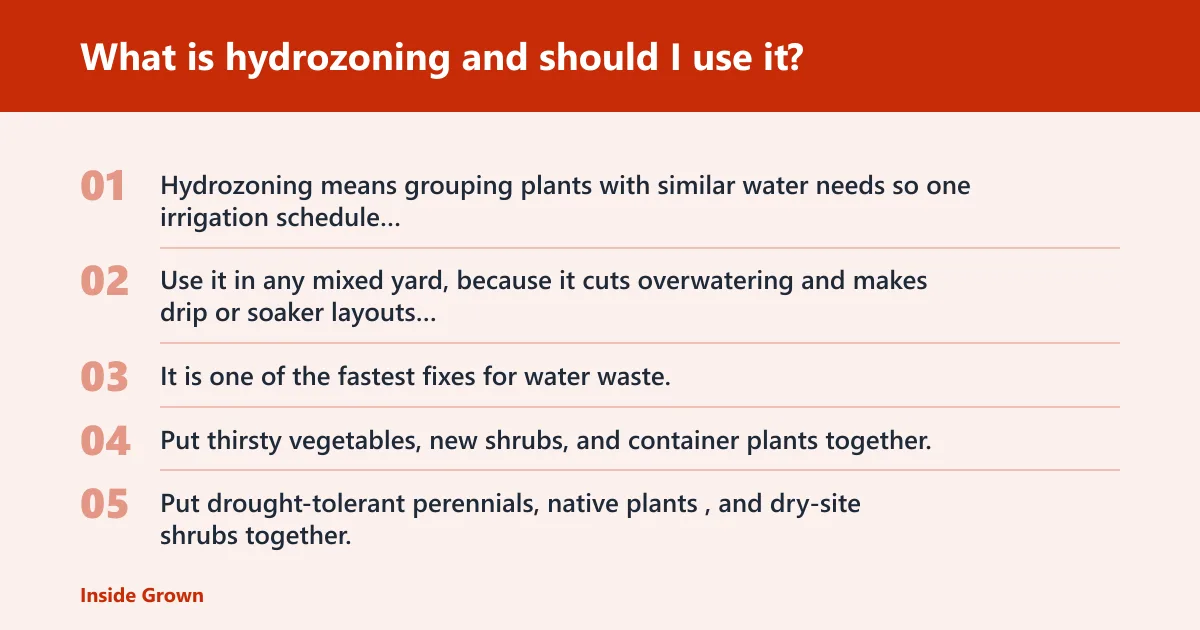
Hydrozoning means grouping plants with similar water needs so one irrigation schedule does not punish the whole bed. Use it in any mixed yard, because it cuts overwatering and makes drip or soaker layouts much simpler. It is one of the fastest fixes for water waste.
Set up hydrozoning in a mixed yard
Put thirsty vegetables, new shrubs, and container plants together. Put drought-tolerant perennials, native plants, and dry-site shrubs together. Keep lawn zones separate from planting beds, or the lawn schedule will force excess water onto plants that do not need it.
Keep irrigation zones simple enough to manage
One valve per water need is easier to control than one broad zone for the whole property. This matters most when the yard has both new plants and established plants. The goal is not perfection; it is fewer mismatches and fewer dead plants.
What plants are best for a drought-tolerant garden?
Native plants are usually the best starting point because they are adapted to local rainfall patterns and climate. Pair them with drought-tolerant plants that match the site and the soil. The safest approach is to treat them as lower-demand choices after establishment, not as zero-water plants.
Choose native plants for your region
Native plants are the best option for local adaptation. They usually settle in with less long-term irrigation than imported plants that expect different rainfall timing. That advantage shows up after establishment, not on day one.
Plan for first-year watering before plants become established
Landscape designers use plants that are self-sufficient once established, but the first season is the trap. New roots are small and shallow, so even drought-adapted plants need regular water until they extend into the soil. Skip that phase and the plant may never catch up.
Use the right plant for the right site
Dry sun, reflected heat, and windy edges demand tougher plants than a partly shaded bed near a wall. Containers and raised planters dry faster than ground soil, so plant choice there needs to be more conservative. Match the plant to the site, not the tag.
How do I improve soil so it holds water longer?
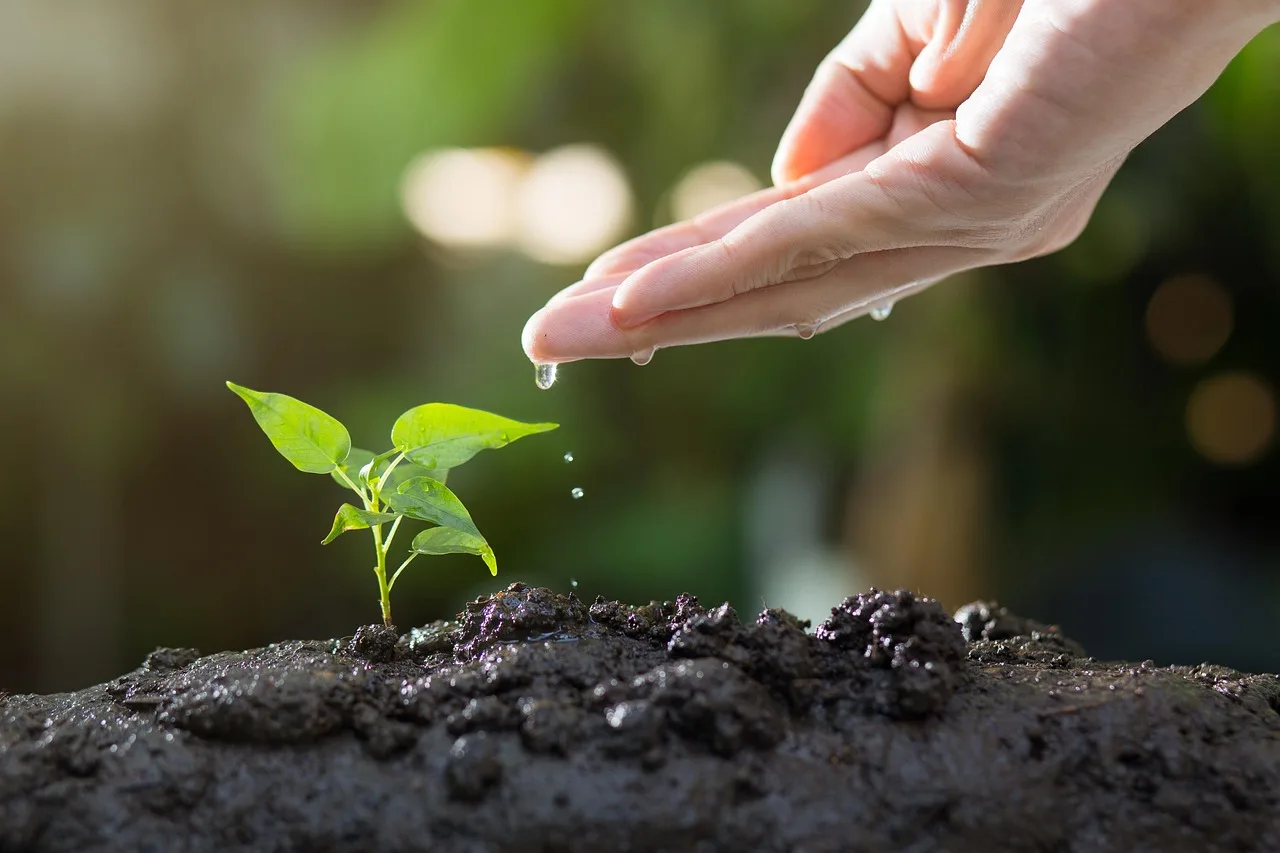
Add compost where soil is thin, lifeless, or too fast-draining, then finish with organic mulch. Organic mulch reduces evaporation and suppresses weeds, which helps the soil stay cooler and steadier. Do not bury stems or crowns; that causes new problems while trying to solve drought.
Apply organic mulch at the right depth
Mulch belongs on the soil surface, not piled against stems. Keep the layer even and airy enough to let water through. Too much mulch can trap moisture around bark and crowns, and that can cause rot in a dry garden just as easily as in a wet one.
Use compost where it helps and where it can hurt
Compost can help sandy or lean soil hold moisture and support roots. In already heavy soil, too much compost can make the root zone stay wet for too long or sit oddly after irrigation. Improve the planting area, not the whole yard, unless the whole yard really needs it.
Add shade trees or other shade where heat is extreme
Shade trees create a cooler microclimate and reduce heat stress on nearby plants. That matters most on west-facing beds, patios, and hot walls. A little shade can cut the amount of water loss from leaves and exposed soil.
Is drip irrigation better than sprinklers for drought gardens?
Yes, in most drought-prone beds, drip irrigation is the better first choice because water goes to the roots instead of the air. Drip irrigation is often used for drought-resistant gardens, and soaker hoses can provide slower root-zone watering in beds. Sprinklers waste more water to evaporation and overspray.
Use drip irrigation for establishment and targeted beds
Drip is especially useful for new shrubs, trees, and mixed beds where you want water to reach the root zone. It also makes hydrozoning practical because different beds can get different output. If water pressure or layout is uneven, fix that before planting.
Use soaker hoses for rows and larger beds
Soaker hoses are a strong choice for long planting strips, vegetable rows, and broad perennial beds. They wet the root area slowly without wetting all the foliage. That is often better than spray when dry air and wind are part of the problem.
Water at the right time
Watering should happen early in the morning or late in the afternoon. That reduces evaporation loss and gives roots more time to absorb moisture before peak heat. During establishment, timing matters almost as much as method.
What hardscaping works best in a low-water garden?
Xeriscaping, rockscaping, rock gardens, and gravel gardens can cut exposed soil and reduce the lawn area that needs water. Rockscaping is described as a modern version of the traditional rock garden. Used well, stone and gravel can protect soil from extreme temperatures and support drought-tolerant planting.
Use rock and gravel where they solve a real problem
Rockscapes use larger rocks first, then smaller pebbles, crushed stone, and gravel. That layered structure can shade soil, slow surface drying, and create planting pockets for dry-site species. It works best when the plants are matched to the drainage and heat load.
Reduce turf instead of trying to irrigate all of it
A gravel garden can replace part of a thirsty lawn and still look intentional. Xeriscaping works when the surface cover, irrigation, and plant selection all point in the same direction. A few well-placed drought plants are easier to keep alive than a whole lawn on a tight hose schedule.
Do not use stone as a cure-all
Stone and gravel reduce evaporation, but they do not fix root damage, compacted soil, or poor drainage. If a planting area already holds water in low spots, hardscaping alone can make the problem worse. Build the drainage plan first.
Step-by-step drought-garden setup
- Map the yard into dry, moderate, and high-demand zones.
- Move new plants and containers into the closest watering zone.
- Separate thirsty beds from drought-tolerant beds with hydrozoning.
- Install drip irrigation or soaker hoses in the beds that need root-zone watering.
- Add organic mulch to exposed soil after planting.
- Use gravel, rock, or reduced turf where irrigation is least practical.
- Water early morning or late afternoon during establishment and heat spikes.
- Watch for pooling, runoff, or wilt that appears even when the soil is wet.
Common mistakes
The biggest failures are simple: overmulching, assuming gravel fixes drainage problems, and stopping irrigation too early after planting. Containers are the easiest place to lose plants because they dry fast and heat up quickly. Mixed beds also fail when every plant is watered the same way.
What to avoid
- Piling mulch against stems or trunks
- Using overhead watering where drip or soaker hoses would work better
- Assuming new drought-tolerant plants can live on rainfall alone
- Letting clay soil stay saturated after irrigation
- Ignoring containers because the in-ground beds look fine
Prevention: keep first-year plants on a separate schedule, then taper watering only after they push new growth and the soil stays evenly moist deeper down.
Frequently asked questions
How do you garden in a drought-prone yard?
Start by grouping plants by water need, then use drip or soaker irrigation only where it matters. Add organic mulch, shrink the lawn area, and give new plants a dedicated establishment schedule. Most losses happen when the whole yard is treated as one watering zone.
What plants are best for a drought-tolerant garden?
Native plants are usually the best first choice, especially when the goal is lower long-term watering after establishment. Add other drought-tolerant plants only if they match the soil, sun, and drainage. Avoid choosing by label alone; choose by site.
How can I reduce watering without killing new plants?
Use root-zone watering, not broad spray, and keep the soil covered with mulch so it dries more slowly. New plants still need a steady schedule in the first season. Reduce the amount of water only after the root ball starts anchoring into the surrounding soil.
What is hydrozoning and should I use it?
Hydrozoning is grouping plants with similar water needs. Yes, it is worth using in mixed yards because it prevents overwatering one plant group just to support another. It also makes irrigation layout simpler and reduces the chance of drought-tolerant plants getting drowned.
How do I improve soil so it holds water longer?
Work compost into thin or sandy planting areas, then cover the surface with organic mulch. This helps soil hold moisture and slows evaporation. In heavy clay, keep the amendment lighter and focus more on slow watering and drainage than on adding lots of organic matter.
How do I keep plants alive during a heatwave or hosepipe ban?
Prioritize new plantings, containers, and vegetable beds first, then water in the early morning or late afternoon. Move temporary shade over sensitive plants if possible. If water is limited, keep the root zone alive and let less critical areas go dormant rather than trying to save everything evenly.