Gardening techniques for small spaces and patios guide
Pick the lightest small-space setup your site can handle: deep pots for 6+ hours of sun, rail planters for bright shade, and short, weighted containers for wind. Choose badly, and you get weak growth, tip-overs, dry roots, or a setup you stop watering. This guide maps patios, balconies, porches, and windowsills to the right containers, plants, sunlight, and upkeep.
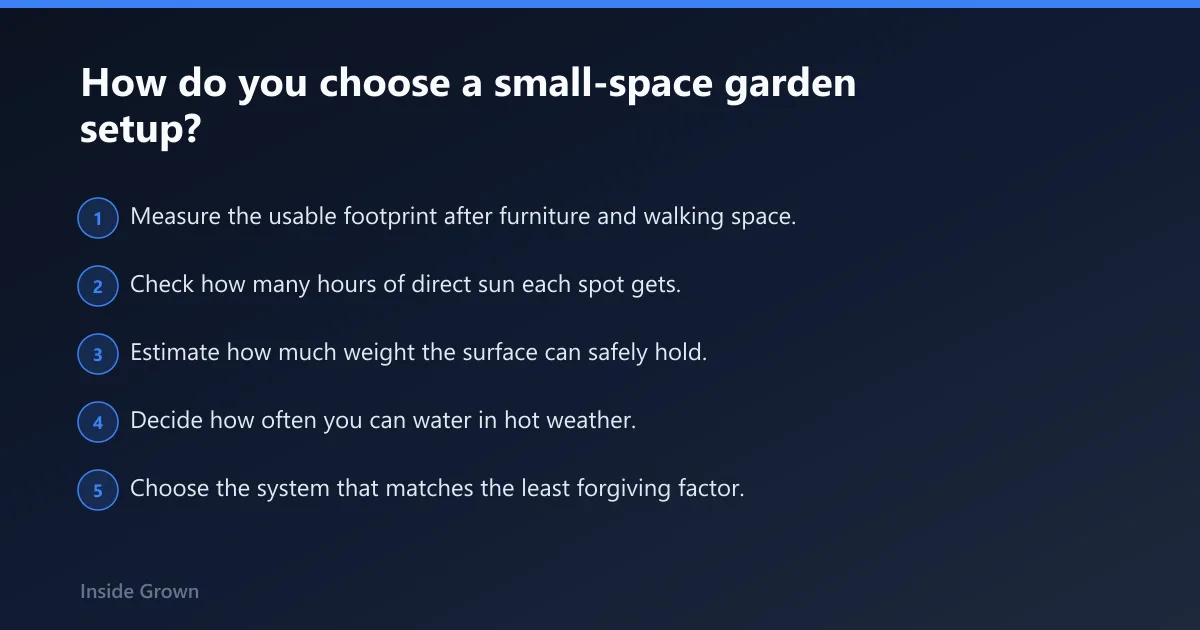
How do you choose a small-space garden setup?
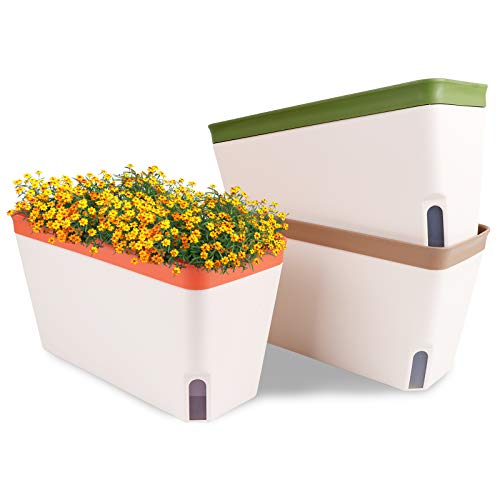

Start with the space, not the plant list. A balcony, narrow patio, covered porch, and rental all push you toward different systems because of light, weight, wind, and how often you can water. The right setup cuts daily friction before it turns into failure.
Match the system to the space type
Container gardening works on patios, decks, balconies, and windowsills because it keeps roots in one place and lets you set each plant where conditions fit. Pots, buckets, fabric grow bags, and self-watering containers all count as container systems, but they behave differently under heat, wind, and dry air.
Rail planters suit balconies with little floor room. Vertical gardening fits when you have wall height but almost no footprint. Raised beds make sense only when you have enough floor space to reach the middle and enough structure to hold the weight.
Compare containers, railing planters, vertical systems, and raised beds
Use containers when you need to move plants. Use railing planters when the floor is already crowded. Use vertical systems when the floor area is tiny but walls or railings are usable. Use raised beds when you want a steadier, higher-capacity growing area and can give it the space.
Use footprint, light, weight, watering, and mobility as filters
- Measure the usable footprint after furniture and walking space.
- Check how many hours of direct sun each spot gets.
- Estimate how much weight the surface can safely hold.
- Decide how often you can water in hot weather.
- Choose the system that matches the least forgiving factor.
According to 15 Tips for Gardening in Small Spaces — Container gardens should get at least 6 hours of direct sunlight per day.
What kind of light does a patio garden need?
Container gardens should get at least 6 hours of direct sunlight per day, and many productive patio crops do well with roughly 6 to 8 hours. South-facing spots are usually strongest in the Northern Hemisphere, while east- or west-facing areas can still work for the right plants.
When sun exposure changes the plan
A south-facing patio can support fruiting crops, deeper pots, and thirstier vegetables. East-facing spaces often suit morning-sun plants and softer crops. West-facing areas can work well, but afternoon heat raises watering needs and can scorch shallow containers faster than expected.
Shade from railings, walls, and overhangs matters as much as compass direction. A bright patio wall can bounce heat back into the pots and dry soil quickly. In those conditions, choose lighter-colored containers, deeper soil, and crops that handle fast swings in moisture.
How shade and reflected heat change plant choice
Microgreens can grow on a south-facing windowsill with 6-8 hours of light, and they are ready to harvest in just a few weeks. That makes them one of the best choices when the patio is too shaded, too narrow, or too exposed for larger crops.
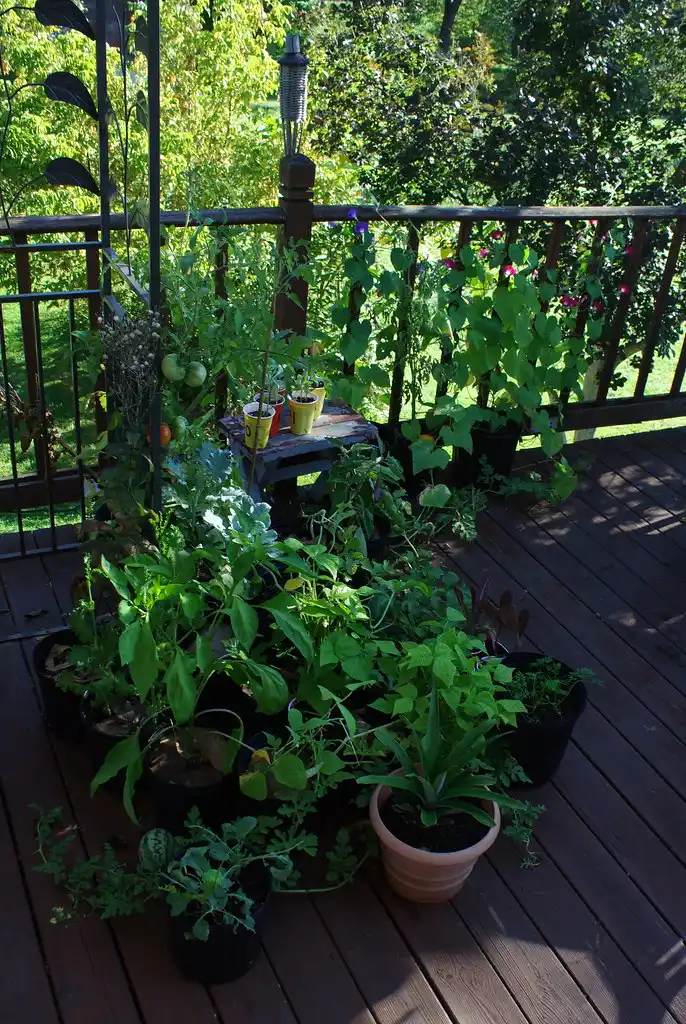
Container gardening basics for tight spaces
Containers are the most flexible option when ground space is limited, but they only work well if the root zone drains, holds enough moisture, and matches the crop size. A pot that is too small dries fast; one without drainage can rot roots in a single wet spell.
Pick the right container type
Pots are the default choice. Buckets can work well too; a 5-gallon bucket can be used as a container if it has drainage holes drilled in. Fabric grow bags dry faster than plastic but breathe better. Self-watering containers use a reservoir-based moisture delivery system and are useful for travel or irregular schedules.
Why drainage holes matter
Drainage holes are not optional. Water must move through the root zone instead of collecting at the bottom, especially on covered porches and balconies where rain does not flush the soil naturally. If containers sit in saucers, empty the saucers after watering unless the setup is intentionally self-watering.
How pot size affects root room and watering frequency
Small pots dry quickly in sun and wind. Larger pots buffer heat and cut watering frequency, but they add weight and take more floor space. For vegetables on patios, the container should be large enough to support the mature root system, not just the transplant size you bring home.
What grows best on a balcony or patio?
The best crops for tiny outdoor spaces are compact, quick, or naturally suited to containers. Dwarf vegetables, microgreens, and smaller fruiting crops usually beat full-size plants that need deep roots, constant support, or a long season to pay off.
Dwarf vegetable varieties that stay manageable
Dwarf determinate tomatoes are suited to containers and do not require tomato cages. Dwarf bush cucumbers are suited to containers and do not require trellises to climb. Pepper plants do well in a 5-gallon-sized grow bag or pot, and blueberries can also be grown in containers when the pot and soil fit their needs.
Choose compact forms over sprawling forms whenever possible. Full-size indeterminate tomatoes, vining cucumbers, and sprawling squash can take over a small patio fast and often need more support than the site can provide.
Microgreens for windowsills and very small spots
When the outdoor footprint is tiny, microgreens are one of the few productive options that do not demand a patio at all. They fit on a sunny windowsill, need little depth, and cycle fast enough to make repeated harvests realistic in very limited space.
What not to grow in very tight patios
Avoid crops that need deep root room, bulky support, or a long sprawl to earn their space. Large winter squash, full-size melons, and oversized indeterminate tomatoes can crowd out the rest of the garden. If a crop needs more structure than the patio can safely hold, skip it.
What are the best vertical gardening ideas for small spaces?
Vertical gardening saves floor space by moving growth upward. It works best for trailing or vining crops and for patios where the ground is full but walls, railings, or fences remain open. The support must not block access, airflow, or the light you already have.
Use trellises, stackable planters, and living walls
Trellises are the simplest vertical tool. Stackable planters are often 3-4 tier systems that turn one footprint into multiple growing surfaces. Living walls can work for herbs or leafy plants, but they need reliable watering and are less forgiving than a plain pot.
Place support where it will not create new problems
Set trellises on the north end of a raised bed so vines do not shade shorter crops. On balconies, keep vertical supports inside the railing line so they do not catch wind or block the path. Tall systems can also cast shadows that change the rest of the layout.
Choose crops that climb or trail well
Use vertical systems for peas, pole beans, smaller cucumbers, strawberries, and some herbs. Trailing crops can soften rail planters and hanging systems, while vining crops use height instead of floor area. Heavy fruiting plants need stronger support than casual décor planters can provide.
Raised beds and square-foot gardening in compact areas
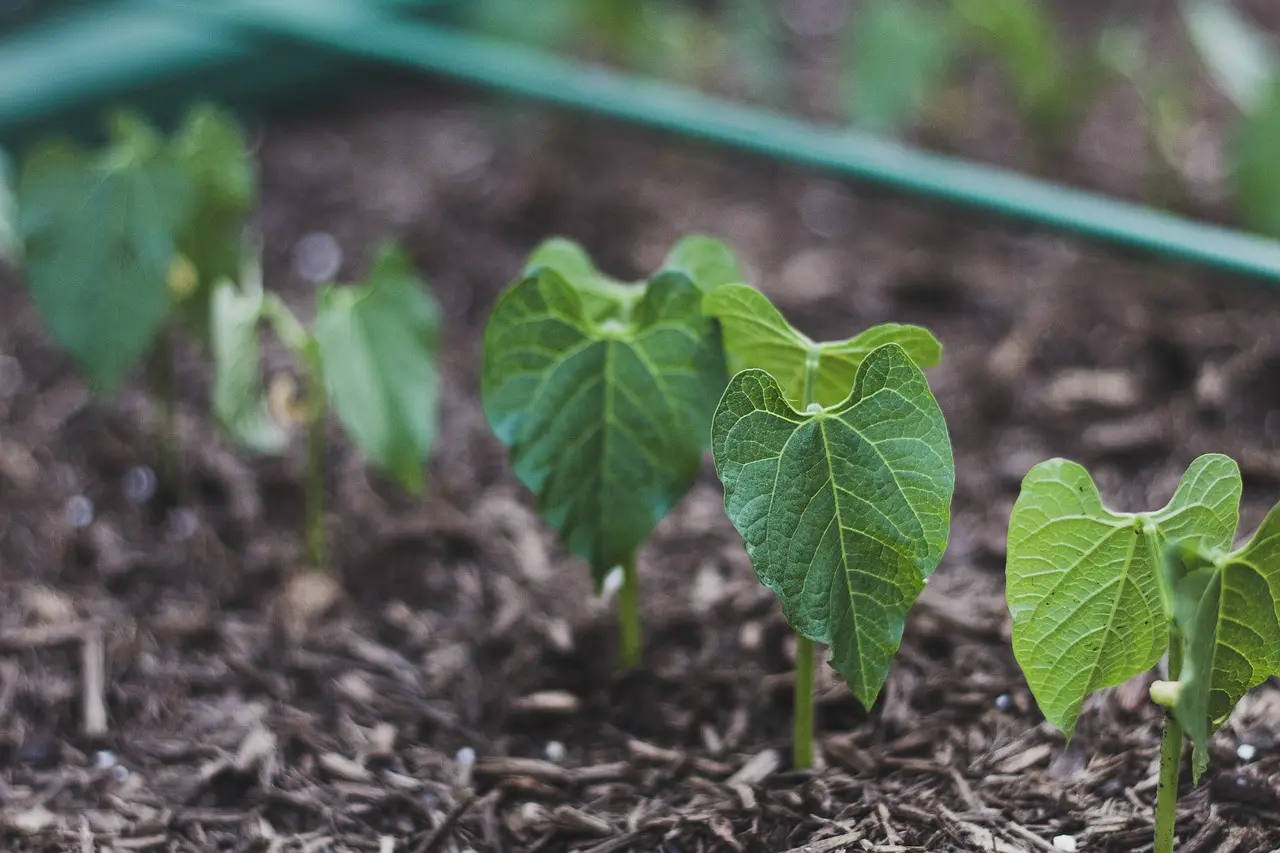
Raised beds are useful when you want more soil volume, better structure, and easier access than scattered pots can provide. For small spaces, they work best when kept narrow, divided carefully, and planted with spacing that matches the bed rather than the open ground model.
Why a 4-foot width is easier to work from both sides
Raised beds for small spaces should be no wider than 4 feet. That width keeps the center reachable from either side, which matters when the bed sits against a wall, fence, or patio edge. Anything wider becomes hard to plant, water, and harvest without stepping into the bed.
Use spill-over edges and trellis placement to fit more in less room
Some crops can spill slightly over the edge of the bed without harming access, which lets you use the boundary more efficiently. Put trellises on the north end so climbing crops do not block sun from lower plants. That small layout choice can make the whole bed more productive.
Apply square-foot spacing, interplanting, and companion planting
Square-foot gardening is a spacing strategy for small beds. It breaks the bed into usable blocks, which makes interplanting and companion planting easier to plan. Instead of one crop taking an entire row, several compatible crops can share a bed when they are spaced for mature size, not guesswork.
How do you keep patio plants watered and movable?
Water loss is faster on patios because sun, wind, and reflected heat all dry containers quickly. Self-watering containers help most when schedules are irregular, travel interrupts care, or the patio gets hot enough to drain regular pots fast. Mobility matters too, especially on balconies and decks.
When self-watering containers help most
Self-watering containers can sustain plants for 7-14 days without attention. That makes them useful for frequent travelers and anyone with an irregular routine. They are not a pass to ignore the garden, but they do reduce the risk of a missed watering turning into a lost crop.
How wind and heat speed up drying
Wind strips moisture from leaves and soil, and hot walls can reflect extra heat into pots. Shallow containers suffer first. If a patio is exposed, group pots together, use mulch on the soil surface, and avoid very small containers unless you can water them often.
Ways to move containers for weather, shade, or travel
Rolling plant carts can help gardeners chase sunlight and rearrange layouts. They also make it easier to move heavy containers before storms or during heat waves. On a small patio, movement can be the difference between a plant that survives a hot week and one that wilts.
Small-space patio garden decision table
Use the setup that fits your space type, not the one that looks biggest. This table compares the main tradeoffs so you can pick based on footprint, sun, watering, mobility, and crop fit before buying soil or plants.
| Setup type | Footprint | Sun needs | Watering frequency | Mobility | Best crops |
|---|---|---|---|---|---|
| Pots | Low to moderate, depending on diameter | Best with 6+ hours of direct sun | High in heat and wind | High if placed on carts or lightweight saucers | Dwarf determinate tomatoes, peppers, herbs, blueberries |
| Rail planters | Very low floor footprint | Bright sun or bright shade, depending on crop | High, because they dry fast | Medium, fixed to the rail but easy to remove seasonally | Herbs, lettuce, strawberries, trailing flowers |
| Vertical systems | Low floor use, high wall use | Needs enough light to reach upper and lower tiers | Medium to high, especially on living walls | Low once installed | Peas, beans, cucumbers, strawberries, leafy crops |
| Raised beds | Higher, but efficient when space allows | Best in full sun | Medium, more stable than small pots | Low | Mixed vegetables, square-foot plantings, trellised vines |
Frequently asked questions
How do I garden in a small patio space?
Choose one system first, then size the plants to it. Deep pots fit sunny patios, rail planters fit tight balconies, and vertical systems fit narrow footprints with wall space. Start with crops that stay compact and avoid anything that needs more room or support than the patio can safely hold.
What plants grow best on a balcony or patio?
Compact crops usually do best. Dwarf determinate tomatoes, dwarf bush cucumbers, container-friendly peppers, blueberries, herbs, and leafy greens are all stronger bets than sprawling plants. If the space is very limited, microgreens on a sunny windowsill give a fast harvest with very little footprint.
How can I maximize space in a small garden?
Use the vertical plane, the rail, and the bed edge before adding more floor pots. Square-foot gardening helps when you have a small raised bed because it organizes spacing and companion planting. Stackable planters and trellises can also add layers without taking over walking space.
Do I need containers or raised beds for a small patio garden?
Containers are the more flexible choice for most patios because they are easier to place, move, and resize. Raised beds make sense when you have enough room for a 4-foot width and want a more permanent planting area. If the patio is rented or windy, containers usually fit better.
How much sun does a patio garden need?
Many productive patio plants need at least 6 hours of direct sunlight per day, and 6 to 8 hours is a common target. South-facing spaces are the strongest in the Northern Hemisphere. East- and west-facing patios can still work if the crop choice matches the available light and heat.
What size pots should I use for vegetables on a patio?
Use the largest pot that the space and weight limits can handle. A 5-gallon-sized pot or grow bag works well for peppers, and a 5-gallon bucket can work if it has drainage holes drilled in. Bigger pots dry out more slowly, which helps on hot, windy patios.