Are Botanical Gardens the Same as Arboretums?
Botanical gardens and arboretums can overlap, but an arboretum typically centers on woody plants like trees and shrubs, while a botanical garden can include a broader mix of plant groups. Mixing them up can make you read the map wrong and miss the collection the site is built around. This guide shows how to tell a mixed site from its plant mix, labels, map, and mission.
Botanical gardens same as table
Use this quick comparison first. It helps you read the site from the ground up: what is planted, how it is labeled, and whether the layout is built around trees or around a wider plant collection.
| How to tell the difference in 60 seconds | What to look for |
|---|---|
| Plant focus | A botanical garden usually shows a broad mix of plant groups, including herbaceous beds, tropical plants, themed displays, and sometimes trees. An arboretum centers on woody plants, especially trees and shrubs, with vines sometimes included if they are part of the woody collection. |
| Typical specimens | Botanical gardens often feature seasonal flowers, native plant areas, cacti, aquatic plants, glasshouse collections, and labeled display beds. Arboretums usually highlight maples, oaks, conifers, flowering shrubs, and other accessioned woody specimens arranged for comparison and study. |
| Signage and labels | Look for plant taxonomy labels with scientific names, family or genus information, accession numbers, and conservation notes. In both places, labels can support education and research; in an arboretum, they often tie directly to a mapped tree collection. |
| Layout clues | A botanical garden may be organized into themed gardens, conservatories, seasonal displays, and labeled beds. An arboretum often uses walking trails, tree courts, specimen rows, and maps that point you to individual trees or grove sections. |
| Hybrid cases | Some university grounds, public parks, and research sites use both labels because they maintain a living collection of trees plus a wider botanical collection. In those cases, the mission statement and the map usually tell you which collection is primary. |
Are botanical gardens the same as arboretums?
No. They overlap, but they do not mean exactly the same thing. A botanical garden usually centers on a wider living plant collection, while an arboretum centers on woody plants. The fastest way to separate them is to look at what dominates the collection, how the map is organized, and what the site says it is trying to study or conserve.
The labels can also overlap in practice. A place can have trees, shrubs, flowers, greenhouses, and native plant areas all at once. When that happens, the main question is not “Does it have trees?” It is “What is the collection built around?”
Why the labels overlap
Both are curated living collections. Both may carry accession records, plant taxonomy labels, and conservation work. Both may be open to the public for display and learning. The difference is the organizing idea: botanical gardens tend to gather many plant groups, while arboretums center woody plants as the core collection.
That means a site can be public-facing and educational without being one type only. A garden with a strong tree collection may still be called an arboretum if trees and shrubs are the main focus of the documented collection. A tree-heavy site can still be a botanical garden if it is organized as a wider plant collection.
What is a botanical garden?

A botanical garden is generally a curated living plant collection with an educational, research, or conservation purpose. It may include herbaceous beds, trees, shrubs, vines, greenhouses, themed plantings, and labeled specimens. The key point is that the collection is documented and organized, not merely decorative.
Living collections and common plant mix
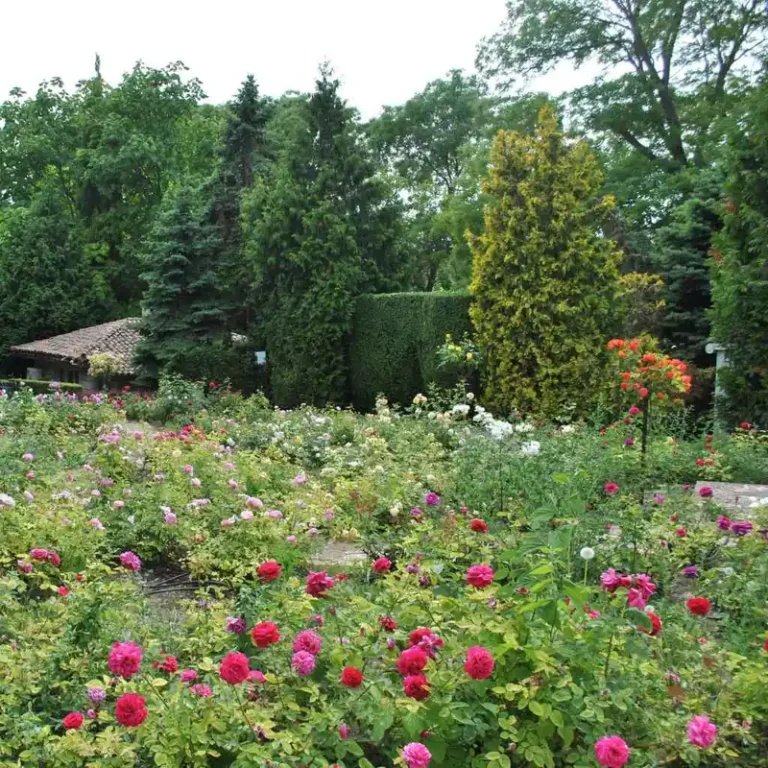
In a botanical garden, the plants are usually arranged to help visitors learn about plant groups, habitats, or themes. That can mean tropical houses, native plant sections, medicinal plant beds, rock gardens, aquatic displays, or seasonal annual borders. Trees may be part of the mix, but they are usually not the only or main focus.
Botanical gardens also often include non-native plants. That is normal. The mission may be display, conservation, propagation, education, or research, and those goals can require a broad palette of species from different regions.
Education and conservation roles
Many botanical gardens support conservation collections, especially for rare or endangered species. You may see seed-saving notes, propagation information, or labels that connect a plant to a research project. Public education matters too, so signage often explains plant families, ecological roles, or where a species comes from.
A common first-timer mistake is assuming a formal flower bed means the whole site is “just landscaping.” If the beds are accessioned, labeled, and tied to a collection plan, they are part of a living collection with educational value.
What is an arboretum?
An arboretum is a curated collection centered on woody plants, especially trees and shrubs, often organized for study and public display. It can include vines and understory plants, but woody plants remain the core focus. The layout usually makes individual specimens easy to compare, track, and label.
Trees, shrubs, and woody plant focus
Arboreta are built around woody plants. That means trees first, but not trees only. Shrubs, woody vines, and sometimes other woody forms can appear in the collection if they fit the study or display goal. What matters is that the collection is organized around woody plant diversity rather than around broad seasonal bedding or mixed garden themes.
So, if a place has labeled oaks, maples, pines, dogwoods, rhododendrons, and other woody specimens arranged by genus or family, that is a strong arboretum signal. The presence of shrubs does not disqualify it.
Maps, trails, and specimen labels
Arboretums often use mapped tree specimens, numbered accession labels, and walking trails that let visitors move from one taxon to another. The map may show grove names, specimen rows, or trail loops instead of garden rooms. That structure helps people compare bark, leaves, buds, fruit, and growth form.
Suppose a 40-acre public site has labeled conifers along a loop trail, a mapped grove of native oaks, and a separate shrub collection near the entry. That layout points toward an arboretum, even if the grounds also include a few ornamental flower beds.
Can a place be both?
Yes. Mixed collections are common, especially at universities, public parks, and hybrid institutions that maintain both tree collections and broader plant displays. In those cases, a site may truthfully use both labels because each one describes part of the collection and part of the mission.
How institutions decide on a label
Institutions usually look at the primary collection focus, the documentation system, and the mission statement. If woody plants are the main study collection, arboretum may be the better label. If the site maintains a wider living collection across many plant groups, botanical garden may fit better. Some sites keep both because neither label fully captures the whole place on its own.
University campuses are a common edge case. A campus may have accessioned tree collections used for teaching, along with greenhouses, pollinator beds, and native plant zones. A public park with mapped tree specimens can also function as an arboretum even if it still feels like a park to casual visitors.
Choose botanical garden if… / Choose arboretum if…
Choose based on what you want to study or see. A botanical garden is usually the better fit if you want plant variety across many groups. An arboretum is usually the better fit if you want tree-focused comparison, mapped woody specimens, and a walk built around canopy and structure.
- Choose a botanical garden if… you want flowers, tropical collections, conservatories, herbs, native plant beds, or seasonal displays that go beyond woody plants.
- Choose a botanical garden if… you are visiting with someone who wants broad plant diversity rather than a tree-centered collection.
- Choose an arboretum if… you want to compare tree species, shrubs, bark, leaf shape, fall color, or woody plant structure in one place.
- Choose an arboretum if… you prefer trails, specimen maps, and labeled groves over themed garden rooms.
For family visits and casual walks, either can work. The difference is what you will notice first. In a botanical garden, the route often moves through displays and plant groups. In an arboretum, the route usually teaches you how to read woody plants as a collection.
What will you actually see?
Expect labels, maps, and signs that reveal how the site is organized. Living collections are documented, so the visible parts often include scientific names, family or genus labels, accession numbers, and notes about origin or conservation status. Those details are not decoration; they are how the collection is managed and interpreted.
Plant taxonomy labels and conservation collections
Plant taxonomy labels help visitors identify a specimen and place it in a larger group. A label may show the scientific name, family, or genus, and sometimes a collection number. In a conservation collection, the label may also note endangered status, propagation work, or research relevance.
That matters because a garden or arboretum with good labeling is doing more than looking neat. It is helping visitors read the collection the same way staff and researchers do.
Visitor clues from the map and signage
Start with the map. If the map highlights tree loops, species rows, or specimen numbers, you are likely in arboretum territory. If it organizes the grounds into display gardens, glasshouses, and themed plant sections, you are likely in botanical garden territory. If it does both, the site is probably a hybrid collection.
Another clue is how the signs are written. A focus on genus, species, family, and accession data usually points to a documented living collection. A focus on seasonal color alone does not tell you much. The sign has to connect the plant to the collection.
Picture a visitor arriving at a 12-acre site with a map, a labeled tree trail, and a separate tropical house. The tree trail suggests arboretum use; the tropical house suggests botanical garden use. Together, they indicate a mixed institution rather than a strict either/or label.
Frequently asked questions
What is the difference between an arboretum and a botanical garden?
The main difference is collection focus. A botanical garden usually presents many plant groups, including flowers, herbs, tropicals, and sometimes trees. An arboretum centers on woody plants and often uses maps, labels, and trails to organize trees and shrubs for study and display.
What are botanical gardens?
Botanical gardens are curated living plant collections with educational, research, or conservation goals. They often include labeled specimens, themed beds, greenhouses, and conservation collections. Trees can be part of the grounds, but they are usually one part of a wider plant collection.
What is an arboretum garden?
“Arboretum garden” usually refers to a garden area or site built around woody plants. In practice, that means trees and shrubs are the collection’s core, often with labels, accession records, and a layout made for comparison, teaching, or public viewing.
Can a place be both an arboretum and a botanical garden?
Yes. Many institutions maintain both a broad plant collection and a strong woody plant collection. Universities, public parks, and hybrid research sites often use both labels because they manage trees, shrubs, and other plant groups as separate but connected collections.
Do arboretums only have trees?
No. Arboretums can include shrubs, woody vines, and other woody plants. Trees are the center of the collection, but they are not always the only plants on site. What makes it an arboretum is the woody plant focus and the way the collection is organized.
Do botanical gardens have trees too?
Yes. Botanical gardens often include trees, sometimes in major numbers. The difference is that trees are usually part of a broader collection that may also include annuals, perennials, tropical plants, aquatic plants, and conservation displays.
Which is better to visit: a botanical garden or an arboretum?
Neither is automatically better. Choose a botanical garden for broader plant variety, seasonal displays, and greenhouse collections. Choose an arboretum if you want to study trees, shrubs, and other woody plants in a mapped, labeled collection. The right choice depends on your goal for the visit.