Is Pine Bark Fines Safe for Vegetable Gardens?
Yes. Pine bark fines are generally safe in vegetable gardens when they are aged or composted, screened to a small, even size, and used with nitrogen and pH in mind. Used poorly, they can slow growth, pull nitrogen from the soil, and leave beds too woody for fine-rooted crops. This guide explains where pine bark fines fit, where they do not, and how to use them in beds, mulch, and containers.
Pine bark fines and size
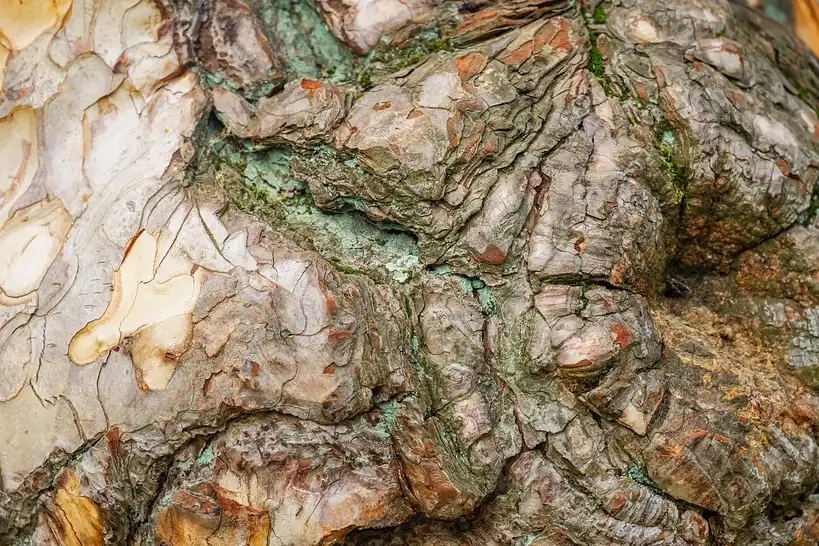

Pine bark fines are the small particles left after pine bark is screened or ground for garden use. They behave differently from bark nuggets or shredded mulch because size changes how fast they break down, how much air they create in soil, and how much water they hold.
For soil use, particle size matters more than the bark species itself. A source-backed range for finely ground pine bark is 1/4 to 1/2 inch. Larger pieces behave more like surface mulch, while smaller pieces break down faster and are less suitable as a lasting soil conditioner. Larger pieces of pine bark should not be used as a soil conditioner.
How fines differ from bark mulch
Surface mulch sits on top of the bed. A soil conditioner is worked into the top layer of soil. Pine bark fines can do either job, but the goal changes the product choice and the application rate.
If you want weed suppression and moisture buffering, a top layer makes sense. If you want looser soil, better drainage, and more pore space, the material needs to be mixed into the topsoil.
Are pine bark fines safe for vegetables?
Pine bark fines are generally considered safe for vegetable gardens when used appropriately. They are a useful soil conditioner in beds that need more air space, better drainage, or more moisture buffering, but they are not a complete replacement for compost and they are not ideal for every crop stage.
Repeated heavy use of pine bark can sometimes cause nitrogen tie-up. Screened fines at the right particle size, applied in moderation, are usually fine. Very coarse bark, overly fresh material, or repeated heavy use can cause problems such as nitrogen tie-up, slow seedling growth, or a gradual drop in soil pH.
What makes them generally safe
Properly prepared pine bark works as a soil improver. In vegetable beds, that means it can loosen compacted soil, open channels for air in the root zone, and help water move through dense areas instead of pooling at the surface. It also helps sandy soil hold moisture longer.
That is why the same product can help two different problems. Clay soil often needs more aeration. Sandy soil often needs better moisture retention.
When safety depends on how you use them
The same material can be safe in one bed and a poor fit in another. Directly around transplants, it can be helpful if mixed into the top layer. Around direct-seeded crops, a thick or uneven layer can interfere with germination. In acid-sensitive beds, repeated use deserves pH checks.
Existing weeds should be removed first. If the bed already has established weeds, top dressing over them only buries a problem.
When pine bark fines fit your bed
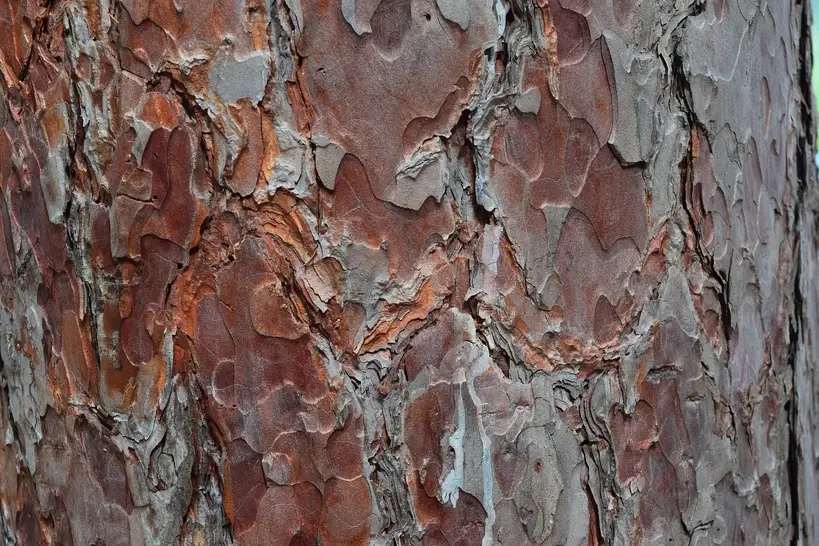
Pine bark fines fit best where the soil needs structure, airflow, or moisture control more than nutrient building. They are most useful in compacted clay, in sandy soil that dries too quickly, and in raised beds that need a lighter texture and better drainage.
Clay soil and compaction
Clay soil often benefits from added porosity. Pine bark fines leave small open spaces that help oxygen and nutrients move through the root zone more easily. That can reduce the tight, sticky feel that slows root growth and water movement.
They work best when worked into the topsoil rather than left in a thick surface layer. Water after incorporation so the fines settle into the soil and begin to mix with the surrounding soil.
Sandy soil and moisture loss
Sandy soil drains quickly and can dry out between waterings. Pine bark fines can help the soil hold moisture longer while still leaving enough air space for roots. That can be useful for vegetables that dislike swings from soggy to dry.
They are not a replacement for organic matter that feeds the soil. Compost still matters when nutrient supply is the priority.
Raised beds and in-ground rows
Raised beds often benefit from improved drainage because they can dry and settle unevenly. Pine bark fines can help open the mix and keep the bed from becoming too dense. In-ground rows can also benefit, especially where foot traffic or repeated cultivation has compacted the top layer.
For new beds, soil testing is the better first step before adding any amendment. For older beds, check whether the problem is structure, fertility, or both.
Pine bark fines decision table
| Garden situation | Good fit? | What to do instead if not |
|---|---|---|
| Clay soil with compaction | Yes, if you want more aeration and better drainage | Use compost first if the main goal is nutrient building |
| Sandy soil that dries fast | Yes, if moisture retention is the main goal | Use leaf mold or compost if you need more feed value |
| Raised beds | Yes, especially for drainage and lighter texture | Use compost-rich mix if the bed needs fertility more than structure |
| In-ground rows | Yes, when topsoil is tight or crusts over | Use compost if the soil is already loose but low in organic matter |
| Seed starting | No, not as the main medium | Use a fine seed-starting mix, coco coir, or perlite-based medium |
| Established transplants | Yes, if worked lightly into the top layer or used as mulch | Use compost around the root zone if the soil needs feeding |
| Acid-sensitive crops | Only with caution and a soil test | Use compost, leaf mold, or neutral organic matter instead |
Say your tomato bed sits in heavy clay and puddles after rain. A moderate amount of screened pine bark fines worked into the top layer can open the soil enough to drain better. If the same bed is already low in nitrogen, add compost too, because bark alone will not solve fertility.
Picture a strawberry border in a raised bed that dries out by midweek. A thin pine bark surface layer can help the soil hold moisture longer. If the plants are new transplants, keep the layer light and avoid burying the crowns.
Should you mix them in or top dress?
Both methods can work, but they do different jobs. Mix pine bark fines into the topsoil when the goal is to improve structure below the surface. Use them as a top layer when the goal is moisture control, weed suppression, or a mulch-like finish.
When to work them into topsoil
Work pine bark fines into the top few inches when soil is compacted, crusted, or slow to drain. That is where they can loosen the root zone and improve water movement. This is the soil-conditioning use, not the mulch use.
Because pine bark can be acidic, avoid repeated deep applications without checking soil pH. A heavy annual dose can slowly pull the soil in the acid direction.
When to leave them as a surface layer
Leave pine bark fines on top when you want a mulch-like layer that slows evaporation and helps keep weeds down. A common retailer rate is a 1 to 2 inch surface layer. It works best in fall or early spring, when beds are less crowded and you can spread it evenly.
Lightly rake the surface if you want some of it to settle in. Do not bury seedlings or cover the crowns of transplants.
Application timing and handling
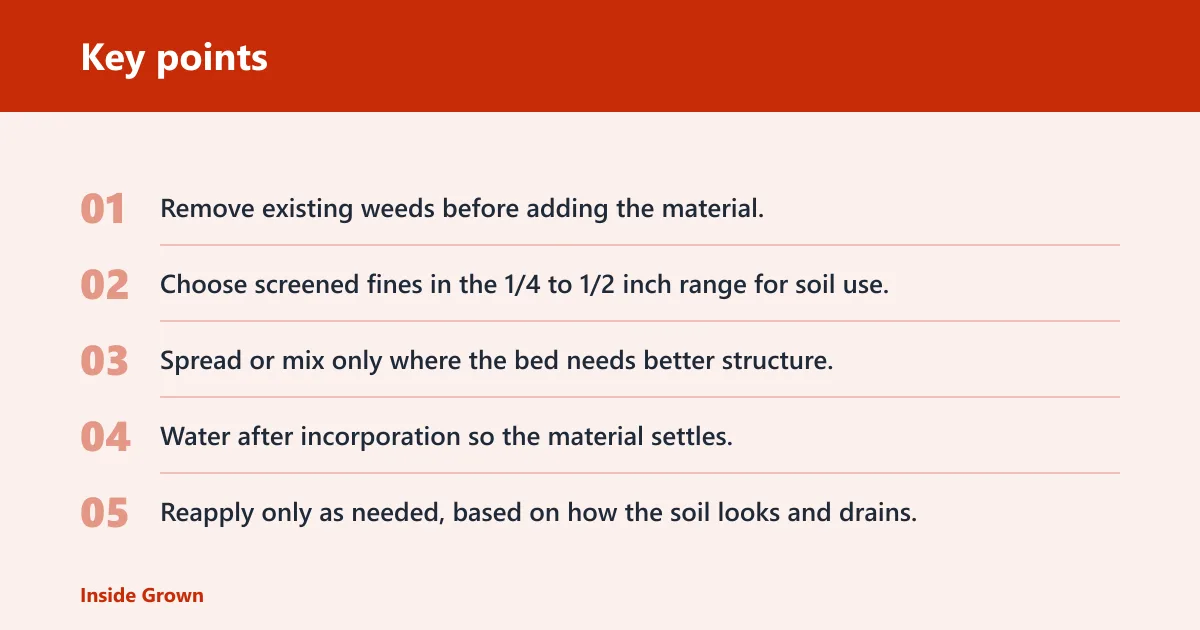
- Remove existing weeds before adding the material.
- Choose screened fines in the 1/4 to 1/2 inch range for soil use.
- Spread or mix only where the bed needs better structure.
- Water after incorporation so the material settles.
- Reapply only as needed, based on how the soil looks and drains.
Most gardeners should think of pine bark fines as a structural amendment first and a mulch second. They are useful in both roles, but the rate and placement should match the job.
Do pine bark fines change soil pH?
Yes, they can. Pine bark can be acidic, and repeated heavy use may lower pH over time. That matters in vegetable beds because many crops perform best in a fairly narrow pH range, and a slow shift can be easy to miss until growth starts to look off.
A single light application is less likely to cause trouble than repeated large additions. If you use bark fines regularly, test the soil pH and watch for signs that the bed is drifting too acidic.
Why acidity matters in vegetable beds
Acidic soil can change how plants access nutrients. In a vegetable garden, that is a concern for crops that prefer a more neutral root zone. It is also a reason not to treat pine bark fines as a universal replacement for compost.
Compost adds organic matter and nutrients. Pine bark fines mainly change texture and water movement.
When to test and monitor soil pH
Test before adding a large amount to an established bed. Test again if the same bed gets bark fines year after year. That is especially important in raised beds, where repeated amendments have a bigger effect in a smaller volume of soil.
If the soil is already acidic, choose a different amendment or use bark only in small, targeted amounts.
Frequently asked questions
How often should pine bark soil conditioner be reapplied?
Reapply only as needed, not on a fixed schedule. In many beds, a light annual top dressing or occasional top-up is enough. If the bark is being used as a soil conditioner, monitor texture, drainage, and pH before adding more, since repeated use can slowly change the soil.
Can pine bark fines be used in raised beds and containers?
Yes, they can be used in raised beds and containers when the goal is better drainage or a lighter mix. Containers need careful watering after bark is added, because the mix can dry faster. For seedlings or nutrient-hungry crops, blend bark with compost rather than using it alone.
Are pine bark fines better for flowers than vegetables?
Not automatically. They can be useful in both flower beds and vegetable beds, but vegetables need more attention to fertility, pH, and planting stage. Flower beds may tolerate a bark-heavy mix more easily, while vegetable beds often need a larger share of compost or other nutrient-building material.
How fine should pine bark be for garden soil?
A source-backed range for finely ground pine bark is 1/4 to 1/2 inch. That size is small enough to mix into soil more evenly without acting like chunks of mulch. Finer material breaks down faster, while larger pieces behave more like surface mulch and are not suited to soil conditioning.
Should pine bark fines be tilled in or used as mulch?
Use them in the soil when you want more aeration, drainage, or moisture retention in the root zone. Use them as mulch when you want surface coverage and slower evaporation. Do not confuse the two uses; the right choice depends on whether the problem is in the soil or on top of it.
Can I mix pine bark fines into my vegetable bed?
Yes, if the bed needs better structure and the material is screened to a small, even size. Mix it lightly into the topsoil, water afterward, and avoid using it as the only amendment. If the bed needs nutrients more than texture, compost, leaf mold, or a compost blend is usually the better choice.
Is pine bark fines safe for vegetable gardens?
Yes, pine bark fines are generally safe for vegetable gardens when they are properly prepared and used with care. The main cautions are particle size, nitrogen balance, and pH. They fit best as a soil conditioner or light surface layer, not as a full replacement for compost.
Do pine bark fines change soil pH in a veggie garden?
They can. Pine bark is often acidic, and repeated heavy use may lower soil pH over time. That does not make it unsafe on its own, but it does mean you should test the soil if you plan to use bark fines regularly, especially in raised beds or beds with acid-sensitive crops.