Is Ash From a Fire Pit Safe for Vegetable Gardens?
Yes, wood ash from a clean, untreated fire pit can be safe for vegetable gardens in small amounts, but only if your soil is acidic, your compost can handle the lime effect, and you avoid pH-sensitive crops. Skip it if the ash came from trash, charcoal additives, or treated wood. Used wrong, ash can push soil pH too high, block nutrient uptake, and weaken vegetables. This guide covers safe rates, when to add ash, when to leave it out, and how to judge compost and crop risk.
What fire pit ash changes in soil


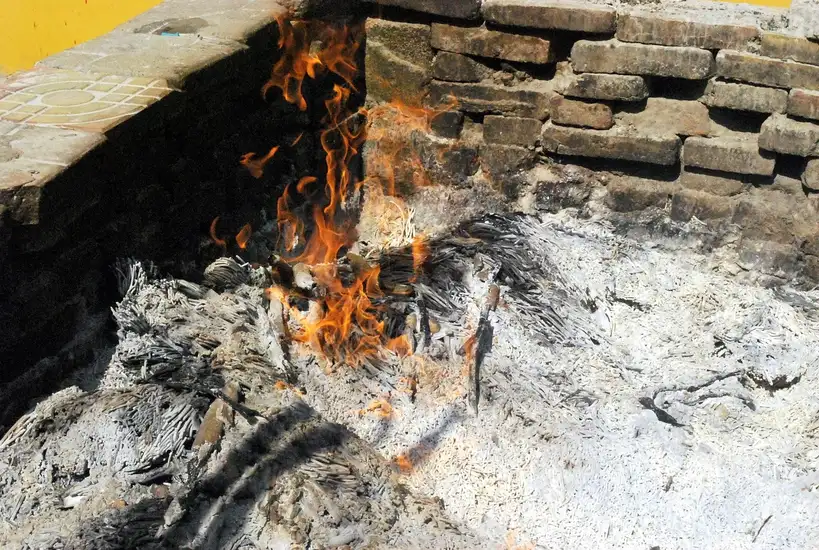
Clean wood ash can add potassium, calcium, magnesium, and phosphorus, but its main soil effect is pH change. Calcium carbonate usually makes up about 25% to 45% of wood ash, and that carbonate content gives ash its liming effect. In plain terms, ash usually corrects acidity more than it feeds crops.
The nutrient piece matters, but only to a point. Potassium is the main nutrient gardeners usually want from ash, and it supports flowering, fruiting, disease resistance, and water regulation. Even so, ash is still a modest nutrient source compared with a complete fertilizer.
Why source material changes the risk
Only ash from burned wood belongs in the conversation. Fire pit ash from untreated wood can be usable, while ash from charcoal briquettes, paper products, treated wood, painted wood, or mixed fire debris should stay out of the garden. Contaminants and additives can change what you spread onto food crops.
Let the ash cool completely before touching it. Wet ash can be caustic, dusty ash can be easy to inhale, and both may irritate skin and lungs. Keep it dry in storage, and never assume every gray residue from a fire pit is safe.
Is ash from a fire pit safe for vegetable gardens?
Sometimes, yes. Clean wood ash can fit a vegetable-garden plan when the soil is acidic and the bed needs a small pH lift, but it should stay out of beds that are already neutral or alkaline. The decision depends on ash source, current soil pH, and crop sensitivity, not on the fact that it came from a fire pit.
Say your tomato bed tests acidic and the only fuel was split hardwood. A small, evenly spread dusting of ash can fit that bed better than a bed planted to blueberries or azaleas, which need low pH to absorb iron. The same ash would be a poor choice for an already alkaline bed.
When clean wood ash can fit a garden plan
Use ash when the source is known, the wood is untreated, and the soil test says the bed is below neutral. Ash works best in acidic soils because it raises alkalinity. That can help a low-pH bed move toward a range vegetable crops can use more comfortably.
When ash should stay out of the bed
Skip ash when the source is mixed or contaminated, when the bed already tests neutral to alkaline, or when the crop list includes acid-loving plants. Ash can raise soil pH quickly, and soil that is already alkaline may be harmed by another rise in pH. In that setting, ash can make nutrient uptake worse instead of better.
Why soil pH decides the answer
Soil pH is the main decision point. Ash should only be applied to soil with pH less than 7-7.5. Test before you apply, then test again later if you keep using ash. Without that check, it is easy to overshoot and create iron deficiency or other nutrient lockout symptoms in vegetables.
Soil pH decision table
Use this table as the first filter. If the ash source is uncertain, the answer usually stops at no. If the source is clean, the next question is whether the bed is acidic enough to benefit from a small liming effect.
| Burn source | Current soil pH range | Recommendation |
|---|---|---|
| Untreated hardwood ash | Below 6.5 | Use sparingly. This is the best-fit range for a small ash addition, spread thinly and retest later. |
| Untreated hardwood ash | 6.5 to 7.0 | Proceed with caution only if a soil test shows the bed still needs a pH lift. Keep the rate very low. |
| Untreated hardwood ash | Above 7.0 | Do not apply. Ash is likely to push the bed further alkaline and reduce nutrient availability. |
| Mixed or unknown fire debris | Any pH range | Do not use in the garden. Unknown ash can contain briquettes, paper products, treated wood, or painted wood residue. |
| Acid-loving beds with blueberries, azaleas, or rhododendrons | Any pH range that is already suitable for those crops | Skip ash. These plants need low pH and can yellow or fail when pH rises. |
| Neutral-loving vegetable beds | Below 7.0 | Possible in small amounts only if the soil is acidic and the bed does not already sit near the upper limit. |
How much ash can you add?
Keep the dose small. Common guidance ranges from one to two pounds per 100 square feet to no more than five pounds per 100 square feet, with another guide listing 10 pounds per 1,000 square feet and up to 25 pounds per 1,000 square feet for extremely acidic soil. Spread it thinly. Do not pile it in one spot.
A standard 5-gallon bucket will hold up to 20 pounds of ashes, which is far more than most vegetable beds should receive at once. That is useful as a handling reference, but it also shows how easy it is to overapply if you treat ash like ordinary compost or mulch.
How to spread ash thinly and evenly
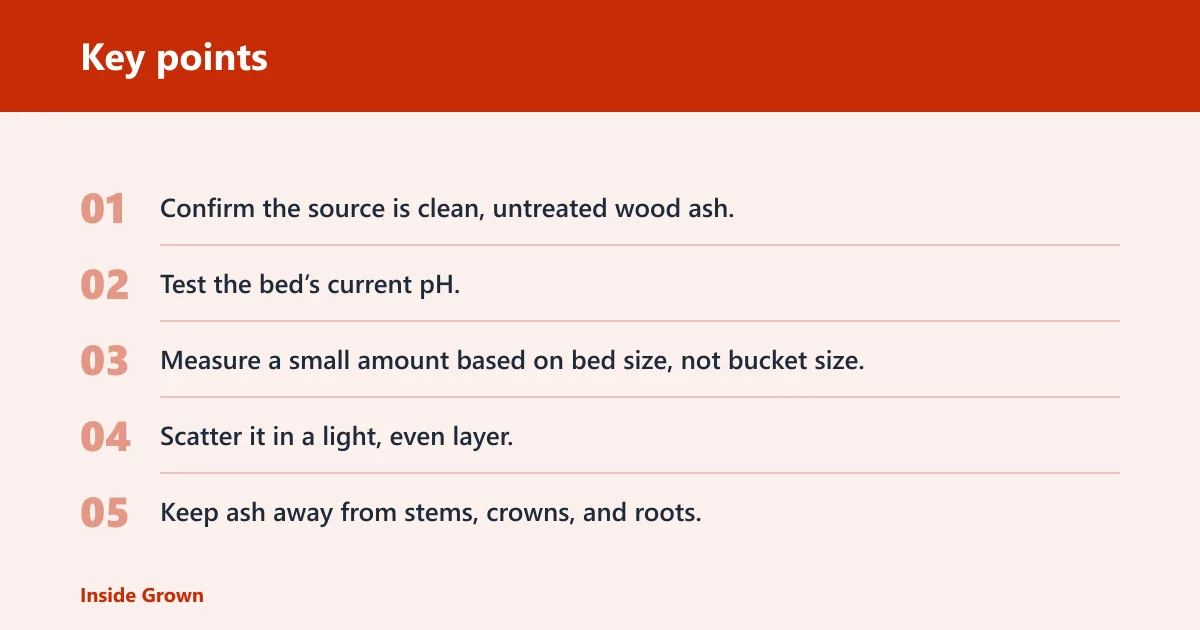
- Confirm the source is clean, untreated wood ash.
- Test the bed’s current pH.
- Measure a small amount based on bed size, not bucket size.
- Scatter it in a light, even layer.
- Keep ash away from stems, crowns, and roots.
- Water lightly or mix it into the top layer of soil after application.
Suppose a 100-square-foot bed is acidic enough to justify ash. A thin application is better than one dense pile in the center, because a pile can create a local pH spike that damages nearby roots. Even distribution matters as much as total rate.
When to water or mix it
Watering after application helps move ash off the surface and into contact with soil. Light mixing works too, as long as you keep the ash near the surface and away from tender roots. Do not bury it against stems or work it deep into the bed like compost.
Which plants should not get ash?
Acid-loving plants should not get wood ash. Blueberries, azaleas, and rhododendrons need low pH to absorb iron, and ash pushes soil in the opposite direction. In vegetables, the main concern is not the crop name alone but whether that crop is growing in a bed that needs acid conditions.
Even vegetables that tolerate near-neutral soil can struggle if the pH climbs too far. The failure mode is usually nutrient lockout, especially iron-related yellowing, weak growth, and poor fruit set. A plant may look short on nutrition when the real problem is pH.
What symptoms to watch after use
Watch for new leaves turning pale or yellow while veins stay greener, especially on crops that prefer more acidic soil. Also watch for slowed growth after a fresh application. Those signs can point to pH moving higher than the crop wants, particularly in beds that were already near neutral.
Ash in compost and pest control
Small ash additions can go into compost, where they help neutralize acidity. The key words are small and even. Too much ash can unbalance the pile, raise pH too far, and make the compost less useful for acid-sensitive beds later.
Ash may also deter slugs and snails, but that is a side effect, not a primary use. Do not overapply just to chase pests. If a bed needs pH correction, use ash for that reason first and keep pest control secondary.
How to add ash to compost safely
Mix ash into the pile in thin layers so it does not form a dry pocket. Do not dump a large load in one place. If the pile is already dry or alkaline, skip ash and use other materials instead. Compost should stay balanced, not loaded with one mineral source.
Safety checks before you spread ash
Use a mask to reduce dust inhalation, especially when transferring ash from storage to the bed. Handle only fully cool ash. Keep it dry until use, and never assume a covered bucket means safe ash if the source is unknown. Safety starts with the burn material, not the container.
Do-not-use checklist
- Do not use ash from treated wood.
- Do not use ash from painted wood.
- Do not use ash from charcoal briquettes.
- Do not use ash from paper products or mixed fire debris.
- Do not use wet ash.
- Do not use hot or still-warm ash.
- Do not use ash on soil that already tests neutral to alkaline.
- Do not place ash directly against stems, crowns, or roots.
One common first-timer mistake is treating every fireplace or fire pit residue the same. Clean hardwood ash and mixed debris are not interchangeable. If the burn source is uncertain, the safest move is to skip the bed and keep the ash out of the compost too.
Frequently asked questions
What kind of ash is safe to use in a vegetable garden?
Safe ash comes from burned wood only, especially untreated hardwood. It should not include charcoal briquettes, paper products, treated wood, painted wood, or mixed fire debris. Clean wood ash can supply potassium, calcium, magnesium, and phosphorus, but its strongest effect is liming, so source matters first.
How much fire pit ash can I add to my garden?
Use a small amount. Common guidance ranges from one to two pounds per 100 square feet, while another guide says no more than five pounds per 100 square feet. A separate recommendation lists 10 pounds per 1,000 square feet, with up to 25 pounds per 1,000 square feet for extremely acidic soil.
Should I test soil pH before using wood ash?
Yes. Test before you apply ash, because the right rate depends on how acidic the bed already is. Ash should only be applied to soil with pH less than 7-7.5. If you keep using ash over time, test again afterward so the bed does not drift too far upward.
Which vegetables benefit from wood ash?
Vegetables grown in acidic soil may benefit most, especially beds that need a modest pH correction and a little potassium. The best fit is a crop bed that is not acid-sensitive and has tested below neutral. Ash is not a general fertilizer, so use it only where the soil chemistry calls for it.
Which plants should not get wood ash?
Blueberries, azaleas, and rhododendrons should not get wood ash because they need low pH to take up iron. In vegetable gardens, any bed already near neutral or alkaline should also skip ash. If a crop shows yellowing after application, the pH may have risen too far.
Can I put fire pit ashes in compost?
Yes, in small, even additions. Ash can help neutralize acidity in a compost pile, but too much can unbalance the mix. Blend it through the pile rather than dumping it in one spot, and avoid ash from contaminated or unknown burn sources.
Can fire pit ashes attract or repel garden pests?
Ash may deter slugs and snails, but that effect is secondary and not reliable enough to justify overuse. It should still be judged first as a soil amendment that changes pH. If the bed does not need pH correction, do not add ash just for pest control.