Is Bone Char Safe for Vegetable Gardens?
By [Author Name], Horticulturist and Extension Garden Writer
Bone char is generally safe in vegetable gardens if it comes from a reputable source and is used sparingly, though bone meal is often the more commonly recommended phosphorus amendment. Poorly sourced products can carry contamination risk, waste money, and push soil pH the wrong way. This guide separates bone char from bone meal and gives a practical checklist for edible beds, pets, pH, and phosphorus needs. For the soil science behind that advice, extension guidance and research agree that phosphorus availability is strongly influenced by soil pH, especially as soils move above neutral, and that soil testing is the right starting point before adding phosphorus amendments (Penn State Extension, NC State Extension, peer-reviewed soil chemistry review). If you garden under organic rules, check the product against the OMRI Products List before you buy.
Bone char vs bone meal


Bone char and bone meal both come from animal bones, but they do different jobs. Bone char is an animal-bone-derived carbon product used in some phosphate or soil-amendment products, while bone meal is a slow-release fertilizer that many gardeners use when they want a bone-based source of phosphorus and calcium. Extension recommendations generally treat bone meal as a phosphorus amendment and stress that its usefulness depends on soil test results, crop need, and pH rather than on the label alone (University of Minnesota Extension, Penn State Extension).
That difference matters in edible beds. If a label does not clearly state how the product is processed and whether it is intended for food gardens, do not assume it is safe for lettuce, tomatoes, beans, or other crops you plan to eat. For organic gardeners, the practical check is simple: confirm the exact product on the OMRI database or the manufacturer’s current organic compliance statement before application (OMRI Products List).
What bone char is used for in gardening
Gardeners use bone char mainly as a phosphate source or soil amendment. Its value depends on how it was made, how clean the feedstock was, and whether the final product is labeled for edible crops. If the label is vague, treat that as a reason to skip it in vegetable beds. When a product claims to supply phosphorus, the meaningful question is whether the label provides a recognized analysis, a use rate, and a clear intended use; extension services consistently recommend matching amendments to a soil test instead of chasing a generic nutrient promise (Penn State Extension).
What bone meal is and what it contains
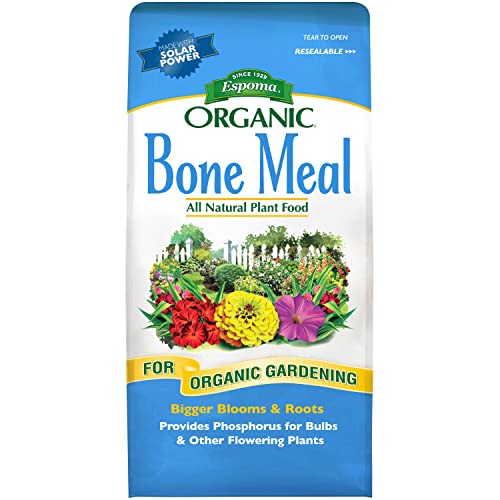
Bone meal is a natural slow-release fertilizer. A common average NPK rating is 4-12-0, which tells you it is far more useful for phosphorus than for nitrogen or potassium. It is also rich in calcium, so it can support root growth and plant structure when the soil actually needs those nutrients. Rates and exact nutrient values vary by product, which is why extension guides advise reading the guaranteed analysis rather than assuming one bag matches the next (University of Minnesota Extension).
Why the difference matters for edible beds
Vegetable gardens work best with a simple rule: use a product when the soil and crop need it, not because it sounds useful. A bone-based amendment that is acceptable in an ornamental border may not fit near edibles if the source is unclear, the crop does not need more phosphorus, or the label lacks a verified use category. Bone meal is the familiar option; bone char needs more label checking before you use it.
Is bone char safe for vegetable gardens?
Bone char can be safe for vegetable gardens if the source is reputable, the product is processed for garden use, and the label says it is appropriate for edible crops. Safety is not automatic, though. Contaminants, unclear processing, and poor labeling are all reasons to skip it in food beds. Organic certification databases and extension services both push gardeners toward traceable inputs rather than anonymous bagged materials (OMRI Products List, Penn State Extension).
When the label and source matter
For food crops, the safest move is to verify the product source before you apply anything bone-based. That means checking whether the manufacturer identifies the feedstock, the processing method, and the intended use. If you cannot confirm those details, bone char does not belong in a vegetable patch. If the product is marketed for organic gardening, verify it in OMRI rather than relying on a retailer’s shorthand or a product title alone.
When to skip it in food beds
Skip bone char if you garden for strict vegan standards, if the label does not explicitly support edible use, or if the soil already has enough available phosphorus. Also skip it on sites that already struggle with runoff, because any phosphorus-rich amendment can be wasted if it is not needed. Soil phosphorus is one of the nutrients most likely to become a management issue when it is applied beyond crop need (Penn State Extension).
Who should avoid it entirely?
Anyone who wants a fully non-animal fertilizer should avoid bone char. The same goes for gardeners who cannot verify processing quality or who are working in a bed with repeated digging from dogs, raccoons, or other wildlife. In those situations, a plant-based phosphorus source is the cleaner choice. If you need an OMRI-listed option, use the OMRI search tool to verify the current status of any candidate product instead of assuming a brand line is approved across the board (OMRI Products List).
What bone-based fertilizer does
Bone-based fertilizers are used mainly for phosphorus, with calcium as a secondary benefit. Phosphorus helps roots form and flowers set. Calcium supports plant structure and root growth. Those benefits matter most when the crop and the soil both point toward a real need for them. Soil science reviews and extension guides consistently note that phosphorus is relatively immobile in soil and most useful when it is placed where roots can actually access it (peer-reviewed soil chemistry review, University of Minnesota Extension).
Phosphorus for roots and flowers
Phosphorus is the nutrient gardeners are usually trying to add when they reach for bone meal. It helps plants establish roots and support flowering, which is why gardeners often use it at transplanting time or when a crop looks weak in the root zone. But if phosphorus is already sufficient, more of it does not help much, and extra phosphorus can create management problems without improving growth (Penn State Extension).
Calcium as a secondary benefit
Bone meal also contributes calcium. That is useful, but it is not a free pass to apply more product than the soil needs. Calcium is only one part of the picture, and a bone-based amendment should still be matched to the crop, the pH, and the actual nutrient gap. Extension sources on phosphorus fertilizers stress that nutrient availability depends on the overall soil environment, not on one ingredient label alone (University of Minnesota Extension).
Why nutrient needs change by crop
Crop type changes the answer more than most gardeners expect. Fruiting crops like tomatoes and peppers usually justify a closer phosphorus check at planting, while leafy greens often need steady nitrogen more than a phosphorus boost. Root crops sit in between, and transplants are the time when a small, well-placed phosphorus dose can matter most. The best tiering is simple: high-need crops include transplants and flowering/fruiting vegetables; moderate-need crops include root vegetables; lower-need crops include established leafy greens in fertile beds.
When soil pH changes the answer
Soil pH can change whether bone meal is worth using at all. Bone meal works best when pH is below 7. In alkaline soil, phosphorus availability drops, so the amendment becomes less useful even if the label suggests a strong nutrient package. That is a core soil-chemistry issue, not a brand issue (Penn State Extension, peer-reviewed soil chemistry review).
Why alkaline soil lowers phosphorus uptake
In alkaline conditions, plants have a harder time taking up phosphorus. That means a bone-based amendment can sit in the soil without delivering the result you expected. The bed may still receive phosphorus, but the crop may not access it efficiently enough to justify the application. Extension guidance commonly recommends correcting the soil plan first, then selecting a phosphorus source only when the test indicates need.
Why bone meal works better below pH 7
Below pH 7, bone meal is more likely to release phosphorus in a form roots can use. That is why it makes more sense in slightly acidic to neutral soil than in an alkaline bed. If your soil test already shows a high pH, a non-bone fertilizer is usually the better pick. The practical rule is not “bone meal always works” but “bone meal works when the soil can actually use the phosphorus.”
How pH should guide the skip-or-use choice
If your soil is alkaline, do not assume bone meal will solve a phosphorus problem. Start with the pH reading, then decide whether the crop actually needs phosphorus. If both answers point away from bone meal, skip it and choose a fertilizer that fits the soil instead. That decision is better than chasing a generic feeding schedule.
Should you use bone-based fertilizer in a vegetable garden?
Use bone-based fertilizer only when the product type, crop, soil pH, and pest pressure all support it. If phosphorus is needed, the soil is below pH 7, and the label confirms food-garden compatibility, bone meal can be a reasonable choice. If any of those conditions fail, skip it. A practical garden decision always starts with soil test results, then moves to crop demand, then to product label and certification.
| Product type | Crop type | Soil pH | Pet/wildlife pressure | Phosphorus need | Recommendation | Rationale |
|---|---|---|---|---|---|---|
| Bone meal | Transplants in a vegetable bed | Below 7 | Low | Needed | Yes | Slow-release phosphorus and calcium fit a food bed when the soil can use them. |
| Bone meal | Leafy greens already growing well | Below 7 | Low | Not needed | No | Skip the amendment when phosphorus is not the limiting factor. |
| Bone meal | Any edible crop | Above 7 | Low | Needed | No | Alkaline soil lowers phosphorus availability, so the benefit drops. |
| Bone char | Edible crops with a verified label | Below 7 | Low | Needed | Maybe | Use only if processing and food-garden compatibility are clear. |
| Bone char | Strict organic or vegan beds | Any | Any | Any | No | Animal-derived input may not fit the garden’s standards or rules. |
| Bone-based fertilizer | Newly transplanted rows with dogs nearby | Below 7 | High | Needed | No | Digging pressure raises the chance of disturbance unless the product is fully buried and protected. |
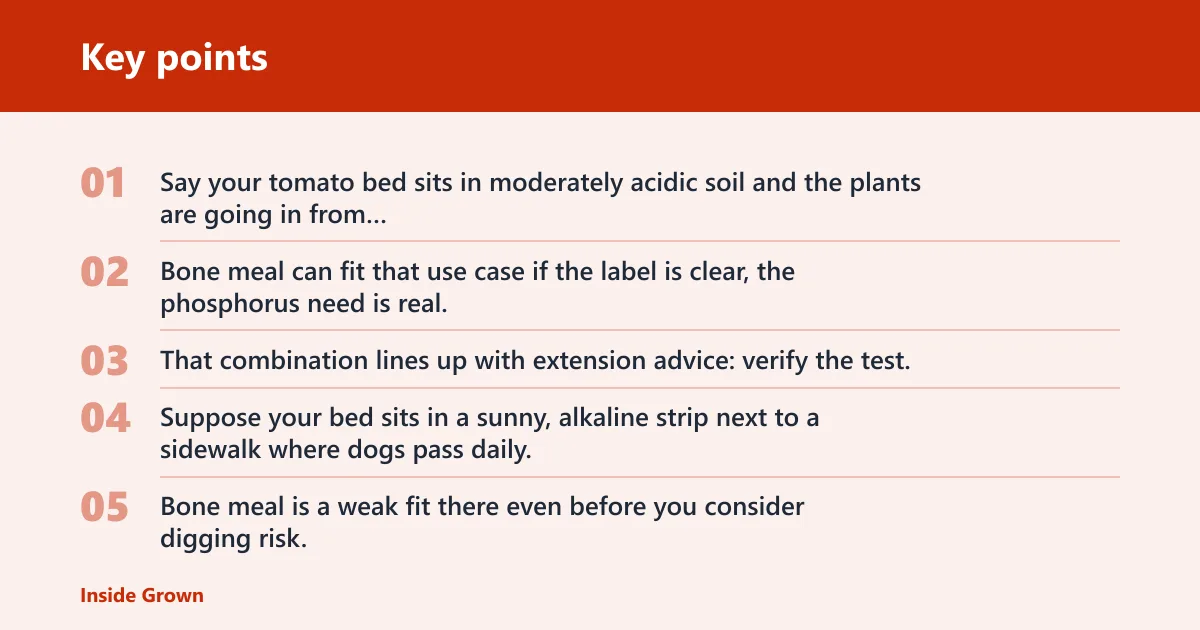
Say your tomato bed sits in moderately acidic soil and the plants are going in from starter pots. Bone meal can fit that use case if the label is clear, the phosphorus need is real, and you work the amendment into the soil instead of leaving it exposed. That combination lines up with extension advice: verify the test, place the nutrient where roots can reach it, and avoid extra phosphorus when the bed does not need it (University of Minnesota Extension).
Suppose your bed sits in a sunny, alkaline strip next to a sidewalk where dogs pass daily. Bone meal is a weak fit there even before you consider digging risk. A non-animal fertilizer is the safer route, especially if you do not want pets nosing around the surface.
How to apply bone meal safely
Use bone meal only after you decide it belongs in the bed. A common vegetable-garden rate is 5 to 10 pounds per 100 square feet, and one source says that amount can feed for about four months. Another practical approach is a small handful in each planting hole. Use the label rate first, since rates vary by formulation and by crop need; extension guidance is clear that phosphorus should be applied according to soil test and label directions rather than by habit (University of Minnesota Extension, Penn State Extension).
Basic rate and placement
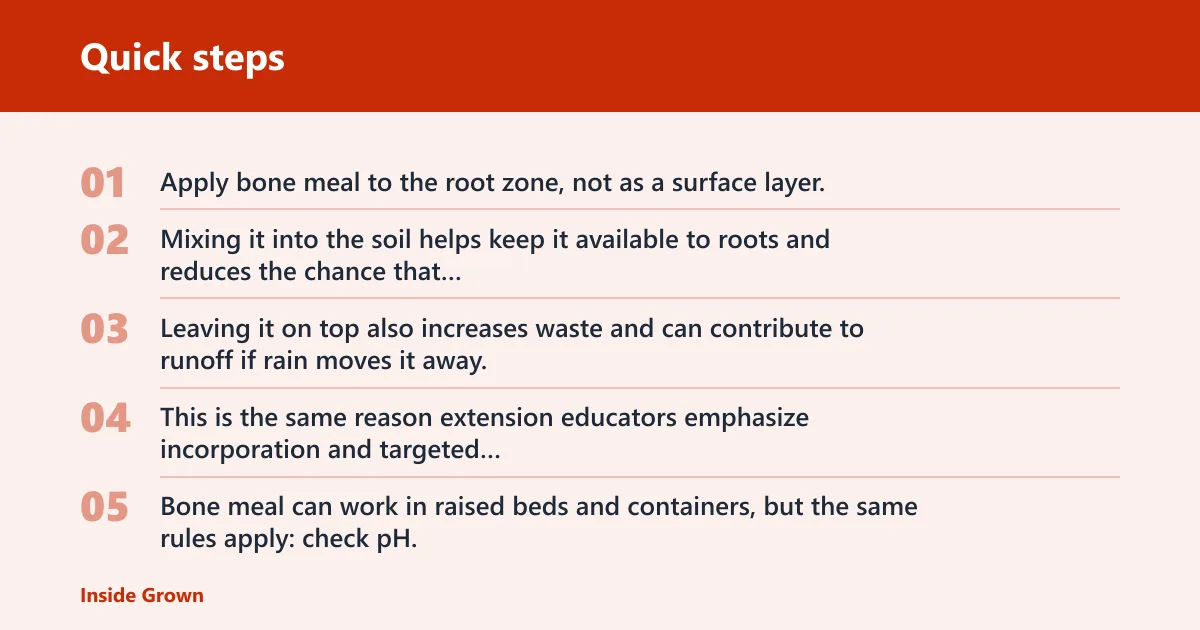
Apply bone meal to the root zone, not as a surface layer. Mixing it into the soil helps keep it available to roots and reduces the chance that pets or wildlife will find it. Leaving it on top also increases waste and can contribute to runoff if rain moves it away. This is the same reason extension educators emphasize incorporation and targeted placement for phosphorus materials rather than broad broadcast use.
Containers, raised beds, and transplants
Bone meal can work in raised beds and containers, but the same rules apply: check pH, confirm the need for phosphorus, and keep it out of reach of animals. For transplants, place a small amount in the hole and cover it well before watering in. Container gardeners should be especially careful because potting mix can concentrate both nutrients and mistakes.
Pets and critters
Dogs may dig for the scent source, and wildlife can do the same. Keep bone meal stored safely away, and do not leave open bags near a shed door or potting bench. In raised beds, a tucked-in application is safer than a loose sprinkle on the surface, but it still should not be used where digging is likely.
Runoff and overuse
Extra bone meal can run off and may cause algae growth if it reaches waterways. Overuse also wastes product when the garden does not need more phosphorus. That is why bone-based fertilizer belongs in a need-based plan, not in a blanket feeding schedule. Soil phosphorus is one of the nutrients most often overapplied when gardeners skip testing (Penn State Extension).
Frequently asked questions
Is bone char the same as bone meal?
No. Bone char is an animal-bone-derived carbon product used in some phosphate or soil-amendment products, while bone meal is a fertilizer made for slow nutrient release. They do not behave the same way in soil, and they should not be treated as interchangeable in edible beds.
Can I use bone char on edible plants?
Only if the product label and source confirm it is appropriate for food crops. If the packaging does not say that clearly, skip it. Edible beds need a higher standard than ornamental planting areas because the crop, runoff, and residue questions matter more. OMRI verification is a useful extra check when the garden is managed organically (OMRI Products List).
Does bone char affect soil pH?
It can, depending on the product and processing, but the main decision point is whether it is suitable for your soil and crop. For bone meal, pH matters more clearly: it works best when soil pH is below 7, and usefulness drops in alkaline soil. That is why a soil test should come before the amendment, not after it.
Will bone-based fertilizer attract animals?
Yes, it can. Dogs may dig for the scent source, and wildlife may investigate fresh amendments in open soil. Burial or thorough coverage reduces the risk, and storage matters too. Keep the product sealed and out of reach so pets do not find it first.
What fertilizers are safer than bone meal for veg gardens?
If you want a non-animal option, choose a plant-based or mineral fertilizer that matches the soil test and crop need. For gardeners avoiding animal inputs, that is often the better route. Preen’s organic variety is also mentioned as an option, and its 100 percent corn gluten formula is described as a natural pre-emergent herbicide rather than a phosphorus fertilizer; because that is not a phosphorus source, it should not be used as one.
How much bone meal should I use in a vegetable garden?
A common vegetable-garden rate is 5 to 10 pounds per 100 square feet. Another basic method is a small handful in each planting hole. Use the lower end first, especially if your soil already has enough phosphorus or if the bed is prone to runoff.
Can bone meal burn plants or harm pets?
Bone meal is a slow-release fertilizer, so burn risk is lower than with many fast fertilizers, but overuse still causes problems. Pets are the bigger concern in many gardens because they may dig it up or eat exposed material. Mix it into soil and store it safely away.
Is bone meal okay for raised beds?
Yes, if the bed actually needs phosphorus and the soil pH supports it. Raised beds can make coverage easier, which helps with pet control. The same rules still apply: verify the need, keep it below the surface, and avoid using it when phosphorus is already sufficient.