Is Charcoal Safe for Vegetable Gardens?
Plain charcoal belongs in vegetable beds only when it is untreated wood charcoal. Briquettes, lighter-fluid charcoal, and charcoal ash are often best kept out unless ash is used sparingly and the soil pH is already low. Good garden hygiene starts with source checking: the material itself matters, and so do the residues on it. Extension guidance on compost use, together with peer-reviewed biochar and soil-chemistry research, supports a cautious split between clean lump charcoal, contaminated grill leftovers, and alkaline ash. This guide separates safe reuse from unsafe material and gives you a quick yes/no rule for beds, compost, and mulch.
What charcoal means in a vegetable garden
Not all charcoal is the same type or use. Natural lump charcoal comes from hardwood, while briquettes are a separate product and are not the preferred garden choice. Raw charcoal can sometimes help in compost or mulch, but ash belongs in a separate category because it is generally alkaline and can affect soil pH. In extension materials on biochar and charcoal, the key distinction is consistent: untreated carbonized wood is different from fuel products and from combustion ash.
Natural lump charcoal versus briquettes
Natural lump charcoal has a porous structure that can fit a limited compost or mulch role. That porosity is why gardeners sometimes use it for odor control, moisture buffering, and habitat for beneficial microorganisms, although the compost literature is clearer on carbon balance and microbial habitat than on simple “fertilizer” effects. Briquettes are not the preferred charcoal type for these uses, because they may contain binders or additives that make them a poor fit for vegetable beds. Peer-reviewed biochar studies and extension publications both note that performance depends on feedstock, processing, and contamination status, not just the word “charcoal.”
Where ash fits in the picture
Charcoal ash is not raw charcoal. It is alkaline, so it can affect soil pH in a vegetable bed. That matters most when your soil already runs high, or when you are growing crops that dislike pH drift. Soil science references consistently treat wood ash and charcoal ash as liming materials, not neutral carbon amendments. Ash is a separate input, not a substitute for untreated charcoal.
Is charcoal safe for vegetable gardens?
Yes, but only in limited, specific forms. Untreated hardwood charcoal can be useful in compost or as mulch, while briquettes, lighter-fluid charcoal, treated wood, and flavored leftovers are unsafe for vegetable beds. The safe answer depends on what the charcoal is, what touched it, and where you plan to put it. If you are unsure, the safer default is to keep it out of food-growing areas.
Safe uses versus unsafe uses
Natural lump charcoal can go into a compost pile first, or into mulch in some gardens. Compost guidance from university extensions commonly treats clean carbon-rich material as a way to balance nitrogen-heavy inputs, while biochar research notes that carbonized wood can improve pore structure and microbial habitat when it is clean and appropriately prepared. That does not make every piece of charcoal garden-safe. Contamination changes the answer fast.
When raw charcoal should stay out of soil
Do not mix in charcoal that came from lighter fluid, flavor additives, or treated wood. Those leftovers can carry residues you do not want near edible roots, and residue concerns are especially important in root-zone crops where direct contact is likely. If the source is unclear, the safest move is to keep it out of beds, compost, and mulch. Extension sources on home composting routinely recommend rejecting unknown or chemically treated materials for this reason.
Why contamination changes the answer
A small piece of clean hardwood charcoal is very different from grill leftovers soaked with starter fluid or smoke flavoring. The first may have a place in compost or mulch. The second belongs in the discard pile, because the risk is not the carbon itself but the contaminants on it. That distinction is more important than the appearance of the piece, which can look similar once it has been burned.
Can you add charcoal to compost first?
Yes, clean hardwood charcoal can go into compost first. Crushed charcoal can help balance compost when there is too much nitrogen, and extension compost guides note that carbon-rich inputs reduce the “wet, smelly” failure mode associated with excess nitrogen and poor aeration. It can also help retain moisture and provide habitat for beneficial microorganisms, though the strongest support here is from biochar research on pore structure and microbial colonization rather than from simple home-garden folklore.
Carbon balance and odor control
In compost, charcoal acts like a carbon material, so it can help steady a pile that has too much nitrogen. That is why it may reduce ammonia odor. A strong ammonia smell usually means the pile needs more carbon, not more nitrogen-rich scraps. Compost troubleshooting guides from cooperative extension offices consistently point to this fix: add dry, carbon-rich material and improve aeration rather than burying the problem under more greens.
Moisture retention and microbes
Charcoal can help hold moisture in compost because of its porous structure. Those pores can also give beneficial microorganisms places to live. Peer-reviewed biochar studies support the idea that porous carbon materials can increase habitat complexity in soil systems, although results vary by feedstock and loading rate. That does not mean charcoal replaces good compost management. It works best as one ingredient in a balanced pile, not as the main ingredient.
What to avoid before it enters the pile
Do not compost briquettes, treated wood charcoal, or material with lighter-fluid residue. Do not add ash as if it were raw charcoal, either. If the piece has an unknown coating, odd smell, or sticky residue, keep it out of the pile. Extension recommendations on compost feedstocks are clear that unknown chemical residues and treated wood belong in the discard stream, not the bin.
Can charcoal work as mulch around vegetables?
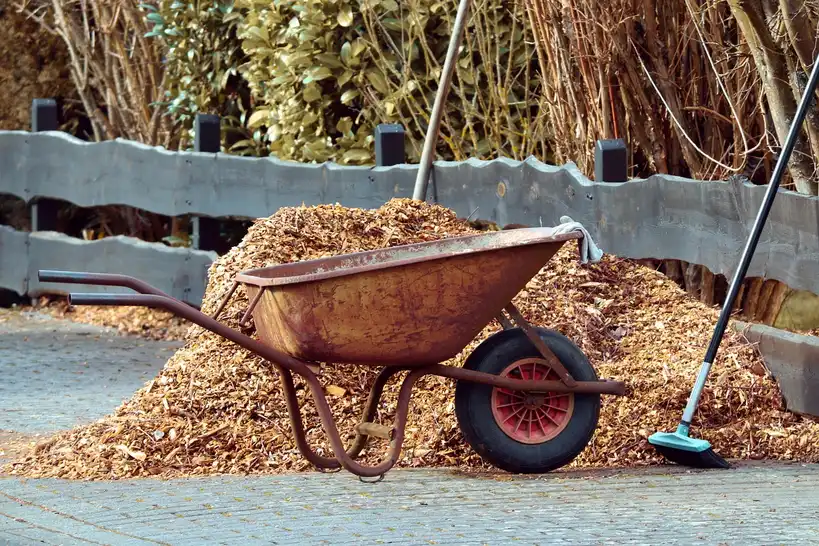
Yes, clean hardwood charcoal can be used as mulch in the garden in some cases. The pieces should be about 1 inch in diameter, because larger chunks are less useful as a surface layer. Mulch can suppress weeds and help the surface dry more slowly after watering or rain, but it does not “feed” the bed in a meaningful agronomic sense the way a fertilizer or compost amendment does. For vegetables, use it only as a modest surface material and only when the charcoal is clean.
Why piece size matters
Chunk size matters because mulch needs to sit evenly on the soil surface. Pieces around 1 inch in diameter are easier to spread and less likely to create gaps. Very fine bits can wash away or blow around, while oversized chunks do less to cover the bed evenly. Practical mulch guidance from garden extensions emphasizes even cover and steady contact with the soil surface as the main goals.
Seedlings, transplants, and root zone caution
Be careful near vegetable seedlings and transplants. Young roots are still establishing, so any mulch that changes water movement or soil chemistry deserves caution around the root zone. Keep charcoal away from the immediate stem area and avoid piling it against tender crowns. A soil-test-first rule matters here: if you do not know the pH, do not use charcoal ash, and do not assume charcoal mulch is neutral. New transplants are the least forgiving place to improvise.
Mulch benefits and limits
Charcoal mulch may help with weed suppression and moisture retention, but it is not a cure-all. Its effect depends on charcoal type, placement, and soil conditions. It can work in some beds, yet it is not the first choice when you need a simple, predictable mulch. For most vegetable beds, extension guidance favors more familiar mulch options unless you have a specific reason to use carbonized wood.
Charcoal decision table
| Charcoal type | Contamination risk | Likely pH effect | Garden use or rejection reason |
|---|---|---|---|
| Natural lump charcoal, clean hardwood | Low if untreated and residue-free | Usually limited, but still variable | Safe to compost; safe as mulch in limited cases; not a routine soil amendment |
| Crushed natural lump charcoal | Low if clean | Variable | Safe to compost; safe as mulch if used lightly; better for carbon balance than direct soil mixing |
| Briquettes | Moderate to high because additives may be present | Uncertain | Unsafe for vegetable beds; not the preferred garden type; contamination and binders are the rejection reason |
| Used grill charcoal with lighter-fluid residue | High | Uncertain | Discard; residue risk makes it unsafe for vegetables and compost |
| Charcoal from treated wood or flavored fuel | High | Uncertain | Discard; contaminants make it unsafe for beds and mulch |
| Charcoal ash | Low for contamination, high for chemistry risk | Alkaline | Unsafe for vegetable beds unless used sparingly and soil pH is already low; pH rise is the rejection reason |
- Confirm the charcoal came from hardwood and was not mixed with briquettes.
- Check for lighter-fluid smell, flavor additives, paint, or treated wood.
- Decide whether you need compost input, mulch, or nothing at all.
- Keep ash separate from raw charcoal.
- If the source is unclear, discard it.
Say your grill left a handful of clean, unlit hardwood chunks, each close to 1 inch across. Those pieces can go into compost or a thin mulch layer. Suppose the same basket of leftovers smells like lighter fluid. That batch should stay out of the garden entirely, because contamination changes the risk. In a vegetable bed, the safe choice is based on source and residue, not on whether the material “looks burned enough.”
Is charcoal ash good for vegetable gardens?
Usually no, not as a general vegetable-bed input. Charcoal ash is alkaline and can affect soil pH, so it is not interchangeable with raw charcoal. A little ash may belong in a low-pH soil situation, but routine use can push a bed away from what vegetables prefer. Soil-test-first is the right rule here: if you have not checked pH, do not guess.
Alkaline effect on soil pH
Soil pH matters because vegetables do not all respond the same way to alkaline inputs. Charcoal’s alkaline nature can shift the balance, and that matters most when you have sensitive crops or do not know your starting pH. If the bed is already neutral to high, ash is usually a poor fit. University soil-testing guidance generally recommends matching liming materials to test results rather than applying them by habit.
Why ash is not raw charcoal
Raw charcoal is carbon-rich material with a porous structure. Ash is the burned residue left after that material is spent. The two behave differently in soil, so using ash as if it were untreated charcoal can lead to the wrong result and the wrong pH shift. In practical terms, ash is a chemistry input; charcoal is a carbon material.
When ash belongs out of the bed
Keep ash out of vegetable beds when you are planting seedlings, setting out transplants, or growing crops that react badly to alkaline soil. Also avoid ash if you already use lime or have not checked pH. In those cases, ash adds risk without a clear payoff. Seedlings and newly transplanted roots are especially vulnerable to pH swings and salt/alkalinity stress near the surface.
How charcoal compares with other vegetable-garden inputs
Charcoal is not the only way to manage weeds or soil conditions. If your goal is weed prevention, use a product made for that purpose rather than assuming charcoal will do the job. For example, Preen Natural Vegetable Garden Weed Preventer, uses 100 percent corn gluten and is described as a natural pre-emergent herbicide. That is a very different role from charcoal, which is a soil material rather than a weed-preventer.
That comparison matters because it keeps the job clear. Use charcoal only when you want a carbon-rich amendment or mulch material that is clean and suitable. Use a pre-emergent product when the goal is weed prevention, and follow its label instead of treating charcoal as a substitute. For additional context, see compost troubleshooting, mulch options for vegetables, soil pH testing, biochar vs charcoal, and weed prevention.
Frequently asked questions
Is charcoal good for vegetable gardens?
Sometimes. Clean natural lump charcoal can be useful in compost or, in limited cases, as mulch around vegetables. It should not be treated as a blanket soil amendment. Briquettes, ash, and contaminated leftovers are different materials and often belong out of the bed. The best answer depends on the feedstock, whether it is residue-free, and whether your soil chemistry supports its use.
Is used charcoal good for the garden?
Only if it is clean, untreated hardwood charcoal with no lighter-fluid residue, flavoring, or treated-wood contamination. If the source is uncertain, do not reuse it in a vegetable garden. The screening step matters more than the fact that it was once burned.
Can I add charcoal to my compost pile first?
Yes, if it is clean hardwood charcoal. It can help balance a compost pile that has too much nitrogen, reduce ammonia odor, retain moisture, and provide habitat for beneficial microorganisms. Do not add briquettes or contaminated charcoal, because those do not belong in food-growing compost. Composting guidance from extension services supports carbon-rich additions for odor and structure control.
Should I use lump charcoal or briquettes in the garden?
Use natural lump charcoal if you are using charcoal at all. It is made from hardwood and is the preferred type for compost or mulch use. Briquettes are not the preferred garden type because they may contain additives, which makes them a poor choice for vegetable beds.
How much charcoal should I mix into garden soil?
Avoid mixing charcoal into soil as a routine amendment unless you have a clear reason and know the product is clean. Charcoal’s effect on soil pH varies by type, so blanket use is a bad idea in vegetable beds. Compost or mulch use is usually the safer path, and soil testing should come before any alkaline material is added.
Will charcoal raise soil pH in a vegetable bed?
It can, depending on the type. Charcoal ash is alkaline and is the most likely form to shift pH upward. Raw hardwood charcoal has a different effect, but it still should not be added carelessly. If pH is already high, keep alkaline material out of the bed.
Sources
- University extension compost guidance on carbon-to-nitrogen balance, odor control, and exclusion of treated or contaminated materials.
- University extension soil-testing guidance on pH-first decision-making for liming or alkaline amendments.
- Peer-reviewed research on biochar and charcoal-derived carbon materials in soil, including pore structure, microbial habitat, and feedstock-dependent effects.
- Soil science references on wood ash and charcoal ash as alkaline materials that can raise soil pH.
- Extension guidance on vegetable-bed mulch selection, root-zone caution, and practical weed suppression.