Is Compost Tea Safe for Vegetable Gardens? Key Rules
Compost tea is safe for vegetable gardens when it starts with fully finished compost, clean water, and a controlled brew used fresh. Safety drops fast when the compost is questionable, the brew turns sour, or manure enters the mix. Use it as a targeted soil treatment, not a routine fix for everything.
This guide is part of our Garden safety concerns: what is safe to use series.
Is compost tea safe for vegetable gardens?


What compost tea is, in plain terms
Compost tea is finished compost steeped in water. In practice, it is a liquid organic fertilizer with beneficial microbes, plus small amounts of nutrients pulled out of the compost. A common DIY brewer uses a 5-gallon bucket, a bag to hold the compost, and non-chlorinated water.
The point is not to “feed” vegetables the way a full fertilizer program does. The point is to add living biology and a light nutrient boost when the crop and soil actually need it.
Why safety depends on the compost, the water, and the brew
Safety comes from three places: the source compost, the water, and the brewing conditions. Finished compost matters because it is dark, crumbly, earthy-smelling, and already decomposed. Non-chlorinated water matters because chlorine can damage beneficial microbes. Brewing conditions matter because a bad brew can go anaerobic and turn unsafe.
When compost tea is useful and when plain compost is the better choice
Compost tea makes sense when a gardener wants a quick microbial input around roots or a light foliar spray for established plants. Plain compost is better when the bed needs long-term organic matter, soil structure, and slower nutrient release. If the compost source is uncertain, skip the tea and top-dress with finished compost instead.
According to Unlocking Nature’s Secret: How to Make Compost Tea for Your Vegetable … — GreatGardenPlans recommends a compost-to-water ratio of 1:5.
What compost should you use for compost tea?

Use only finished compost: well-aged, fully decomposed material that is dark, crumbly, and smells like soil after rain. That starting material sets the ceiling for safety. If the compost contains raw manure, kitchen waste that never finished, or unknown inputs, it is the wrong material for tea.
Why finished compost is the starting point
Finished compost is steadier and cleaner than raw material. It is less likely to carry active pathogens, heat, or unstable compounds that can stress plants. It also gives the brew a better microbial base. A compost tea recipe cannot fix weak source material.
What to avoid: raw manure, bad inputs, and questionable piles
Avoid raw manure, pet waste, industrial sweepings, treated wood scraps, and any pile that smells like sewage or rot. If the source pile was built from unknown waste streams, do not use it for edible crops. Unknown inputs are the easiest way to turn a garden input into a contamination risk.
How source quality affects both plant safety and spray safety
Poor source material affects more than food safety. It can clog sprayers, coat leaves with fine sludge, and leave a film that attracts dust. If the tea will be sprayed, the compost should be clean enough to strain easily through a mesh bag, nylon stocking, pillowcase, or paint strainer.

Can compost tea contain harmful bacteria?
Yes. Compost tea can contain harmful bacteria if the source compost is contaminated, the tools are dirty, or the brew turns anaerobic. That is why smell, appearance, and timing matter so much. A good-looking batch is not a promise, but a bad-looking batch is a clear reason to discard it.
Where contamination risk starts
Risk starts in the compost pile, then rises during brewing and storage. If the compost includes manure or unknown waste, the risk rises. If the bucket, bag, or strainer is dirty, the risk rises again. If the tea sits warm and still for too long, undesirable microbes can take over.
How aeration, clean tools, and water quality change the odds
Aeration helps by favoring oxygen-loving microbes. Clean tools reduce the chance of adding new contamination. Non-chlorinated water supports the beneficial organisms instead of suppressing them. Gardening.org says tap water can sit out overnight to remove chlorine, which is a simple step that helps both aerated and non-aerated batches.
Why smell, texture, and appearance matter before use
Finished tea quality cues are practical. A pleasant earthy or forest-floor smell is the main sign to look for. Slight froth can be normal in an aerated brew. Sour, foul, or ammonia smell means discard it. Slimy texture, odd surface growth, or off-looking color are also reasons to start over.
Is aerated compost tea safer than non-aerated compost tea?
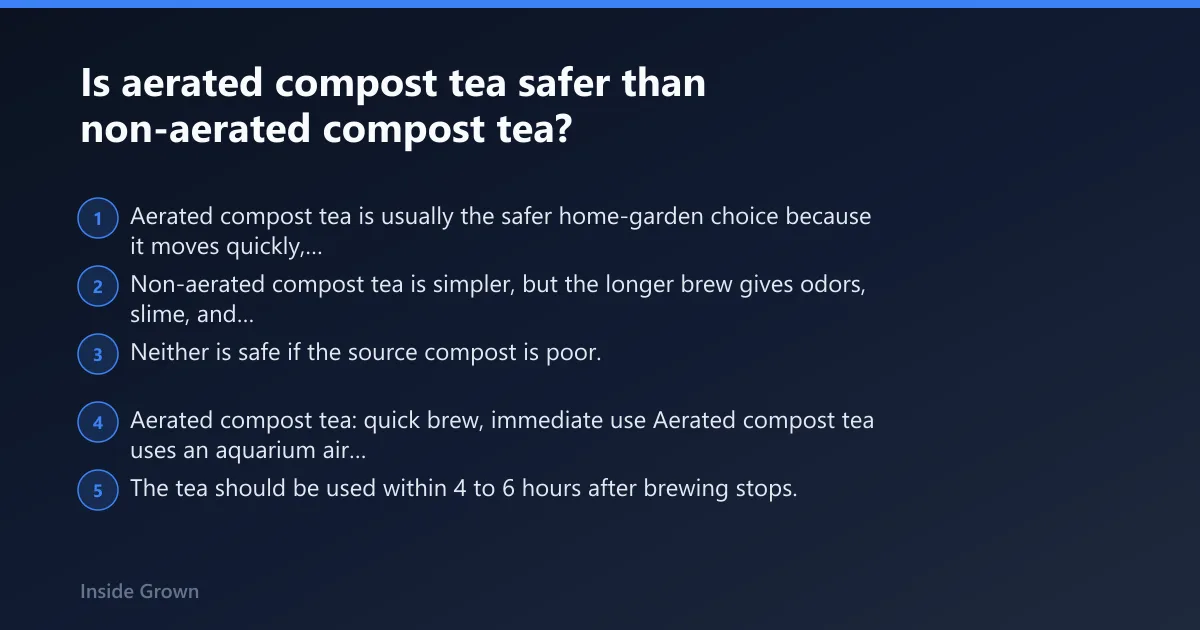
Aerated compost tea is usually the safer home-garden choice because it moves quickly, stays oxygenated, and is used right away after brewing. Non-aerated compost tea is simpler, but the longer brew gives odors, slime, and anaerobic shifts more time to develop. Neither is safe if the source compost is poor.
Aerated compost tea: quick brew, immediate use
Aerated compost tea uses an aquarium air pump or bubbler and often brews for 24 to 36 hours. The tea should be used within 4 to 6 hours after brewing stops. It also suggests a roughly 24-hour brew and a small amount of organic compost in the mix, which is practical for home use.
Non-aerated compost tea: slower brew, more time for things to go wrong
Non-aerated compost tea is lower-tech and needs fewer tools, but it brews more slowly. It can brew for about a week to a bit longer, with daily stirring or mixing. That extra time makes temperature swings, smells, and contamination harder to manage.
What the brewer should watch during each method
Keep brewing in a suitable outdoor range around 55 to 85 °F. Very hot or cold weather slows the process. Watch the smell, not the clock alone. A batch that smells bad at any point should be discarded, even if the timing seemed right.
| Decision point | Safer choice | Stop and discard |
|---|---|---|
| Compost source | Finished compost, dark, crumbly, earthy-smelling | Raw manure, unknown waste, questionable pile |
| Water | Non-chlorinated water; tap water left out overnight | Strongly chlorinated water used straight from the tap |
| Brewing method | Aerated brew, clean bucket, immediate use | Stagnant brew with slime or foul odor |
| Appearance and smell | Earthy smell, slight froth in aerated tea | Sour, ammonia, rotten, slimy, or mold in the wrong place |
| Storage | Use fresh | Kept around for later use |
How should you apply compost tea to vegetables?
Use compost tea either as a soil drench around the root zone or as a foliar spray when the crop can handle it. Soil drench is the lower-risk choice for edible crops. Foliar use can be useful, but it needs careful timing, good strain, and extra caution near harvest.
Foliar spray timing for edible leaves
For foliar application, spray in the morning or late afternoon so leaves dry without harsh midday sun. That helps reduce leaf burn and gives the spray time to sit without rapid evaporation. On edible leaves, use clean, well-strained tea and avoid spraying right before harvest.
Soil drench use around roots
Soil drench is simply poured around the base of the plant. It places the microbes in the root zone where they are most useful and keeps edible surfaces cleaner. For seedlings, transplants, and crops close to harvest, drench is usually the more cautious choice.
Which crops can handle foliar use more cautiously
Leafy greens deserve the most caution because the harvested part is the leaf itself. Fruiting vegetables such as tomatoes, peppers, and squash can be better candidates for occasional foliar use, but the spray still needs to be clean and should not be applied too close to harvest. Herbs fall between the two and benefit from the same caution.
Safety checklist for edible crops
Compost tea can be used on vegetables without trouble when the batch, crop, and timing all pass a simple check. Leafy greens, seedlings, and transplants call for the most caution. Fruiting vegetables can tolerate more flex, but no crop should receive a bad-smelling or questionable brew.
Leafy greens, seedlings, transplants, and fruiting vegetables
Leafy greens are often better treated with a soil drench unless there is a strong reason to spray. Seedlings and fresh transplants are sensitive, so use weak, clean applications near the root zone only. Fruiting vegetables can receive either method if the brew is fresh and the leaves are not being coated late in the season.
How often to apply compost tea without overdoing it
How often can you apply compost tea to a vegetable garden? Use it sparingly. Over-application can leave leaves dirty, clog sprayers, and add little beyond plain compost or mulch. A light, occasional use during active growth is more sensible than a fixed weekly schedule.
Should compost tea be diluted before use?
Should compost tea be diluted before using on vegetables? If the tea is already weak, no dilution may be needed. If it is dark, strong, or leaves residue when strained, a light dilution can help with spraying. For safety, the bigger issue is not concentration alone; it is whether the batch is clean and fresh.
Use this compost tea decision checklist before you spray
This checklist is the one-page filter to use before any batch touches edible crops. If a single item fails, do not spray. Compost tea is a tool for a clean batch and a known source. It is not worth forcing a questionable brew onto vegetables.
Source-material screening
- Use finished compost only: dark, crumbly, earthy-smelling, fully decomposed.
- Reject raw manure, unknown waste, or compost with a sour or rotten pile smell.
- Use non-chlorinated water; let tap water sit out for a while or overnight before use.
- Keep tools clean: bucket, mesh bag or fabric bag, and strainer.
Brew smell and appearance checks
- Good batch: earthy smell, clean liquid, and slight froth only if aerated.
- Bad batch: sour, foul, or ammonia odor.
- Bad batch: slimy texture, visible mold in the wrong place, or off-looking color.
- Bad batch: no clear finish point, or it sat too long after brewing.
Do-not-use rules for unsafe batches
- Do not use tea made from raw manure or unknown inputs.
- Do not use tea that smells rotten, sour, or like ammonia.
- Do not store homemade tea for later use.
- Do not spray a bad batch on leafy greens or near harvest.
Frequently asked questions
Is compost tea safe for vegetable gardens?
Yes, if the compost is fully finished, the water is non-chlorinated, the brew stays aerobic, and the batch is used fresh. It is not safe when made from raw manure, questionable waste, or a brew that smells rotten. For edible crops, a soil drench is the lower-risk choice.
Can you spray compost tea on edible plants?
You can spray it on edible plants if the tea is clean, well strained, and applied with caution. Morning or late afternoon is best. Keep a wider margin on leafy greens, and avoid spraying right before harvest. If the batch is dirty, sour, or slimy, skip the spray.
Does compost tea contain harmful bacteria?
It can, especially when the compost source is poor or the brew goes anaerobic. Finished compost lowers the risk, but it does not remove it completely. Clean tools, good water, and short brewing time all help. A bad smell is enough reason to discard the batch.
Should compost tea be diluted before using on vegetables?
Sometimes, but dilution is not the main safety step. A weak batch may go on as is, while a stronger or darker batch can be diluted for easier spraying. The more important checks are compost quality, smell, texture, and freshness. Never dilute a bad batch and hope it improves.
How often can you apply compost tea to a vegetable garden?
Use it lightly and only when there is a reason. Too much can dirty foliage, clog sprayers, and add little benefit. Occasional use during active growth is more sensible than a fixed routine. Plain compost, mulch, and good watering practices usually do more for the bed.
How do you know if compost tea has gone bad?
Trust the smell first. Sour, foul, or ammonia odors mean the batch should be discarded. Slimy texture, visible mold in the wrong place, and off-looking liquid are also warning signs. Slight froth can be normal in aerated tea, but bad odor is the line you do not cross.