How Botanical Gardens Protect Rare Plants From Pests and Disease
Botanical gardens protect rare plants with layered checks: they screen incoming material, quarantine new arrivals for weeks, inspect routinely, use targeted biological controls, and isolate or destroy infected plants quickly. Miss one layer, and a single pest or pathogen can wipe out years of propagation work. This guide explains each safeguard, where it fails, and how gardens respond.
What biosecurity means in botanic gardens
Biosecurity in a botanic garden is a set of precautions that keeps harmful organisms out of a collection and stops them moving through it. That includes insects, viruses, bacteria, and fungi. The pathways are ordinary ones: shoes, tools, vehicles, soil, timber, wind, and water.

That matters because rare-plant collections often sit close together. One infected cutting, one dirty pruner, or one contaminated trolley can move a pest from a nursery bench to a conservation bed. Botanic gardens are especially exposed to invasive plant pests and pathogens because they handle live material from many origins and often maintain high plant diversity in one place.
Visitors may see barriers, hygiene stations, footbaths, or restricted-access signs because those measures reduce the chances of moving spores, eggs, or contaminated debris between areas. A public path can still pass near a high-control house, but the access rules around that house are usually stricter than the rules for an outdoor display bed.
High-control greenhouse collections and outdoor living collections do not use the same playbook. A greenhouse can limit entry, filter movement, and control tools more tightly. Outdoor collections face rain splash, wind dispersal, wildlife, and larger surface areas, so the risk tools shift toward spacing, inspection, sanitation, and rapid removal of infected material.
How do gardens keep pests out?
Gardens keep pests out by checking new material before it enters the collection, checking records, and holding uncertain plants apart from the main stock. Quarantine lowers the risk from pests and pathogens and supports careful plant distribution. The aim is to stop problems before they become collection-wide.
Incoming plants are inspected for visible insects, lesions, mold, wilting, and odd growth. Staff also check paperwork: source, collection number, movement history, and any prior pest notes. If a record is incomplete, the plant usually stays separate until the gap is resolved.
Say your garden receives a small batch of cuttings from another institution. If one cutting arrives with faint leaf stippling and no source record, it should not go straight into the propagation house. It stays isolated, gets inspected again, and may be sampled for diagnostics before it joins the collection.
Common failure points at intake are easy to miss. A plant can look clean but carry eggs, spores, or latent virus. Soil on roots can hide nematodes or fungal inoculum. Shared carts, labels, and sleeves can also spread contamination if staff move them between benches without cleaning.
Integrated pest management in practice
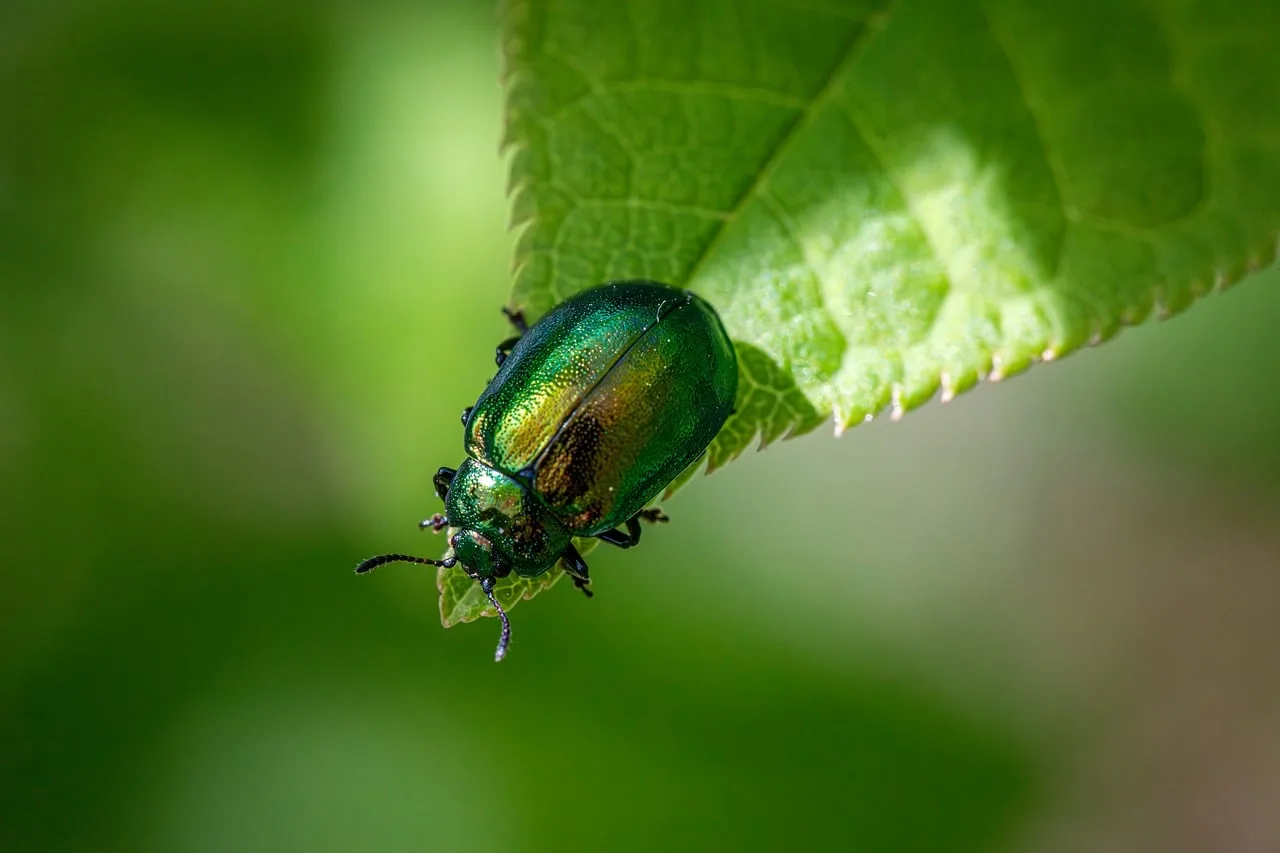
Integrated pest management, or IPM, combines biological, cultural, mechanical, and chemical approaches. It starts with monitoring. Garden staff track pests and diseases, compare what they find with thresholds, choose the least disruptive control that fits the risk, and then check whether the action worked.
Cornell Botanic Gardens says its IPM program uses two full-time staff for plant collections and brings together biological, cultural, mechanical, and chemical approaches. Cornell also uses seven steps as guidelines for control decisions. That is the point of IPM: act with enough force to protect the plant, but not so broadly that you damage the collection or nearby biodiversity.
Monitoring and scouting run year-round. Teams look for the presence, identity, and quantity of pests, not just a yes-or-no sign that something is wrong. Cambridge says gardens constantly monitor collections for first signs of damage. Some programs also use growing degree days to time scouting for insects whose activity rises with accumulated heat.
Biological controls use predators and beneficial organisms rather than broad spraying. Cultural controls can include spacing, pruning, airflow, watering changes, or removing fallen debris. Mechanical controls include sticky traps, hand removal, vacuuming, or barrier methods. Chemical tools still have a place, but IPM uses them after monitoring and only when other options will not hold the line.
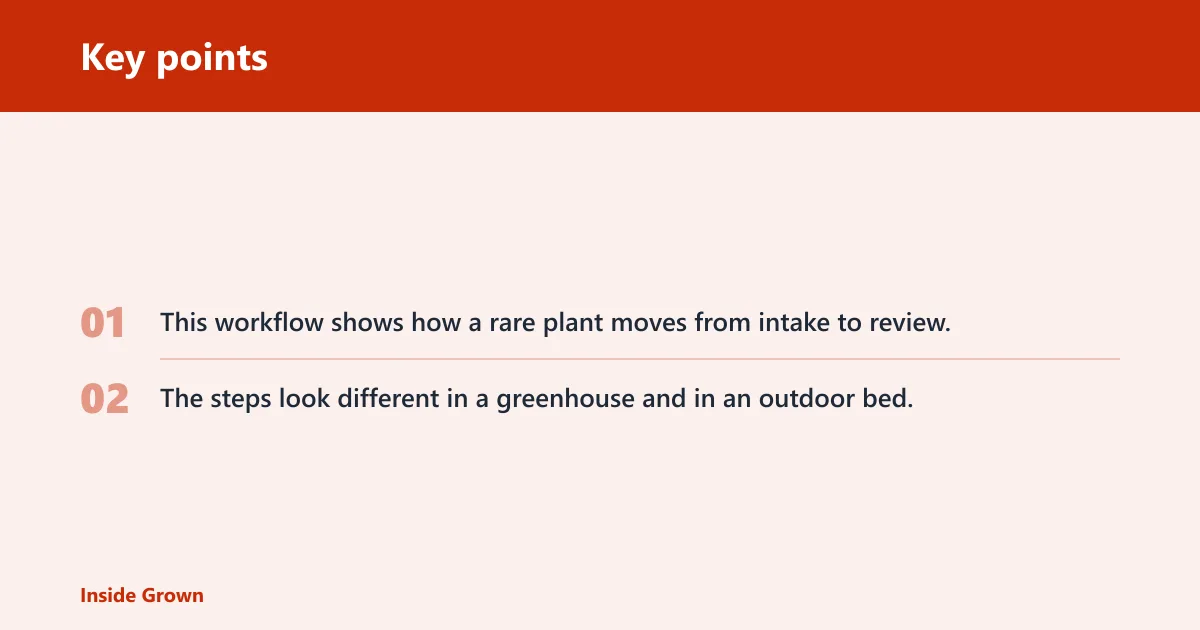
Rare plant protection workflow table
This workflow shows how a rare plant moves from intake to review. The steps look different in a greenhouse and in an outdoor bed, but the sequence stays the same: screen, isolate, verify, monitor, identify, act, and review.
| Stage | Purpose | Typical tools | Common failure point | Visitor-visible clue |
|---|---|---|---|---|
| Incoming material screening | Block pests and pathogens before entry | Visual inspection, intake log, source paperwork | Latent infection with no visible symptom | Receiving bench kept off-limits |
| Quarantine | Separate new material from the main collection | Isolation house, separate benches, dedicated tools | Shared carts or gloves move contamination | Restricted access sign, closed door |
| Record check | Confirm identity, origin, and movement history | Accession records, plant labels, digital database | Missing source data delays release | Usually not visible to visitors |
| Symptom scouting | Find early signs of stress or disease | Hand lens, sticky traps, inspection schedule | Small lesions or egg masses are overlooked | Yellowing, spotting, or bagged plant material |
| Pest ID | Identify the organism and likely spread route | Microscope, samples, diagnostic reference images | Look-alike damage leads to the wrong response | Usually not visible |
| Control selection | Choose the least disruptive effective action | Beneficial insects, pruning, sanitation, targeted sprays | Control does not match life stage or pest pressure | Temporary barriers or treated plants |
| Escalation threshold | Decide when to isolate, treat, remove, or notify | Action thresholds, risk logs, statutory contact list | Delayed response lets spread continue | Plant moved behind the scenes |
| Post-treatment review | Check whether the response worked and record the result | Follow-up scouting, updated records, reinspection date | Symptoms return after a false clear result | Plant may stay separated longer |
What happens when a plant looks sick?
When a rare plant shows symptoms, staff do not jump straight to a spray. They scout the plant, compare symptoms with known pest and disease patterns, and decide whether the problem is likely insect damage, fungal infection, bacterial rot, viral change, nutrient stress, or physical injury. Correct ID comes first.
Diagnostics matter when symptoms are unclear or the risk is high. In-house diagnostics can speed up the first check, while statutory authorities may need to be involved in higher-risk cases. That risk-based approach helps avoid both delay and overreaction.
If a diagnosis is uncertain, the plant is usually isolated. If the pest pressure is limited, targeted treatment may be enough. If the organism appears highly contagious, the plant may be removed to help protect the rest of the collection. After that, the site is cleaned and the case is reviewed against the collection’s pest and disease strategy.
Suppose a greenhouse orchid collection develops distorted new growth on one bench. Staff might hold the plant in place, sample it, and inspect nearby benches before moving it. If the issue turns out to be a virus with no practical cure, removal can be the safer option for the rest of the collection.
How do gardens use beneficial controls?
Gardens use biological control when a predator, parasitoid, or other beneficial organism can suppress a pest more precisely than a broad spray. Aphidius colemani is used against aphids, and Cryptolaemus montrouzieri is used against mealybugs. These controls are chosen because they target specific pests and fit an IPM program. (Wikipedia)
Biological control is not a cure-all. It works best when staff know the pest identity, count the pressure correctly, and release the right organism at the right time. If the pest is already widespread or the wrong life stage dominates, the release may slow the outbreak but not end it.
Chemicals still have a place when the risk is high, the timing is tight, or the collection cannot tolerate delay. The point is precision, not avoidance for its own sake. A clean result matters, but so does avoiding repeated broad use that can harm pollinators, natural enemies, and surrounding habitats.
Invasive alien species make that balance harder. They are a major threat to native ecosystems, and botanic gardens often respond with codes of conduct and collection policies that limit risky introductions, require records, and tighten movement rules for live plants.
Frequently asked questions
How do botanical gardens keep rare plants from getting pests?
They use layered checks: screen incoming plants, hold new material in quarantine, inspect collections regularly, and act quickly on early signs of pests or disease. Tools range from hygiene stations and dedicated equipment to beneficial insects and targeted treatments when monitoring shows a problem.
What is integrated pest management in a botanical garden?
IPM is generally a monitoring-first approach that combines biological, cultural, mechanical, and chemical controls. Staff track pest presence and quantity, compare that with thresholds, then choose the least disruptive action that still protects the plant. After treatment, they recheck to see whether the response worked.
Why do botanical gardens use quarantine for new plants?
Quarantine gives staff time to catch pests or pathogens before a new plant enters the main collection. It also lets them verify records, compare symptoms over time, and separate uncertain material from valuable holdings. That lowers the chance of spreading a hidden problem through the garden.
How do botanic gardens stop diseases from spreading between collections?
They separate plant groups, clean tools, control movement, and scout year-round for early symptoms. Gardens also use diagnostics to identify the cause, then isolate or remove infected material if needed. Those steps matter because viruses, bacteria, and fungi can spread with live plant movement.
What happens if a rare plant in a garden gets infected?
Staff isolate the plant, identify the problem, and choose the response that best protects the rest of the collection. That may mean targeted treatment, stricter isolation, or removal if the organism is too risky or the plant cannot be saved without exposing others.
Do botanical gardens use chemicals or biological controls for pests?
Yes, but usually as part of IPM rather than as the only response. Beneficial organisms and other biological controls can suppress specific pests, while chemicals are used when the risk or timing calls for them. The aim is to reduce pesticide use without leaving the collection exposed.