What to Know Before Visiting a Botanical Garden in Winter
Visit a botanical garden in winter if at least one greenhouse or conservatory is open and the main paths are cleared; skip it when ice closures leave only bare outdoor beds. Poor planning can waste admission, put you on slippery ground, and leave little to see. This guide covers what winter conditions change, what indoor spaces are worth your time, and how to judge whether the trip is still worth making.
Winter visit decision checklist table

| Outdoor garden conditions | Greenhouse or indoor options | Go, reschedule, or pivot |
|---|---|---|
| Paths are cleared, signed, and free of ice | At least one greenhouse is open and staffed | Go, but stay on paved or marked routes and avoid any closed beds |
| Ice is present on walkways, slopes, or thresholds | Indoor spaces remain open with separate admission | Pivot to the greenhouse visit only, or reschedule outdoor walking |
| Winter roads or paths are unmaintained | Indoor access still follows its own rules and hours | Do not assume the outdoor garden is safe; check whether only indoor areas are worth visiting |
| Outdoor garden is open but restroom access is limited | Greenhouse service may hold the restroom key | Go only if that limitation is workable for your group |
| Garden is open on a shortened winter schedule | Special exhibitions may extend hours for indoor spaces | Confirm both clocks before leaving home; if the timing fails, reschedule |
| Outdoor beds look dormant, frozen, or sparsely planted | Warm indoor viewing space is available | Choose a hybrid visit or indoor-only visit rather than expecting a full garden day |
Are botanical gardens open in winter?
Yes, sometimes. Winter hours often differ from summer hours and are often shorter. A garden can also split its schedule between outdoor grounds and indoor spaces, so the answer is not just open or closed. Check the winter timetable, any exhibition hours, and whether admission changes for greenhouse entry.
How winter hours differ from summer
One garden is open from April 1 to September 30, from 9 AM to 5 PM. The same garden is open from October 1 to March 31, from 9 AM to 3 PM. That kind of shift is common in winter planning: fewer daylight hours, fewer staffed services, and a tighter window for both outdoor and indoor visits.
If a garden shortens hours, arriving late can turn a possible hybrid visit into a rushed indoor stop. That matters even more if the outdoor grounds close earlier than the greenhouse or if the greenhouse closes before the published outdoor end time.
When special exhibitions change access
Special exhibitions can change the normal winter pattern. Some gardens extend hours for a show, while others restrict access to specific buildings or ticketed areas. That can make the greenhouse more valuable in winter, but only if the exhibition is actually open on the day you plan to go.
Guided excursions may also change the plan. In one case, guided excursions are available only on weekdays and must be ordered in advance. If your trip depends on a tour, confirm that detail before you travel.
What to confirm before leaving home
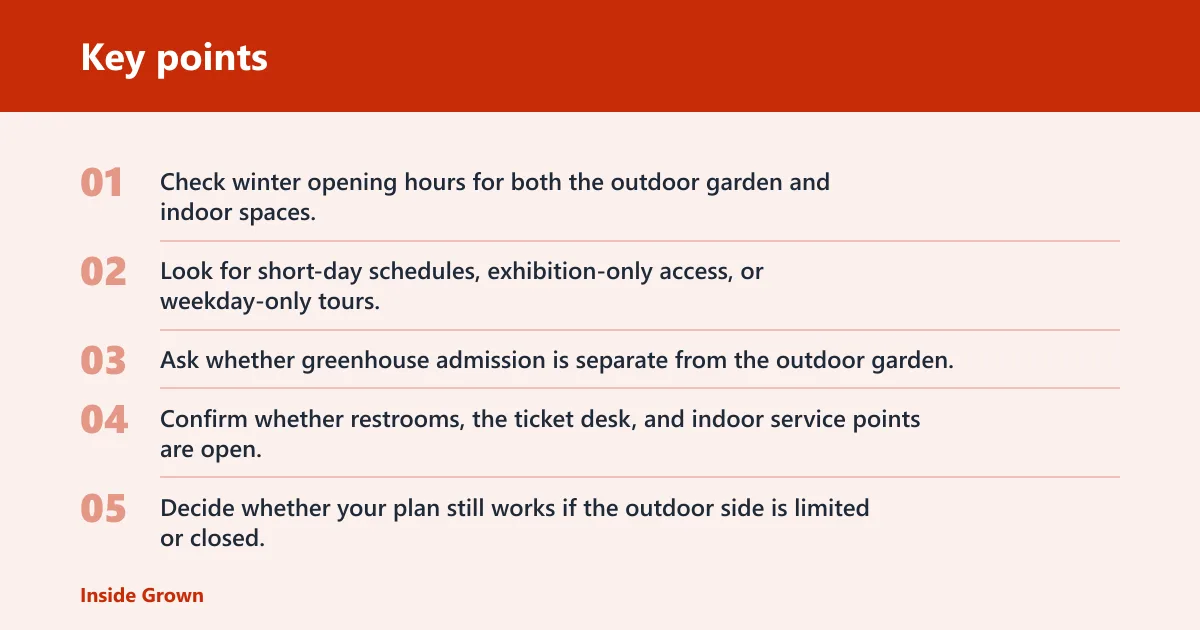
- Check winter opening hours for both the outdoor garden and indoor spaces.
- Look for short-day schedules, exhibition-only access, or weekday-only tours.
- Ask whether greenhouse admission is separate from the outdoor garden.
- Confirm whether restrooms, the ticket desk, and indoor service points are open.
- Decide whether your plan still works if the outdoor side is limited or closed.
Say your plan depends on a 2 PM arrival and the garden closes at 3 PM in winter. That still leaves time for a quick greenhouse stop, but not for a full walk through outdoor sections, especially if you need to pause for icy thresholds or a restroom detour.
What winter paths and closures mean
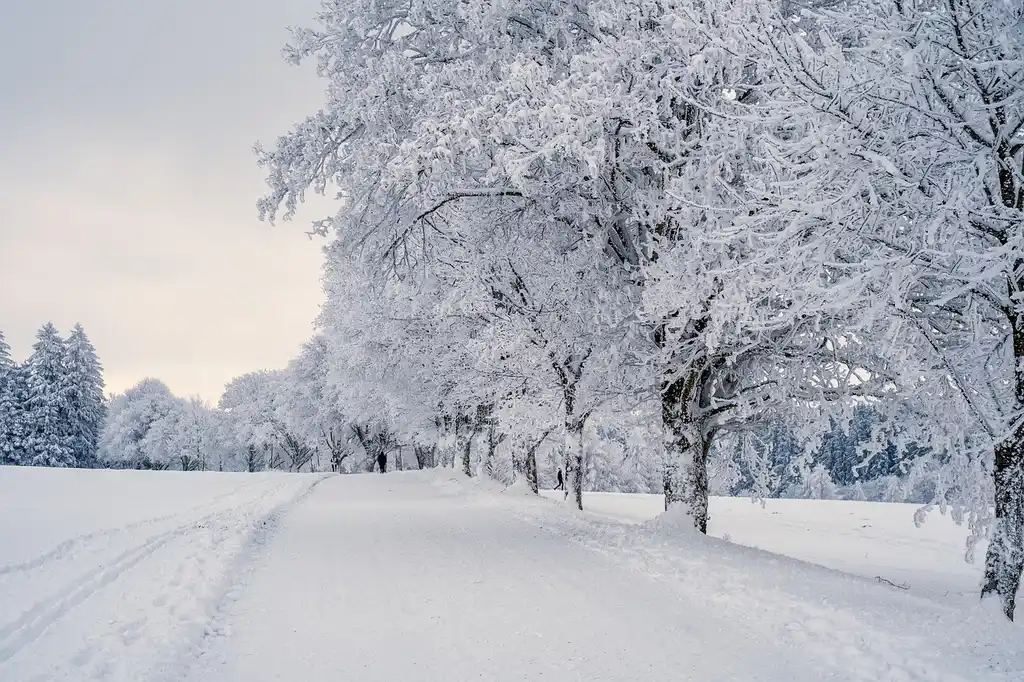
Winter changes the ground first. Ice risk rises on paths, slopes, and steps, and some roads or walkways may not be maintained at all. The safest approach is simple: stay on paved or clearly marked routes, and treat any closed section as closed rather than “probably okay.”
Ice risk and slippery surfaces
You should not walk on ice at a botanical garden. One garden states plainly that visitors must not step on ice during winter. That is not a minor caution. It is a sign that outdoor footing can change quickly, especially near shaded paths, wet thresholds, and compacted snow.
Slip risk also matters for children and anyone carrying camera gear, bags, or strollers. A surface that looks merely damp can be slick enough to cause a fall, especially when the path has frozen overnight and warmed only at the edges.
Marked routes versus closed areas
Use marked routes only. In winter, some paths may be narrowed, fenced, or closed entirely, and some plant beds may sit under frozen ground or snow cover. Walking off route can damage beds and puts you closer to unmaintained surfaces.
Suppose a path is open but the grass beside it looks flattened by frost. The correct move is still to stay on the paved route. Frozen beds are not a shortcut, and a closed-looking edge can hide ice under snow.
What to do if roads or paths are unmaintained
Do not assume winter access is the same across a whole site. One arboretum states that winter roads are not maintained and entry is at your own risk. It also says visitors in that arboretum can only move on roads in outdoor areas. That is a clear sign that winter access can be highly restricted.
If the roads are unmaintained, treat the outdoor visit as a no-go unless the site specifically says otherwise. Pivot to the greenhouse, postpone the trip, or limit your visit to areas that are clearly open and staffed.
Are greenhouses worth visiting in winter?
Yes, often more than the outdoor beds. Greenhouses can give you a warm indoor viewing option when the garden outside is dormant, sparse, or partly closed. They may also follow different access rules from the outdoor garden, including separate admission, shorter windows, or special entry points.
Separate admission and entry rules
Some gardens charge extra for greenhouses. One stated rule says entrance to the outdoor garden is free, but greenhouses cost extra. That means your winter plan should account for two decisions: whether the outdoor grounds are worth seeing, and whether the indoor space is worth a separate ticket.
Greenhouses may also have different access rules than the outdoor garden. You might need a different entrance, a different closing time, or a different ticket check. If you arrive expecting one combined admission and find two systems instead, the visit can stall before you get inside.
Indoor viewing when outdoor beds are dormant
Winter outdoor beds often look frozen, clipped back, or sparse. That does not make the visit useless, but it does change expectations. The greenhouse becomes the main reason to go if you want active foliage, warmer air, and a fuller plant display than the outdoor garden can provide.
A common first-timer mistake is to expect spring color from a winter garden. In reality, the best winter visit is often a hybrid one: a short outdoor walk for structure and layout, then time indoors for the plants that are actually in view.
Which indoor spaces to ask about first?
- Greenhouses or conservatories
- Exhibition halls with winter programming
- Visitor centers with plant displays
- Any indoor route that stays open in bad weather
Ask whether the greenhouse needs separate admission, whether it opens earlier or closes later than the outdoor side, and whether the route between spaces is sheltered. That matters on cold days when a short walk between buildings can be enough to make the difference between a good visit and a miserable one.
What should you wear and bring?
Wear layers, traction footwear, and a weatherproof outer layer. Winter botanical gardens can feel colder than the forecast suggests because paths stay damp, wind moves through open beds, and indoor-outdoor transitions force you to adjust quickly. Cold-weather comfort starts with shoes that grip and clothing you can add or remove.
Layers and weatherproof outerwear
Choose a base layer that handles chill, a middle layer for warmth, and an outer shell that blocks wind and wet snow. A weatherproof outer layer matters because even a short walk between the gate, greenhouse, and restroom can leave you damp enough to cut the visit short.
Gloves help more than most people expect. They protect your hands when you reach for railings, ticket windows, or camera controls, and they make it easier to keep moving without distraction from the cold.
Traction footwear for ice and wet thresholds
Footwear should have traction, not just insulation. Smooth soles can be a problem on icy paths, wet paving, and sloped entrances. If the garden has wet thresholds or a partially melted trail, grip matters more than style.
Bring traction footwear if you expect freeze-thaw conditions. That choice supports both the outdoor garden and the walk between buildings, where a shiny patch of ice can appear on an otherwise ordinary path.
Small items that help on cold days
- Gloves you can keep on while opening doors
- A hat or hood for exposed paths
- A small backup payment method if separate admission applies
- An ID if the site requires one for access or consent forms
- Weather backup planning in case a closure changes the visit
If you are carrying a child’s bag, camera gear, or a stroller, leave room for slow movement. Winter gardens punish rushed plans. A shorter route with better footing is usually wiser than trying to cover the whole site in one pass.
What rules and access limits should you expect?
Expect site-specific rules to control what you can bring, where you can go, and how you can behave. Common winter limits include no bicycles, no dogs except assistance dogs, no littering or smoking, and a requirement to respect paths and plant beds. Posted rules always govern on site.
Dogs, bicycles, littering, and smoking rules
One garden states that dogs are not permitted except assistance dogs. Another arboretum prohibits entry with animals entirely. These are not interchangeable policies, so never assume one site’s winter pet rule applies to another.
Other restrictions can be strict as well. In one arboretum complex, smoking, alcohol, and drug consumption are prohibited, and open fire handling is strictly forbidden. Bicycles may also be disallowed. The safest assumption is that the outdoor garden is for walking, not for recreation that could disturb the site.
Wheelchair access and restroom limits
Wheelchair access may be available, but winter can add new barriers such as wet thresholds, icy slopes, and narrowed routes. One garden states that it is wheelchair accessible and employees are available to assist at any time. That is helpful, but it does not erase the need to check current winter conditions before arrival.
Restroom access can also change. Public restrooms may be closed, with the key available upon request from greenhouse service. If restroom access matters for your group, confirm it before you go and ask where the nearest staffed point is located.
Children supervision and photography permissions
Children need adult supervision. One rule states that children up to 14 years must be accompanied by an adult responsible for their behavior. Winter surfaces increase the risk of falls, and children should not run or play unsafely on slippery ground.
Photography rules can be stricter than many casual visitors expect. In one arboretum, photography and filming for non-personal use require prior written consent. That can affect tripod users, family photographers posting content publicly, and anyone planning a shoot rather than a casual snapshot. Personal use may be allowed, but public or commercial use can need permission first.
Picture a family arriving with a tripod for a holiday card photo. If the site requires prior written consent for non-personal use, the family may still be able to take personal pictures, but a staged shoot could be blocked or delayed until consent is cleared.
What winter rules should I expect at a botanical garden?
Expect shorter hours, limited or separate greenhouse access, closed restrooms, restricted paths, and stricter safety rules on ice. You may also see dog bans, bicycle bans, smoking restrictions, and limits on filming or tripod use. Winter rules are site-specific, so the posted signs matter more than general assumptions.
In practice, winter rules are there to manage conditions, not to make the visit difficult. If the garden says to stay on marked routes, use staff guidance, or avoid certain areas, that is usually because the ground, the buildings, or the plant beds need protection.
Frequently asked questions
What should I know before visiting a botanical garden in winter?
Check winter opening hours, confirm whether the greenhouse is open, and ask whether admission is separate. Outdoor beds may be dormant, paths may be icy, and restrooms may be limited. The best winter visit is usually the one you plan around both outdoor conditions and indoor fallback options.
Are botanical garden paths open in winter?
Sometimes, but not always. Paths may be shortened, fenced off, or left unmaintained, and some sites allow movement only on roads or marked routes. If the garden says winter roads are not maintained, treat that as a major warning and do not assume the whole site is open for walking.
Can you walk on ice at a botanical garden?
No. Ice is a slip hazard, and one garden explicitly says visitors must not step on ice during winter. Stay off icy surfaces, choose cleared routes, and reschedule or pivot indoors if the only access involves frozen walkways, slopes, or thresholds.
What should I wear to a botanical garden in winter?
Wear layers, a weatherproof outer layer, and traction footwear. Gloves help, and a hat or hood can make open paths much more tolerable. If the garden has wet thresholds or icy spots, shoes with grip matter more than light walking shoes or dress footwear.
Are dogs allowed in a botanical garden in winter?
Only if the site allows them. One garden permits dogs only as assistance dogs, and another arboretum bans animals entirely. Do not assume winter is an exception. Check the posted rule before you arrive, because the dog policy may be strict year-round.