Best Season to Visit a Botanical Garden: How to Choose
Pick the best season by matching your goal to the garden’s plant calendar: spring for peak blooms, summer for tropical color, fall for foliage and seed heads, and winter for structure or conservatories. Pick the wrong window, and you can miss the flowers you wanted, run into heat or rain, and waste a trip. This guide shows how to compare climate, bloom timing, and visit goals so you can choose the best month with confidence.
How do you choose the best season for a botanical garden?
Start with the goal that matters most. If you want blooms, target the plant’s peak flowering window. If comfort matters more, choose the mildest weather. If you want photos or quieter paths, look for shoulder seasons and early mornings. The best season is the one that fits the garden’s climate and your priorities.
Start with your main goal
Different goals point to different months. Peak bloom often means more color and more visitors. Cooler weather can mean easier walking and longer stays. Birdwatching and slow strolling often improve when the garden is less crowded and temperatures stay moderate.
Match that goal to the garden’s climate and plant schedule
A botanical garden is an area displaying a wide range of plants, labelled with their botanical names. That plant mix matters. A temperate garden may peak in spring, while a tropical garden may look lush for much of the year but become more comfortable in drier months. Cacti and succulents often look best when sun is strong and rain is low.
Use the local weather forecast as the final check
Check temperature, humidity, rain, and wind before you go. Bloom timing does not always line up with good weather. A month with flowers can still bring heat stress or muddy paths. A calm, mild day in an off-peak month can be the better visit.
📊 Tripoto lists the Kolkata garden entry fee as INR 10 per person. Source: Tripoto.
What changes the best time from one garden to another?
Garden type changes everything. Temperate gardens usually have a sharper spring peak. Tropical gardens stay active longer, but rain and humidity can shape the visit more than bloom timing. Arid gardens often reward dry, bright weather, especially for succulents, palms in open displays, and clean photography.
Temperate gardens and their spring peak
In temperate climates, spring usually brings the strongest flowering display. Many tulips, magnolias, rhododendrons, and seasonal beds bloom together. Cooler days also make long walks easier. If the garden has a brief flowering window, spring may be the best season even when crowds are heavier.
Tropical gardens and year-round growth with rainy season tradeoffs
Tropical gardens may offer green growth across much of the year, with seasonal spikes in flowering and foliage. Rainy months can make paths slippery and reduce comfort, but they can also make leaves look fuller and more saturated. Orchid collections often stay relevant beyond one short bloom month.
Arid gardens and the best months for cacti and succulents
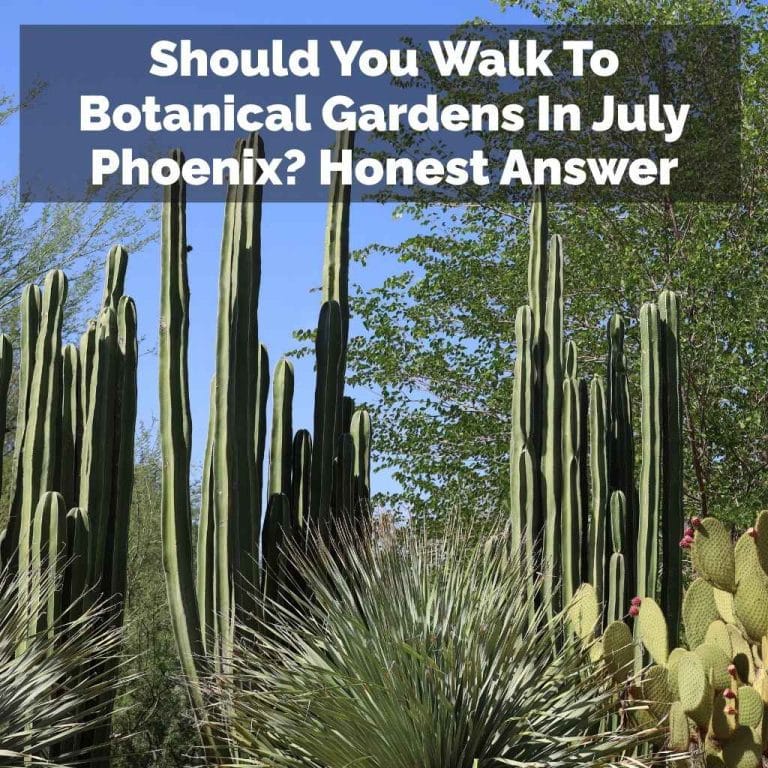
Arid gardens often look best in dry, bright weather. Cacti and succulents usually handle heat better than many other collections, but visitors still need tolerable temperatures. Strong sun can improve form and detail, yet midday heat can shorten a visit fast. Early morning is usually the safer choice.
When are flowers, foliage, and collections at their best?
Flowers usually peak in spring, but that is only one part of a botanical garden visit. Winter can offer structure, seed heads, and cool-season color. Greenhouses can extend the season for orchids, aquatic plants, palms, and bonsai. The best month depends on which collection you want to see.
Spring blooms and peak flower display
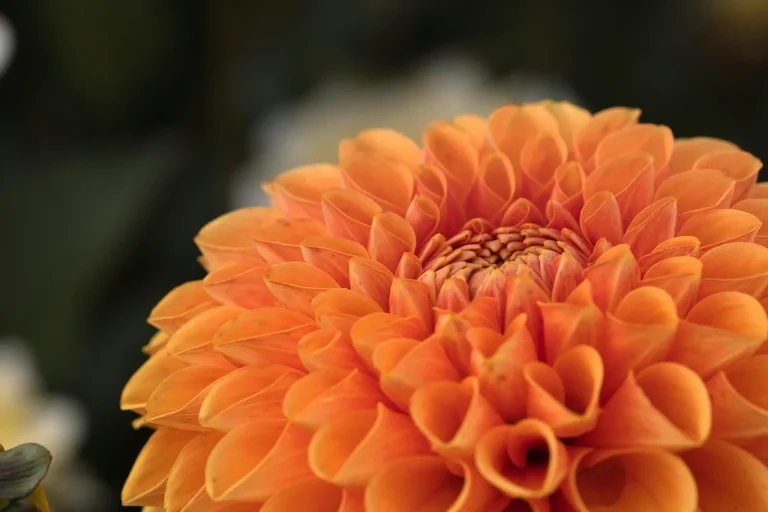
Spring is the common answer because many gardens schedule their strongest flower show then. Beds open in sequence, trees leaf out, and color arrives in layers. If you want the broadest mix of fresh blooms, spring is often the first season to check.
Winter interest plants and cool-season color
Winter can still be a smart visit season. Evergreens, bark texture, berries, seed heads, and structural plant forms are easier to notice when leaves have thinned. In mild climates, winter light can also be excellent for photos. In cold climates, conservatories become even more valuable.
Greenhouse displays, orchids, aquatic plants, palms, and bonsai
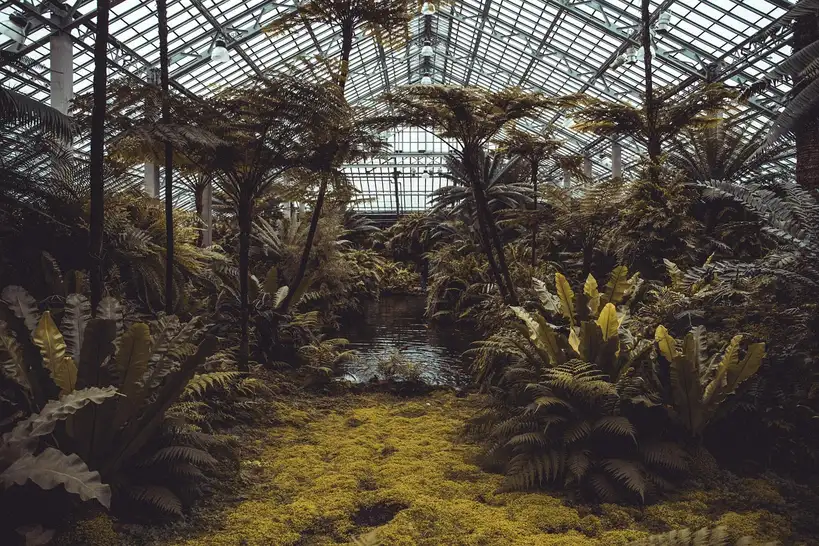
Greenhouses change the calendar. Orchids may flower on a different schedule from outdoor beds. Aquatic plants, palms, and bonsai collections often stay worth visiting year-round because they are managed for display, not just outdoor season. If a garden has strong indoor holdings, an off-peak month can still be worthwhile.
How does local weather affect your visit?

Local weather often matters more than the calendar. Temperature, humidity, sun exposure, rain, and wind can change how long you stay and how much you see. A perfect bloom month can feel poor in high heat, while a cooler shoulder season may be much more enjoyable.
Temperature, humidity, and heat stress
Heat and humidity raise fatigue quickly. In humid tropical gardens, shade may help, but it does not remove the strain. In dry climates, high sun can still drain energy. If the forecast shows extreme heat, shift toward early hours or a different season.
Rainy months, wind, and muddy paths
Rain changes path quality, visibility, and photo conditions. Heavy rain can close trails or reduce access to certain collections. Wind can damage delicate flowers and make long exposures difficult for photos. If a garden has a rainy season, check whether there are covered routes or indoor sections.
Sun exposure and shaded routes
Strong sun can help with sharp photos, but it can also flatten color at midday and make exposed paths tiring. Gardens with tree cover, pergolas, or greenhouses offer more options. For the most comfortable walk, pick shaded routes in the warmest part of the day.
Say your trip is to a large tropical garden with open lawns and a few orchid houses. A dry month may give you the best balance: enough color to keep the visit interesting, but less humidity, fewer puddles, and better conditions for walking between collections.
Which season fits your visit goal best?
Your goal should decide the month. Photography often favors clean light and fewer crowds. Family visits usually benefit from shorter walks and milder temperatures. Birdwatching and relaxed walking often improve when the garden is calm, shaded, and not pressed by peak heat or peak attendance.
Best season for photography
Photography usually works best in shoulder seasons or early bloom periods. Morning light is softer, and the paths are quieter. In tropical gardens, sunrise can be ideal before heat and glare build. In colder regions, winter light can be crisp and useful for structure and texture.
Best season for a family visit
Families often do better in cooler months or mild mornings. Children and older visitors usually tire faster in heat, and long walks are less appealing in heavy rain. A garden with indoor houses, benches, and short loops can stay practical outside peak bloom season.
Best season for birdwatching or slow walking
Birdwatching often improves in quieter months, especially when flower beds are less crowded and paths are less busy. Slow walkers may prefer off-peak periods with fewer people and moderate temperatures. In many gardens, that means a shoulder season rather than the busiest bloom weekend.
Use this season-selection checklist before you book
Score each visit window from 1 to 5, where 5 is strongest. This keeps bloom timing, comfort, crowding, rain, and photo quality separate. Then match the total to the garden type and your goal. A high bloom score is not always the best visit if the weather is poor.
| Visit window | Bloom quality | Temperature comfort | Crowd level | Rain risk | Photography potential | Best fit by garden type |
|---|---|---|---|---|---|---|
| Spring | 5 | 4 | 2 | 3 | 5 | Temperate gardens; mixed collections; major flower displays |
| Summer | 3 | 2 | 3 | 2 | 4 | Tropical gardens; aquatic plants; long daylight trips |
| Autumn | 3 | 4 | 4 | 4 | 4 | Arid gardens; foliage color; quieter visits |
| Winter | 2 | 5 | 4 | 4 | 3 | Conservatories; bonsai; winter-interest plants |
| Rainy season | 3 | 2 | 3 | 1 | 4 | Tropical foliage; greenhouse-heavy gardens; short visits |
Read the score by garden type
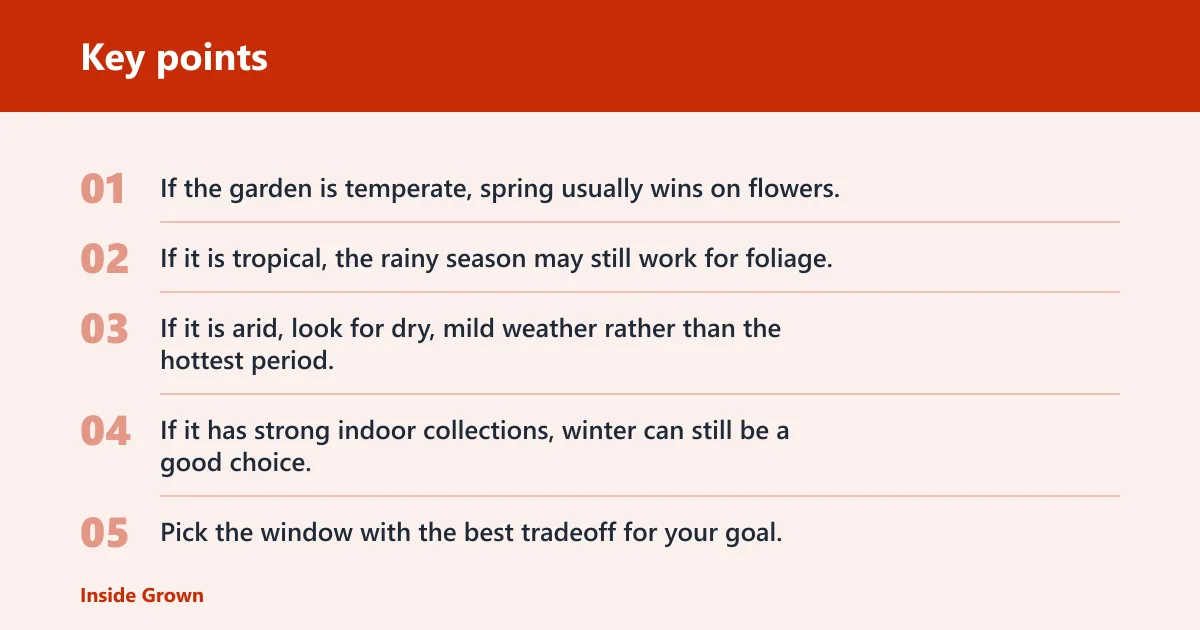
If the garden is temperate, spring usually wins on flowers. If it is tropical, the rainy season may still work for foliage, but dry months are easier for comfort. If it is arid, look for dry, mild weather rather than the hottest period. If it has strong indoor collections, winter can still be a good choice.
Choose the season that matches your priorities
Pick the window with the best tradeoff for your goal. A bloom-focused traveler can accept crowds and aim for spring. A comfort-focused visitor may choose cooler months. A photographer may want early morning in a shoulder season. This is the simplest way to avoid a generic, one-size answer.
How do opening hours affect the best season to visit?
Opening hours can matter as much as the month. Early entry usually means cooler air, softer light, and fewer visitors. Last admission and daylight length matter too. In hot regions, midday can be the worst part of the day even in the right season.
Why morning often works best
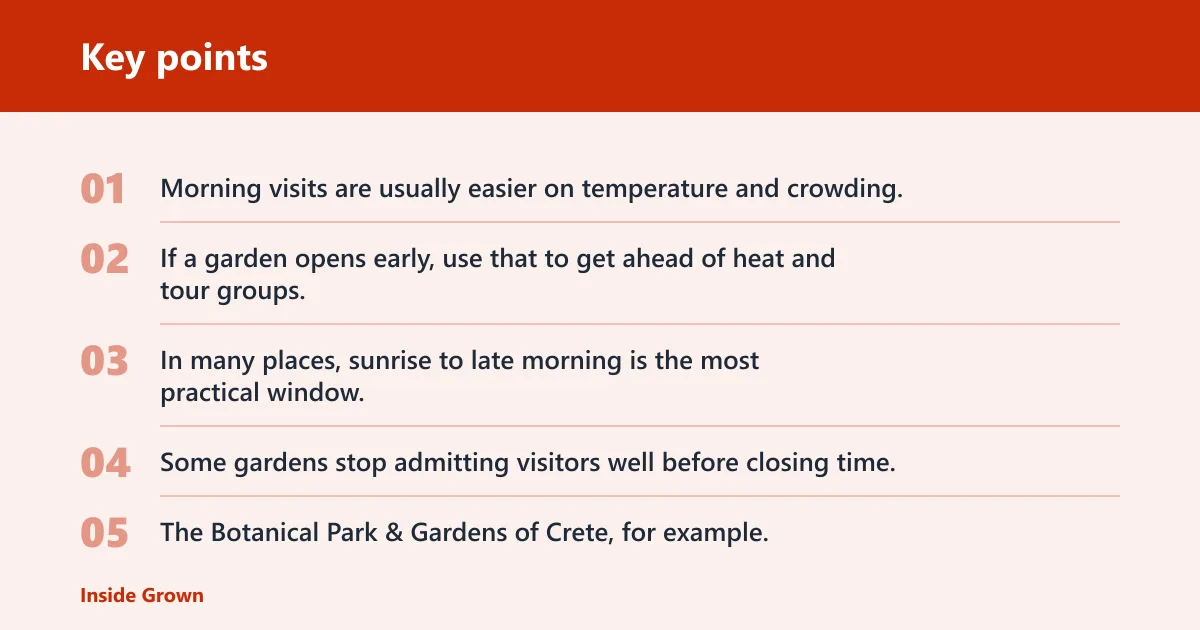
Morning visits are usually easier on temperature and crowding. Light is also gentler for photography. If a garden opens early, use that to get ahead of heat and tour groups. In many places, sunrise to late morning is the most practical window.
Why last admission and sunset matter
Some gardens stop admitting visitors well before closing time. The Botanical Park & Gardens of Crete, for example, welcomes visitors daily from 09:00 and says last entrance is 2 hours before sunset. That kind of rule can shorten a late-afternoon plan, especially in winter when daylight fades faster.
Seasonal closure risk and shorter days
Some gardens or sections close seasonally for weather, maintenance, or plant care. Short winter days can cut viewing time even when the garden is open. In summer, daylight lasts longer, but heat may push your best window back to early morning or late afternoon.
Suppose you are planning a visit in a city with hot afternoons and a garden that opens at 6:00 AM and closes at 5:00 PM, like the Kolkata botanical gardens. That schedule makes an early arrival sensible, especially from October to March, which is the recommended period there. Tripoto lists the entry fee as INR 10 per person and a camera fee of INR 20, and also describes the site as spanning 273 acres with over 12,000 plant species.
What should I expect from a botanical garden in rainy season?
Rainy season can bring fuller foliage, stronger green color, and fewer visitors, but it also raises the chance of wet paths, slippery steps, and reduced comfort. If you go then, expect to move more slowly, check for indoor shelters, and keep the visit flexible.
Best uses for a rainy-season visit
Rainy months can be good for tropical foliage, palms, aquatic plants, and greenhouse collections. They can also work well for short visits when you want lush scenes without peak crowds. If the garden is partly shaded, the rain may be less of a problem than the heat.
What to check before you go
Look for drainage, covered paths, and any weather alerts. A light shower is one thing; sustained heavy rain is another. If the forecast points to storms or strong wind, postponing the trip is usually smarter than forcing a full-day visit.
Are botanical gardens better in bloom or in cooler weather?
That depends on your goal. Bloom is better for maximum flower display. Cooler weather is better for comfort, longer walks, and fewer heat-related limits. Many visitors should pick the season that offers acceptable bloom and the most tolerable conditions, not one extreme or the other.
When bloom should win
If the main reason for visiting is flowers, choose bloom season even if it is busier. Some collections are brief and worth planning around. That is especially true for annual flower beds, spring bulbs, or short-lived tree blossoms.
When cooler weather should win
If the visit is for relaxed walking, family time, or photography without sweat and glare, cooler weather may be the better choice. A garden with strong evergreen structure, bonsai, or conservatory plants can still feel complete outside peak flower season.
What are good practical tips for any season?
Check the local forecast, avoid extreme heat or heavy rain, and go early when possible. Bring water, a hat, and comfortable shoes. If the garden has last admission rules or seasonal closures, plan around those first so you do not lose part of the visit.
Simple packing list
- Water
- Hat or cap
- Comfortable walking shoes
- Light rain cover if showers are possible
- Camera or phone with a charged battery
Basic attractions to look for
- Orchids
- Cacti and succulents
- Palms
- Aquatic plants
- Bonsai
- Seasonal flower beds
Frequently asked questions
What is the best season to visit a botanical garden?
Spring is often the best season for blooms, but not always for comfort. In cooler climates, spring usually gives the best flower display. In hotter regions, a milder dry season may be better overall. The best answer depends on the garden’s climate, collections, and your visit goal.
What month is best for visiting a botanical garden?
There is no single best month for every garden. For temperate gardens, spring months often work best. For tropical gardens, a dry month may be better than a rainy one. If you want the fewest crowds, a shoulder month can beat the peak bloom month.
Should I visit a botanical garden in spring or winter?
Choose spring if your priority is flowers. Choose winter if you want cooler weather, calmer paths, or a garden with strong greenhouse and winter-interest collections. In mild climates, winter can be a very good time. In colder climates, indoor displays matter more.
How do I choose the best time to visit a botanical garden in my city?
Check your city’s temperature, humidity, rainy months, wind, and daylight length. Then match those conditions to the garden’s flowering calendar and collections. If the garden is mostly outdoor and temperate, aim for spring or another mild season. If it has strong indoor houses, winter can still work.
What should I expect from a botanical garden in rainy season?
Expect greener foliage, fewer visitors, and more weather risk. Paths may be wet, muddy, or slippery, and some areas may close briefly. Rainy season can still be worthwhile if the garden has good drainage, covered sections, or indoor collections like orchids and bonsai.
Which season is best for photography at a botanical garden?
Photography is often best in spring or another shoulder season with soft morning light and fewer crowds. Bright sun can help detail, but midday glare can be harsh. If the garden is tropical, sunrise often beats midday. If it has winter structure, cold-season light can work well too.