Best Plants for a Rain Garden Display (2026): research shows
The best plants for a rain garden botanical display are moisture-tolerant perennials, grasses, sedges, and shrubs that handle brief flooding, with one tall anchor, several midlayer plants, and low edging for structure. If you plant it poorly, the bed turns patchy, collapses after storms, or reads like a ditch instead of a designed space. This guide sorts plants by visual role, water tolerance, and viewing distance so you can build a rain garden that reads as a composition first.
Quick comparison: best plants for a rain garden botanical display
| Product | Badge | Best for | Price | ||
|---|---|---|---|---|---|
 | Pink Swamp Milkweed – Large 600mg Envelope – 100 FlowerSWEET YARDS | Budget pick | 100+ Pink Swamp Milkweed seeds | $5.99 Price as of 13 Oct 2026 | View |
 | Kalanchoe Flower Plants 3PK, Desk Plant Decor, LivePlants for Pets | Pair with it | 3-piece Kalanchoe flowering succulent set | $23.49 Price as of 13 Oct 2026 | View |
 | Joe Pye Weed Eutrochium purpureum Premium Seeds forSherwoods Seeds | Our pick | Joe Pye Weed heirloom flower seeds | $6.99 Price as of 13 Oct 2026 | View |
 | 25 Blue Flag IRIS Versicolor (Dry – Moist Soil) NativeSeedville | Also great | 25 Blue Flag Iris native seeds | $3.00 Price as of 13 Oct 2026 | View |
The strongest compositions mix wet-center anchors with mid-height color and outer-edge structure. Sun exposure and USDA zone limits matter, but form matters just as much because the eye reads height, leaf size, and bloom timing before it reads drainage function.
For a practical display, think in layers: a focal plant in the wet center, a soft mass in the transition zone, and a lower, drier rim that keeps the bed from looking flat after storms.
How we chose these plants
These picks were chosen for four things: wet-foot tolerance, clear ornamental form, reliable sun and zone fit, and a display role that helps the rain garden read like a planted scene rather than a utility strip.
Native species get priority because they suit wet sites and usually bring better pollinator value. Grasses, perennials, and shrubs form the backbone. Flowers matter, but foliage and winter structure matter too.
- Wet-center suitability for brief flooding or consistently moist soil
- Visible form at different distances, from tall anchor to edge texture
- Sun exposure and USDA hardiness zone match
- Maintenance tradeoffs such as flop risk, spread, and seasonal collapse
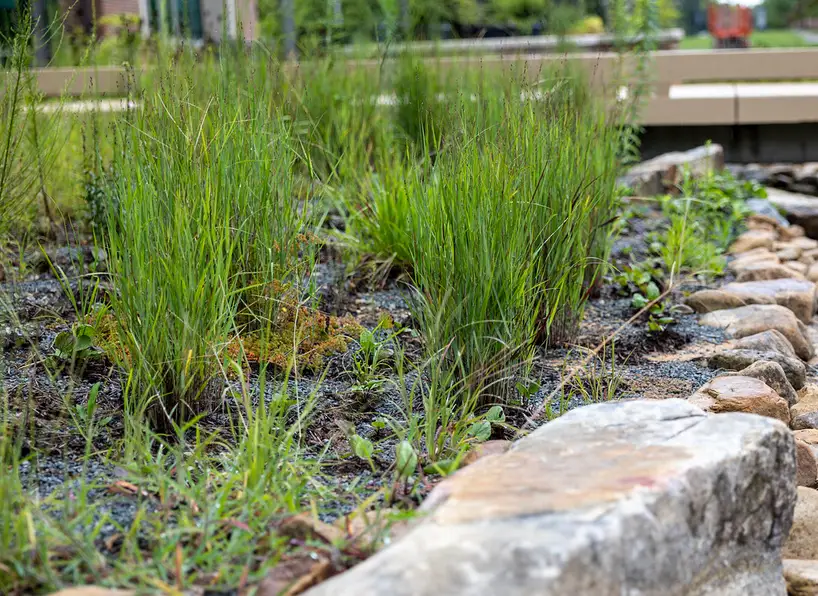
Rose mallow and buttonbush: best for the wet center
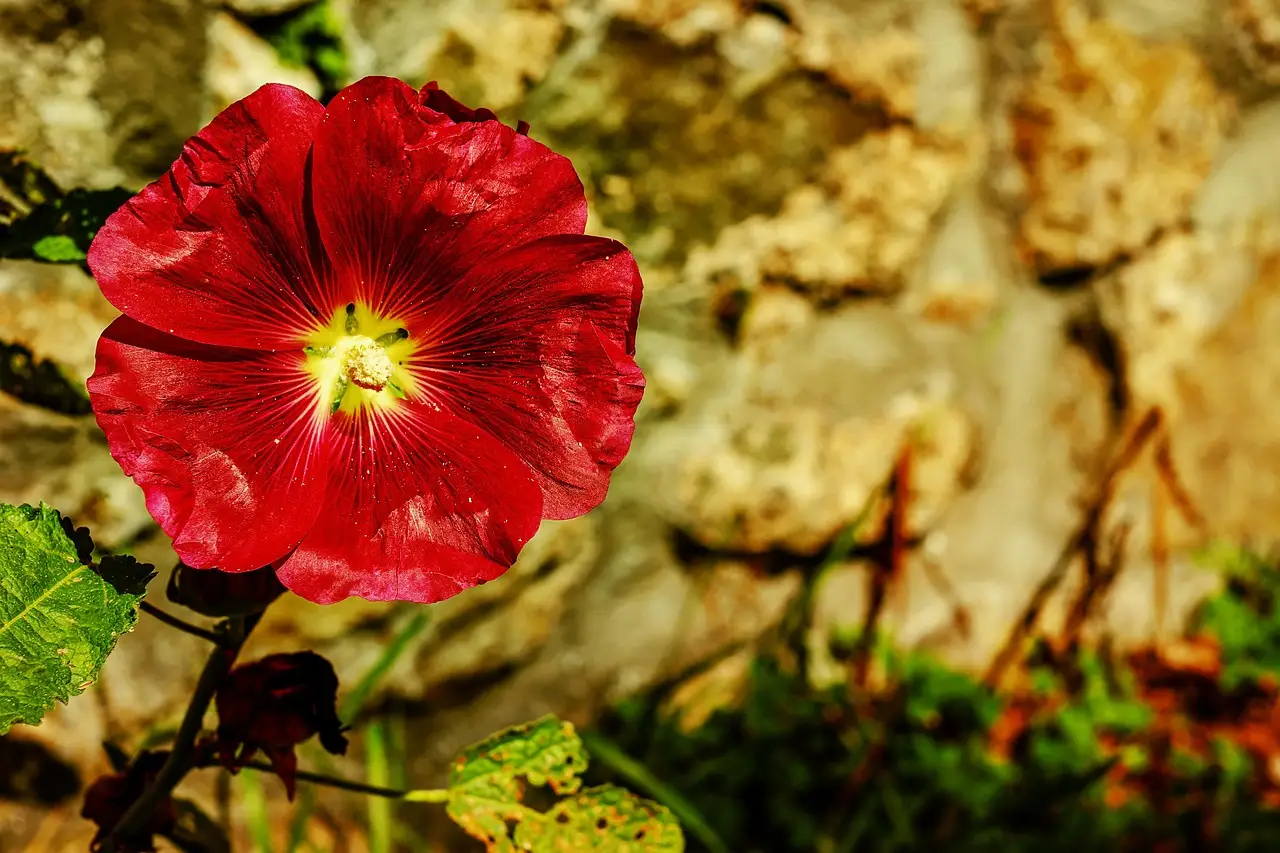
Rose mallow and buttonbush are the best wet-center choices when you want a bold anchor that still looks deliberate after rain. Both take wet feet, both carry strong seasonal presence, and both can be read from a distance without making the bed feel crowded.
Rose mallow: best for oversized flowers and a bold center
- High volume 600mg seed envelope
- Fragrant, pollinator-friendly pink blooms
- Great germination guarantee with refund
Rose mallow can work well as a wet-center focal point because it pairs large, showy blooms with good wet-soil tolerance. It is a perennial for full sun in USDA zones around 4-9, and its flowers may reach several inches across. Pink, red, lavender, white, or mixed flowers give you enough range to coordinate with neighboring foliage.
Use it when you want one dramatic mass that reads well from a patio or path. The native wildflower background fits a rain garden, and the stems keep enough presence that the center does not vanish after a storm.
The drawback is simple: it needs room, and stems can look tired if the site swings between standing water and dry stress. In poorly drained clay, that swing is harder on the plant than steady moisture.
Buttonbush: best for a fragrant shrub anchor
Buttonbush is a wetland native shrub for part sun to sun in zones 4-10, and it grows between 5 and 12 feet tall. Its fragrant white pincushion-like flowers make it a strong structural anchor for the wet center, especially where you want height without a bulky evergreen mass.
This shrub gives the rain garden a woody backbone and strong pollinator value. Bees and other insects use the flowers heavily, and the rounded bloom heads are readable from across a yard, which helps the bed look intentional.
The drawback is scale. A small rain garden can be swallowed by it, and the plant needs space to keep its form legible. It is not the right choice for a narrow strip beside a walk.
Papyrus and elephant ear: best for a tropical focal point
Papyrus and elephant ear create the strongest tropical note in a temperate rain garden. Their large scale, bold leaf or stem form, and strong moisture demand make them best used as accent plants in the wet center or just off center where the eye needs a clear destination.
Papyrus: best for vertical stems and pond-edge drama
Papyrus is recommended for full sun in zones 9-11, and it thrives with feet wet. That makes it best for pond-edge suitability or a saturated pocket in the wet center, where its tall graceful stems can rise above lower plantings without needing a heavy bloom display.
Use it when you want a clean, architectural tropical look. The narrow stems contrast with broad leaves nearby, and that contrast is what makes a rain garden read as a composition.
The drawback is hardiness. In cooler climates, it is not a reliable permanent anchor, so the display may need annual replanting or seasonal replacement. That is a real maintenance cost.
Elephant ear: best for oversized foliage in warm zones
Elephant ear is listed for full sun in zones 8-11 and is a water-loving focal plant with huge deep green leaves. In warmer areas it can act as a perennial; in cooler climates it is generally treated as an annual, so it suits seasonal display beds better than permanent structure.
It is strongest where you want lush foliage more than flowers. Place it near the wet center with lower companions around it, and the bed gains scale fast.
The drawback is obvious: it is not a cold-climate anchor, and the leaves can collapse hard after frost or a cold snap. In a zone 4 to 7 garden, that means replanting rather than relying on winter presence.
Canna lily and bee balm: best for color near the edge
Canna lily and bee balm are good edge and transition plants because they bring color without taking over the wettest ground. They help tie the center to the rim, and they keep the eye moving across the bed instead of landing on one large mass.
Canna lily: best for bold bloom near the transition zone
Canna lily is recommended for full sun in zones 8-11 and is a bold edge plant with tropical blooms and wet-soil tolerance. It belongs near the wetter side of the transition zone, where its upright form can catch light without sitting in the deepest water.
This plant is useful when the goal is strong color blocks at the front or sides of the bed. The leaves are large enough to read from a distance, but not so large that they hide everything behind them.
The drawback is the same as with other warm-zone tropicals: cold limits use. In cooler climates it behaves as a seasonal plant, so the display can lose definition after frost.
Bee balm: best for pollinator color in mixed sun
Bee balm is recommended for part sun to sun in zones 4-8 and brings red, pink, purple, lavender, or white blooms with strong pollinator value. It belongs in the transition zone, or even near the drier edge if drainage is uneven but not bone dry.
It is a good bridge plant between tall center pieces and lower edge grasses. Hummingbirds and bees respond well to the flower heads, so it works well where you want visible activity as well as color.
The drawback is maintenance. Bee balm can spread and can lose lower leaves if airflow is poor, so it needs spacing and occasional cleanup to keep the display from looking ragged.
Switch grass and chokeberry: best for structure through the seasons
Switch grass and chokeberry give the rain garden year-round backbone. One is a grass with movement and erosion control value; the other is a shrub with seasonal change, which helps the bed keep form when flowers are gone.
Switch grass: best for four-season movement and erosion control
Switch grass is listed for full sun in zones 4-9 and reaches about 3 to 6 feet tall. It is a native grass with four-season interest and erosion control value, which makes it especially useful along the dry edge and upper transition zone.
Use it to soften the boundary of the bed and to create a repeat rhythm between larger flowering plants. Its seed heads and upright blades keep the garden readable after bloom season.
The drawback is that some cultivars can open up or flop if the site is too rich, too shaded, or too wet for too long. In poorly drained clay, it belongs higher on the slope rather than in standing water.
Chokeberry: best for shrub structure and seasonal change
Chokeberry is recommended for part sun to sun in zones 3-9 and suits wet soil well. It comes in mounded or taller forms, with origins in open woodland, swamp, and bog habitats, which makes it a reliable shrub layer for rain garden design.
Its value is visual rhythm. Spring flowers, summer foliage, and fall color can each carry a different part of the season, so the bed does not depend on a single bloom window.
The drawback is that it is not the flashiest first glance plant. If you want a tropical statement, chokeberry is not the answer; if you want structure that survives changing weather, it is a strong choice.
Which one should you buy first?
Start with the plant that matches your wettest spot and the view you want people to notice first. If you need a large focal point in full sun and zones 4-9, rose mallow is the clearest first buy. If the site is colder, start with switch grass or chokeberry and build upward from there.
For a warm-climate tropical effect, elephant ear and papyrus work best together, but only where winter limits do not matter. For a mixed pollinator bed with more climate range, bee balm plus buttonbush gives you flowers at different heights and stronger seasonal reliability.
Say your rain garden is 12 feet across and sits at the bottom of a short slope. Put buttonbush in the wet center, use rose mallow one step out, then rim the high side with switch grass. That keeps the center bold while the edge stays open.
Suppose a clay-heavy site holds water for a day after storms and then dries hard in the sun. In that case, the safest display strategy is to keep the wet-center plants on the highest moisture pocket and move bee balm, chokeberry, and switch grass toward the faster-draining rim.
How to make a rain garden look ornamental, not just functional
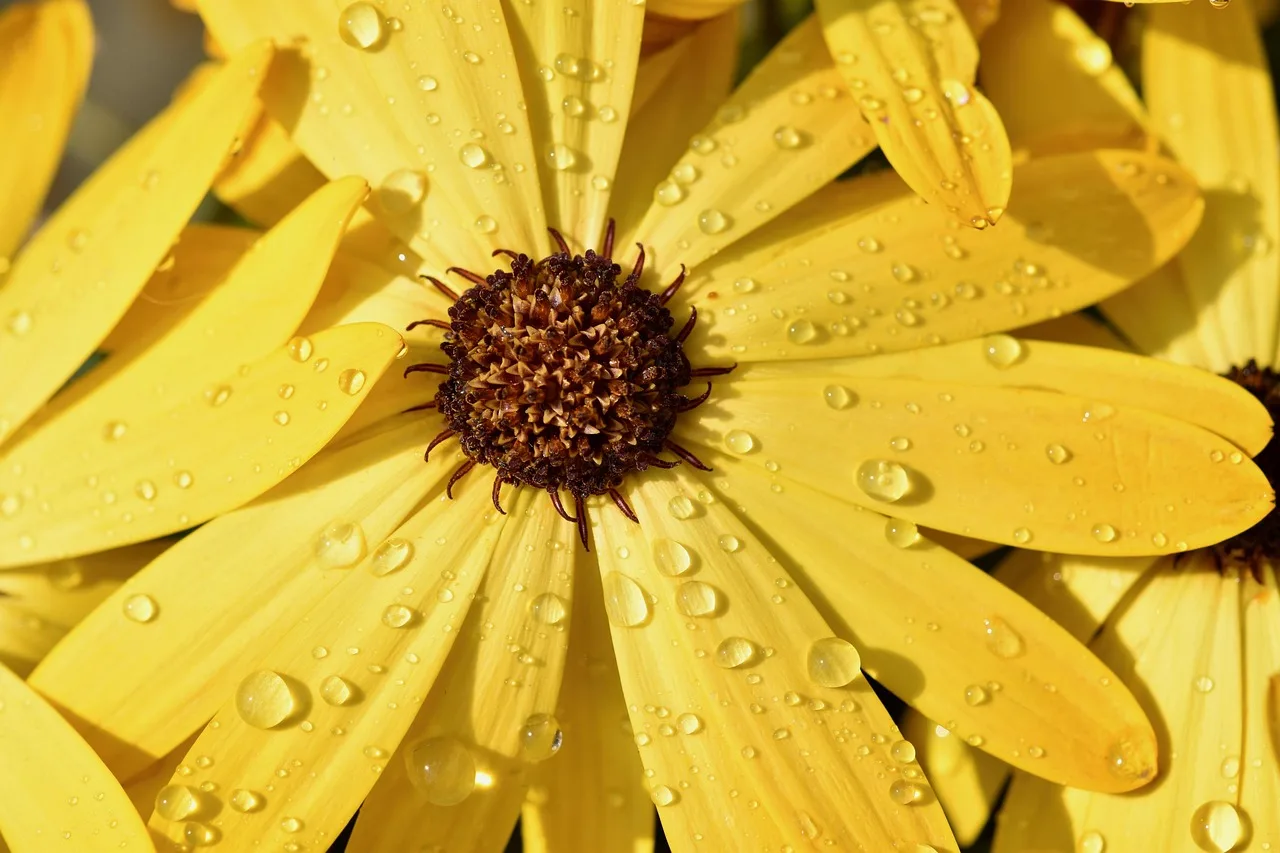
Build the bed as a layered composition. Put the tallest, boldest form in the wet center, keep medium plants in repeated drifts, and use lower grass or shrub edges to frame the scene. Repetition matters more than packing in many species.
- Place one anchor plant where water lingers longest.
- Add two to four midlayer plants that repeat color or leaf shape.
- Use grasses or low shrubs on the outer rim to hold the edge.
- Repeat one foliage shape or bloom color at least twice.
- Leave open sightlines so the center plant can be seen from a path or window.
What stays attractive after heavy rain? Upright grasses, woody shrubs, and plants with strong stems or broad leaves usually recover better than soft, floppy perennials. Rose mallow, buttonbush, switch grass, and chokeberry tend to read better after a storm than thin-stemmed plants that splay onto the soil.
A common first-timer mistake is putting every showy plant in the wettest pocket. The result is a crowded center and a bare rim. Spread the display so the visitor’s eye moves from center to edge in one clear sequence.
| Plant | Best zone in rain garden | Sun | USDA zones | Primary display role | After-rain read |
|---|---|---|---|---|---|
| Rose mallow | Wet center | Full sun | 4-9 | Large flowers, bold focal point | Strong, though stems need room |
| Buttonbush | Wet center | Part sun to sun | 4-10 | Shrub anchor, pollinator support | Very good structural read |
| Papyrus | Wet center or pond edge | Full sun | 9-11 | Tall stemmed accent | Good in warm climates |
| Elephant ear | Wet center or transition zone | Full sun | 8-11 | Large foliage focal point | Strong until cold weather |
| Canna lily | Transition zone | Full sun | 8-11 | Bold bloom near edge | Good, but seasonal in cool climates |
| Bee balm | Transition zone to dry edge | Part sun to sun | 4-8 | Pollinator color | Fair to good; can spread |
| Switch grass | Dry edge | Full sun | 4-9 | Four-season structure | Excellent upright form |
| Chokeberry | Dry edge to transition zone | Part sun to sun | 3-9 | Shrub structure, seasonal change | Very good, especially as a woody layer |
Which rain garden plants are best for pollinators? Bee balm, buttonbush, rose mallow, and swamp-adapted native species draw the most attention from bees, butterflies, and hummingbirds. If pollinators matter most, mix flower shapes and bloom windows instead of relying on one species alone.
What are the best plants for a rain garden botanical display?
The best plants for a rain garden botanical display are the ones that fit the wet center, transition zone, or dry edge without breaking the composition. Rose mallow, buttonbush, switch grass, chokeberry, bee balm, canna lily, papyrus, and elephant ear are the strongest visual tools here because they combine moisture tolerance with clear form.
Choose one anchor, one or two middle-layer bloomers, and a repeatable edge plant. That gives the garden height, color rhythm, and a view that still makes sense after rain.
Which rain garden plants stay attractive after heavy rain?
Plants with strong stems, woody structure, or upright leaf architecture stay attractive longest after heavy rain. Buttonbush, switch grass, chokeberry, rose mallow, and papyrus hold their shape better than floppy, shallow-rooted, or top-heavy plants in a saturated bed.
After a storm, the best plants do not need to look perfect. They need to keep the bed legible, with stems and foliage still pointing upward rather than collapsing across the soil.
What plants work in the wet center versus the drier edge of a rain garden?
The wet center should hold the most moisture-loving plants, while the drier edge should carry species that still tolerate occasional overflow but handle faster drainage. Put rose mallow, buttonbush, papyrus, and elephant ear closest to the wettest soil, then move to bee balm, canna lily, switch grass, and chokeberry farther out.
That zoning keeps the display healthy and makes the planting look intentional. It also reduces failure in spots that alternate between standing water and dry heat.
Which rain garden plants are best for pollinators?
Bee balm and buttonbush are the strongest pollinator picks in this group, with rose mallow and swamp-adapted natives also useful. Their flowers offer different shapes and bloom habits, which helps support bees, butterflies, and hummingbirds through the season.
For the best effect, avoid planting only one pollinator species in a single block. Mix a shrub, a perennial, and a grass so the display works visually while feeding wildlife across more of the season.
Which rain garden plants give a tropical look in temperate climates?
Elephant ear, papyrus, and canna lily give the clearest tropical look in temperate climates. They work best where summers are warm, the soil stays moist, and the gardener accepts that some of these plants will act as seasonal accents rather than permanent structure.
Use them sparingly so the bed still reads as a rain garden, not a container display dropped into the ground. One bold tropical form is often enough.
What shrubs can handle wet soil in a rain garden?
Buttonbush and chokeberry are the strongest shrub choices here. Buttonbush is the wetter-site specialist with the tallest presence, while chokeberry brings a lower or mounded shrub layer that still tolerates wet soil and adds seasonal change.
If the site is small, choose one shrub and one grass rather than two large shrubs. That keeps the bed open enough for flowers and avoids a crowded look.
Can I use grasses and perennials together in a rain garden display?
Yes. That combination is often the best way to give a rain garden structure, bloom, and movement. Switch grass provides a steady framework, while perennials like rose mallow and bee balm supply the seasonal color that makes the bed feel designed.
This mix also helps after bloom ends. The grass keeps the bed upright while the perennials finish their cycle, so the planting never drops to a blank patch of soil.
Which rain garden plants need full sun?
Rose mallow, papyrus, elephant ear, canna lily, and switch grass are all listed for full sun, with phlox and fiber optic grass also commonly cited for sun but not central to this plant set. Full sun matters because many rain garden plants bloom and hold form better with strong light.
When sun drops below the needed range, stems loosen, bloom count falls, and the display loses the crispness that makes it look planned.
What rain garden plants work in zones 4 to 9?
Rose mallow, switch grass, bee balm, buttonbush, and chokeberry are the best zone-flexible choices in the 4 to 9 range. They cover wet-center, middle-layer, and shrub roles without forcing a tropical-only climate requirement.
If you garden in this band, start with those species before reaching for warm-zone accents. They give the bed a longer useful season and less replanting pressure.
How do I make a rain garden look ornamental, not just functional?
Use repetition, scale, and viewing distance as design tools. Put a tall anchor in the wet center, repeat a midlayer bloom or leaf shape, and keep the outer rim lighter so the whole bed reads as a deliberate composition rather than a drainage basin.
Keep the plant palette tight. Three visual roles are enough: anchor, filler, and edge. That simple structure is what turns a rain garden into a botanical display.