Gardening techniques for pruning herbs the right way
Prune soft-stem herbs by cutting above a leaf pair and taking no more than one-third of the plant. With woody herbs, avoid cutting into bare old wood and remove only a modest amount at a time. Cut too hard, too low, or after bolting starts, and regrowth slows or stops. This guide gives a herb-by-herb pruning system for basil, mint, cilantro, oregano, thyme, sage, rosemary, and similar kitchen herbs.
This guide is part of our Gardening techniques series.
What you’ll need before you cut
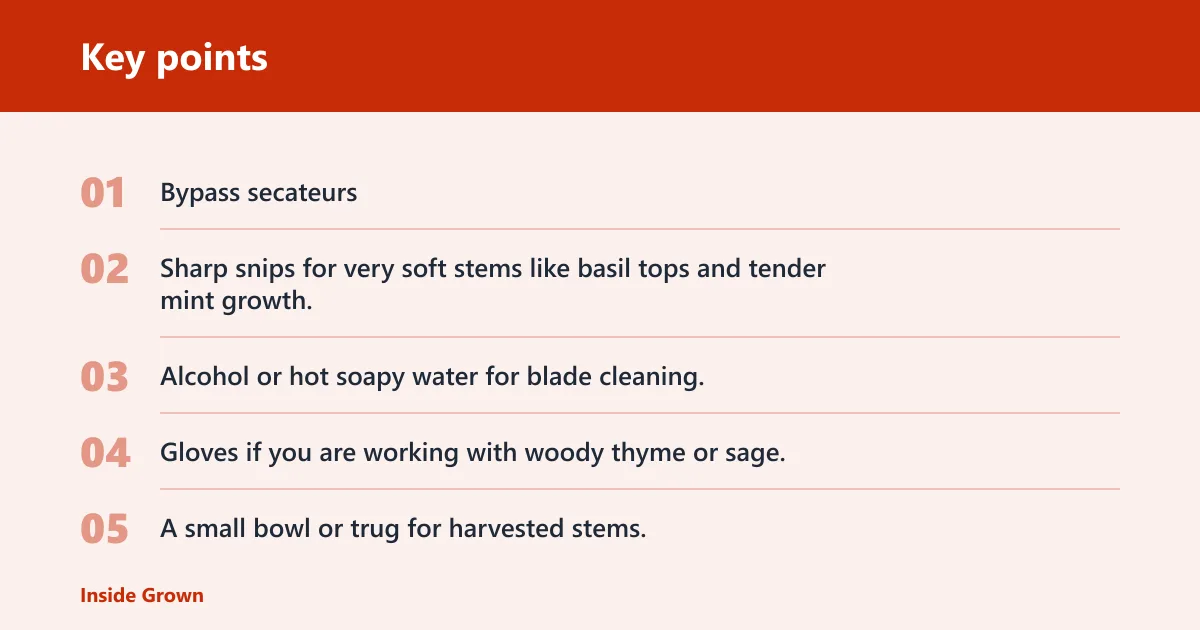



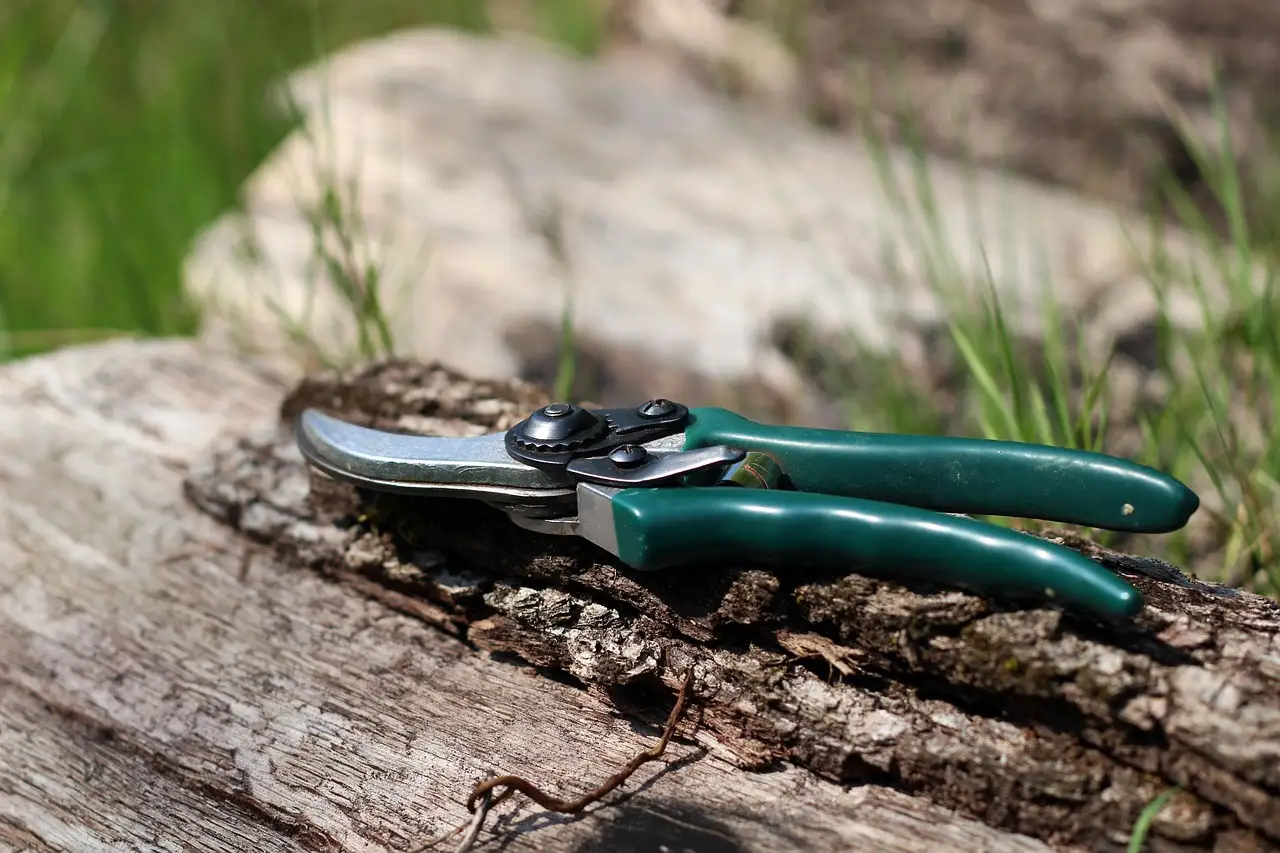
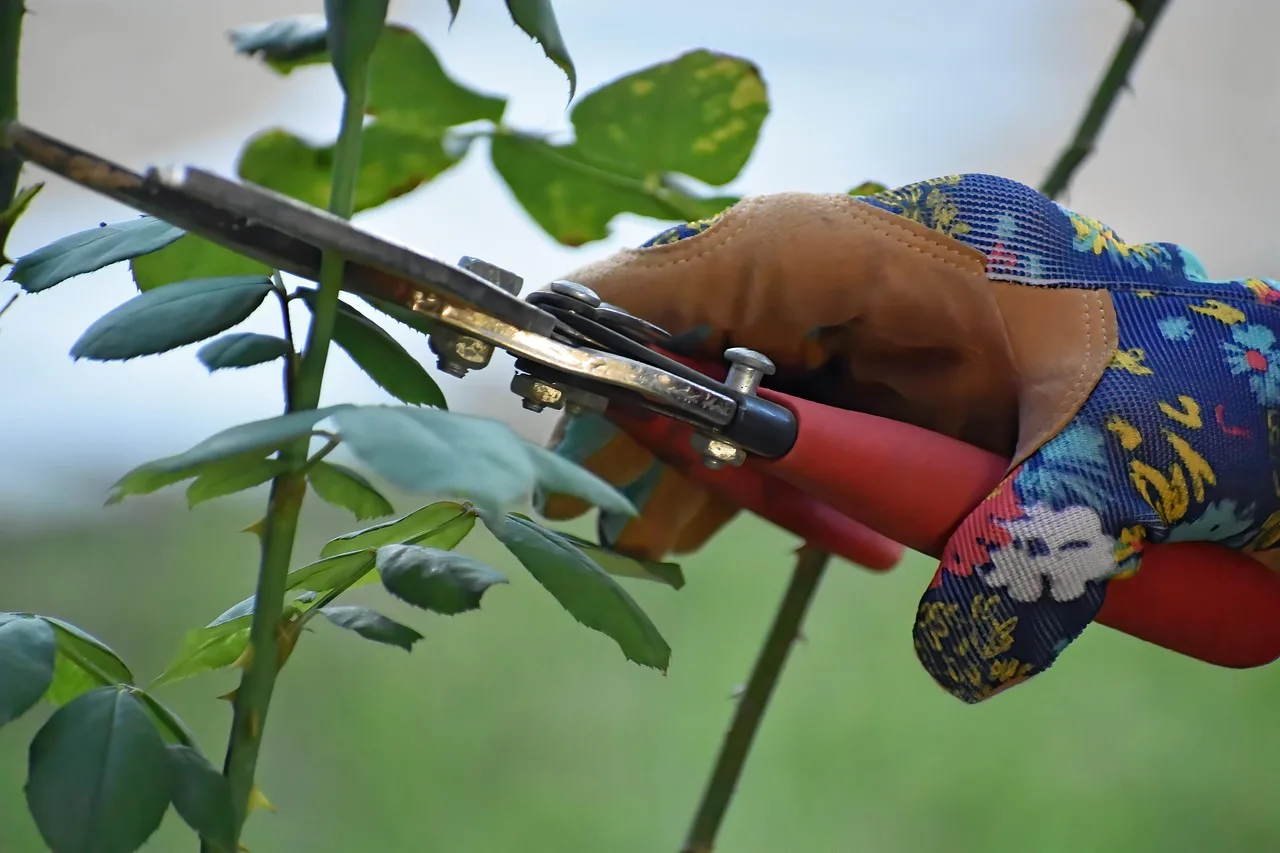
- Bypass secateurs for clean cuts on small herb stems; they make cleaner cuts than anvil types.
- Sharp snips for very soft stems like basil tops and tender mint growth.
- Alcohol or hot soapy water for blade cleaning.
- Gloves if you are working with woody thyme or sage.
- A small bowl or trug for harvested stems.
Use bypass secateurs for stems up to finger-thickness. If stems are thicker than that, step up to long-handled loppers, though that is uncommon for kitchen herbs. Clean blades matter because crushed stems heal slowly and brown at the cut.
📊 Soft herbs like basil and mint respond best to tip pinching every 10 to 14 days. Source: Gardening tips for pruning herbs so they grow fuller.
How do you prune herbs so they grow back fuller?
Cut above a leaf node or bud so the plant shifts growth into new shoots instead of extending one tired stem. Stop once about one-third of the total foliage has been removed. For soft herbs, that usually means frequent tip work; for semi-woody herbs, it means lighter, less frequent cuts.
Use the node, not the stem tip
A leaf node is the point where leaves attach and dormant growth sits nearby. When you remove the tip just above that point, the buds below it are more likely to break into side shoots. That is the basic reason pruning makes many herbs bushier.
Make the cut in the right place
Place the cut a quarter of the stem thickness above a bud, then angle it 45° away from the bud so water sheds off the wound. On soft-stem herbs, that cut can be very close. On firmer stems, leave a little more space and avoid nicking the bud itself.
- Find a healthy leaf node or bud on green growth.
- Set the blade just above it, not below it.
- Cut at a 45-degree angle away from the bud.
- Stop when you have removed about one-third of the foliage.
Prune soft-stem herbs by pinching, not shearing
Soft-stem herbs respond best to frequent light cuts because they replace lost tips quickly. Basil, mint, and cilantro all handle steady harvest better than hard shaping. For this group, the goal is to keep the plant in active leaf production, not to force a dramatic reshape.
Basil: pinch above the second or third leaf pair
Basil should be pinched above the second or third leaf pair on a stem. Remove flower spikes early, because bolting shifts energy away from leaf growth. If a basil plant is still young, begin with tip pinching rather than broad cuts so the plant keeps enough leaf area to power regrowth.
Mint and cilantro: harvest lightly and often
Mint responds to frequent light cuts and usually handles tip trimming every 10 to 14 days during active growth. Cilantro is more delicate; harvest outer stems first and keep the center growing if it is still soft green. Cilantro bolts sooner than many herbs, so let it keep enough foliage to delay stress.
Say your basil is 15 cm tall and already has three good leaf pairs below the tip. Pinching above the third pair keeps the lower buds active and usually gives you two new side shoots instead of one tall stem.
How hard can you cut semi-woody herbs?
Semi-woody herbs need restraint. Oregano and thyme can take regular trimming, but they should be cut in green growth, not into dead-looking base wood. Sage also prefers light shortening rather than hard shearing. Once stems are older and woody, recovery slows and blank sections often stay bare.
Oregano: trim the upper new growth only
Oregano is a semi-woody herb that usually gets a monthly trim during active spring growth. Shorten it by cutting just above a node with leaves still attached below it. Focus on the upper new growth, because lower, older stems are slower to restart.
Thyme: never cut into old bare wood
Thyme should be trimmed by removing crowded stems and taking only the soft, leafy tips. Do not cut into old bare wood. If the plant is dense, open the center first so light reaches fresh growth. That often improves regrowth more than a hard haircut would.
Sage: keep cuts in green, flexible growth
Sage should be shortened lightly only where the stem is still green and flexible. Avoid bare stems and avoid hard shearing. If a stem has gone woody, treat it as structural growth and prune around it instead of into it.
When should you delay pruning or cut less?
Delay pruning when herbs are flowering heavily, bolting, drought-stressed, or packed tight in a container. In those stages, the plant has less energy to replace removed leaves. Cutting less, or only harvesting the most usable tips, protects regrowth and reduces the chance of stall, yellowing, or dieback.
Flowering and bolting herbs
Remove flower spikes early on basil and trim flowering tops lightly on other soft herbs. Once a herb is bolting, the plant is already shifting toward seed production. Heavy pruning at that point can leave you with fewer leaves and slower restart.
Crowded or container-grown plants
Container herbs dry faster and often rebuild more slowly after a heavy cut. If stems are crowded, thin a few shoots for airflow rather than shortening every stem at once. That keeps the plant leafy enough to keep feeding itself.
Suppose a thyme pot has a dense top and two stems are crossing in the center. Remove the weaker stem at its base and trim only the soft tips of the others. The goal is space and light, not a shaved canopy.
Herb pruning decision table for 10 common kitchen herbs
Use this table to match cut depth to stem type, plant stage, and restart speed. If the herb is soft and leafy, pinch. If it is semi-woody, tip-trim. If it is woody or bare at the base, hold back and only cut green growth.
| Herb | Stem type | Cut height | Maximum foliage removed | Pruning cadence | Restart signs after trimming |
|---|---|---|---|---|---|
| Basil | Soft stem | Above the second or third leaf pair | Up to one-third | Every 10 to 14 days in active growth | Two side shoots form below the cut |
| Mint | Soft stem | Just above a leaf node | Up to one-third | Every 10 to 14 days in active growth | Leafy tips fill in fast after pinching |
| Cilantro | Soft stem | Outer stems first, above low nodes | About one-third | As needed while center stays green | Center remains soft green and upright |
| Parsley | Soft stem | Outer stems at the base of the stem | About one-third | Weekly harvest in active growth | Fresh leaves rise from the crown |
| Oregano | Semi-woody | Just above a leafy node on upper growth | About one-quarter to one-third | Monthly during active spring growth | Upper buds break into new leafy shoots |
| Thyme | Semi-woody | Only in green, leafy growth | About one-quarter | Monthly during active spring growth | Fresh tips emerge near the cut line |
| Sage | Semi-woody | Only green, flexible growth | About one-quarter | Light pruning a few times a season | New leaves appear on green stems |
| Rosemary | Woody | Soft tip growth only | About one-quarter | Light seasonal shaping | Fresh tips remain green, no bare-wood cutback |
| Chives | Soft stem | Low leaves, above the crown | Up to one-third | Frequent harvest in active growth | Fresh tubular leaves rise from the base |
| Dill | Soft stem | Upper leafy growth only | About one-third | As needed before flowering | New leaflets appear if the center stays green |
Common mistakes that slow regrowth
Most slow recovery comes from cutting too low, cutting too much, or cutting the wrong stage of growth. The fix is usually less aggressive pruning, not more. If a herb stalls after a cut, the wound location and amount removed are the first things to check.
Cutting into bare woody stems
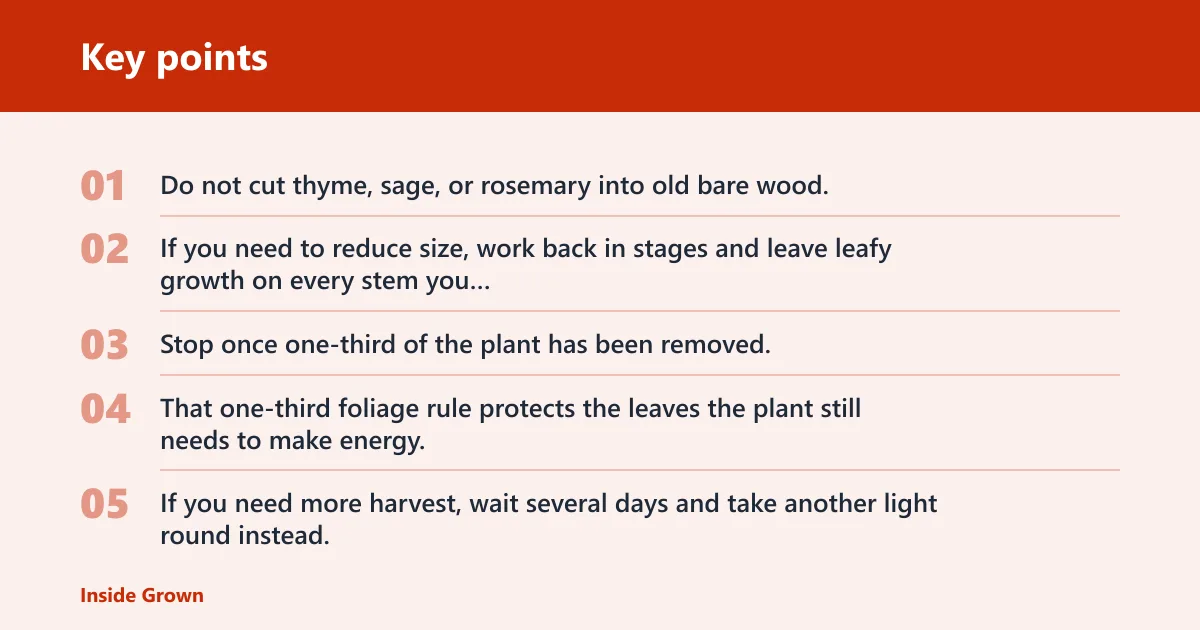
Do not cut thyme, sage, or rosemary into old bare wood. Those sections often lack active buds. If you need to reduce size, work back in stages and leave leafy growth on every stem you shorten.
Removing too much foliage at once
Stop once one-third of the plant has been removed. That one-third foliage rule protects the leaves the plant still needs to make energy. If you need more harvest, wait several days and take another light round instead.
Using dull or dirty blades
Dull blades crush tissue. Dirty blades spread disease between stems. Wipe bypass secateurs or snips before moving between herbs, especially if one plant has yellowing, blackened, or mushy stems.
Pruning at the wrong stage
Prune after dew evaporates but before midday heat, when the plant is dry and less stressed. Avoid cutting during a heat spike or when the soil is very dry. A dry, active plant usually rebounds faster than a thirsty one.
Frequently asked questions
How do you prune herbs so they grow back fuller?
Cut above a leaf node or bud so the plant can push new side shoots from below the cut. Keep the cut shallow, use a clean bypass secateur, and stop at about one-third of the foliage removed. That combination gives the plant enough leaf area to restart quickly.
Where do you cut basil so it keeps growing?
Pinch basil above the second or third leaf pair on a stem. That leaves active buds below the cut, which usually branch into two new stems. Remove flower spikes as soon as they appear, because flowering slows leaf production and makes stems tougher.
Can you cut rosemary and sage hard without killing them?
No. Keep both herbs in green, flexible growth and avoid hard cuts into bare wood. With rosemary and sage, a light seasonal trim is safer than a drastic reshape. If a stem has turned woody, shorten only the leafy tips and leave the old structure intact.
How often should you trim mint and oregano?
Mint responds well to tip pinching every 10 to 14 days during active growth. Oregano usually gets a monthly trim during active spring growth. Both herbs recover best when you remove only leafy upper growth and leave enough foliage below the cut to restart.
Should you prune herbs above a leaf node or bud?
Yes. Cut above a leaf node or bud so the plant can redirect growth into new shoots. A 45-degree cut away from the bud helps water run off the wound. That small detail matters most on soft-stem herbs and young green shoots.
What tools are best for pruning herbs cleanly?
Use bypass secateurs for cleaner cuts on small herb stems, especially stems up to finger-thickness. Sharp snips work for tender basil and mint tips. Anvil tools are less ideal on fresh herb stems because they can crush tissue instead of slicing it cleanly.
When is the best time of day to prune herbs?
Prune after dew has evaporated but before midday heat. That timing keeps stems drier and reduces stress on the plant. If the herb is wilted from heat or dry soil, water first and wait for the plant to recover before cutting.
How much of an herb plant can you cut off at once?
Start with the one-third foliage rule and stop there. For basil, mint, cilantro, and similar soft herbs, one-third is a practical ceiling. For thyme, sage, and rosemary, cut less and stay out of bare wood, because older stems recover more slowly and less predictably.