Are Snake Repellents Safe for Vegetable Gardens? Risks
Most snake repellents are a poor fit for vegetable gardens; I keep repellent products out of edible beds and rely on physical exclusion instead. Used badly, they can contaminate soil or wash onto crops, and they can expose pets and children to granules or sprays. This guide ranks common snake repellents by real exposure risk in vegetable gardens and tells you which ones to avoid around food plants, pets, and kids.
Are snake repellents safe for vegetable gardens?


Some are acceptable only at the perimeter, but most are a bad match for planted beds. The main safety question is not whether a product smells strong; it is whether it can land on leaves, enter soil, drift onto produce, or leave residues where pets and children may contact it.
What “safe” should mean here
For vegetable gardens, “safe” should mean low risk of crop contact, low risk of soil contamination, and low risk to pets and children who may touch the area later. A product can be sold as natural and still be a poor choice if it needs frequent reapplication or spreads with rain or irrigation.
That is why a repellent that belongs outside the bed is different from a repellent that can sit among tomatoes, greens, or herbs. The edible bed is the highest-exposure zone.
According to Defensive Gardening: How to Keep Snakes Out of Your Vegetable Garden — Snake-proof fencing should be buried at least 6 inches deep.
Which snake repellents are lowest risk around edible beds?
The lowest-risk options are usually physical barriers and habitat fixes rather than scent products. If a repellent must be used, perimeter-only devices and materials belong outside the crop zone, while sprays, loose granules, traps, and mothballs should stay away from the bed itself.
Garden exposure safety matrix
| Repellent type | Foliage contact risk | Soil contact risk | Wash-off risk | Pet exposure | Child exposure | Perimeter-only? |
|---|---|---|---|---|---|---|
| Essential oil spray | High | High | High | Moderate to high | Moderate to high | Yes |
| Botanical oil granules | Low to moderate | Moderate | Low to moderate | Moderate | Moderate | Usually yes |
| Ultrasonic solar stakes | Low | Low | Low | Low | Low to moderate | Usually yes |
| Mothballs | High | High | High | High | High | Yes, but poor choice |
| Sulfur | Moderate | Moderate to high | Moderate | Moderate | Moderate | Usually yes |
| Snake fencing | Low | Low | Low | Low | Low | Perimeter use |
| Traps | Low | Low | Low | High if accessible | High if accessible | No, not for beds |
Perimeter-only tools versus in-bed products
Perimeter-only means the product belongs outside the planted area, where it is not likely to touch leaves or wash directly onto harvestable crops. That fits fencing, some ultrasonic stakes, and some botanical granules better than sprays or loose chemicals. It does not make them effective in the soil under lettuce or beans.
Where fencing outranks scent-based products
Snake fencing is often the most dependable control because it blocks entry instead of relying on odor to change behavior. Guidance commonly calls for a barrier buried at least 6 inches deep and built 3-4 feet high. Hardware cloth or galvanized steel fits that use far better than any smell-based repellent.
How do essential oil snake repellents affect vegetables and soil?
Essential oil sprays are often described as safe, non-toxic, and all-natural, and one spray recipe uses 15 drops of clove, cinnamon, or peppermint oils in a gallon of water. That does not make them a good in-bed choice. If they land on foliage or soil, the exposure path is direct.
Peppermint, clove, cinnamon, and eucalyptus sprays
These sprays work through a strong scent mechanism, not by creating a physical barrier. They are usually applied to edge zones, cracks, or perimeter areas, and the same spray is often advised to be reapplied every 3-4 days. That frequent use is a warning sign in edible beds.
What happens on leaves, mulch, or bare soil
Spray drift onto leafy crops can leave residues on produce surfaces. On mulch or bare soil, the liquid can move with irrigation or rain, spreading the contact zone beyond the target strip. In a vegetable bed, that creates more crop and soil exposure than most gardeners expect.
Reapplication after irrigation or rain
Natural oil sprays need repeat applications because scent fades and water moves the product. In irrigated beds, that means the same treated area may be hit again before harvest, which increases the chance of residue on leaves and the chance that soil life is repeatedly exposed.
Are ultrasonic snake repellers safe near garden beds?
Ultrasonic stakes are marketed as safe to use even around pets, and they are described as solar-powered devices that send ultrasound waves and vibrations through the ground. They are usually safer than sprays because they do not put material on crops, but their safety is not the same thing as proven control.
Coverage claims and spacing claims
Some stakes are described as covering 7000 square feet, with placement recommended every 70 feet. Those numbers are product claims, not proof of uniform protection. In real garden layouts, raised beds, paths, posts, compost piles, and wet soil can break up that coverage fast.
Why placement matters more than the marketing copy
If a stake sits too far from a bed, it may do little. If it sits in the bed edge, it may still be low-risk for crops but offers no clean guarantee that snakes will turn away. Perimeter placement makes more sense than scattering stakes among plants.
Ultrasonic devices also do nothing to remove the reasons snakes enter: cover, prey, and water.
What snake repellents should you avoid around pets and kids?
Mothballs and loose chemical products are the worst fit for vegetable gardens, especially where children or pets may enter the area. Sulfur is less extreme but still deserves caution because it can irritate skin and can be unpleasant around small hands, paws, and edible beds.
Mothballs and outdoor use warnings
Mothballs are commonly suggested in folklore, but outdoor use is a problem. They are not a garden perimeter tool, and their vapors and residues can create exposure concerns near soil, mulch, and produce. In practice, they belong on the avoid list for food gardens.
Sulfur and irritation risk
Sulfur is often used as a folk remedy, but it can irritate skin and may cause issues for pets that brush through treated edges. It is not a product to broadcast around carrots and herbs without reading the label carefully and keeping it out of the planted bed.
Products with vague “pet-safe” claims
“Pet-safe” is often used without stating whether the product can touch edible foliage, whether it belongs in soil, or whether it is meant only for borders. That vague language is a warning. If the label does not separate perimeter use from in-bed use, keep it away from food crops.
What is the safest way to keep snakes out of a vegetable garden?
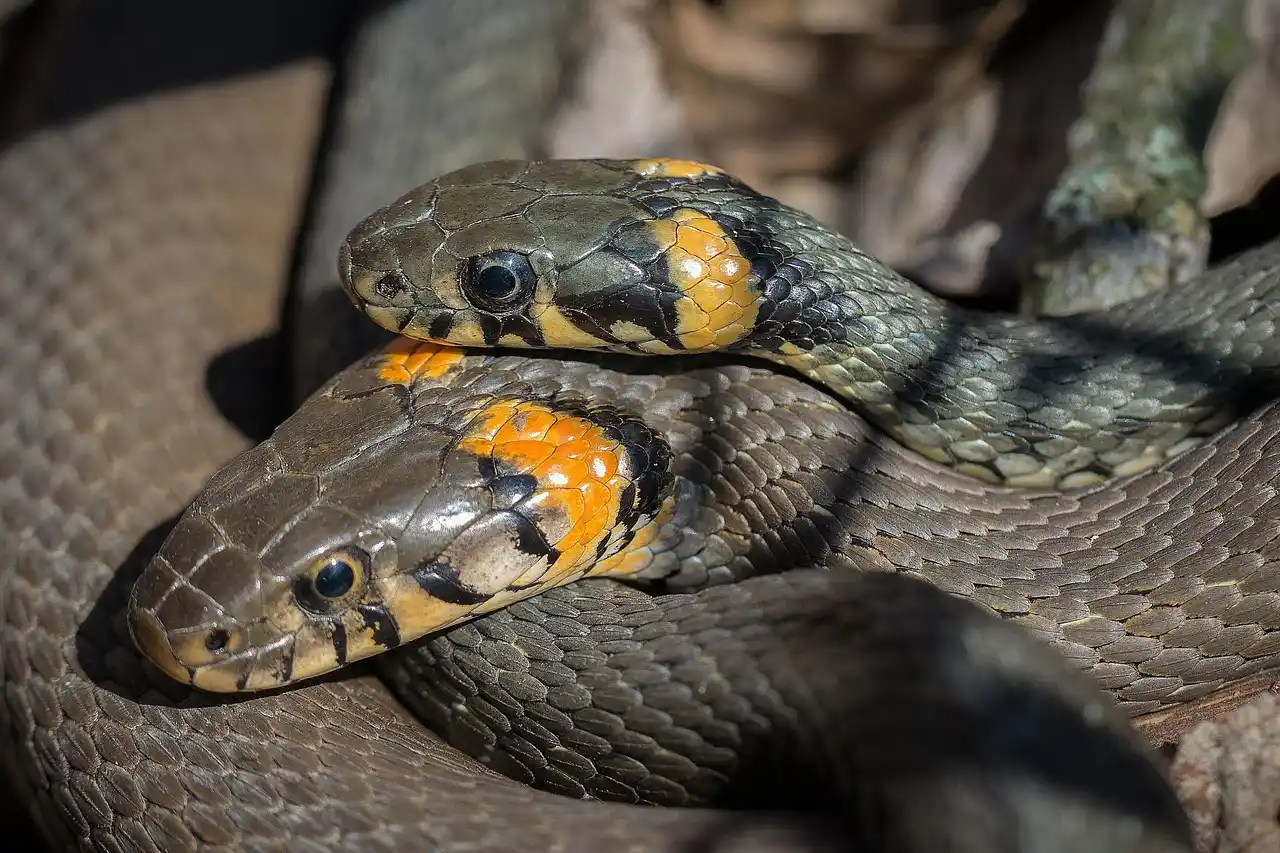
The safest method is to remove what attracts snakes, then block entry with a physical barrier. Reduce cover, remove rodents, and cut water access first. Then use snake-proof fencing or hardware cloth as the main defense instead of leaning on scent-based products with uncertain crop exposure.
Habitat cleanup that actually changes the problem
Snakes are drawn to dense foliage, tall grass, and debris. Keep grass short and reduce hiding spots around the garden edge. Clear boards, stacked pots, old mulch piles, and anything that shelters rodents, because rodent pressure often brings snakes in behind them.
Water and food source reduction
Standing water, leaking hoses, and overflowing saucers all help create the kind of damp edge that many snakes use. Fix drips, drain wet spots, and keep compost and feed sources sealed so the garden is less attractive to prey species.
Barrier choice
Hardware cloth or galvanized steel fencing works because it blocks passage. Buried at least 6 inches deep and built 3-4 feet high, it addresses the entry point directly. That is more reliable than trying to make the whole bed smell wrong.
Do snake repellents actually work in gardens?
Some may reduce visits at the edge, but many do not hold up well in real vegetable beds. Heat can drive off volatile oils, rain can wash products into soil, and irrigation can dilute or spread them. The closer a product sits to crops, the more those failures matter.
Failure cases gardeners should expect
Sprays lose strength after rain and heat. Granules can be displaced by watering. Ultrasonic stakes may have decent placement claims on paper, but beds with mulch, beds with trellises, and dense planting can interrupt coverage. That is why habitat change usually beats repeated repellent use.
Decision rule for choosing habitat change over repellent use
- Use habitat cleanup first if snakes are entering because of cover, rodents, or water.
- Use fencing next if entry needs to stop immediately.
- Use perimeter-only devices only when the label keeps them outside the planted bed.
- Avoid any product that puts residue on leaves, soil, or harvestable parts.
How often do natural snake repellents need to be reapplied?
Natural repellents usually need frequent reapplication because scent breaks down quickly in weather and irrigation. One spray recipe is advised every 3-4 days, and botanical granules are suggested every 5 to 7 days. That kind of upkeep is hard to manage without repeated contact near crops.
Why repeated application matters in edible beds
Every reapplication is another chance for drift, runoff, or accidental contact with harvestable leaves and fruit. Frequent use also raises the odds that pets or children will cross the treated zone before the odor fades. For beds, that is a practical risk, not a theoretical one.
Frequently asked questions
Are snake repellents safe for vegetable gardens?
Most are not a good fit for edible beds. A safer approach is to keep sprays, granules, mothballs, and sulfur away from crop zones and use fencing or habitat control instead. If a product is meant for perimeter use, keep it at the edge, not among vegetables.
Which snake repellents can I use around edible plants?
Very few belong directly around edible plants. Botanical oil granules are often described as usable around edible commodities, but they still work better as a perimeter tool than an in-bed treatment. Snake fencing is the best low-exposure choice for protecting vegetables.
Do essential oil snake repellents harm vegetables or soil?
They can. Peppermint, clove, cinnamon, and eucalyptus sprays may land on leaves or soil, and repeated use can leave residue or wash into the root zone. They are better treated as edge products, not bed treatments, especially in irrigated gardens.
Are ultrasonic snake repellers safe near garden beds?
They are generally lower risk than sprays because they do not coat plants or soil. Still, their coverage claims and spacing claims do not guarantee protection inside a crowded vegetable garden. They make more sense at the perimeter than between planted rows.
What snake repellents should I avoid around pets and kids?
Avoid mothballs, loose chemical baits, and any product that leaves granules or spray residue in a place where hands, paws, or harvestable crops will touch it. Sulfur also deserves caution. If a label is vague about food crops or perimeter-only use, keep it out of the garden.
What is the safest way to keep snakes out of a vegetable garden?
Remove the reasons they visit, then block entry. Keep grass short, clear debris, cut rodent pressure, fix water sources, and install hardware cloth or galvanized steel fencing buried at least 6 inches deep. That approach protects the garden without coating food plants in repellent.