Gardening Techniques for Windy Yards and Exposed Sites
Start by mapping three wind zones—sheltered, moderate, and exposed—and put the toughest plants and windbreaks on the windward edge, with staking only for the first season. Skip that, and I see shredded foliage, snapped stems, dry soil, and plants that never settle in. This guide shows how to lay out a windy garden, choose plants by exposure level, and get new plantings through their first year.
This guide is part of our Gardening techniques series.
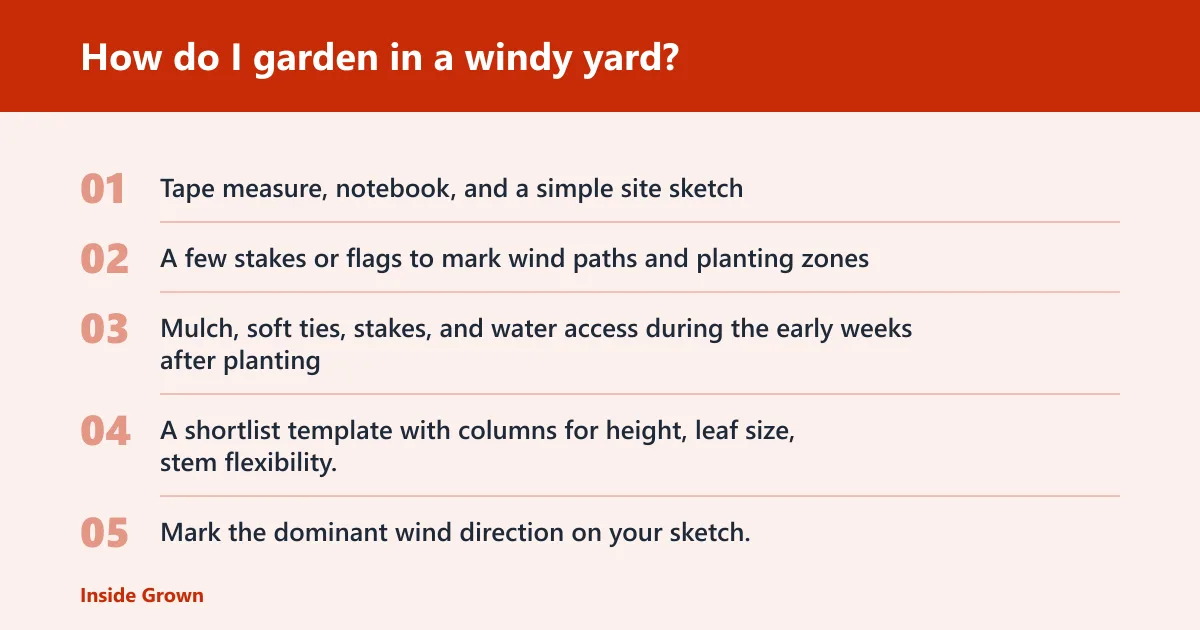
How do I garden in a windy yard?


Begin with the wind source, not the plant list. I’ve mapped hillside sites, ridge tops, open fields, coastal gardens, and gaps between buildings, and each one pushes air differently. The goal is to cut force at the edge, keep roots steady, and save the calmest ground for the plants least able to cope.
What you’ll need
- Tape measure, notebook, and a simple site sketch
- A few stakes or flags to mark wind paths and planting zones
- Mulch, soft ties, stakes, and water access during the early weeks after planting
- A shortlist template with columns for height, leaf size, stem flexibility, and establishment risk
Plan the wind exposure before you plant
- Mark the dominant wind direction on your sketch.
- Divide the yard into three zones: most exposed edge, transition zone, and sheltered interior.
- Flag the hardest-hit strips where wind funnels, rebounds, or crosses open space.
- Note extra stress from salt, drought, reflected heat, or cold air.
- Place tender plants only in the sheltered interior.
Three-zone planning checklist
| Zone | Wind pressure | Best plant traits | Establishment risk |
|---|---|---|---|
| Most exposed edge | Highest | Low, dense, flexible, small-leaved, salt- or drought-tolerant if needed | High |
| Transition zone | Moderate | Medium height, flexible stems, reduced leaf area, moderate root anchoring | Medium |
| Sheltered interior | Lowest | Broader choice, including more delicate shrubs and young perennials | Lower |
📊 Beginning gardeners are told to pick a spot with at least 6 to 8 hours of direct sun daily. Source: How to Start a Vegetable Garden (Beginner’s Guide).
What plants survive exposed and windy sites?
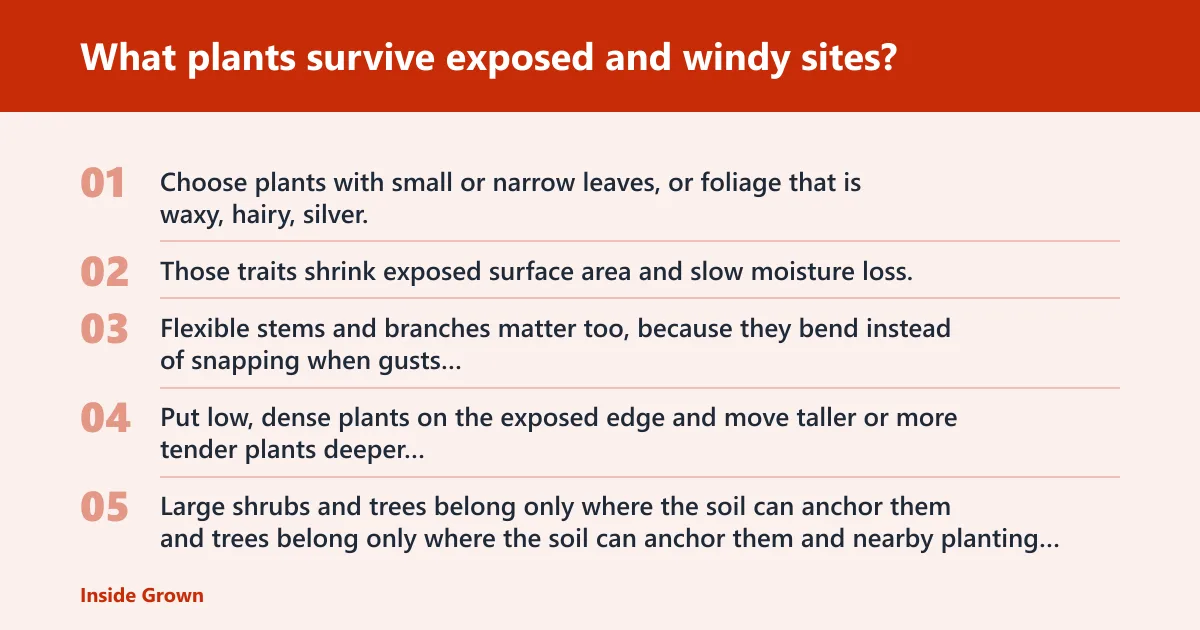
Choose plants with small or narrow leaves, or foliage that is waxy, hairy, silver, or leathery. Those traits shrink exposed surface area and slow moisture loss, which matters because wind drives transpiration up fast. Flexible stems and branches matter too, because they bend instead of snapping when gusts shove the canopy.
Sort plants by height, leaf form, and risk
Use a planting matrix before buying. Put low, dense plants on the exposed edge and move taller or more tender plants deeper inside the site. Large shrubs and trees belong only where the soil can anchor them and nearby planting can soften the blast.
| Plant trait | Why it helps in wind | Best zone | Establishment risk |
|---|---|---|---|
| Small or narrow leaves | Less area for tearing and drying | Edge to interior | Lower |
| Waxy, glossy, hairy, silver, or leathery foliage | Slows water loss and reduces scorch | Edge and transition | Lower |
| Flexible stems and branches | Bends under gusts instead of breaking | Edge and transition | Lower |
| Large leaves, rigid stems, tall top-heavy growth | Tears, browns, and leans more easily | Sheltered interior | Higher |

Should I use a windbreak in my garden?
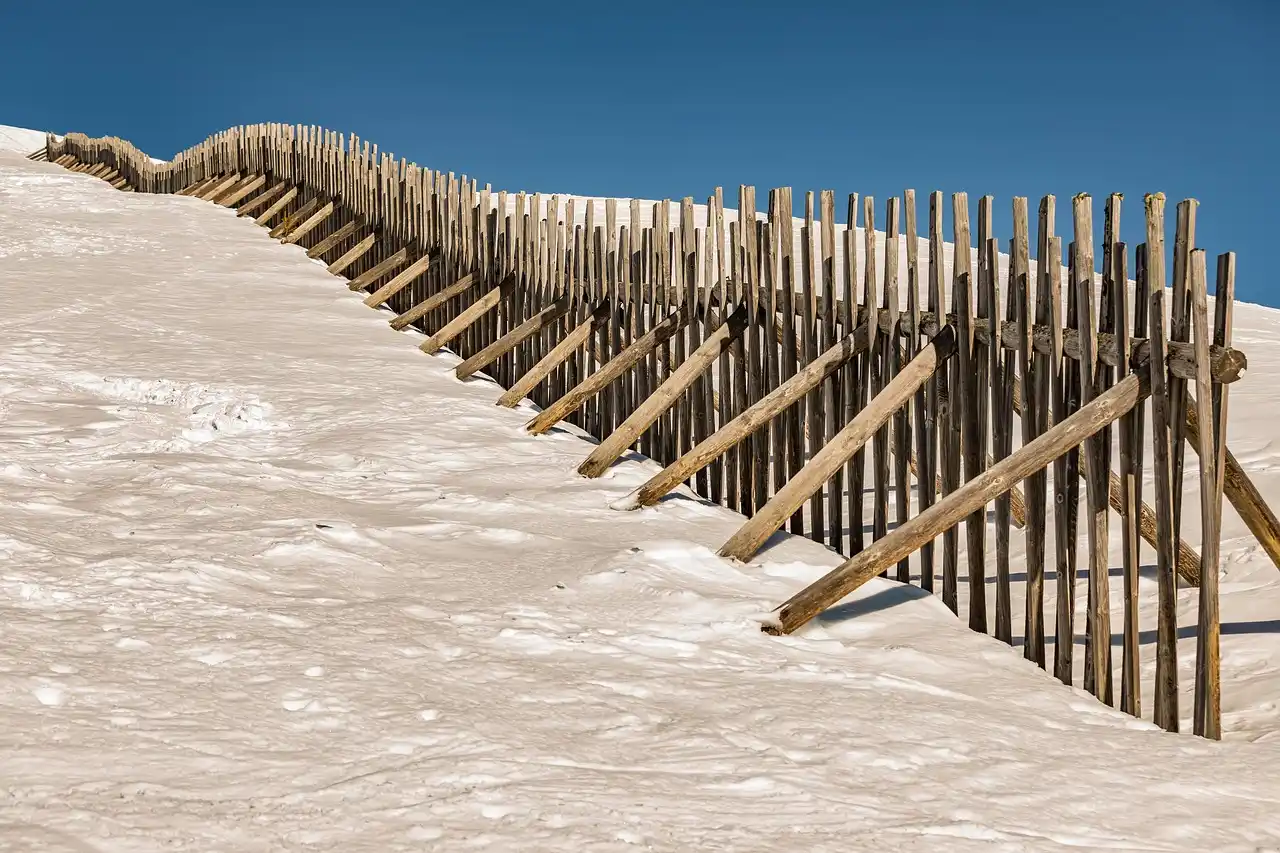
Yes, if the site gets regular exposure or funneling. Semi-permeable windbreaks work better than solid barriers because they cut wind speed while still letting some air pass. Solid walls can throw air over and around the barrier and make turbulence worse. The best shelter usually comes from layers, not one hard screen.
Build a barrier that slows wind without sealing it off
- Place the barrier on the windward side of the planting area.
- Use a mix of trees, shrubs, and hedges rather than one straight wall of one plant type.
- Leave room for airflow under and through the planting.
- Set new beds on the lee side, not right against the barrier.
- Let the barrier mature before moving delicate plants into the open edge.
Layered planting makes better shelter over time
Layered planting uses a tough outer layer and a protected interior layer. The outer layer takes the first hit and slows the air. The inside then becomes a sheltered planting area, which supports a wider range of plants than the exposed edge. That gradual shelter often beats a single fence panel.
How do I protect newly planted shrubs and trees from wind?

Newly planted shrubs and trees can be at higher risk because repeated movement can loosen roots, often called windrock. Tall or top-heavy plants are especially vulnerable. The safest approach is steady soil moisture, temporary support only when needed, and a layout that gives them some shelter from day one.
First 12 weeks after planting
- Plant when soil moisture is steady and wind is lower if possible.
- Set the root flare at the right height and firm the soil evenly.
- Water deeply after planting to settle the root ball.
- Mulch the root zone, keeping mulch off the stem.
- Stake only if the plant cannot stand upright on its own.
- Check ties after every stretch of hard wind and loosen or remove them as roots grip.
- Water on a consistent schedule so roots keep growing.
- Watch for leaning, root loosening, or torn leaves and adjust the plan fast.
If that didn’t work, try this next
- Move the plant one zone deeper into the layout.
- Add a temporary screen on the windward side using a semi-permeable barrier.
- Replace a top-heavy plant with a lower, denser species better suited to the edge.
- Reduce competition from hot reflected surfaces or dry, thin soil.
How do I stop plants from getting damaged by wind?
Stop the damage by reducing force, not by trying to block every gust. Wind can damage foliage, including large leaves that tear or brown, and it can dry plants faster because wind speeds transpiration. The fix is the right zone, the right plant form, and enough moisture for roots to recover between blows.
Common mistakes
- Putting tender plants in the most exposed edge
- Using a solid barrier that creates turbulence
- Ignoring wind plus drought, salt, or cold
- Leaving stakes on too long or planting too shallowly
Troubleshoot the failure pattern
- For shredded foliage, move the plant to a sheltered location and switch to smaller- or thicker-leaved species.
- For repeated stem breakage, replace rigid plants with flexible-stemmed forms and shorten the wind path with layered planting.
- For uprooting or rocking, improve anchoring soil, reduce canopy load, and recheck staking only until roots hold.
- For dry, scorched leaves, water deeply and add shelter before adding more sun-loving plants.
How do I choose plants for a coastal or hillside garden?
Start with the exposure type. Coastal sites add salt spray. Hillsides and ridges get stronger, more constant wind. Open fields have long fetch, so plants take repeated pressure from one direction. Gaps between buildings can turn into wind tunnels, where gusts speed up suddenly and hit young plantings hardest.
Match the plant to the site stress
A salt-burned coastal edge generally calls for salt-tolerant, low, flexible plants first. A ridge needs windbreak structure and root-stable shrubs before taller accents. An open field edge usually needs the toughest plants on the boundary and the rest tucked behind them. In a building gap, break the funnel before adding anything tall.
Combine wind exposure with drought, salt, or cold before you buy. A plant that handles one stress well may fail when two or three arrive together. A sheltered planting area supports a wider range of plants, so save the exposed edge for the few that can take repeated abuse.
Can a windy yard be made less exposed with planting?
Yes. Planting can reduce exposure over time if the layout starts with the windward edge and builds inward. A tough outer layer slows the wind, a transition zone catches the next level of plants, and the sheltered interior becomes calmer as the canopy fills in. The change is gradual, not instant.
Use planting to shape the microclimate
- Place the most wind-tolerant plants on the windward edge.
- Step height upward slowly toward the interior.
- Mix shrub and hedge layers with a few taller anchors only where roots can hold.
- Fill gaps with lower plants so wind cannot rush straight through.
Prevention: Revisit the three-zone map after the first season and shift any stressed plant one zone deeper before root damage compounds.
Frequently asked questions
How do I garden in a windy yard?
Map the wind first, then plant to the map. Use the most exposed strip for the toughest, lowest plants and keep the sheltered interior for anything with broad leaves or weak stems. Add a semi-permeable barrier where gusts funnel, and protect new roots until they grip.
What plants survive exposed and windy sites?
Choose plants with small or narrow leaves, plus waxy, hairy, silver, or leathery foliage. Flexible stems are the next filter. Keep tall or top-heavy plants out of the edge zone unless a windbreak already lowers pressure there.
How do I stop plants from getting damaged by wind?
Reduce the force before it reaches the canopy. Use layered planting, keep soil moisture steady, and avoid solid barriers that create turbulence. If a plant is already tearing or browning, move it deeper into shelter and replace it with a better-matched form.
Should I use a windbreak in my garden?
Use one when wind regularly dries, bends, or uproots plants. Semi-permeable windbreaks are the better choice because they slow wind while still letting air pass. Mix trees, shrubs, and hedges, and leave enough space for the barrier to mature.
How do I protect newly planted shrubs and trees from wind?
Treat them as high-risk for windrock. Plant into moist soil, mulch the root zone, and stake only if the plant cannot stay upright on its own. Check ties after windy spells and remove support as soon as roots hold the plant without movement.
What kind of leaves and stems handle wind best?
Small leaves and narrow leaves handle wind best because they lose less water and catch less force. Waxy, hairy, silver, and leathery foliage also helps. Stems and branches that bend rather than snap are better than stiff, upright growth in exposed sites.