Gardening tips for pruning herbs so they grow fuller
For basil, mint, oregano, and thyme, cut just above a leaf pair or node, leaving at least 2 sets of leaves; for woody rosemary, sage, and lavender, trim only soft new growth and never into bare stems. Cut too low, and herbs can stall, thin out, or die back instead of branching. This guide shows exactly where to cut each common kitchen herb so it regrows fuller.
This guide is part of our When to plant seeds and bulbs series.
Why pruning herbs makes them bushier
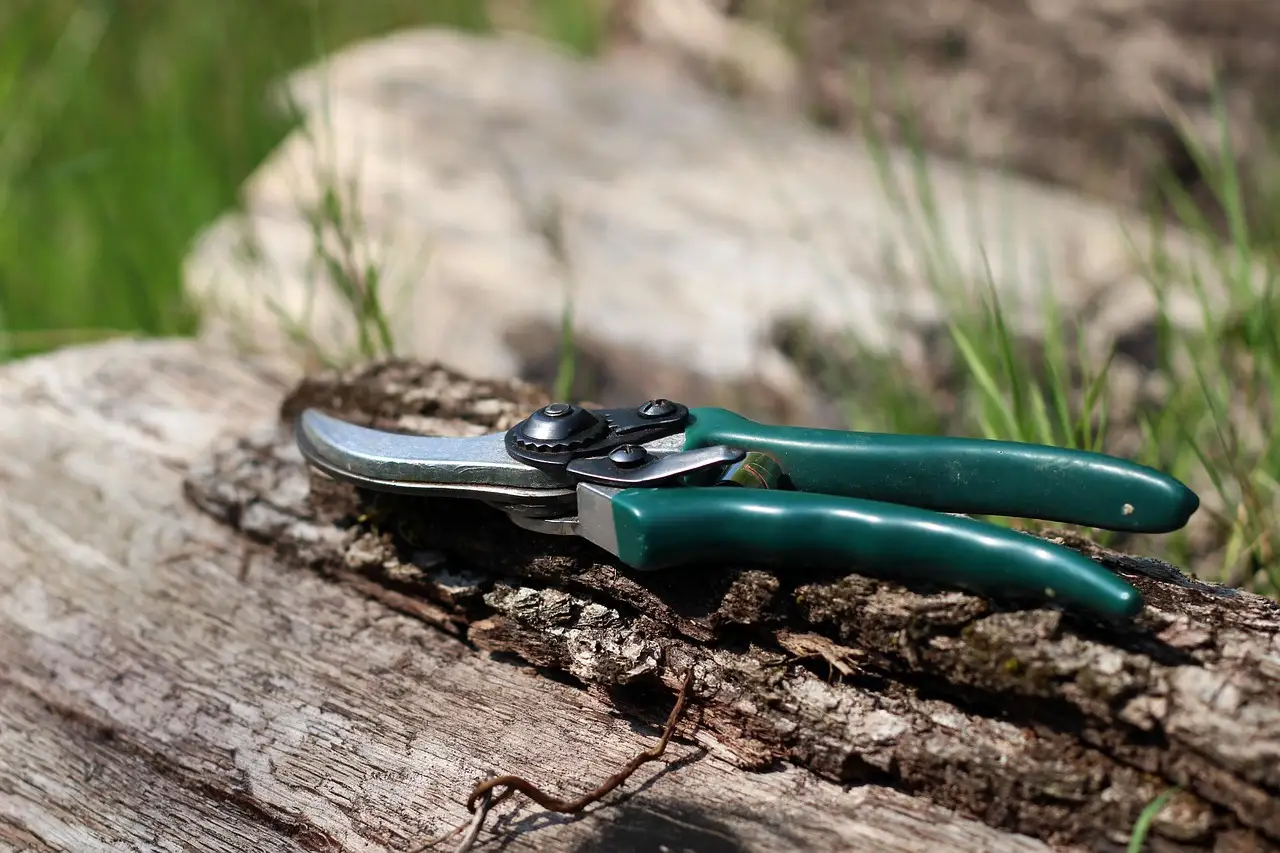


Pruning removes the stem tip that keeps growth moving upward. The plant shifts energy into side shoots below the cut, so you get a fuller plant instead of one long, sparse stem.
Light, regular trimming also helps air move through the canopy, which lowers disease pressure in crowded herb plantings. Herbs usually crop better when light reaches the center and air can move freely.
Active growth matters. Soft herbs such as basil and mint respond best to frequent tip pinching every 10 to 14 days. Semi-woody herbs like oregano and thyme usually get a monthly trim during active spring growth.
📊 Make pruning cuts at a 45° angle. Source: Gardenersworld.
What you’ll need
- Bypass secateurs or sharp pruning shears for small herb stems; bypass pruners make cleaner cuts than anvil types.
- Long-handled loppers only if stems have become thick, up to 3 cm in diameter.
- Clean cloth or alcohol to wipe blades before moving between plants.
- Gloves if the plant is woody or the stems are dense.
- A dry plant with foliage free of dew or rain.
- Wait until morning, after dew evaporates, before midday heat.
- Check that the plant gets at least six to eight hours of direct light and sits in well-draining soil or mix.
- Sanitize the blades, then choose the cut point above a node or bud.
- Make the cut at a 45-degree angle, slanting away from the bud.
- Stop once you have removed one-third of the total foliage.
How do you know where to cut herbs?
Cut just above a leaf node, bud, or leaf pair so the plant can push new shoots from that point. On soft stems, the best cut is just above an active double-leaf node. Keep the cut close enough to leave no stub, but not so close that you damage the bud.
A 45-degree cut helps water shed off the wound. That matters on herbs that stay dense after trimming, because wet cut surfaces can stay damp longer.
Use the node as your map
Look for the point where two leaves or side shoots meet the stem. That junction usually tells you where branching will happen after trimming.
If a stem has several leaf pairs, cut just above the uppermost healthy node you want to keep. The node placement influences branching direction, so choose the pair facing the space you want to fill.
Step 1: Start with soft herbs
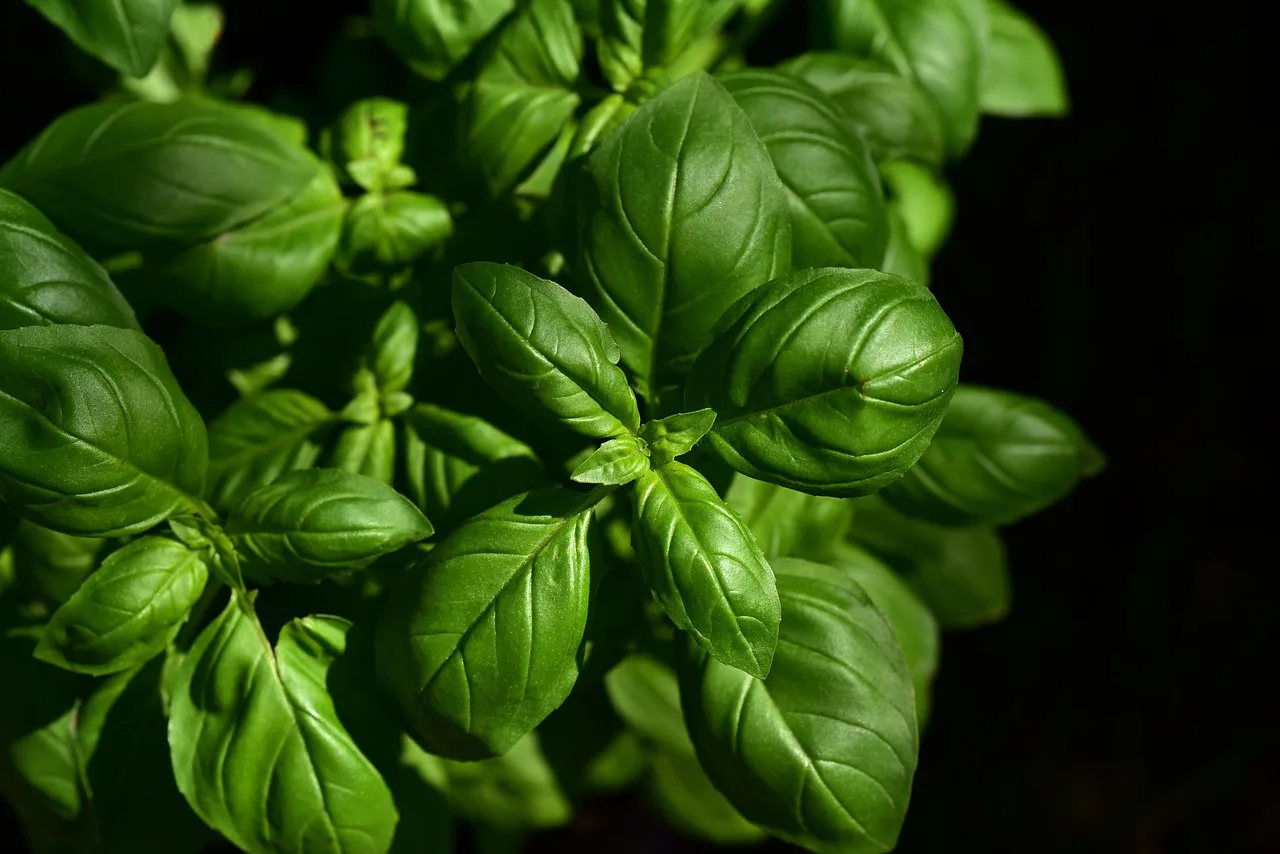
Soft herbs grow on tender green stems and respond best to tip pinching. Basil, cilantro, and mint should be handled this way first, because frequent light cuts keep them leafy rather than lanky.
Basil: pinch above a pair of leaves
Pinch or snip just above the second or third leaf pair on a stem. That leaves enough foliage for recovery and stops the stem from stretching upward too quickly.
For basil that is already tall, cut above a healthy leaf node and remove the flower spike early. A flowering basil plant shifts energy away from leaf production, and the leaves often get tougher.
Mint and cilantro: trim often
Mint fills in fast when you remove the tips regularly. Cilantro is similar, although it bolts sooner; harvest outer stems first and keep the center growing if the plant still has soft green growth.
For both, use small, frequent cuts rather than a major haircut. Soft herbs like basil and mint need tip pinching every 10 to 14 days during active growth.
What to do when a soft herb starts flowering
Cut the flowering stem back to the nearest strong leaf node. If the plant is already heavy with flowers, harvest what is usable, then trim only the green portions that still have leaves.
Say your basil in a 10-inch pot has stretched 14 inches tall with two flower buds. Cut each stem back to a pair of leaves near the lower third of the plant, leaving plenty of green growth for regrowth.
Step 2: Trim semi-woody herbs with restraint
Semi-woody herbs have firmer stems at the base and softer growth at the tips. Oregano, thyme, and sage should be trimmed, but not shaved down hard. If neglected, they often become leggy and woody at the base.
Oregano and thyme: shorten the soft top growth
Remove some of the upper new growth, cutting just above a node with leaves still attached below it. Do not cut into old bare wood, because that section may not push new shoots reliably.
Monthly trimming during active spring growth keeps these herbs compact. Thin crowded stems at the same time so light can reach the center.
Sage: keep the cut in green growth
Sage can be shortened lightly, but only where the stem is still green and flexible. Leave older woody framework in place unless there is soft growth above it.
Suppose sage has three long shoots leaning across the pot. Remove one shoot at a time back to a green node, then wait for side shoots to fill in before taking more.
Can you prune rosemary and lavender the same way as basil?
No. Rosemary and lavender are woody herbs, so in general it is best to cut only into green growth and avoid bare brown hardwood. Basil can be pinched repeatedly; rosemary and lavender need lighter structural pruning to stay productive without dying back from the cut.
For woody herbs, look for soft new growth at the tips and shorten that portion only. Keep the cut above a green leaf cluster. If a stem is fully brown and leafless, leave it alone.
How far into green growth you can safely cut
Trim back to a point where you can still see healthy leaves below the cut. That keeps some active tissue on the plant and gives it a place to branch.
Do not shear rosemary or lavender like a hedge. A hard cut can leave bare sections that never refill.
What to avoid when stems are bare and brown
Never cut into old brown hardwood on rosemary or lavender. If a branch has no green growth left, remove only the dead tip or leave it in place until a side shoot develops elsewhere.
Pruning woody herbs works best as light shaping, not restart pruning.
Herb pruning decision table
| Herb | Cut point | Percent to remove | Recovery time note |
|---|---|---|---|
| Basil | Just above a pair of leaves or active node | Up to 33% per session | Fast recovery in active growth; pinch every 10 to 14 days |
| Mint | Just above a leaf pair | Up to 33% per session | Usually rebounds quickly if soil stays evenly moist |
| Oregano | Above a green node on soft tips | About 25% to 33% | Trim monthly during spring growth; avoid old wood |
| Thyme | Above leafy green growth, not woody base | About 25% to 33% | Slow and steady regrowth; keep cuts shallow |
| Sage | Above green, flexible shoots | About 20% to 25% | Needs light shaping, then time to refill |
| Rosemary | Only in soft green tips | About 10% to 20% | Recover slowly; avoid cutting into brown wood |
| Lavender | Soft green growth above woody base | About 10% to 20% | Light pruning only; do not strip stems bare |
How much of an herb plant can you trim at once?
Use the one-third rule: never remove more than one-third of the total foliage in one session. That limit reduces stress and preserves enough leaf area for regrowth.
In container-grown herbs, stay closer to the low end because pots dry faster and root volume is smaller. In-ground herbs usually recover more easily, but the same one-third limit still applies.
Container herbs need gentler follow-up
Potted basil, mint, or thyme often need faster watering after pruning, since the exposed soil surface dries quickly. Water when the top two inches of soil feel dry.
Ground-planted herbs can handle a slightly larger trim session if they are already well established, but not if the weather is hot or the plant is already flowering.
Should you pinch or cut herbs with pruners?
Pinch soft stems with your fingers and use bypass secateurs or sharp pruning shears for thicker or more fibrous stems. Clean cuts matter because crushed stems heal poorly and can invite dieback.
Use pruners for anything that feels tough enough to tear when pinched. That includes mature mint stems, older oregano, sage shoots, and most rosemary tips.
Tool choice by stem type
Soft herbs: pinch tender tips. Semi-woody herbs: use pruners for cleaner cuts. Woody herbs: use sharp shears and keep every cut small.
If a stem is up to 3 cm in diameter, long-handled loppers are the right tool, but most kitchen herbs never need them.
How do I stop basil from flowering and getting woody?
Pinch basil every 10 to 14 days, cut above a leaf pair, and remove flower buds as soon as they appear. That keeps growth focused on leaves instead of stems and seed production.
Once basil flowers heavily, leaf quality drops and stems can stiffen. Regular harvests in the morning slow that shift by keeping the plant in active leafy growth.
Weekly maintenance for basil
Check each stem once a week. If a stem has more than 4 to 6 leaf pairs and is starting to stretch, cut it back above a node that leaves at least 2 sets of leaves on the stem.
Harvest no more than one-third of the total foliage in one session, even if the plant looks dense.
How often should you trim herbs during the growing season?
Trim soft herbs every 10 to 14 days, semi-woody herbs monthly during active spring growth, and woody herbs only when new green growth needs shaping. That rhythm keeps plants compact without pushing them into stress.
A simple weekly routine works well: inspect, pinch, thin, and stop when you reach the one-third limit. Morning harvests are best, after dew evaporates but before midday heat.
A repeatable weekly routine
- Check each herb for flower buds, weak stems, and overcrowding.
- Pinch soft tips first, then trim semi-woody herbs if the canopy is dense.
- Thin crossing stems so light reaches the center.
- Stop at one-third total foliage removed.
- Water only if the top two inches of soil feel dry.
Common mistakes
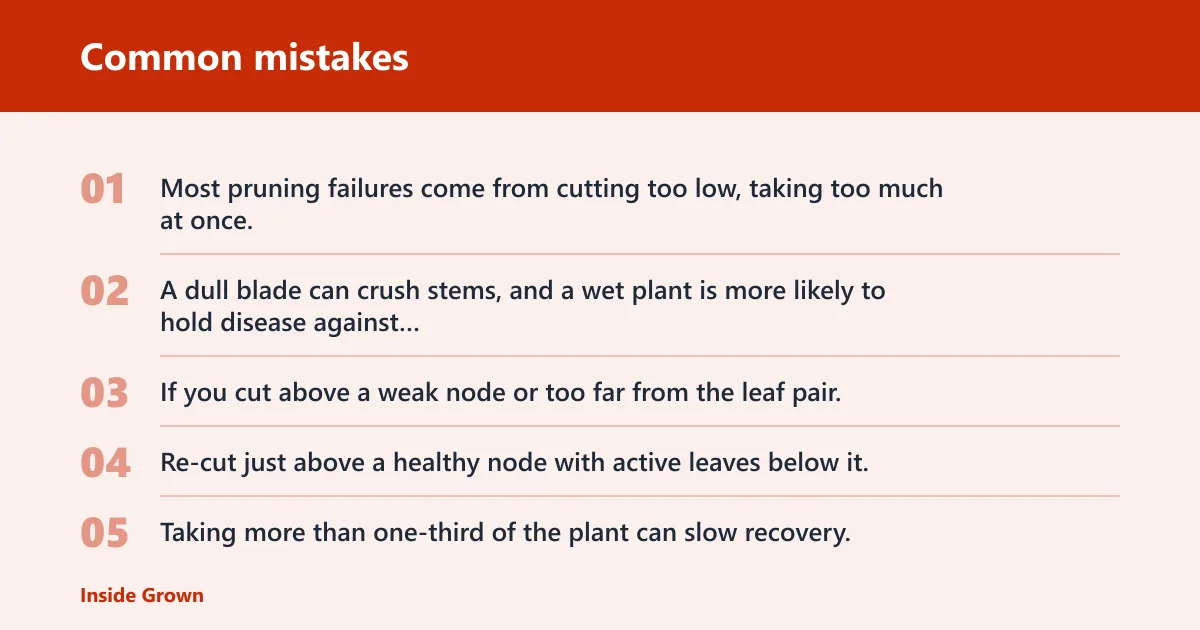
Most pruning failures come from cutting too low, taking too much at once, or using the wrong tool. A dull blade can crush stems, and a wet plant is more likely to hold disease against fresh cuts.
Cutting above the wrong node
If you cut above a weak node or too far from the leaf pair, the plant may leave a stub or branch unevenly. Re-cut just above a healthy node with active leaves below it.
Removing too much foliage at once
Taking more than one-third of the plant can slow recovery. If the herb is already leggy or flowering, trim in stages over several days instead of all at once.
Ignoring light, drainage, or spacing after pruning
Pruning helps only if the plant can recover. Herbs need six to eight hours of direct light daily and well-draining soil or mix. Crowded pots and soggy soil slow regrowth and raise disease risk.
What to do if an herb is already leggy
Cut back only to green growth, then wait for new shoots before taking more. If the lower stems are bare and woody, shift to lighter, more frequent trimming rather than a hard reset.
Frequently asked questions
How do I prune herbs so they grow back fuller?
Cut just above a node or leaf pair so side shoots can form below the cut. Keep removals light, stay under one-third of the foliage per session, and trim during active growth. That gives the plant enough leaf area to recover and branch well.
Where do you cut herbs to make them bushier?
Make the cut just above a healthy leaf node, ideally above a pair of leaves on soft herbs. Use a 45-degree angle so water sheds away from the wound. Leave a few leaf pairs on the stem so regrowth starts quickly.
How much of an herb plant can I trim at once?
Remove no more than one-third of the total foliage in one session. If the plant is stressed, leggy, or in a small container, trim less. Follow with normal watering and good light so the plant can rebuild leaf mass.
What tools should I use to prune herbs cleanly?
Use bypass secateurs or sharp pruning shears for small stems, since they make cleaner cuts than anvil types. Pinch only soft tips that tear cleanly by hand. Sanitize blades before moving between plants if any stem looks diseased.
When is the best time of day to harvest herbs?
Harvest in the early morning after dew evaporates but before midday heat. That timing helps preserve aroma and flavor. Avoid pruning during the hottest part of the day, when the plant is already losing moisture quickly.
Can I prune rosemary and lavender the same way as basil?
No. Basil can be pinched repeatedly, but rosemary and lavender should only be cut in soft green growth. Never cut into bare brown hardwood. Keep pruning light and structural, not hard and repeated.