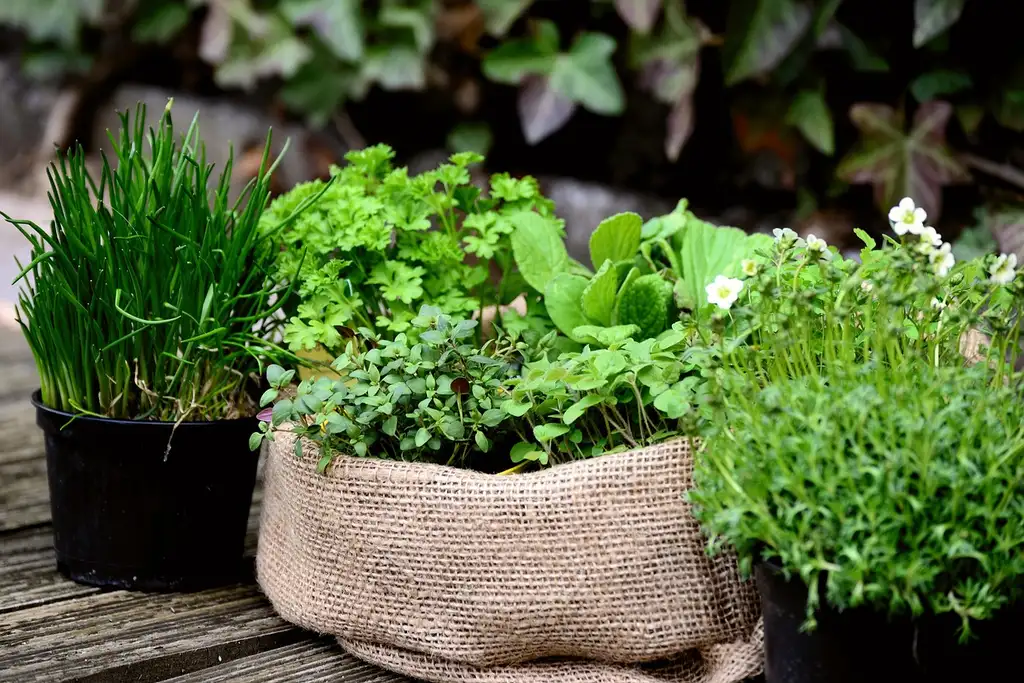
Gardening tips for indoor herbs that actually stay alive
Keep indoor herbs alive by pairing each plant with its weak point: strong light, a pot with drainage holes, airy mix, and water only when the top inch dries; cut no more than one-third at a time. Skip that, and basil sulks, mint rots, and parsley goes thin and bitter fast. This guide covers light, pots, soil, watering, and harvest rules for basil, mint, parsley, cilantro, chives, rosemary, and thyme.
This guide is part of our When to plant seeds and bulbs series.
What you’ll need


- A bright window with the strongest direct light available, or a grow light for darker kitchens
- A pot with drainage holes and a saucer
- A sterile, fast-draining indoor potting mix with sand, perlite, and peat or similar components
- A watering can or squeeze bottle
- Optional: pebble tray, small fan, diluted liquid fertilizer, pruning scissors, and clean jars for cuttings
According to 10 Best Tips How to Keep Herbs Alive Indoors – Best Guide — Average indoor temperatures of 68° to 76°F are considered sufficient for herbs indoors.
How do I keep herbs alive indoors?
Start with light, then pot, then water. Most indoor herbs need high light intensity around 6,000–10,000 foot candles, and a bright window indoors may only reach about 5,000 foot candles, so the brightest window is the first move and a grow light is the backup. Keep roots in a draining container and water only when the top 2–3 inches of soil are almost dry.
- Move the pot to the brightest window you have, with no cold glass touching the leaves.
- Set the container in a saucer so runoff can escape after each watering.
- Replace dense native soil with a sterile indoor mix that drains fast.
- Check the soil before every watering; ignore the calendar.
- Trim lightly during active growth, then stop hard cutting in winter.
Why indoor herbs die so fast
Most failures come from four places: low light, soggy roots, dry air, and tired potting mix. Kitchens make all four worse because windows can be dim, heat vents dry leaves, and people water on habit instead of soil condition. If the plant looks tired, the cause is usually simple and physical.
Which herbs are easiest to keep alive indoors?
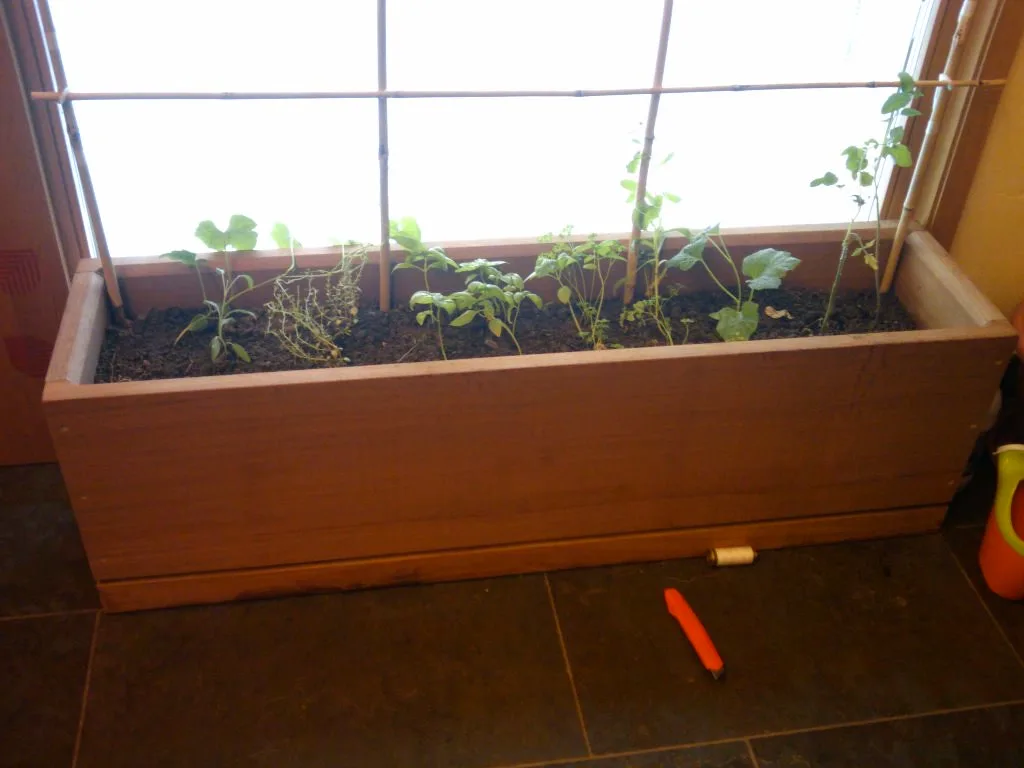
Mint and chives are often good starting points because they can handle less-than-perfect light and tend to recover well after cutting. Parsley and basil need more attention, cilantro hates heat and bolts quickly, and oregano usually wants brighter light and drier soil. If a kitchen stays dim, it is smarter to keep the most demanding herbs fresh in a pot and buy the rest cut.
| Herb | Light need | Watering rhythm | Pot size | Most likely failure point |
|---|---|---|---|---|
| Basil | Very bright window or grow light | Keep evenly moist; check often | 6 to 8 inches | Cold, low light, and stalling after harvest |
| Mint | Bright indirect to direct light | Water when the top inches dry | 8 inches or separate pot | Cramped roots and dry pots |
| Parsley | Bright light | Steady moisture, never soggy | 6 to 8 inches | Slow start and dry air |
| Cilantro | Bright light, cooler spot | Keep lightly moist | 6 inches | Heat and quick bolting |
| Oregano | Strong direct light | Let soil dry more between waterings | 6 inches | Too much water |
| Chives | Bright window or grow light | Moderate, even moisture | 6 inches | Weak light and missed cutting |
How much light do indoor herbs actually need?
Put herbs in the brightest window available and treat direct sun as better than indirect light when the plant needs energy. A sunny spot with several hours of direct light is the best first choice, but cold glass can chill roots and leaves, so keep pots a little back from the pane. If the room never gives strong light for most of the day, a grow light is worth using.
When a grow light is worth it
Use one when the plant stretches toward the window, grows pale, or stops making new leaves after a few weeks. Mount the light close enough to brighten the whole canopy, but not so close that leaves dry or curl. In a dim apartment, one steady light beats moving herbs between random windows.
Choose the right pot and mix
Drainage holes are strongly recommended. Herbs indoors are often best potted in containers with drainage holes because standing water can keep roots wet and increase root rot risk. Use a sterile container medium with sand, perlite, and peat or a similar airy blend, and skip dense native garden soil; it compacts fast in pots and stays wet longer than herbs can tolerate.
Right-sized containers prevent slow rot
Too large a pot holds extra wet mix around small roots, which delays drying and makes the plant look thirsty even while the roots struggle. Choose a container only a little larger than the root ball, then repot once roots fill the space. A snug pot dries at a useful pace.
How often should you water indoor herbs?
Water when the top 2–3 inches of soil are almost dry, not on a fixed weekly plan. Indoor herbs often need watering every 1–3 days depending on light, pot size, and room heat, but the soil test wins every time. Water deeply until excess runs out the bottom, then empty the saucer.
Winter changes the rhythm
Heat running indoors dries pots and leaves, but short winter days slow growth, so the surface can look dry while the root zone is still damp. Check more often and water less often if the plant is sitting cool and dim. This is where overwatering usually starts.
How do you keep herbs from stalling indoors?
Keep temperatures stable, raise humidity a bit, feed lightly, and cut at the right time. Average indoor temperatures of 68° to 76°F are sufficient, and herbs need at least 50% humidity to grow well. Keep pots away from drafts, radiators, heaters, and AC vents, then support dry rooms with a pebble tray or grouped plants.
Feed lightly, not often
Use fertilizer at half to one-third strength. Heavy feeding pushes soft growth that fails faster in weak winter light. Give small doses only when the plant is actively making new leaves, then stop if the herb begins to stretch, fade, or stall.
Prune for regrowth, not cleanup
Harvest during spring and summer growth, and avoid heavy winter pruning. Remove stems above a leaf pair so the plant branches from the nodes instead of leaving a stub. That keeps basil, chives, and mint fuller at the base instead of bare and woody.
Root new plants when older ones fade
Take node-bearing stem cuttings, place them in water, and wait for roots before moving them to soil. This works well for basil and mint when the mother plant gets tired. It is also the cleanest way to replace a leggy plant without starting from seed.
Herb survival scorecard and rescue checklist
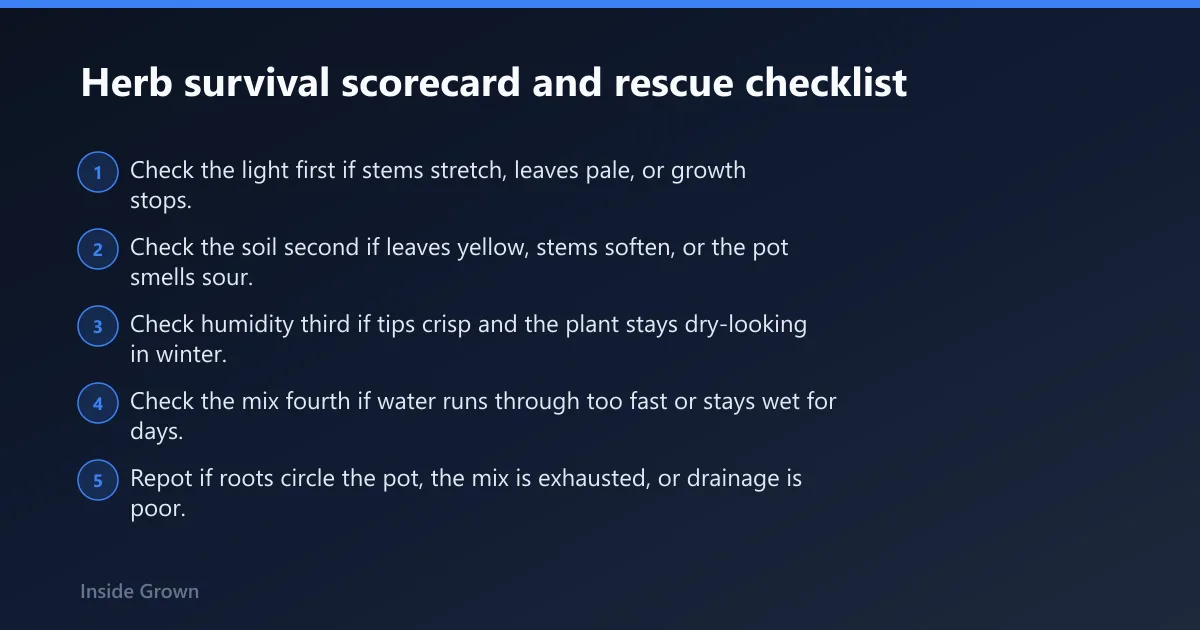
Use this as a triage sheet when a plant starts dropping leaves, leaning, or smelling sour. Match the herb to its usual failure point first, then fix the most likely cause before you touch fertilizer or pruning scissors.
| Herb | Typical indoor failure mode | Fast rescue move |
|---|---|---|
| Basil | Low light and cold windows | Move to the brightest spot and prune lightly above a leaf pair |
| Mint | Cramped roots and dried-out pots | Repot into drainage holes and water deeply |
| Parsley | Slow growth from weak light | Raise light level and keep soil evenly moist |
| Cilantro | Heat and bolting | Move to a cooler window and harvest quickly |
| Oregano | Too much water | Let the mix dry farther and cut back watering |
| Chives | Leggy growth from weak light | Put under stronger light and keep cutting the tops |
- Check the light first if stems stretch, leaves pale, or growth stops.
- Check the soil second if leaves yellow, stems soften, or the pot smells sour.
- Check humidity third if tips crisp and the plant stays dry-looking in winter.
- Check the mix fourth if water runs through too fast or stays wet for days.
- Repot if roots circle the pot, the mix is exhausted, or drainage is poor.
Common mistakes
Watering on a schedule is the fastest way to kill herbs indoors. So is using pots without drainage holes, keeping them too far from the window, overfeeding fragile plants, and cutting hard in winter when regrowth is slow. Another common error is leaving mint, basil, and cilantro in the same setup even though they fail in different ways.
Prevention: label each pot with the herb’s light and watering needs, then check the soil every time before watering. That one habit prevents most repeat failures.
Frequently asked questions
How do I keep herbs alive indoors?
Give each herb strong light, a draining pot, and a fast mix, then water only when the top 2–3 inches are almost dry. Keep the room near 68° to 76°F and avoid heaters or cold windows. Harvest lightly so the plant keeps enough leaf surface to recover.
Why do my indoor herbs keep dying?
Most failures come from too little light, soggy soil, or dry winter air. If the plant is pale and stretched, move it closer to the brightest window or add a grow light. If stems blacken or roots smell off, cut back watering and repot into a drier mix with drainage holes.
How often should I water indoor herbs?
Check the soil, not the calendar. Water when the top 2–3 inches feel almost dry, then soak the pot until water exits the bottom and empty the saucer. Depending on light and room heat, that may mean every 1–3 days indoors.
What is the best light for indoor herbs?
Direct window light is best, and most herbs need high intensity to stay compact and useful. A bright window may still be too weak in winter, so a grow light becomes worthwhile when plants stretch, pale, or stop producing new leaves after a couple of weeks.
Do indoor herbs need drainage holes?
Yes. Drainage holes let excess water leave the pot, which reduces root rot risk. Use a saucer to catch runoff, but do not let the pot sit in it. That keeps roots wet too long and is one of the fastest ways to lose basil, mint, or parsley indoors.
How can I make herbs grow back fuller after harvesting?
Cut stems above a leaf pair during active growth so the plant branches instead of stalling. Take no more than one-third at a time, and avoid hard pruning in winter. Basil, chives, and mint respond best when harvested often but lightly.