Gardening tips for beginners: a simple first-season plan
Begin with a few easy crops in one small bed or a 4×4 foot patch, and check it regularly for water, weeds, and pests; starting with simple crops can make it easier to build confidence before adding more demanding ones. Skip that, and you usually lose time, seed, and confidence to heat, poor spacing, or overwatering. This guide shows how I test the site, choose low-risk plants, and run a simple first season week by week.
This guide is part of our When to plant seeds and bulbs series.
What you’ll need
- Hand trowel
- Watering can or hose with a gentle rose
- Gloves
- Pruners
- Labels or markers
- Finished compost
- Mulch such as straw, shredded leaves, or bark
- Seeds for quick crops
- A few healthy transplants
- Basic soil test kit for pH, if available
According to How to Garden – Gardening Basics for Beginners – Garden Design — Garden Design identifies 12 essential garden tools as a beginner basic.
How do I start a garden for the first time?
Pick a small patch first, then buy only what fits it. Clear weeds, check light, check soil, and choose a few fast crops that fit those conditions. Small beds are easier to water, space, and inspect while the soil is still settling.
- Draw the bed on paper and mark north, south, and nearby shade.
- Measure the area you will actually plant, not the whole yard.
- Remove weeds and grass before anything goes in.
- Label each row or pot before sowing.
- Choose a few crops with similar water and light needs.
If that didn’t work, try this next: cut the plan in half. One bed, two containers, or one narrow border is enough for a first season. Fill it too much, and you lose track of watering and spacing fast.
What you should plant first
Choose crops that show results quickly and tolerate uneven beginner care. Radishes, lettuce, bush beans, herbs, and a few flowers for borders can be reasonable low-risk starts. If space allows, add one or two higher-reward crops such as cherry tomatoes or courgettes, but only if the site gets enough light.
| Crop | Best start method | Why it suits beginners |
|---|---|---|
| Radishes | Direct sow | Fast harvest and easy spacing |
| Lettuce | Direct sow or transplant | Quick leaves, forgiving in cool weather |
| Bush beans | Direct sow | Simple care and steady picking |
| Herbs | Transplant or sow | Useful in small spaces and containers |
| Cherry tomatoes | Transplant | Reliable with enough sun and support |
How much sun does your site get?
Count direct light, not just brightness. A site with around 6 or more hours of direct sun usually suits many fruiting crops, while partial shade can work better for leafy greens and many herbs. South-facing areas usually get more light; north-facing spots are often cooler and shadier.
Match crops to the light you actually have
Full sun is the right home for tomatoes, beans, and courgettes. Partial shade can still grow lettuce, spinach, chard, and parsley. Shade is limited, but some leafy herbs and salad greens can cope if the site is cool and moist.
Gardeners’ World advises beginners to check whether a garden is south-facing or north-facing, then compare that with hours of direct light. That matters more than hopeful planting. A sun-hungry crop in shade will stay weak, stretch, and often fail before harvest.
What kind of soil do you have?
Use a simple squeeze or roll test to identify the soil before planting. Clay holds shape and water, sandy soil falls apart fast, chalk feels gritty and often alkaline, and loam crumbles into a workable mix. Soil texture controls drainage, root growth, and how often you water.
How to read a simple squeeze test
Squeeze a damp handful. If it forms a sticky ribbon, it leans clay. If it will not hold together, it is sandy. If it feels pale and chalky, expect alkaline conditions. If it breaks into crumbs without much effort, it is closer to loam.
Gardeners’ World recommends a soil test to see what plants the site can support. That is worth doing early, because pH can limit crop choice. Acidic soil suits some plants better than alkaline soil, and trying to force the wrong crop into the wrong pH wastes a season.
What should I plant in my first year of gardening?
Start with a short list of crops that fit your light, soil, and time. Quick greens, radishes, bush beans, herbs, and one or two warm-season crops are safer than a packed bed of difficult plants. Fast growers can give feedback sooner and may waste less space if something fails.
How to choose crops without overbuying
- Pick one leafy crop, one root crop, one bean or pea, and one fruiting crop if sun is strong.
- Buy fewer transplants than you think you need.
- Reserve room for paths so you can reach every plant.
- Skip anything that needs staking, frequent feeding, or narrow timing unless you have room left.
For a first season, a small set beats a crowded mix. Garden Design frames beginner gardening as learning to plant and care for vegetables, flowers, and more; that is easier when the bed is simple enough to read at a glance.
Step 1: prepare the ground and plant correctly
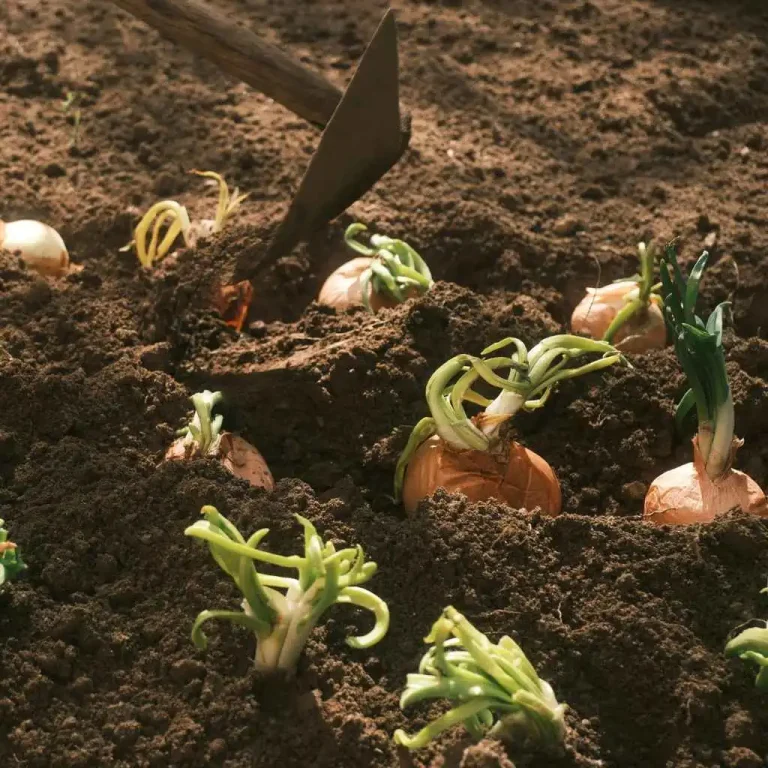
Remove weeds first, then plant at the right depth with the root ball level to the surrounding soil. Seeds need fine soil contact and steady moisture; transplants need a hole wide enough for roots without burying the stem too deeply. Bad depth causes slow starts and transplant shock.
Seeds versus transplants
Direct sow radishes, beans, and many greens where they will grow. Buy transplants for tomatoes, courgettes, and any crop with a long season or slow early growth. Garden Design identifies starting seeds at home as a basic gardening skill, but transplants lower risk when time is short.
- Water the soil lightly before planting.
- Pull weeds and roots from each planting spot.
- Dig a shallow hole or trench sized to the crop.
- Set the root ball so the top sits level with the soil.
- Firm soil gently and water the root ball, not the leaves.
If that didn’t work, try this next: lift the plant, reset the depth, and re-water. A transplant buried too deep or left high above the soil line often stalls, especially in windy or hot weather.
Step 2: water, feed, and mulch on a simple schedule
Water the root zone, not the foliage, so moisture reaches the roots instead of sitting on leaves. Gardeners’ World suggests soaking the rootball every week instead of watering little and often. That approach usually builds deeper roots than frequent light sprinkling.
Compost and mulch without overdoing it
Use finished compost as a top layer around plants and veg patches. Gardeners’ World says compost can be used as mulch around plants and veg patches, and it works best when laid around the base, not packed against stems. Mulch helps hold moisture and suppress weeds.
For beds and borders, a loose layer of straw, shredded leaves, or bark keeps the soil cooler and steadier. Containers dry faster, so they need more frequent watering and feeding than in-ground beds. Gardeners’ World says feeding is generally every fortnight during the growing season, but containers may need closer attention.
Your first-season garden calendar
Use a weekly checklist so the bed stays on course. The plan below keeps the first season simple: prep first, then sow, then thin, then watch for water and pest problems before they spread. Raised beds, containers, and in-ground plots follow the same order, but containers dry out faster and need tighter checks.
| Week | Main task | What to check |
|---|---|---|
| 1 | Map bed, test light, clear weeds, test soil | Sun hours, pH, texture, drainage |
| 2 | Add compost and mulch, mark rows | Bed edges, spacing, labels |
| 3 | Direct sow radishes and beans; plant transplants | Depth, root-ball level, firming |
| 4 | Water deeply and thin seedlings | Wilting, crusting soil, crowding |
| 5 | Check pests and re-mulch bare spots | Aphids, slugs, snails, leaf holes |
| 6 | Harvest first radishes and loose leaves | Overcrowding, pale growth, split roots |
| 7–8 | Stagger sowings and replace weak gaps | Damping off, transplant shock, dry pots |
Warning signs that mean trouble
White, collapsing seedlings near the soil line can suggest damping off, which often happens in wet, crowded conditions. Limp plants with dry soil need a deep soak. Limp plants with wet soil are often overwatered. Newly planted transplants that droop for several days may be under root stress or planted too deeply.
Keep checking for aphids, slugs, and snails. Gardeners’ World warns those are common garden pests. Start with hand-picking, barriers, and removing hiding spots before using any spray. A quick morning and evening look is usually enough in a small first bed.
Common mistakes and how to avoid them
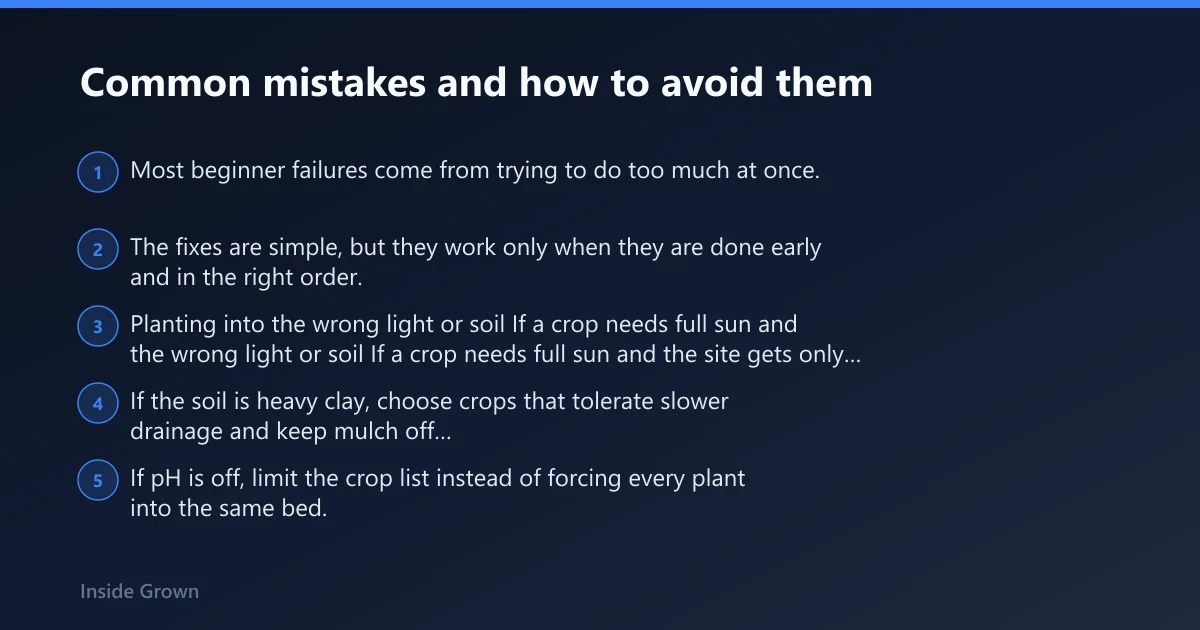
Most beginner failures come from trying to do too much at once. The fixes are simple, but they work only when they are done early and in the right order.
Planting into the wrong light or soil
If a crop needs full sun and the site gets only partial shade, move that crop to containers or switch to greens. If the soil is heavy clay, choose crops that tolerate slower drainage and keep mulch off the stem base. If pH is off, limit the crop list instead of forcing every plant into the same bed.
Watering too often or on foliage
Little-and-often watering keeps roots shallow. Water the base deeply, then wait. On containers, check daily in hot weather because they dry quickly. On beds, stick to the root zone and avoid soaking leaves, which helps prevent fungal problems.
Skipping labels, spacing, and early pest checks
Labels stop mix-ups. Spacing reduces disease. Early checks catch slugs before they chew a row down overnight. If a plant disappears, inspect soil, leaf edges, and the underside of leaves before replacing it.
Prevention: Keep a spare label in each row and review the bed every 2–3 days during the first month. Small, regular checks prevent most first-season losses.
Do I need compost or fertilizer when starting a garden?
Compost is usually the first thing to add because it improves soil structure, moisture holding, and root growth. Fertilizer comes later if plants show they need more food or if containers are depleted. Start with compost and mulch, then feed lightly only after plants are growing well.
Frequently asked questions
How do I start a garden for the first time?
Pick a small area, test the light, clear weeds, and choose a few easy crops that match the site. Garden Design identifies seed starting as a basic skill, but beginners usually do better with a mix of direct-sown radishes and beans plus a few transplants.
What are the easiest vegetables for beginners to grow?
Radishes, lettuce, bush beans, and some herbs are the safest starts because they grow quickly and make problems obvious. If you have strong sun, add cherry tomatoes or courgettes, but only after the basic bed is working and watering is steady.
How often should beginners water plants?
Check the soil every few days and water when the top layer has dried but roots still need moisture. Gardeners’ World suggests soaking the rootball every week rather than watering little and often. Containers usually need water more often than in-ground beds.
When should I plant seeds vs transplants?
Direct sow crops that mature fast or dislike root disturbance, such as radishes and beans. Buy transplants for crops that need a longer season or stronger early growth, like tomatoes and courgettes. That split lowers failure risk and shortens the time to harvest.
How do I know what kind of soil I have?
Use the squeeze or roll test first, then confirm with a soil pH test if possible. Clay feels sticky, sandy falls apart, chalk feels gritty and often alkaline, and loam breaks into crumbs. Gardeners’ World recommends a soil test before choosing plants.
How do I avoid killing plants as a beginner?
Start small, match crops to sun and soil, plant at the right depth, and water the root zone deeply instead of sprinkling the leaves. Check for aphids, slugs, snails, overwatering, and transplant shock every week. Small fixes early are far easier than replacement later.