Gardening tips for raised beds: setup, soil, watering
Use a roughly 12-inch-deep raised bed for many vegetables, and a deeper bed for root crops and longer-season plants; use a balanced mix of topsoil, compost, and aeration material, and water slowly until the top few inches are damp. I see shallow beds fail first. Poor drainage and fast-drying spots near concrete, fences, or walls leave roots stressed, stunted, and underproducing. This guide gives a setup method for bed size, soil blend, drainage, wind exposure, and a watering plan that fits hot, dry conditions.
What a good raised bed needs

The three things that matter most are depth, soil, and water management. If one is off, the bed still works, but it becomes harder to keep productive in summer.
Size and site shape the rest of the build. Sun, wind, reflective walls, and the surface under the bed all change how fast the root zone dries and how often the bed needs attention.
What you’ll need
- Tape measure
- Spirit level
- Drill or screwdriver
- Ground staples or screws for lining
- Wood, blocks, metal, or gabion panels
- Topsoil
- Compost or well-rotted manure
- Sharp sand or other aeration material
- Mulch
- Watering can, hose, or drip kit
According to Gardening tips for raised beds — A raised bed width of 1.5 meters is about right.
What size raised bed is best for beginners?
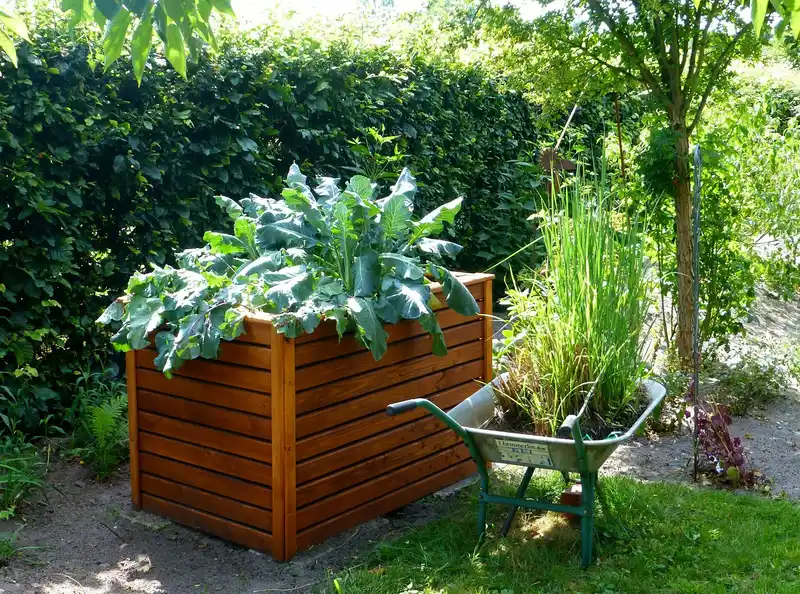
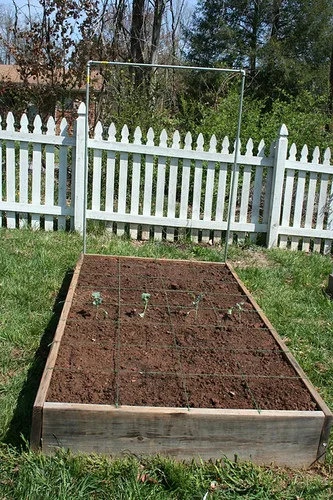
A 4×4 bed is a perfect starting point for beginner gardeners, and a 4×8 bed is also recommended as a beginner size. Keep the width to what can be reached from both sides; 1.5 meters is about right for most people. For vegetables, 12 inches is a practical minimum, while 18 inches suits deeper-rooted crops and longer-season planting.
Comfort matters as much as capacity. A 40-50 cm height is recommended if you want to sit on the edge for weeding, thinning, and harvest work.
Choose depth by crop, not by habit
Most leafy crops, bush beans, and salad roots do well in 12 inches. Carrots, beets, parsnips, and many long-season vegetables are easier in 18 inches because the root zone stays looser for longer. Shrubs, perennials, and bulbs can use different depths depending on species, but they usually need firmer drainage and less constant feeding than annual vegetables.
Use reach as the sizing rule
If a gardener must step into the bed to weed the center, it is too wide. A narrower bed is faster to plant, easier to mulch, and less likely to get compacted. This matters more on hot sites, because compacted soil holds less water at the root.
Which materials should you build with?
Scaffold boards and wooden sleepers are the common timber choices, while breeze blocks, sheet metal, and gabions each solve a different site problem. Treated wood lasts longer against damp soil, but untreated wood is often preferred where food safety or personal preference rules out treatment. Any material works best when it fits the bed’s sun, wind, and maintenance load.
Timber is easiest to cut and fit. Blocks and gabions are heavier, but they cope better with rough ground and exposed sites. Sheet metal is tidy and slim, though it can heat up fast in full sun.
Scaffold boards and wooden sleepers
Scaffold boards are light enough for one or two people to handle, and sleepers give a sturdier, broader wall. The tradeoff is rot resistance versus cost. Untreated wood looks natural, but it needs better drainage and more inspection. Treated wood usually lasts longer, though it should be lined where direct soil contact is a concern.
Breeze blocks, sheet metal, and gabions
Breeze blocks are stable and simple on level ground, especially for permanent beds. Sheet metal resists rot and keeps the footprint slim, but it can cook the edge soil in strong sun. Gabions drain well and suit sloping or stony sites, though the wire baskets need filling and anchoring.
When to line timber and when to leave it open
Line timber if the soil is very wet, if the bed sits on concrete, or if the wood needs protection from direct moisture. Leave it open if drainage is already strong and the bed is set on free-draining ground. A liner should be fixed securely with staples or screws, and it should not block drainage where the bed needs to dry between waterings.
How do you site and drain a raised bed?
Beginners should choose an open, sunny spot with free-draining ground, and most vegetables need 6 to 8 hours of direct sunlight daily. Beds near walls, fences, or in rain shadows dry faster than beds in open ground, while sheltered spots reduce wind stress and slow evaporation. Site choice matters more than most people expect.
Raised beds on concrete or paving need added drainage. On soil, drainage often comes from the ground below; on hard surfaces, it must be built in.
Set the bed before you fill it
- Place the frame where it will get the most sun the crop can tolerate.
- Check whether wind funnels between buildings or fences.
- Level the base so water spreads evenly.
- Add drainage below only when the bed sits on concrete or paving.
- Fit a liner only if the site needs moisture control or timber protection.
Drainage details that matter
On paving or concrete, a layer of rubble, stones, or crocks can help water move away from the base. Geotextile membrane can separate the soil from drainage stone without letting fine soil wash through. Drainage holes are useful in lined or bottom-sealed beds, but they are not automatically needed in beds that sit directly on soil.
A liner can help keep soil in place and protect wood. It can also trap moisture if the bed is already slow to drain. That is the failure case most gardeners miss.
What soil mix is best for raised garden beds?
A practical mix is topsoil, organic matter or well-rotted manure, and sharp sand or another aeration component. Raised beds can be filled with a 3:2:7 mix, or with a garden-friendly blend that keeps structure open while holding enough moisture for vegetables. The right mix depends on crop type and the speed at which the site dries.
Heavier mixes hold nutrients longer. Grittier mixes drain faster and suit bulbs, alpines, and other plants that hate wet feet. A bed near concrete, metal, or a south-facing wall often needs more moisture-holding material than a shaded bed on soil.
Use the mix to match the crop
For mixed vegetables, aim for roughly 60% topsoil, 30% compost, and 10% aeration material. For hungry crops, keep the compost share high enough to feed the bed through the first part of the season, then plan liquid feed top-ups. For alpines and bulbs, switch to a specialist gritty mix so water drains away faster and the crown does not stay wet.
Estimate how much fill you need
A 4×4 bed at 12 inches deep holds about 16 cubic feet. A 4×8 bed at the same depth holds about 32 cubic feet. A simple estimator is length × width × depth, using feet for all three. That number is the amount of mix you should order before you start, because settled beds often need a second top-up.
Fill beds right to the top, then leave for two weeks to settle. Expect the surface to drop as the mix beds in and the organic matter consolidates.
How often should you water a raised bed?
Raised beds can dry out more quickly than topsoil, so they need closer watching during warm spells, wind, and afternoon sun. Watering is best done slowly and deeply rather than with short, frequent splashes. Near fences, walls, or reflective surfaces, expect the bed to dry faster and need more checks.
Drip irrigation is presented as a low-maintenance alternative. Hand watering still works when the bed is small, shaded, or mulched well.
Use a simple watering decision guide
- If the bed gets full sun and afternoon heat, water more often and check the top layer daily.
- If wind hits one side hard, soak that side first because it dries fastest.
- If the bed sits near concrete, paving, a wall, or a fence, expect heat reflection and faster drying.
- If the surface is mulched, reduce frequency and water more deeply.
- If water beads up instead of soaking in, water in short passes until the mix accepts moisture.
When hand watering is enough
Hand watering is usually enough for a small bed, a shaded bed, or a bed with a moisture-retentive mix and a mulch cover. Drip irrigation becomes more useful on exposed sites, larger beds, and beds planted with vegetables that hate repeated stress from dry spells. A soaker hose is cheaper and simpler; a kit gives cleaner routing and easier expansion.
Mulch is the backup plan. It slows evaporation and reduces crusting, especially on beds with a high sand share or a windy exposure.
Proof asset: raised-bed setup worksheet
This worksheet ties sizing, fill volume, mix choice, and watering together. Use it before buying materials so the bed fits both the crop and the site.
| Bed size | Best use | Fill volume at 12 in deep | Notes |
|---|---|---|---|
| 4×4 | Beginner mixed vegetables | 16 cu ft | Easy to reach from both sides; strong starter choice |
| 4×8 | Mixed vegetables or a longer crop run | 32 cu ft | Still manageable if the center is reachable from both sides |
| 1.5 m wide bed | General-purpose layout | Depends on length and depth | Keep access practical; wider beds become hard to manage |
| Use case | Soil mix ratio | Watering note |
|---|---|---|
| Vegetables | 60% topsoil, 30% compost, 10% aeration | Water slowly until the top 6 inches are damp |
| Dry, hot sites | Topsoil-led mix with more moisture-holding organic matter | Use mulch and consider drip irrigation |
| Alpines or bulbs | Specialist gritty mix | Prioritize drainage over fertility |
| Site condition | Watering action | Likely risk |
|---|---|---|
| Full sun | Check more often | Fast drying |
| Wind exposure | Mulch and water deeply | Surface crusting |
| Near wall or fence | Expect extra drying | Heat reflection and rain shadow |
| On concrete or paving | Add drainage | Waterlogging if sealed poorly |
Must-have

These are the pieces that keep the bed functional through summer: the frame, the soil mix, and the watering system. Pick these first, then add extras only if the site needs them.
 Our pickInfinite Cedar · 4′ x 4′ · 1" Thick Western Red Cedar
- 100% natural western red cedar from North America
- Built with unmatched 1-inch thick wood construction
- All boards pre-cut and pre-drilled for easy assembly
Drawback: Heavier and more expensive than typical pine or plastic options$164.00Price as of 30 Sep 2026View on Amazon →As an Amazon Associate we earn from qualifying purchases. Prices and availability are accurate as of the date shown and are subject to change.

- 100% natural western red cedar from North America
- Built with unmatched 1-inch thick wood construction
- All boards pre-cut and pre-drilled for easy assembly
Infinite Cedar Premium Cedar Raised Garden Bed is a strong fit for a compact starter bed. The pre-cut, pre-drilled boards reduce assembly friction, and western red cedar is a sensible choice where timber longevity matters. The drawback is size: a 4′ x 4′ footprint is easy to reach, but it is not the best choice if you want a longer planting run.
Also greatVego · Drip Irrigation Kit · 25ft Tubing- Designed specifically for raised garden beds
- Simple DIY installation with all components included
- Durable, flexible tubing fits various garden layouts
Drawback: Limited 25-foot tubing length restricts larger garden areas$109.95Price as of 30 Sep 2026View on Amazon →As an Amazon Associate we earn from qualifying purchases. Prices and availability are accurate as of the date shown and are subject to change.

- Designed specifically for raised garden beds
- Simple DIY installation with all components included
- Durable, flexible tubing fits various garden layouts
Vego Garden Irrigation Kit suits gardeners who want a built-in watering plan instead of chasing dry spots with a hose. The tubing is made for raised-bed layouts, which makes routing simpler. The drawback is cost and setup time; on a small shaded bed, it can be more system than you need.
Nice-to-have

These items make the bed easier to manage, but they are not mandatory on every site. Add them when the bed sits in full sun, on paving, or in a windy corner.
Budget pickGILMOUR · 50′ Soaker Hose · Recycled Vinyl- Saves up to 80% water during irrigation
- Clog-resistant fabric cover for consistent soaking
- Lightweight and flexible for easy storage
Drawback: Requires connection to a standard garden hose$16.99Price as of 30 Sep 2026View on Amazon →As an Amazon Associate we earn from qualifying purchases. Prices and availability are accurate as of the date shown and are subject to change.

- Saves up to 80% water during irrigation
- Clog-resistant fabric cover for consistent soaking
- Lightweight and flexible for easy storage
Gilmour 50′ Black Flat Weeper Soaker Hose is a straightforward choice for beds that need slow, even watering without a full irrigation kit. The flexible hose is easy to store and suits long runs. The drawback is control: it is less tidy than a purpose-built drip layout, and its placement takes a bit of care.
Pair with itAgfabric · 3x50ft Heavy Non-Woven Weed Barrier- Heavy-duty polypropylene material is tear-proof
- High air permeability allows soil to breathe
- Eco-friendly weed control for raised beds
Drawback: Requires staples or pins to keep securely in place$24.99Price as of 30 Sep 2026View on Amazon →As an Amazon Associate we earn from qualifying purchases. Prices and availability are accurate as of the date shown and are subject to change.

- Heavy-duty polypropylene material is tear-proof
- High air permeability allows soil to breathe
- Eco-friendly weed control for raised beds
Agfabric Weed Barrier Ground Fabric can help separate soil from a base layer or suppress weeds around the bed. The air-permeable fabric is useful where you want the soil to breathe. The drawback is that fabric can become awkward if roots or self-seeded weeds grow through it, and it is not a cure for poor drainage.
Pair with itRngeo · 2-Pack 3-in-1 Soil Moisture Meter- Tests moisture, light, and pH in one tool
- Battery-free operation for simple monitoring
- Compact size suitable for different garden spots
Drawback: Only tests shallow root zones via surface insertion$9.99Price as of 30 Sep 2026View on Amazon →As an Amazon Associate we earn from qualifying purchases. Prices and availability are accurate as of the date shown and are subject to change.

- Tests moisture, light, and pH in one tool
- Battery-free operation for simple monitoring
- Compact size suitable for different garden spots
Rngeo 3-in-1 Soil Moisture Meter is useful for checking whether a hot bed is actually dry below the surface or only crusted on top. The battery-free operation keeps it simple. The drawback is that meters are a guide, not a verdict; they are best used alongside finger checks and visual inspection.
Consumables and spares
These are the fill and feeding items that get used up during setup and across the season. Buy enough to finish the bed, then keep a small reserve for top-ups.
Upgrade pickFoxFarm · 12 Quart · Ocean Forest Potting Soil- Light, aerated texture with aged forest products
- Packed with fish meal and earthworm castings
- Ready to use straight out of the bag
Drawback: Pricey per quart compared to basic bulk soil mixes$26.99Price as of 30 Sep 2026View on Amazon →As an Amazon Associate we earn from qualifying purchases. Prices and availability are accurate as of the date shown and are subject to change.

- Light, aerated texture with aged forest products
- Packed with fish meal and earthworm castings
- Ready to use straight out of the bag
FoxFarm Ocean Forest Potting Soil works well as a bagged starting mix for seedlings, transplants, or top-up pockets in a raised bed. The ready-to-use texture is convenient. The drawback is scale: bagged mix gets expensive fast for full-bed fills, so it is better as a component than as the whole answer.
Budget setups
These example stacks keep the spend tied to the bed’s job. Use the price column as a quick planning check, then swap pieces if your site is sheltered, shaded, or already easy to water.
| Setup | What it includes | Estimated total |
|---|---|---|
| Starter | Cedar bed + bagged soil + soaker hose | $207.98 |
| Mid | Cedar bed + irrigation kit + moisture meter | $283.94 |
| Serious | Cedar bed + irrigation kit + weed barrier + soil top-up bag | $326.94 |
Frequently asked questions
How deep should a raised bed be for vegetables?
Use 12 inches for most vegetables and 18 inches for root crops or long-season plants. If the bed sits on concrete or paving, make sure drainage is handled before filling. A deeper bed helps only when the mix stays open and the root zone does not sit wet for long.
What soil mix is best for raised garden beds?
Use about 60% topsoil, 30% compost or well-rotted manure, and 10% aeration material for most vegetable beds. On dry sites, bias the mix a little toward moisture retention. For bulbs and alpines, switch to a gritty mix that drains faster and stays less wet at the crown.
How often should I water a raised bed?
Water whenever the top layer dries and the bed feels lighter, then soak until the top 6 inches are damp. In full sun, wind, or against reflective surfaces, that may mean checking daily in hot weather. Drip irrigation helps keep the schedule steady.
Do raised beds need drainage holes or a liner?
Only when the bed is lined, bottom-sealed, or sitting on concrete or paving. On soil, the ground underneath often handles drainage well enough. A liner protects timber, but it can also trap moisture if the site is already slow to drain, so use it only when the site needs it.
What size raised bed is best for beginners?
A 4×4 bed is a perfect starting point, and a 4×8 bed is also recommended as a beginner size. Keep the width to what can be reached from both sides. If the center is hard to reach, the bed is too wide for easy maintenance.
How do I keep raised beds from drying out too fast?
Use mulch, choose a moisture-holding soil mix, and place the bed where it gets enough sun without unnecessary wind. Beds near walls, fences, and paving dry faster, so those sites often need drip irrigation or more frequent deep watering. Surface cover matters more than most people expect.