Best Seed Starting Containers: based on specs and reviews
I usually use 2-inch cell trays for many vegetables, 4-inch pots or soil blocks for faster growers and root-sensitive crops, and deeper containers for peas, beans, and anything that dislikes root disturbance. The wrong container wastes mix, dries out fast, and leaves seedlings leggy or stunted. This guide matches container type to crop size, root behavior, watering habits, and transplant risk.
This guide is part of our Planting from seeds: a beginner’s guide series.
Quick comparison
| Product | Badge | Best for | Price | ||
|---|---|---|---|---|---|
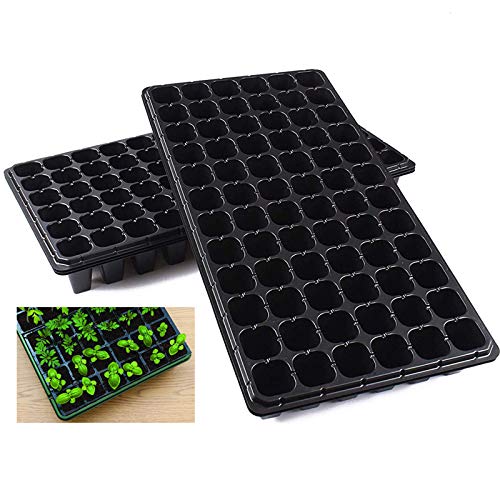 | AIFUSI 10 Pack Seed Starter Kit, 72 Cell Seedling TraysAIFUSI | Budget pick | 10-pack of 72-cell plastic seedling trays | $20.99 Price as of 30 Sep 2026 | View |
 | RimCereal 24 Pcs Coco Coir Seed Starter Pots 4 InchRimCereal | Also great | 24 biodegradable 4-inch coco coir pots | $28.99 Price as of 30 Sep 2026 | View |
 | GROWFRIEND Seed Starter Kit with Grow Lights & Heat Mat –GROWFRIEND | Our pick | 40-cell kit with dual grow lights and heat mat | $32.99 Price as of 30 Sep 2026 | View |
 | KUGAZ Plant Pots, 1 Pack 12 Inch Self Watering Pots withKUGAZ | Pair with it | 12-inch self-watering pot with water indicator | $23.99 Price as of 30 Sep 2026 | View |
The easiest beginner choice is a 40- to 72-cell tray for small-seeded crops that transplant cleanly. The cheapest choice per seedling is often a reused food-safe container or a large cell tray when you are starting many plants at once.
How we chose
The right container is not the same for basil and beans. Basil can start in a tray and move fast, while beans need depth and calm roots. I match the container to crop size, root sensitivity, how fast the mix dries, and how cleanly the seedling leaves the container at transplant time.
Cost matters too. A tray that costs more upfront can still be cheaper per seedling if it is reused for several seasons, while a peat pot may reduce transplant shock but cost more each time.
I also weighed watering control, because damp corners and soggy bottoms are where damping off starts. Containers that hold shape, drain well, and fit a dome or a light stand are easier to manage indoors.
Small nursery pots: best overall for most seedlings
- Biodegradable — plant the whole pot directly
- 4-inch depth supports stronger root development
- Coconut fiber offers good oxygen flow to roots
These 4-inch coco coir pots can fit larger seedlings that need room quickly, especially tomatoes, peppers, basil, and many flowers. The extra depth gives roots more space per seedling, and the open structure can keep the root zone airy while still holding moisture better than a flimsy cup.
They are useful when a crop needs a little more time before transplanting, or when a gardener wants to avoid potting up twice. They also work well for seedling groups that do not like cramped cells.
The tradeoff is watering control. Coir can dry faster at the sides, and a larger pot can stay wet too long if the mix is heavy or the seedling is small. For tiny seeds, this is usually more container than is needed.
Why drainage holes and extra root space matter
Drainage holes keep the mix from sitting waterlogged. That helps prevent damping off and weak stems. In a small nursery pot, the balance is simpler: enough depth for roots to spread, enough drainage to let excess water escape, and enough volume that the mix does not collapse around the stem.
When pots beat trays for transplanting
Pots beat trays when seedlings are likely to stay indoors longer, when the crop resents root crowding, or when the gardener wants fewer transplant steps. They are also better when watering is irregular, because the larger volume buffers brief misses more effectively than a tiny cell.
Seed trays: best for starting lots of small seeds

- 10-pack at a low per-tray price
- Reusable thick plastic construction
- Small 1.8-inch cells suit fine seeds and quick plugs
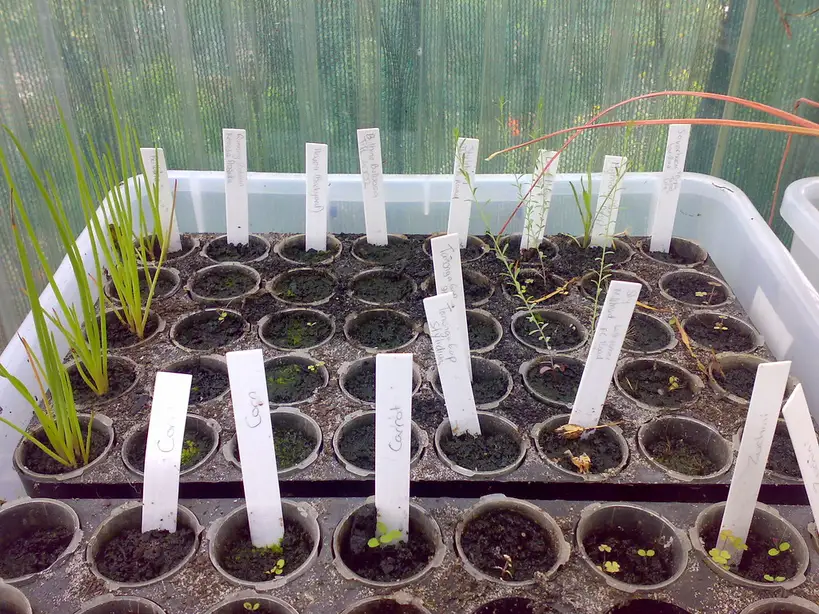
Seed trays are the workhorse choice for mass starting, especially when the crop has small seeds and a clean transplant window. A 72-cell tray with small cells can suit fine seeds, herbs, brassicas, and flowers that do not need a large root zone right away.
They fit neatly under a humidity dome, which helps hold moisture during germination. Once sprouted, the same tray can move under grow lights without taking much bench space.
The drawback is limited root space. Seedlings can dry out quickly, root circle early, or stall if they are left too long before potting up or planting out.
Cell count and module size
More cells mean smaller spaces and less mix per seedling. That is useful for small seeds and big sowing runs. Fewer, larger cells give roots more room and reduce the pressure to transplant early, but they take more space and mix.
Drainage and dome fit
Good trays need drainage holes so excess water can move out after bottom watering. A tray that fits under a humidity dome is easier to manage during germination, but the dome should come off or vent once sprouts appear to lower mold risk and prevent weak growth.
Best crops for tray sowing
Brassicas, basil, lettuce, many flowers, and other small-seeded crops often do well in trays because they tend to germinate densely and transplant cleanly. Trays also suit gardeners starting many plants in a small space, where using separate pots would waste room.
Cell packs and peat pots: best for seedlings that hate root disturbance
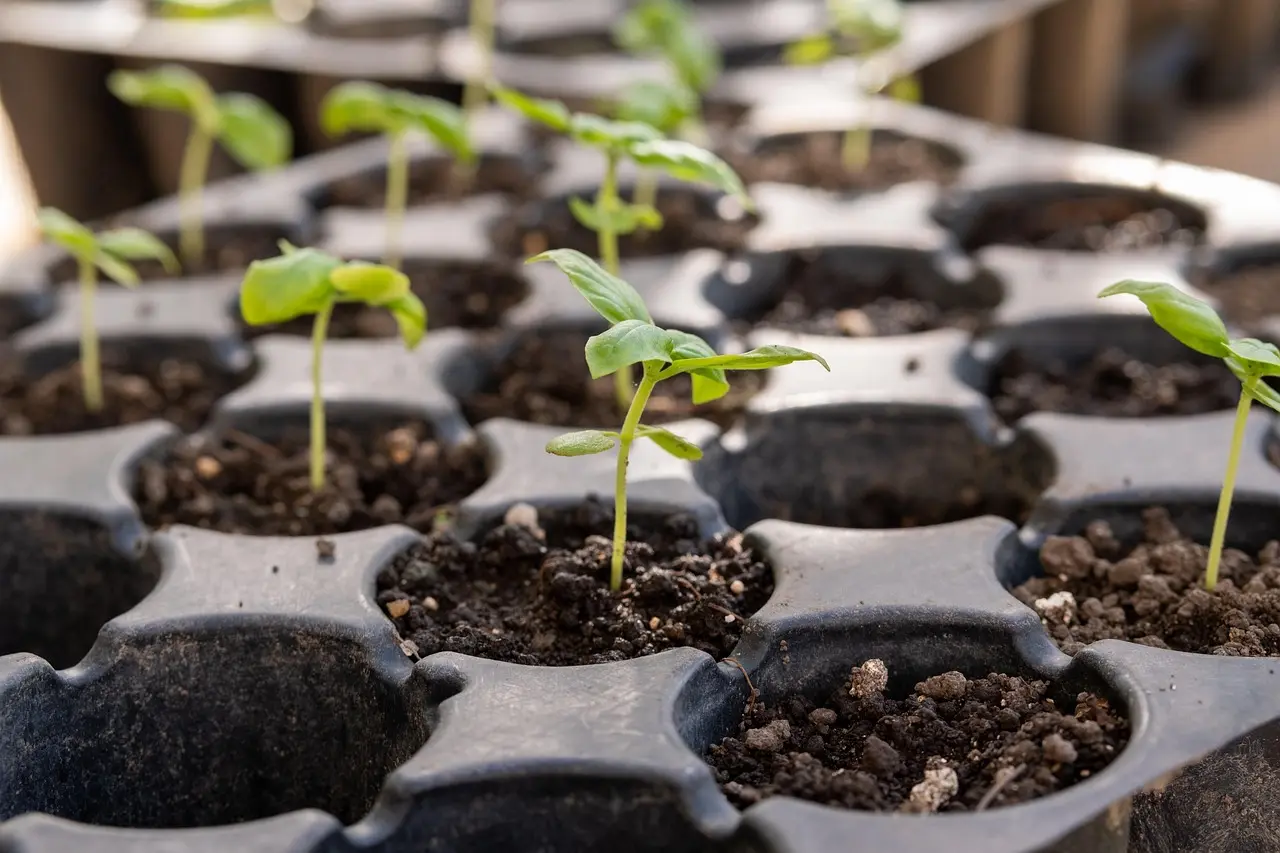
Cell packs and plug trays help when each seedling needs its own slot, because they separate roots from the start and make spacing easier. That is useful for crops that outgrow a flat quickly or need careful transplant timing, such as tomatoes and peppers.
Peat pots add a different advantage: the whole pot can be planted, which can reduce root disturbance at transplant. They can be a reasonable choice for squash, cucumbers, and other crops that resent repeated handling.
The weak point is water management. Peat and coir can hold moisture well, but they can also stay too damp or soften before the seedling is ready, especially if the gardener keeps them saturated. Some peat pots also dry unevenly at the edges.
When individual cells help timing and spacing
Individual cells let seedlings be moved on a crop-by-crop schedule instead of all at once. That helps when one tray holds tomatoes, another holds herbs, and the outdoor planting date is still weeks away. It also reduces root tangling compared with sowing thickly in one pan.
Where peat pots help and where they fail
Peat pots help most when the seedling will be planted soon and the gardener wants to avoid disturbing the root ball. They fail when they stay wet too long, because the sides can soften, the pot can lose shape, and roots may still hit the air before transplant if the pot dries out too fast.
How to time transplanting before roots circle or pots soften
Move seedlings on before roots wrap around the cell walls or press hard against the bottom. For peat pots, transplant while the pot is still firm enough to hold shape but not so early that the roots have barely filled the container. Waiting too long makes removal messy and defeats the point.
Recycled containers: best for low-cost seed starting
- All-in-one kit includes grow lights, heat mat, and humidity dome
- Dual LED full-spectrum lights replace a sunny window
- Heat mat provides consistent bottom warmth for germination
Recycled containers are the cheapest path when they are food-safe, sturdy, and easy to modify. Clean berry clamshells, deli tubs, takeout trays, and similar plastic containers can work well for short-term seed starting if they are sanitized and given drainage.
They are best for gardeners starting a small batch on a budget or experimenting with a crop before buying more supplies. They also help when space is tight and a shallow, custom-sized container fits the shelf better than a standard tray.
The drawback is inconsistency. Some recycled plastics crack, flex, or hold too much water if drainage is poor. Shallow food containers are especially prone to drying out unevenly or collapsing under wet mix.
Which containers are food-safe enough to reuse
Food-safe plastics are the safest starting point because they are already intended for contact with food. Avoid containers that held chemicals, oils, or unknown substances. If the plastic is brittle, badly scratched, or smells off after washing, it should be discarded.
How to clean and sterilize before reuse
Wash containers with soap and hot water first. Then sanitize them before reuse so old soil, algae, and disease spores do not carry over. Dry them fully before filling, because wet residue can dilute the seed-starting mix and keep the bottom too damp.
How to add drainage without ruining the container
Drill or puncture drainage holes in the base and, if needed, a few small side holes near the bottom edge. The goal is drainage without turning the container flimsy. If the plastic flexes too much after puncturing, it is probably too thin for repeated use.
What are the best containers for starting seeds indoors?
The best containers are the ones that match the crop and the watering pattern. For small seeds and mass sowing, trays are usually best. For larger seeds and seedlings that need room, small nursery pots work better. For crops that resent root disturbance, individual cells, plug trays, or peat pots can be worth the extra cost.
That is why blanket advice fails. A lettuce seed does not need the same container as a bean, and a tomato seedling does not want the same moisture pattern as a brassica plug. Container choice should follow the root system, not habit.
Decision matrix: container choice by crop and growing behavior
| Container type | Best crop types | Root sensitivity | Watering difficulty | Cost per seedling | Transplant risk |
|---|---|---|---|---|---|
| Seed trays | Small seeds, herbs, brassicas, flowers | Moderate | Moderate to high | Low | Low to moderate if transplanted on time |
| Small nursery pots | Tomatoes, peppers, basil, larger flowers | Low to moderate | Moderate | Moderate | Low |
| Peat pots | Squash, cucumbers, beans, other disturbance-sensitive crops | Low | Moderate to high | Moderate to high | Low if planted before the pot weakens |
| Cell packs / plug trays | Tomatoes, peppers, brassicas, bedding flowers | Moderate | High | Low to moderate | Moderate if left too long |
| Recycled containers | Mixed starts, extra transplants, short-term test sowings | Variable | Variable | Very low | Variable |
Decision matrix: container choice by cost, reuse, and transplant risk
| Container type | Reuse potential | Sanitation burden | Space efficiency | Best use case |
|---|---|---|---|---|
| Seed trays | High | Low to moderate | High | Starting many seedlings in a small footprint |
| Small nursery pots | High | Moderate | Moderate | Growing larger seedlings before transplant |
| Peat pots | Low | Low | Moderate | Reducing handling for disturbance-sensitive crops |
| Cell packs / plug trays | Moderate | Moderate | High | Managed transplant timing and uniform seedlings |
| Recycled containers | Variable | High | Variable | Low-cost starts when drainage can be controlled |
Which one should you buy
If you want the simplest setup, buy a 40- to 72-cell seed tray and use a fine seed-starting mix. It is the easiest match for herbs, brassicas, lettuce, and many flowers, especially if you have a humidity dome and a grow light nearby.
If you are starting a lot of seedlings, choose the tray kit with the most cells and the best reuse potential. If you want the lowest cost, clean and sanitize food-safe recycled containers and add drainage holes carefully. If you want the least transplant stress, use 4-inch pots for larger seedlings and peat pots only for crops that will be planted out promptly.
If your space is limited, do not buy oversized containers for every crop. Small cells save room under lights, while a few deeper pots can handle tomatoes, peppers, and any seedling that needs more root volume before moving outside.
What do i need to start seeds indoors
The basic setup needs seeds, containers, and soil or potting mix. Helpful extras include plastic, labels, and grow lights. Start with a fine-textured seed-starting mix that drains well but still holds enough moisture for germination. The rest depends on how many seedlings you want and how much light you can provide.
Where to start seeds indoors
Start seeds indoors on a bright shelf, table, or rack where temperature and light are easier to control than on a windowsill alone. After sprouting, seedlings usually need stronger light than a typical indoor window provides, so a grow light placed close to the plants is often the more reliable choice.
Is it best to start seeds indoors
Indoor starting is best when the crop needs a head start, the season is short, or the gardener wants more control over germination. Seeds are often started four to eight weeks before the projected outdoor transplant date, and the timing depends on time to maturity and last frost date.
Do seed starting containers need drainage holes
Yes. Drainage holes are important because soggy mix invites damping off and weak roots. A container can hold moisture and still drain well; it just should not trap standing water. If a container has no holes, add them or use it only as a sleeve around a proper liner.
When should I transplant seedlings out of their containers
Transplant when roots have filled the container but before they circle hard, stall growth, or dry the mix too fast. The exact timing depends on the crop. Tomatoes and peppers can usually wait longer than fast-growing greens, while root-sensitive crops should move before the root mass becomes crowded.
Frequently asked questions
what are the best containers for starting seeds indoors
For most gardeners, 2-inch cell trays are the best all-around choice for small-seeded crops, while 4-inch pots suit larger seedlings that need more root room. Deep containers work best for peas, beans, and other crops that dislike root disturbance. Match the container to the plant, not the shelf space.
should I use seed trays or pots for indoor seed starting
Use seed trays when you are starting many small seedlings, want to save space, or need a humidity dome during germination. Use pots when the crop grows fast, needs more root volume, or is likely to stay indoors longer. Pots are easier to water evenly, but trays are more space efficient.
can I reuse containers for starting seeds indoors
Yes, if the container is food-safe, structurally sound, and sanitized before reuse. Wash with soap and hot water, then clean thoroughly so old soil and disease spores are not carried over. Add or inspect drainage holes before filling. Avoid cracked, brittle, or chemical-contaminated containers.
what size container is best for seedlings
Most seedlings do well in small cells or 2-inch trays at first. Larger seeds and quick-growing crops often do better in 4-inch pots or deeper cells because the roots fill the space faster. The best size is the one that stays moist without becoming waterlogged and gives roots enough room until transplant.
do seed starting containers need drainage holes
Yes. Drainage holes are one of the most important features in any seed-starting container. Without them, water pools at the bottom, roots stay too wet, and damping off becomes more likely. Even recycled containers should be modified so excess water can leave the mix after watering.
when should I transplant seedlings out of their containers
Move seedlings before the roots circle the container or the mix dries out within hours of watering. That timing varies by crop and container size, but the warning signs are the same: crowded roots, slowed growth, and a tray that needs constant watering. Transplant earlier for smaller cells and later for deeper pots.