Seed Starting Basics for Beginners: Tools, Soil, Timing
Buy the main basics first: seed trays, domes or wrap, a light source, a heat mat, labels, and a fine seed-starting mix; in general, sow cool crops a few weeks before last frost, tomatoes a bit earlier, peppers earlier still, and shift later if your room stays cool. Bad soil or poor timing gives weak sprouts, damping off, and leggy seedlings that never catch up. This guide covers the cheapest starter kit, the right mix for each crop, and how indoor temperature changes your sowing schedule.
This guide is part of our Planting from seeds: a beginner’s guide series.
What do beginners need to start seeds indoors?


Use a small kit you can actually run: trays or small containers, seed-starting mix, labels, a gentle watering tool, and light if your window is dim. A heat mat can help warm-season crops, but I would not buy it first if money is tight.
Bare minimum setup
For a first tray, buy cell trays or small pots, one bag of seed-starting mix, plant labels, and a watering method that does not blast seeds out of place. A simple spray bottle works for tiny sowings, while bottom watering works better once seedlings have roots.
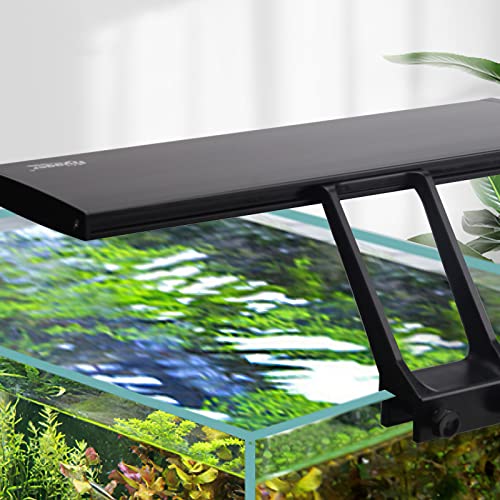
If the room has weak daylight, I’d usually buy a basic grow light before extras like fans, humidity domes, or special inserts. Those can wait. Most beginners miss by buying more gear than they need, then skipping the part that matters most: steady light and careful watering.
Better setup
After the first round, add a heat mat for peppers, eggplant, and other warm crops. A rigid tray under the cells helps with bottom watering and keeps the setup easier to move. A second tray also makes it simpler to separate dry and wet crops.
One roll of labels or plastic plant tags saves confusion later. Seedlings look alike fast. Without labels, it is easy to mix up tomatoes, peppers, basil, and flowers after germination.
Best setup
For many seedlings or a cold room, add a timer for lights, a simple fan, and a shelf that keeps lights close to the canopy. These pieces matter when you want stems that stay firm, not just seeds that sprout. A dome can help early moisture control, but remove it once sprouting begins.
Skip fancy extras if the budget is small or the growing space is cramped. A first setup should be easy to wash, easy to move, and cheap enough to repeat next season.
Which soil is best for starting seeds indoors?
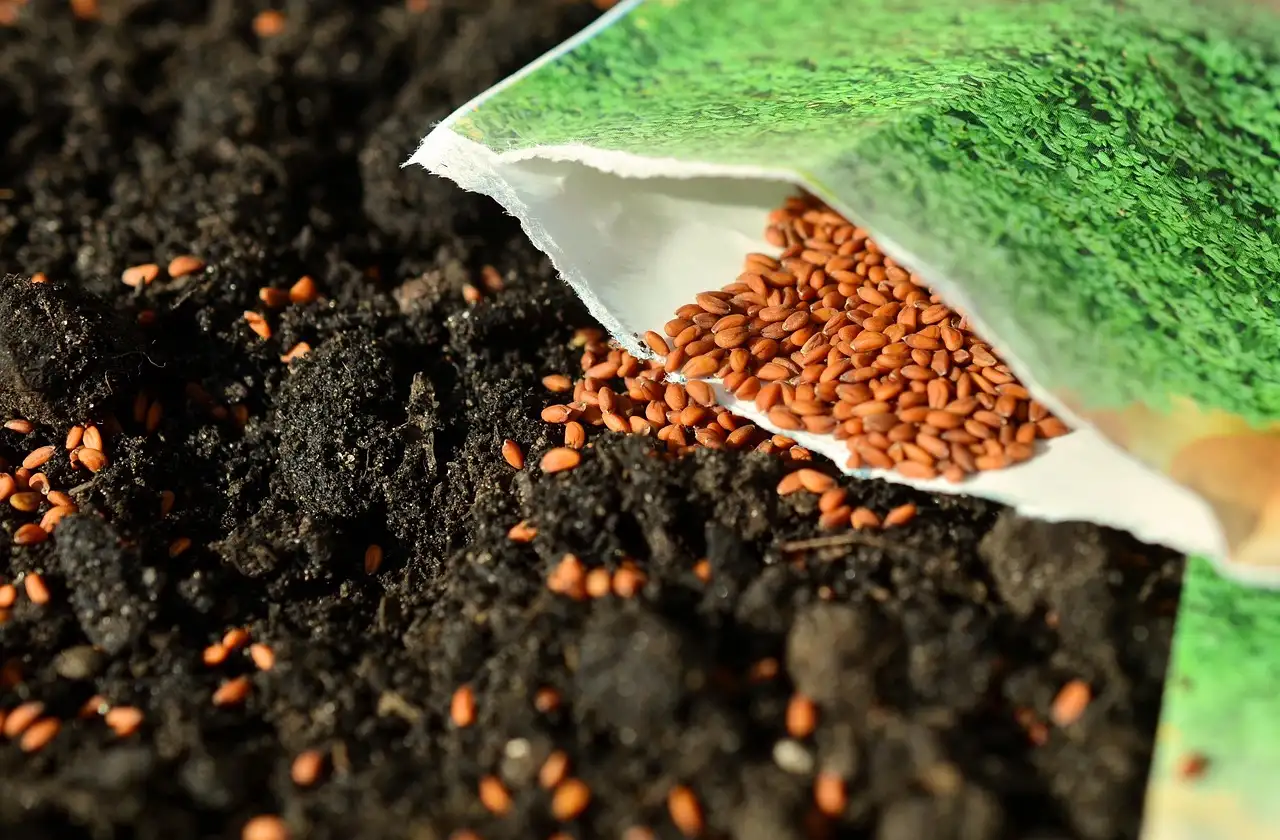
Use a seed-starting mix, not regular garden soil. Seed-starting mix is blended for germination and early seedling growth, and it can be used in trays, cells, blocks, or small pots. Garden soil is usually too coarse, too dense, and too uneven for indoor sowing.
Seed-starting mix versus garden soil
Good seed-starting media have a finer particle size, better drainage, enough water retention, and usually low fertility. That mix keeps tiny roots moist without suffocating them. Standard potting soil often holds more water and contains larger pieces that can slow root development in seed trays.
Some seed-starting mixes contain little fertility, so seedlings may need feeding after true leaves develop. That is normal. Seeds bring enough stored energy to sprout, but they do not carry a crop all the way to transplant size.
What to look for in a mix
When comparing products, check particle size, drainage, water retention, and included nutrients. A mix that dries into a crust is too light on water retention. A mix that stays soggy after watering is too heavy and raises the risk of damping off.
Coco peat is sold as a 700 g brick and can work as part of a starting medium when expanded and blended properly. It holds water well, so it suits growers who forget to water often, but it can stay too wet on its own in a cool room.
When packaged blends make sense
Black Gold Seedling Mix is sold in an 8 qt package, which suits a small first project. Peaceful Valley Quickroot is sold in a 1 cu ft size and also in a 54 cu ft tote, so it can fit a bigger sowing plan. Those sizes matter more than brand names when comparing value and storage space.
Choose the smaller pack if you are learning or sowing only a few trays. Choose the larger bag only if you will use it quickly, store it dry, and seed many cells each season.
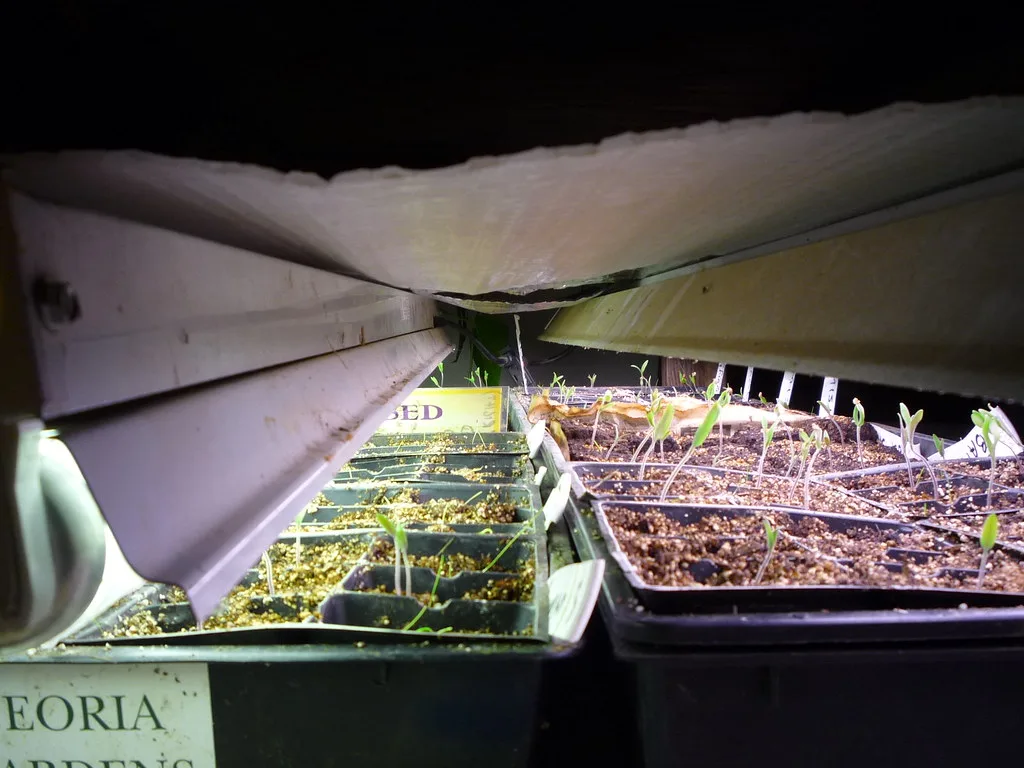
Do you need grow lights to start seeds successfully?
Not always, but low natural light makes grow lights worth buying early. A bright south window can work for a small number of seedlings, yet many homes still end up with leggy plants without supplemental light. The weaker the light, the more seedlings stretch toward the window.
How to tell if window light is enough
If seedlings lean hard, space out quickly, or grow long stems with small leaves, the window is not enough. Tomatoes and peppers are especially unforgiving in dim rooms. They may germinate fine and still become weak in a few days if light is poor.
Low light also slows drying. That matters because wet mix plus weak light is a common path to damping off. The surface stays damp longer, and stems stay soft.
Simple light setup for low-budget growers
A basic LED grow light hung close above the seedlings is usually enough for a beginner setup. Keep the light close enough to limit stretching, and raise it as the plants grow. A timer helps keep the schedule steady, which matters more than running the light sporadically.
If money is tight, buy light before buying heat extras. Warmth helps germination. Light keeps seedlings usable.
How do trays, pots, and blocks compare for beginners?
Cell trays are often the easiest choice for beginners because they group seedlings in one place and make watering and moving simpler. Small pots work well too, especially for larger seeds or for gardeners who do not want to transplant twice. Blocks are useful, but they ask for more technique.
Cell trays and small containers
Trays are the standard first buy because they pair well with seed-starting mix and a watering system. Cells reduce crowding and make it easier to keep each crop labeled. They also save space on a shelf or table.
Small containers are fine when starting a few plants. Deep enough pots help for larger seedlings with stronger roots. For crops like squash or cucumbers, a pot can be easier than a crowded plug tray.
When pots are easier than trays
Pots work better when the gardener waters by hand and wants fewer transplants. They also suit large seeds that do not like root disturbance. Use them when the goal is a small number of sturdy plants rather than a bench full of plugs.
When blocks are worth trying
Blocks can work well for growers who want less plastic and are comfortable keeping moisture even. They are worth trying after a first season, not before. Skip them if the room is dry, the budget is tight, or the watering schedule is irregular.
| Option | Best for | Main advantage | Main drawback |
|---|---|---|---|
| Cell tray | Most beginners | Organized, compact, easy to move | Needs close watering attention |
| Small pot | Large seeds or fewer plants | Simple and familiar | Takes more shelf space |
| Block | Careful growers with steady moisture control | Less plastic use | Less forgiving if watering slips |
| Direct sowing | Crops that dislike root disturbance | No indoor setup needed | Depends on outdoor timing and weather |
How do you time seed starting before the last frost date?
Use the last frost date as the anchor, then count backward by crop type. Cool crops usually start 4–6 weeks before that date, tomatoes 6–8 weeks, and peppers 8–10 weeks. If your room stays below 70°F, warm crops may need a little more time.
Using the last frost date as your anchor
The last frost date is often the main timing mark for indoor starting because it gives a rough guide for when transplants can move outside in your area. It varies by region and crop, so a blanket calendar is a poor substitute for local timing. Count back from that date instead of sowing everything at once.
Crops that grow fast and tolerate cool conditions can wait longer. Warm-season crops need a longer indoor run so they are ready when outdoor conditions improve.
Which seedlings are better direct-sown instead
Beans, peas, carrots, beets, radishes, and many squash family crops are often better direct-sown. They either dislike transplanting or grow fast enough that indoor starting adds little value. Sunflowers and nasturtiums also tend to do better when sown where they will grow.
Start indoors only when the crop benefits from a head start, the season is short, or pests make outdoor germination unreliable. Otherwise, direct sowing saves time and space.
Beginner seed-starting setup checklist
A first setup should buy only what the seedlings will use in the first month: a tray or small pots, seed-starting mix, labels, watering gear, and light if the room is dim. Add a heat mat or fan only when the crop list and room conditions make them useful.
- Bare minimum: seed tray or a few small pots, seed-starting mix, labels, and a gentle watering method. Skip domes and extras if the room is already warm and bright enough.
- Better: add a rigid bottom tray, a basic grow light, and a heat mat for warm crops. Skip large containers if only a few varieties will be started.
- Best: add timer-controlled lights, a shelf, and a small fan for airflow. Skip blocks and special media until watering habits are consistent.
- If light is low: prioritize the light fixture over extra trays. Skip window-only setups for tomatoes and peppers.
- If the budget is tight: start with one flat, one bag of mix, labels, and one light. Skip humidity domes unless the air is very dry.
What happens after germination?
After germination, seedlings need steadier light, careful watering, and only light feeding once true leaves appear. True leaves are the signal that supplemental feeding may begin. Until then, the seed itself carries most of the plant’s food.
When to feed seedlings after true leaves appear
Feed lightly after true leaves develop, especially if the mix contains little fertility. Start weak and watch the response. Too much fertilizer early can burn tender roots or push soft growth that flops over.
Use feeding as support, not rescue. If seedlings are pale and stretched, light is usually the first problem to solve.
How to water without causing damping off
Water the mix, not the stems. Bottom watering is useful once roots are established, because it keeps leaves and crowns drier. Overwatering makes the surface stay wet too long, which invites damping off and weak roots.
Let the top of the mix dry a bit between waterings, but do not let cells collapse or separate from the roots. The goal is even moisture, not saturation.
Transplanting and hardening off
Move seedlings on when roots fill the cell or when growth slows in a tiny container. Before planting outside, harden them off by giving them a few days of outdoor exposure that increases gradually. Sudden sun and wind can damage even healthy starts.
If the seedlings were grown in low light, give them extra time and better light before transplanting. Weak starts do not recover quickly outside.
Frequently asked questions
What tools do I need for seed starting as a beginner?
Start with trays or small pots, seed-starting mix, labels, and a gentle watering method. Add a grow light if your window is weak. A heat mat is optional unless you are starting warm-season crops in a cool room. Keep the first setup small and easy to maintain.
What soil is best for starting seeds indoors?
Use seed-starting mix, not garden soil. It has finer particle size, better drainage, and enough water retention for tiny roots. Many mixes have little fertility, so feeding may begin only after true leaves appear. Coco peat and packaged blends can work if moisture is managed well.
When should I start seeds indoors before the last frost?
Count backward from your last frost date. Cool crops often start 4–6 weeks before that date, tomatoes 6–8 weeks, and peppers 8–10 weeks. Warm rooms speed germination, while cool rooms slow it. Match the calendar to the crop, not just the month.
Do I need grow lights to start seeds successfully?
Only if natural light is weak or uneven. A bright window can handle a few seedlings, but many homes produce leggy plants without supplemental light. Grow lights help keep stems short and firm, which matters most for tomatoes, peppers, and other long-season crops.
Can I start seeds in pots instead of trays?
Yes. Small pots work well for larger seeds, fewer plants, or crops that dislike transplanting. Trays are better for space and organization, but pots can be easier when you want simpler watering and fewer moves before planting outside.
What is the difference between seed-starting mix and potting soil?
Seed-starting mix is lighter, finer, and built for germination and early growth. Potting soil usually holds more moisture and has larger particles. That can be useful later, but it is often too dense for small seeds and can slow root growth in indoor trays.
What seedlings are best for direct sowing versus indoor starting?
Direct sow beans, peas, carrots, beets, radishes, and many squash family crops when conditions allow. Start indoors for tomatoes, peppers, eggplant, and slow-growing flowers that need a long head start. Direct sowing is simpler for crops that dislike root disturbance.