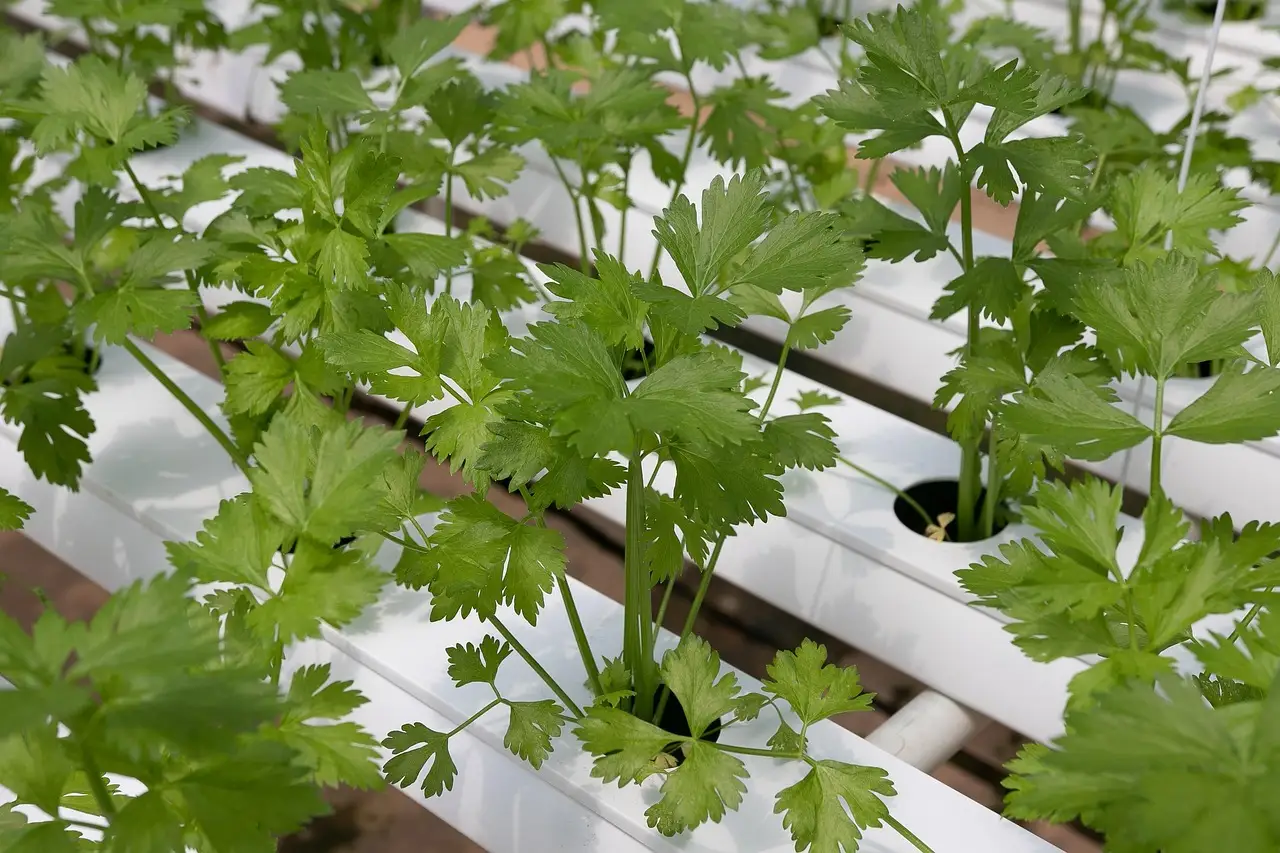
How to Plant Seeds in a Hydroponic Setup
Start seeds in hydroponics by matching the starter medium to the system. Use rockwool, plugs, or foam cubes for most setups, and direct-seed only if the seed zone stays evenly moist. Weak starts lead to poor roots, damping off, and wasted nutrients before the first true leaf opens. This guide shows how to choose the right method for raft, drip, wick, NFT, and DWC systems, then avoid the early mistakes that stop germination.
What you’ll need
- Reservoir with clean water to start
- Net pots sized for your system
- Starter plugs or another grow medium such as rockwool, coconut coir, perlite, or peat moss
- Seeds suited to the crop and setup
- Air pump, air stone, and tubing for oxygenation where the system uses a reservoir
- Grow lights if you do not have strong natural light
- Dilute hydroponic nutrient solution, or plain water at the start for some setups
- pH meter or test strips
Can you start seeds in hydroponics?
Yes. You can start seeds in hydroponics either by direct sowing into a consistently moist medium or by pre-germinating in starter plugs and moving the seedlings later. The safer option for most beginners is a plug or cube because it gives better control over moisture, oxygen, and spacing before roots enter the system.
Direct sowing versus starter plugs
Direct sowing works best in systems that keep the seed zone evenly moist, such as some wick or drip setups. Starter plugs fit most other beginner systems because they hold moisture without burying the seed in soggy water. That balance matters: seeds need moisture to sprout, but they also need air around the embryo.
Say your basil seeds are going into a small NFT setup. Starter plugs cut the risk that the seed sits too wet in the channel before roots form. By contrast, a lettuce seed in a wick bed can often handle direct sowing if the top of the medium stays damp, not flooded.
How do you plant seeds in a hydroponic system?
Begin by choosing the system method first, then match the medium to it. For most beginners, that means moist starter plugs in net pots, with the reservoir set to the right height for the system. Keep the medium evenly moist during germination, not saturated. Use plain water at first for many setups, and move seedlings once roots are established and the plug holds together.
- Match the system to the crop.
- Pick the starter method. Use plugs for DWC, NFT, drip, and most raft systems. Cloner-style systems are primarily for cuttings, so use them for seeds only if your setup is specifically designed to keep seed starters supported, moist, and well aerated.
- Gather the parts. You need a reservoir, net pots, starter medium, seeds, and a light source if windows are not enough. Clean water is fine at the start for many crops.
- Pre-moisten the medium.
- Soak and drain the plugs. Moisten starter plugs or grow media before sowing, then let excess water drip off. Rockwool should be pre-soaked and pH-conditioned before use. The goal is damp and airy, not dripping wet.
- Check pH before sowing. Plain water should stay slightly acidic rather than near neutral for many seed-starting setups. If you mix nutrients, aim for about 5 to 6.5 so seedlings can take up what they need.
- Sow the seeds.
- Place the seeds. Put two to three seeds in each starter plug when the seed is small or the packet has average germination. For larger seeds or reliable seed lots, use fewer seeds to reduce thinning later.
- Cover lightly. Use a thin layer of the same medium to stabilize the seed. Do not pack it down hard, because that cuts air exchange and can slow sprouting.
- Set the water line.
- Set reservoir height. In DWC and similar setups, fill the reservoir to just under where the net pots sit. In one common basket setup, water should touch the bottom of the grow pot at first, then sit lower as roots lengthen.
- Recheck after setup. If the plug stays glossy or waterlogged, lower the level. If it dries between checks, raise it by about 1 to 2 cm and check again after a few hours.
- Add oxygen and light.
- Run the air system. Connect the air pump to the air stone and tubing so bubbles move through the reservoir. Disc-shaped and bar-shaped air stones both work, and the point is steady oxygen at the root zone.
- Place the lights close. Use grow lights when sunlight is weak or absent. Keep coverage even across the tray so seedlings do not lean toward one side. Set the light at the distance that gives bright, even coverage without heat stress, and keep it on long enough each day for steady seedling growth.
- Wait for roots before transplanting.
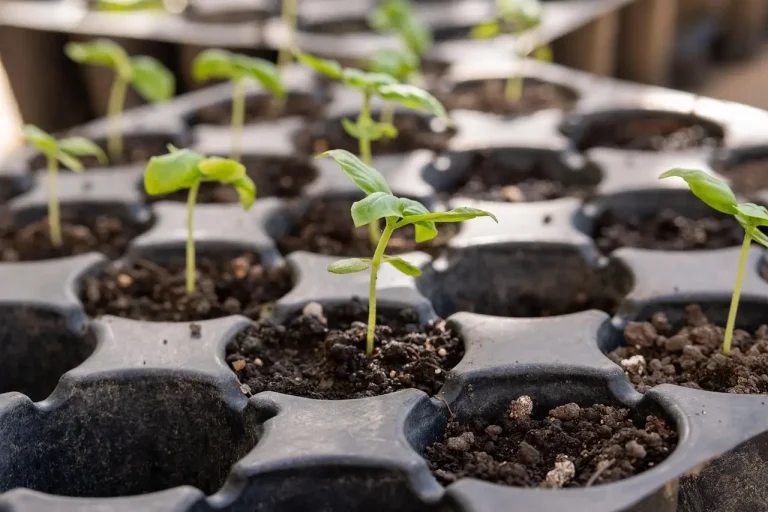
- Watch for sprouting. Keep the medium evenly moist during germination, not saturated. Transplant timing depends on the crop, the number of true leaves, root length, and whether the plug still holds together.
- Move only established starts. Transplant after roots show through the plug or basket. Remove weaker seedlings after germination so the strongest plant gets the space and light.
Do hydroponic seeds need an air pump?
Not every setup needs one at the seed stage, but reservoir systems do better with oxygenation. An air pump connected to an air stone and tubing helps prevent weak roots in DWC-style reservoirs and improves root health after sprouting. In wick or tray starts, oxygen comes more from the medium, so the pump matters less until roots reach the reservoir.
When oxygen matters most
Seeds can sprout in a moist plug without bubbles, but roots fail faster in stagnant water. That is why DWC and similar constant-reservoir systems benefit from air from the start, while starter plugs in a propagation tray can often begin with only clean water and a stable environment.
Suppose a plug sits in a tray with the bottom constantly soaked and no air movement. The seed may sprout, then stall because the root zone stays too wet. Add airflow and lower the water line so the plug stays damp instead of submerged.
When should you transplant hydroponic seedlings?
Move seedlings when the crop is ready, not just when the calendar says so. A common window is about 2 to 3 weeks after germination, but the better cue is visible root growth, a sturdy stem, and a plug that holds together. Crop type, true leaves, root length, and plug integrity matter more than a fixed timeline.
What to look for before moving them
- Roots reaching through the starter plug or basket
- At least one healthy true leaf set for most crops
- A plug that holds together when lifted
- No signs of damping off at the stem base
Seeds table
This decision table maps common system types to the seed-starting method that usually fits best, the reservoir contact to aim for, the starter medium, and the main failure risk to watch first.
| System type | Best seed-starting approach | Ideal reservoir water contact | Recommended starter medium | Top failure risk |
|---|---|---|---|---|
| DWC | Start in starter plugs inside net pots, then lower the water line as roots grow | Just under the net pots | Rockwool or pre-soaked plug | Oversaturation and weak roots if the plug stays wet |
| Kratky | Pre-germinate in plugs and place into the basket after sprouting | Initial water can reach the bottom of the grow pot, then drop as roots extend | Rockwool, coconut coir, or peat-based plug | Algae and waterlogging from excess surface moisture |
| NFT | Start in plugs or cubes, then transplant once roots are visible | Very light contact at the root zone only | Small rockwool cube or foam-style starter | Dry-out before roots touch the film |
| Drip | Start in plugs or a loose medium, then transplant to the pot | Usually below the top of the medium; drippers wet it on a schedule | Rockwool, coconut coir, or perlite blend | Uneven germination if the drip pattern misses the seed zone |
| Wick | Direct sow or start in a plug if the medium stays evenly moist | Wick-fed moisture from below, not full saturation | Peat moss blend or coconut coir | Slow moisture delivery and weak emergence |
| Cloner | Use starter plugs inside the cloner collar or net pot opening | Moist, bubbled zone below the collar, not deep submersion | Pre-soaked plug | Damping off from wet collars and poor airflow |
Why the method changes by system
DWC and cloner-style setups can flood the root zone if the water line is too high, so the seed zone must stay damp rather than submerged. NFT gives roots moving solution, not standing water, so plugs need to hold moisture long enough for roots to reach the channel. Wick systems are the most forgiving for direct sowing, but they still fail if the top dries out before emergence.
Common mistakes
- Overwetting the medium. Keep plugs moist, not saturated. Too much water blocks oxygen and invites damping off.
- Skipping pH checks. Use slightly acidic water for plain-water starts and about 5 to 6.5 when nutrients are mixed in. A poor pH can stall uptake even when moisture looks right.
- Using strong nutrients too early. Start with tap water only in many cases, or a very dilute nutrient solution after sprouting. Strong mixes can burn undeveloped seed tissues.
- Ignoring light coverage. If light is weak or uneven, seedlings stretch and lean. Keep the lamp close enough for even coverage without heat stress.
- Leaving too many seedlings per plug. Two to three seeds per plug works for many small seeds, but you still need to remove weaker sprouts after germination.
- Letting the seedling area stay too humid and still. Keep air moving gently, avoid stagnant moisture around the stem base, and hold temperatures steady while seedlings emerge.
A common first-timer mistake is setting a DWC reservoir high enough that the net pots sit in standing water. The plug stays dark and wet, then the stem base softens. Lower the water line so the bottom only just touches the pot zone, and let the roots seek moisture downward.
What seeds are best to start in hydroponics?
Small, fast-germinating crops are the easiest place to begin, especially leafy greens, herbs, and other plants that transplant well from plugs. Bigger seeds can work too, but they usually need more spacing and a firmer medium. Choose crops that fit the system size and root space, not just the seed packet.
Must-have
 Also greatVentana Plant Science · 50 pack · pH balanced · pre-moistened
- Ready to use right out of the bag
- pH balanced with nutrients and beneficial fungi
- Fits standard propagation trays
Drawback: 50-pack size may be more than you need$22.63Price as of 20 Nov 2026View on Amazon →As an Amazon Associate we earn from qualifying purchases. Prices and availability are accurate as of the date shown and are subject to change

- Ready to use right out of the bag
- pH balanced with nutrients and beneficial fungi
- Fits standard propagation trays
Also greatCHTASO · 100 pcs · 2 inch · slotted mesh- Holes in bottom and sides help roots absorb water and nutrients
- Made of UV-resistant, non-toxic plastic
- Reusable for hydroponics and aquaponics
Drawback: 2-inch size may not match every hydroponic insert or tray$16.00Price as of 20 Nov 2026View on Amazon →As an Amazon Associate we earn from qualifying purchases. Prices and availability are accurate as of the date shown and are subject to change

- Holes in bottom and sides help roots absorb water and nutrients
- Made of UV-resistant, non-toxic plastic
- Reusable for hydroponics and aquaponics
Upgrade pickVIVOSUN · 10" x 20.75" · warming mat · indoor growing- Maintains optimal temperatures for seed starting and cuttings
- Provides stable, uniform heat
- Suitable for standard 1020 trays
Drawback: Heat mat only; no tray or controller included$11.39Price as of 20 Nov 2026View on Amazon →As an Amazon Associate we earn from qualifying purchases. Prices and availability are accurate as of the date shown and are subject to change

- Maintains optimal temperatures for seed starting and cuttings
- Provides stable, uniform heat
- Suitable for standard 1020 trays
Nice-to-have
Our pickWindspeed · 120 pcs · 1 inch cubes · starter kit- Includes rockwool cubes, net cups, tags, and tweezers
- Rockwool cubes offer good water absorption and breathability
- Includes pieces for starting and transplanting
Drawback: Multiple pieces are included; check the kit contents before buying$14.69Price as of 20 Nov 2026View on Amazon →As an Amazon Associate we earn from qualifying purchases. Prices and availability are accurate as of the date shown and are subject to change

- Includes rockwool cubes, net cups, tags, and tweezers
- Rockwool cubes offer good water absorption and breathability
- Includes pieces for starting and transplanting
Pair with itSeewaazee · 79 pcs · grow pods kit · for Aerogarden- Includes sponges, baskets, domes, labels, and a tweezer
- Works with all hydroponic growing system brands
- Made from natural, biodegradable peat
Drawback: Designed around round seed pods; check compatibility with your system$7.39Price as of 20 Nov 2026View on Amazon →As an Amazon Associate we earn from qualifying purchases. Prices and availability are accurate as of the date shown and are subject to change

- Includes sponges, baskets, domes, labels, and a tweezer
- Works with all hydroponic growing system brands
- Made from natural, biodegradable peat
Consumables and spares
These items are the pieces you replace, top up, or keep on hand once a seed-starting routine is running.
- Extra starter plugs for reseeding weak spots
- Clean water for topping up reservoirs
- Dilute nutrient solution for seedlings after sprouting
- Replacement air tubing and spare air stone
- pH test strips or meter solution
- Labels for tracking varieties and germination dates
The key point is simple: hydroponic seed starting is cleaner than soil starting, but the setup still fails fast if water, air, and light are off by a little. Match the medium to the system, keep the plug moist rather than soaked, and move seedlings only after roots have formed.
Frequently asked questions
How many seeds should I put in each starter plug?
Use two to three seeds per plug for many small seeds, then thin to the strongest seedling after germination. For larger seeds, drop to one or two. If the packet shows a low germination rate, the extra seed gives you a backup without changing the transplant step.
Do I need nutrients when starting hydroponic seeds?
Not always. Plain water is acceptable at the start in many setups, and tap water can work initially. Once nutrients are mixed in, keep the solution dilute for seedlings and watch the pH range closely, since strong feed can damage undeveloped roots before they establish.
What growing medium should I use for hydroponic seeds?
Rockwool, coconut coir, perlite, and peat moss are all common choices. Pick the medium that holds moisture without packing tight, and pre-moisten it before sowing. For more control, starter plugs are easier for beginners than loose media in an open tray.
How do you grow seeds in a hydroponic system?
Place seeds in a moist starter medium, keep them evenly damp, give them steady light, and set the reservoir so the seed zone does not flood. Once roots show, transplant the seedlings into the system and continue with a weak nutrient solution appropriate for the crop.
When do I transplant hydroponic seedlings into the system?
Move seedlings after sprouting and once roots are visible or the plug holds together well. A common guide places that window at two to three weeks with proper light and nutrients. If more than one seed germinates per plug, keep the strongest plant and remove the rest.