How to Start Seeds in Paper Towels for a Head Start
Start seeds in paper towels by placing them between damp towels at about 70–80°F, checking daily, and moving them to soil as soon as the radicle is about 1/4 to 1/2 inch long. Wait too long, and roots grow into the towel or curl, which can slow seedlings or damage them during transplant. This guide covers which seeds benefit, how to set up the towel method, when to stop, and how to pot sprouts safely.
Why paper towel germination works

- Maintains warm germination temperatures
- Includes a digital thermostat
- Two-pack for multiple trays
Paper towel germination gives seeds steady moisture and warmth in a compact setup, so you can spot sprouting before you commit a cell or garden bed. It suits seeds that sprout quickly and handle movement at the sprout stage. It is less useful for seeds that dislike root disturbance or need to stay buried where they are sown.
When this method is worth using
Use it when you want fast feedback on seed viability, quicker sprouting for warm-season crops, or tighter control over moisture and temperature. Indoor seed starting gives you control over light, temperature, and moisture, and high germination results are one of the main benefits of sowing indoors.
When direct sowing is the better choice
Skip the towel for crops that resent transplanting, need to stay undisturbed, or need constant moisture in a fine seed-starting mix from the start. Seeds that need a lot of moisture are not suitable for paper-based rolls, and some seedlings are better left in place rather than moved after the radicle appears.
What you’ll need
- Plain paper towels, white if possible, so you can see roots easily.
- A sealable baggie or shallow container with a lid to hold humidity.
- Water in a spray bottle or clean cup for dampening the towels.
- Seed packets with sowing depth, temperature, and light instructions.
- A warm location, ideally around 70–80°F for many fast sprouters.
- A seed-starting mix that is fine-textured and soil-less for potting up.
- Small pots, cell trays, or toilet paper roll starters for the next stage.
- A grow light if the seedlings need strong indoor light after sprouting.
- A heat mat if the crop wants extra warmth, especially warm-season seeds.
Which seeds should you start this way?
Choose seeds that sprout quickly, make a visible radicle, and can be moved soon after germination. Tomatoes, cucumbers, many peppers, brassicas, and other common warm-season crops can work, but the fit depends on how fast they sprout and how well they handle transplanting. Always check the packet first.
Seeds that usually respond well
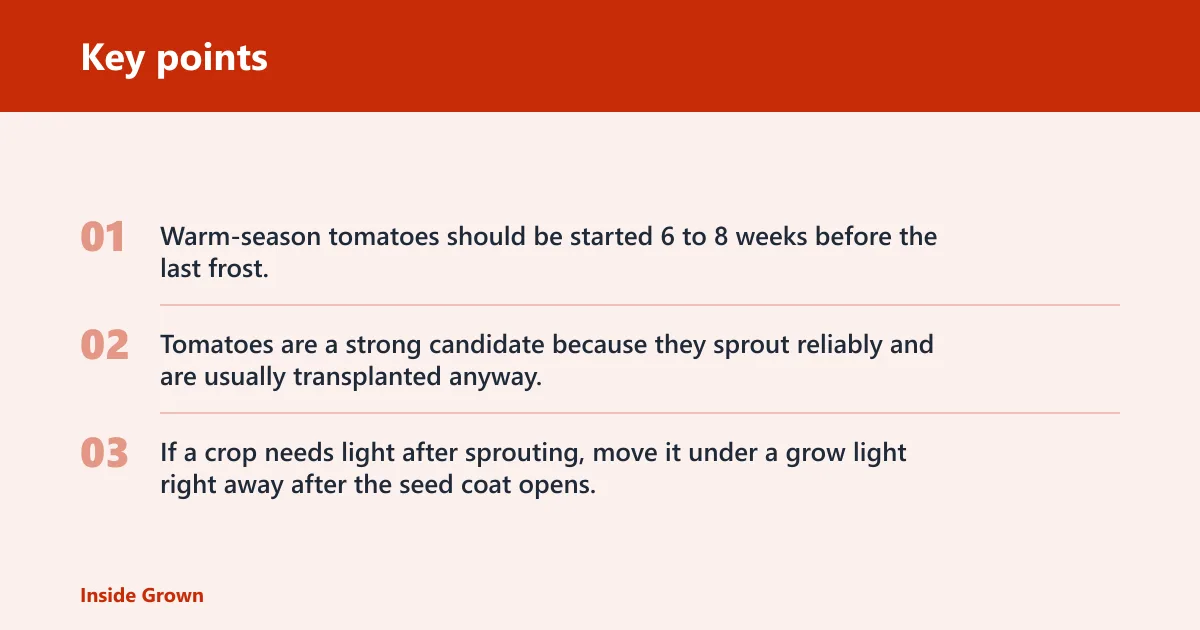
Paper towels suit seeds that germinate in a few days to a couple of weeks and do not need deep burial to trigger sprouting. Warm-season tomatoes should be started 6 to 8 weeks before the last frost. Cucumbers need only 3 to 6 weeks of lead time before planting, so they benefit more from a quick start than from long storage in a towel.
Seeds that are a poor fit
Avoid paper towels for seeds that hate root disturbance, seeds that want to stay warm and evenly moist in mix from day one, and very fine seeds that are hard to handle once wet. If the packet says to sow very shallowly, keep in darkness, or transplant with caution, direct sowing or plug trays may be safer.
Tomato seeds and other common warm-season crops
Tomatoes are a strong candidate because they sprout reliably and are usually transplanted anyway. They still need the packet’s sowing depth, temperature, and timing before the last frost. If a crop needs light after sprouting, move it under a grow light right away after the seed coat opens.
How to germinate seeds in paper towels
Moisten the towel, place the seeds between layers, seal in humidity, and keep the setup warm until the radicle appears. The towel should be damp, not soaking wet. Check daily for drying or mold, because both can stop germination or damage the seed before you can pot it.
Moisten the towel. Wet it fully, then wring it out so it feels damp but does not drip. Too much water cuts oxygen around the seed and encourages mold.
Lay out the seeds. Spread seeds on one half of the towel with space between them, then fold the towel over. Keep seeds in a single layer so roots do not tangle at the start.
Seal in humidity. Slide the towel into a baggie or lidded container. Leave a little air space, then place it in a warm spot that stays near 70–80°F when possible.
Check daily. Open the setup once a day to look for drying, mold, and the first root tip. If the towel starts to dry, mist it lightly. If it is wet enough to leave puddles, remove excess water and reset.
Pot as soon as roots appear. Move each sprout when the radicle is 1/4 to 1/2 inch long. That window is short, because roots can grow into the fibers or curl if you wait.
Say your cucumber seed cracks open on day 3 and the root reaches 3/8 inch by day 4. Move it then, not the next weekend. The root is still short enough to lift cleanly, which lowers transplant shock.
Do seeds need light or heat?
Many seeds need warmth more than light to germinate, but the need changes after sprouting. A warm spot can be enough for germination, a heat mat can help warm-weather crops in cool rooms, and a grow light becomes important once the seedling needs light for even growth indoors.
When a warm spot is enough
Put the setup in a warm room, on top of a refrigerator, or anywhere the temperature stays steady and above the crop’s lower range. If the packet says darkness is preferred, keep the towel covered until the root appears. Do not place it in direct sun, which can overheat the baggie and dry the towel.
When to add a heat mat
A heat mat is optional, but useful for seeds that sprout better with bottom heat. Warm-weather plants may need a heat mat if temperatures dip below 60°F. Set the mat under the tray or container, and keep the towel from sitting in standing water.
When to move sprouts under a grow light
Move seedlings under a grow light once they are planted in mix if they need strong indoor light after sprouting. Seed-starting setups often include grow lights for steady, even light. Keep the light close enough to prevent stretching, while still leaving room for the leaves to open fully.
When should you move sprouts?
Move sprouts as soon as the radicle is visible and before it grows long enough to anchor into the towel. A short root lifts cleanly; a long root tears easily. This timing matters most for seeds that send out a thin, delicate first root and for seedlings that dislike transplant shock.
How to move seedlings without tearing roots
Prepare pots or cells first, then open the towel gently and lift each seed with tweezers or by the towel edge, not by the root. If the root has begun to curve, free it with water and patience instead of tugging. Any tear at this stage can slow growth for days.
What to plant them into next
Use a fine, soil-less seed-starting mix that is lightly moist, not soggy. Set the sprout root-down and cover it according to the seed packet’s depth rules, then firm the mix gently. For zero-waste starts, toilet paper roll sections can work if the crop does not need high moisture.
Suppose a tomato radicle is already 1 inch long and starting to bend around the towel fibers. Pot it immediately into moist seed-starting mix and water gently from the edge. Waiting longer raises the chance of root damage and makes the seedling harder to position straight.
Common mistakes
The most common problems are too much water, too little checking, and waiting too long to pot up. Mold can spread quickly in a closed baggie if the towel stays wet, and roots can grow into the fibers before the gardener notices. Dry towels stall germination just as fast.
- Towel too wet. Wring it out harder and reopen the baggie for a few minutes.
- Towel drying out. Add a light mist, then recheck in a few hours.
- No sprout after several days. Check packet temperature, depth, and whether the seed is one that should be direct-sown instead.
- Mold on towel or seed. Discard the moldy starter pots with seeds and soil if contamination has spread. Moldy starter pots should be disposed of with seeds and soil.
- Leggy seedlings after potting. Move them under a grow light sooner and keep the fixture close enough for even growth.
A common first-timer mistake is leaving pepper seeds in a warm bag for days after the root shows. The root can curl into the towel and break during removal, which is avoidable if the sprout is moved as soon as it opens.
Paper towel germination table
| Seed type | Expected germination speed | Paper towel suitability | Moisture risk | Transfer timing | Common failure mode |
|---|---|---|---|---|---|
| Tomato | Fast, often within days | Good | Medium | At 1/4 to 1/2 inch radicle | Root curls into fibers |
| Cucumber | Fast | Good for a short hold | Medium | Very soon after root appears | Overlong root breaks |
| Pepper | Slower | Fair if checked closely | Medium | As soon as the radicle is visible | Waiting too long |
| Lettuce | Fast | Fair to good | Low to medium | At first root emergence | Drying out |
| Beans | Fast | Usually unnecessary | Medium | If used, move immediately | Root damage during transfer |
| Carrot | Slower | Poor fit | High | Not recommended | Poor transplant tolerance |
Toilet paper roll starters
Toilet paper rolls can work as a related zero-waste starter container when the crop does not need high moisture. Cut each roll into four to five-inch sections, then cut four slits at the base, each about one to one and a half inches, so the bottom opens slightly in the tray. Fill with seed-starting mix and water lightly.
These holders are best for seeds that can move on without much root disturbance. They are not a good substitute for high-moisture setups, and they should not stay saturated. If the mix stays wet, the cardboard softens and mold risk rises.
Frequently asked questions
How do you germinate seeds in paper towels?
Place seeds between damp, not soaking wet, paper towels, seal them in a baggie or container, and keep them warm. Check daily and move each sprout to seed-starting mix as soon as the radicle is 1/4 to 1/2 inch long. That keeps roots from growing into the towel.
How long does it take for seeds to sprout in paper towels?
Timing depends on the crop, temperature, and seed age. Fast seeds can show roots in a few days, while slower warm-season crops take longer. A warm location and steady moisture shorten the wait, but the packet’s sowing guidance still sets the real timetable.
Which seeds can you start in a paper towel?
Fast sprouters and seeds that tolerate early handling are the best fit. Tomatoes and cucumbers are common choices, while seeds that dislike root disturbance or need very steady moisture are usually better in mix or direct-sown. The seed packet should guide the final choice.
Do seeds need light or heat while germinating in paper towels?
Most seeds need warmth before light, and some need darkness until they sprout. A heat mat can help warm-weather crops if the room is cool. Once the seedling is potted and needs light, place it under a grow light for even indoor growth.
How wet should the paper towel be for seed germination?
It should be evenly damp, with no dripping water and no puddles in the baggie or container. If water squeezes out, it is too wet. If the towel starts to dry and feel crisp in spots, mist it lightly and check again later the same day.
When should you move sprouted seeds out of a paper towel?
Move them when the radicle is 1/4 to 1/2 inch long, or sooner if the root starts to curve. That is the safest point because the root has emerged but has not yet grown deeply into the towel. Delay increases the chance of tearing.
What is the best way to transplant seeds started in paper towels?
Prepare a small pot of lightly moist, soil-less seed-starting mix, then move the seed gently with the root facing down. Cover according to the packet’s depth instructions and water lightly. If the crop needs strong indoor light, place it under a grow light right away.