How to Keep Seed Trays Warm for Better Germination
Keep seed trays at the crop’s target root-zone temperature, usually about 65–75°F for cool-season crops and about 70–85°F for warm-season crops. Use a heat mat only when the tray base sits below that range. Too little bottom heat slows sprouting and can make germination uneven; too much can dry the mix and stress seedlings. Check the tray base, not the room air, then choose a mat, dome, insulation, or no extra heat at all.
What you’ll need

- Seed trays with drainage holes
- Fine-textured, sterile seed starting mix
- Seedling heat mat sized to the tray footprint
- Thermostat controller for the heat mat
- Humidity dome with vents
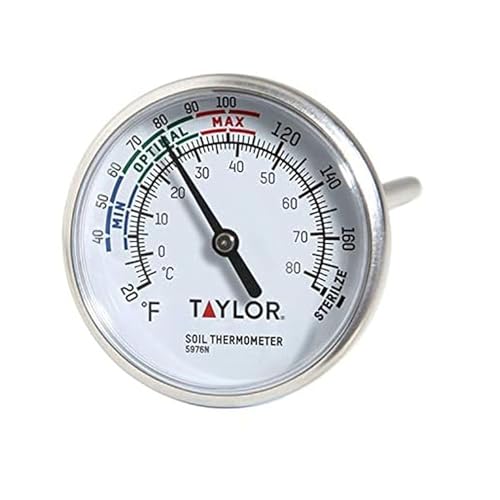
- Thermometer for checking tray temperature
- Foam board, wood, or another barrier for cold floors and windowsills
- Bright grow light for after sprouting
- Bottom-watering tray or shallow pan
How do you actually keep seed trays warm for germination?
Start by measuring the tray base and matching heat to the crop’s root-zone target, not the air around the trays. A heat mat under the tray, a thermostat controller, and simple insulation from cold surfaces usually solve the problem. If the room already stays warm enough, no extra heat may be needed.
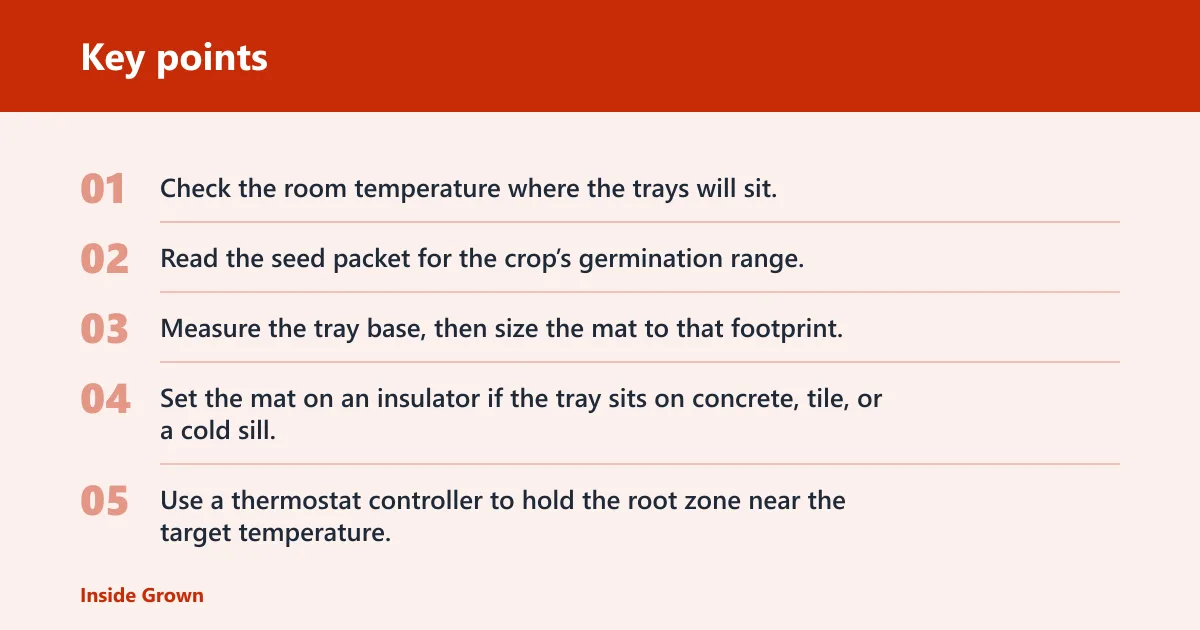
- Check the room temperature where the trays will sit.
- Read the seed packet for the crop’s germination range.
- Measure the tray base, then size the mat to that footprint.
- Set the mat on an insulator if the tray sits on concrete, tile, or a cold sill.
- Use a thermostat controller to hold the root zone near the target temperature.
- Keep the mix evenly moist with bottom watering, not waterlogged.
Why root-zone temperature matters more than air temperature
Seeds respond to warmth where the roots form, so the tray base matters more than the room air. A room can feel mild and still leave the mix cold overnight, especially on a basement floor or a windowsill over glass. That lag slows germination and can widen the spread between first and last sprouts.
When extra heat helps and when it does not
Cold rooms, cool basements, and trays on uninsulated surfaces usually benefit from bottom heat. Warm rooms often do not. If the tray base already stays within the crop’s range, add insulation before you add a mat. That keeps the setup simpler and lowers the chance of overheating seeds that prefer cooler conditions.
Do you actually need bottom heat?
Use room temperature as the first filter, then compare the crop’s germination range to the tray base. If the tray base is already in range, skip the mat. If the base is 5°F or more below the target, add heat or insulation. In many rooms, the decision is that simple.
| Room temperature | Crop type | Tray location | Risk of overheating | Recommended setup |
|---|---|---|---|---|
| 60–65°F | Warm-season tomatoes, peppers, basil | Basement floor or cool shelf | Low if thermostatically controlled | Heat mat plus thermostat controller |
| 65–70°F | Most cool-season crops | Insulated shelf | Medium if covered too tightly | Insulation first, mat only if tray base is below target |
| 70–75°F | Many lettuce, brassica, and herb seeds | Indoor shelf away from drafts | Medium to high for heat-sensitive seeds | No heat for many crops; vent dome and monitor moisture |
| 75–80°F | Heat-loving crops already near target | Warm room or sunny interior spot | High for cool-season crops | Usually no mat; use airflow and moisture control instead |
Common germination temperature ranges by crop group
| Crop group | Common germination range | Notes |
|---|---|---|
| Cool-season greens | 60–70°F | Often sprout well near the lower end |
| Brassicas | 65–75°F | Many do well around 70°F |
| Tomatoes | 70–80°F | Usually quick and even in the mid-70s |
| Peppers | 80–85°F | Often slower below the upper 70s |
| Basil and other warm herbs | 70–85°F | Heat-sensitive if held too cool for too long |
A common first-timer mistake is putting lettuce on a mat set for peppers. The lettuce sits at the wrong temperature and either germinates slowly or stalls. If a lettuce tray sits on a 78°F mat in a warm room, lower the setpoint to about 65–70°F, or skip the mat and use insulation only.
Can you use a warm windowsill instead?
A warm windowsill can work if the sill stays inside the crop’s germination range day and night. It often fails when the glass cools sharply after sunset or when direct sun drives the tray too hot at midday. Insulation helps, but a sill is still less stable than a thermostatted mat.
When a sunny sill helps and when it overheats trays
If the sill is bright, draft-free, and insulated from cold glass, it can support germination for crops that like moderate warmth. The risk rises with dark pots, tight domes, and southern exposure in direct sun. A covered tray can heat fast, then cool just as quickly after the sun moves.
How cold glass and nighttime drops slow germination
Cold glass pulls heat out of the tray base. Even a room that reads 70°F can leave the mix cooler overnight if the tray sits on a chilled sill. That drop matters most for seeds that want steady warmth, such as peppers and basil. A foam board under the tray reduces that heat loss.
Should seed trays stay warm after seeds sprout?
No. Once most seedlings have emerged, reduce or remove bottom heat and move the tray into bright light. Seedlings need a close light source to prevent stretching, and continuing strong bottom heat can dry the mix faster than the roots can use it. Vent the dome early, then remove it.
When to reduce or remove bottom heat
Use emergence as the trigger, not a fixed number of days. If most seeds have cracked the surface and cotyledons are opening, reduce the mat setpoint or shut it off. Leave a few late seeds on warmth only if the crop benefits from it and the tray is not drying out.
Why seedlings need bright light close to the canopy
Heat no longer helps much once sprouts are visible. Light does. Place grow lights close enough to keep seedlings compact, then adjust as they grow. If the lights sit too far away, seedlings stretch fast, especially after the mat comes off and the tray cools.
How long should seed trays stay on heat?
Keep the mat on only through germination, then reassess after emergence. For many crops that means several days to two weeks, depending on species and freshness. The right stopping point is when most seeds in that tray have emerged and the seedlings are ready for bright light, not when the first sprout appears.
How do you heat seed trays without overheating them?
Use a thermostat controller, size the mat to the tray footprint, and raise the tray off cold surfaces with foam board or wood. Then verify the temperature at the tray base. If the root zone runs above the crop’s range, lower the setpoint in 2°F steps and recheck after the mix stabilizes.
- Place the heat mat under the full tray footprint.
- Set the probe where roots sit, in the middle of the mix.
- Choose the crop’s target range on the thermostat controller.
- Wait for the tray base to stabilize before sowing another batch.
- If the mix runs warm, lower the setpoint by about 2°F and recheck after about 30 to 60 minutes.
- Keep the dome vented once sprouts appear.
Seeds do need warmth to germinate, but they also need oxygen and steady moisture. Keep the mix moist, not soggy. A wet, dense mix chills unevenly and can invite damping-off conditions, especially under a closed dome.
How to keep soil warm overnight
Overnight heat loss usually comes from cold floors, glass, or drafty air. Put the tray on foam board, wood, or another insulator, then let the thermostat hold the mat’s setpoint through the night. If the room swings a lot, a controller does more than a bare mat can.
Common mistakes
These errors slow germination more often than the seed itself. Fix the cause in order, starting with temperature, then moisture, then airflow.
- Using a mat without a thermostat: Set a controller to the crop’s range and probe the tray base.
- Keeping the mix soggy: Bottom-water until evenly moist, then drain excess water.
- Leaving the dome closed too long: Vent early and remove it once seedlings emerge.
- Placing trays on a cold surface: Add foam board, wood, or another insulator first.
- Ignoring crop-specific limits: Check the packet, especially for heat-sensitive seeds.
Say your pepper tray sits in a 62°F basement on bare concrete. The room is cool, the surface is colder, and the tray base may never reach the needed range. Add a sized heat mat plus a thermostat controller, then lift the tray onto foam board so the mat is not fighting the floor.
Prevention: Label each tray with crop and target range before sowing. That keeps mixed batches from getting the same heat setting by default.
Frequently asked questions
How warm should seed trays be for better germination?
Most crops germinate best when the tray base stays near the packet’s range, often around 65–75°F for cool-season seeds and 70–85°F for warm-season seeds. Check the mix temperature, not the air, and set the mat or insulation to match that range.
Do I need a heating mat for seed trays?
Only if the tray base stays below the crop’s range. Warm rooms, insulated shelves, and bright indoor spots may be enough for many seeds. Cool basements, garages, and cold windowsills usually benefit from a mat and controller.
Can I use a warm windowsill instead of a heat mat?
Yes, if the sill stays within the crop’s range day and night. Add foam board under the tray and watch for midday spikes and nighttime drops. Glass and direct sun can make the temperature swing more than a mat with a controller.
How do I keep soil in seed trays warm overnight?
Put the tray on foam board or wood, use a thermostat controller, and avoid direct contact with cold concrete or glass. If the room temperature swings a lot, the controller keeps the root zone steadier than ambient room heat alone.