What Seeds Can You Still Plant After the Frost Risk Passes?
After frost risk passes, you can still sow fast crops like bush beans, cucumbers, squash, beets, radishes, lettuce, spinach, carrots, and annual herbs; warm-soil crops wait until soil is 60°F+; long-season crops may no longer pay off. Plant the wrong seeds late, and you lose weeks of growth, get thin stands, and miss harvests before heat or cold returns. This guide sorts seeds into plant now, wait for warm soil, and skip this season.
What frost risk really means
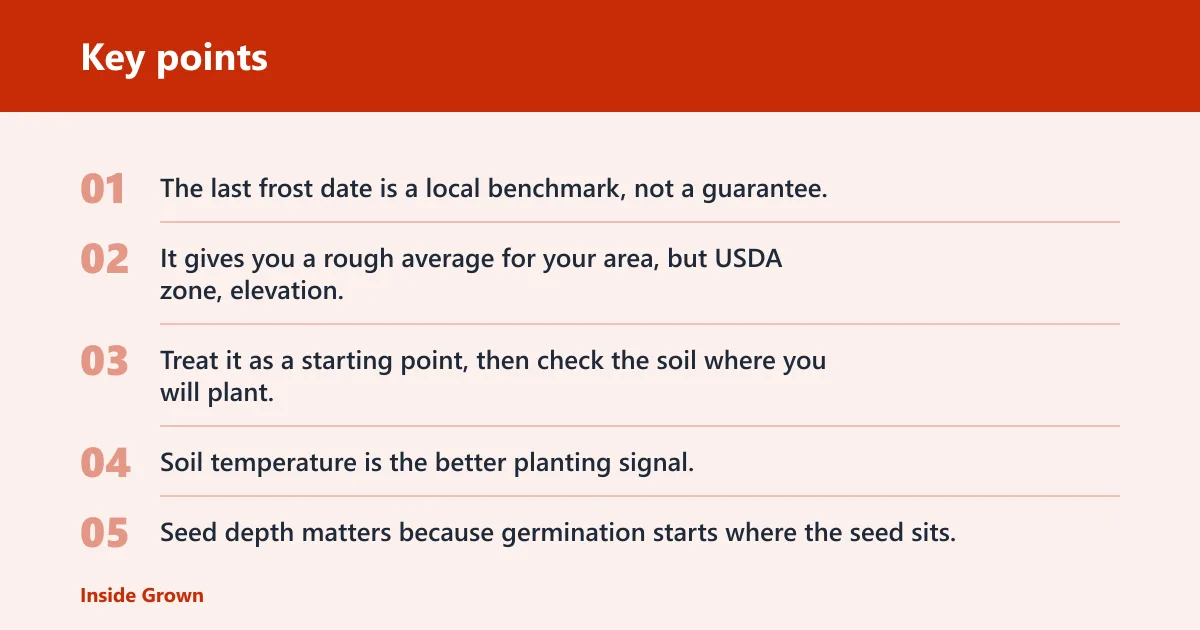


The last frost date is a local benchmark, not a guarantee. It gives you a rough average for your area, but USDA zone, elevation, and yard-level microclimate can move planting time forward or back by days or even weeks. Treat it as a starting point, then check the soil where you will plant.
Soil temperature is the better planting signal. Seed depth matters because germination starts where the seed sits, not at the weather station. A cool-season crop may sprout in cool soil and keep growing through chilly nights, while a warm-season crop can stall, rot, or emerge unevenly in the same bed.
Why local weather changes the answer
A sheltered bed beside a south-facing wall warms sooner than a low spot that collects cold air. Raised beds and containers also lose winter chill faster than native ground. That means two gardens on the same street can have different planting windows even when their last frost date is identical.
Why soil temperature beats the calendar
For many seeds, the real question is whether the soil is workable and warm enough for steady germination. Beans, cucumbers, squash, and corn need warm soil to move quickly. Lettuce, radish, spinach, and carrots tolerate cooler conditions and are often worth direct sowing soon after frost risk passes.
Seeds you can still plant now

After frost risk passes, the best late-start seeds are usually quick cool-season crops and fast warm-season crops with short maturity times. Direct sowing is the main path for many of them, especially if the crop dislikes root disturbance. Choose varieties with the shortest days to harvest when the season is already moving.
Fast cool-season crops
Lettuce, radish, spinach, carrots, beets, and many annual herbs still make sense after frost if the soil can be worked. These crops tolerate cool nights and often germinate well in spring soil that would be too cold for heat-loving vegetables. They are also good candidates for succession sowing.
Warm-season crops that can still work
Beans, cucumbers, squash, and corn can be planted after frost risk passes, but only if the soil has warmed enough for quick germination. These crops are less forgiving in cold ground. If the soil stays cool, seeds may sit, rot, or emerge so slowly that pests and disease catch up.
Late flowers worth direct sowing
Annual flowers with short maturity can still pay off, especially if you want color later in summer. Direct-sown zinnias, cosmos, calendula, and nasturtiums are common choices once frost danger is gone. Flower packets still matter here, because packet dates and sowing depth vary by cultivar.
| Crop type | Minimum soil/air conditions | Plant now / wait / skip | Days to harvest | Likely success in cool / average / hot spring |
|---|---|---|---|---|
| Radish | Soil 40°F to 50°F; cool nights okay | Plant now | 25 to 35 | Cool: high / Average: high / Hot: low |
| Lettuce | Soil 45°F to 65°F; light shade helps in heat | Plant now | 30 to 60 | Cool: high / Average: high / Hot: medium |
| Spinach | Soil 40°F to 60°F; cool air preferred | Plant now | 35 to 50 | Cool: high / Average: medium / Hot: low |
| Carrot | Soil 45°F to 75°F; fine, firm seedbed | Plant now | 55 to 80 | Cool: medium / Average: high / Hot: medium |
| Beet | Soil 50°F to 85°F; even moisture | Plant now | 50 to 70 | Cool: medium / Average: high / Hot: medium |
| Bush bean | Soil 60°F+; frost-free air | Plant now if warm; otherwise wait | 50 to 70 | Cool: low / Average: high / Hot: high |
| Cucumber | Soil 70°F preferred; warm nights help | Wait if soil is still cool | 50 to 70 | Cool: low / Average: medium / Hot: high |
| Squash | Soil 70°F preferred; strong growth needs warmth | Wait if soil is still cool | 45 to 60 | Cool: low / Average: medium / Hot: high |
| Corn | Soil 60°F to 65°F+; uniform warmth helps | Wait if soil is cool | 60 to 100 | Cool: low / Average: medium / Hot: high |
| Zinnia | Soil 60°F+; frost-free nights | Plant now if warm; otherwise wait | 60 to 75 | Cool: medium / Average: high / Hot: high |
Which seeds need warmer soil first?
Beans, cucumbers, squash, and corn need warmer soil before sowing outside. If the seedbed is still cold, the seed may absorb water slowly, then stall or decay before it sprouts. For these crops, a warm calendar date is less useful than a soil reading at seed depth.
What cold soil does to germination
Cold soil slows metabolic activity inside the seed. That delay can mean patchy stands, weak seedlings, or outright failure. A bean planted into chilly ground may sit for days, while a cucumber seed may rot before emergence. That is why warm-season crops often fail even after the frost date has passed.
When to wait instead of sowing
Wait if the soil is below the crop’s preferred range, the forecast still includes cold nights, or the bed stays wet and heavy after watering. A common first-timer mistake is sowing squash into cool, soggy ground because the frost date is past. The seed is safe from frost, but not from rot.
How to judge days to harvest
Seed packet days to harvest is one of the best late-planting tools you have. It tells you whether a crop can still finish before summer heat, pest pressure, or the first fall frost. If the maturity window is too long, the seed may be safe to plant but not worth the bed space.
Reading maturity ranges on the packet
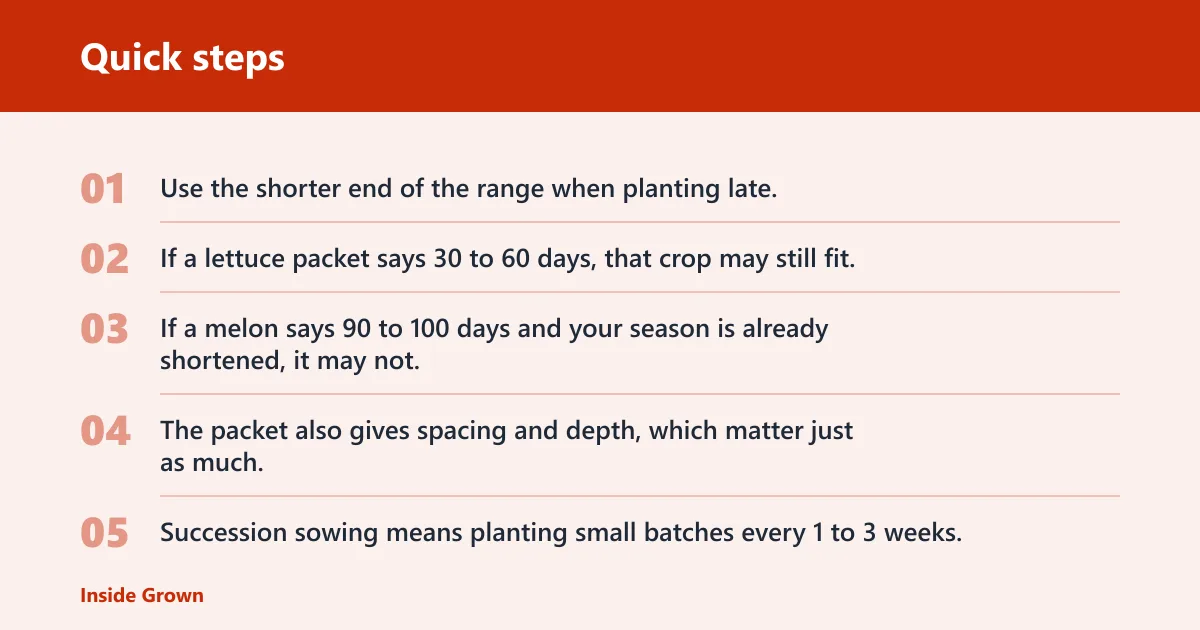
Use the shorter end of the range when planting late. If a lettuce packet says 30 to 60 days, that crop may still fit. If a melon says 90 to 100 days and your season is already shortened, it may not. The packet also gives spacing and depth, which matter just as much.
Using succession sowing
Succession sowing means planting small batches every 1 to 3 weeks. It extends the harvest window for fast crops like lettuce, radish, beans, and cilantro. That approach is especially useful after frost risk passes, because not every row needs to be planted on the same day.
Suppose a garden bed has room for three rows of lettuce. Plant one row now, another in 10 days, and the last after that. If heat arrives early, the first row may bolt sooner, but the later rows can still give fresh leaves when the first planting is fading.
Direct sowing or starting indoors?
Direct sowing is usually the better choice for fast-germinating vegetables after frost, especially when the soil is workable and the crop resents transplant shock. Start indoors only when the crop needs a long season, demands warmth to germinate, or benefits from an earlier head start than the outdoor bed can provide.
When direct sowing is better
Radish, beans, carrots, beets, corn, cucumbers, and squash are common direct-sow crops. Direct sowing avoids root disturbance and puts the seed where it will finish. It also works well when soil is warm enough for quick sprouting and when you want to reduce transplant shock.
When to start indoors instead
If the crop needs a long growing season and the outdoor window is already short, starting indoors can still make sense. That is more useful for slow annual flowers and long-season vegetables than for quick crops like radish or lettuce. For these, transplanting often adds stress without much payoff.
How seed depth affects emergence
A common rule of thumb is to plant seeds about 2 to 3 times their thickness. Tiny seeds need shallower placement, because burying them too deep slows emergence or prevents it altogether. If a packet gives a depth range, follow the packet before any general rule.
How do microclimates change timing?
Microclimates can move your planting date more than the calendar suggests. Raised beds, containers, and south-facing walls warm faster. Low spots and frost pockets stay colder longer. That difference matters for whether a seed should be planted now, held for a week, or skipped until the next window.
Raised beds and containers
Raised beds drain and warm sooner than ground-level plots, so they often become plantable first. Containers can warm even faster, but they also dry out quickly. If you sow there, water consistently after planting so the top inch does not dry out before germination.
Sheltered walls and south-facing beds
A south-facing bed near a wall may be ready before the rest of the yard. That extra heat can help beans, cucumbers, and squash get moving once the soil is warm enough. The same sheltered spot may also dry faster, so check moisture at seed depth rather than only at the surface.
Cold pockets and low spots
Low areas collect cold air and can stay frosty after nearby beds are safe. If seedlings repeatedly fail there, shift the most temperature-sensitive crops to a warmer location or delay sowing. Lettuce and radish may tolerate the spot; cucumbers and squash often do not.
Planting checklist
Use this quick check before you sow. It keeps late planting practical and cuts down on avoidable failures.
- Check the last frost date for your area, then adjust for your USDA zone and yard microclimate.
- Measure soil temperature at seed depth, not just air temperature.
- Match the crop to the right category: cool-season now, warm-season only if the soil is warm enough.
- Read the packet for days to harvest, spacing, and planting depth.
- Choose varieties with shorter days to harvest if the season is already short.
- Water consistently after sowing so the seed zone stays evenly moist.
- Stagger fast crops every 1 to 3 weeks if you want a longer harvest.
Frequently asked questions
What seeds can I still plant after the frost risk passes?
You can still plant many quick crops after frost risk passes, especially radishes, lettuce, spinach, carrots, beets, bush beans, cucumbers, squash, corn, and annual herbs. The key is whether the soil is warm enough for that crop and whether days to harvest still fit your season.
Is it too late to plant seeds after the last frost date?
Not usually. The last frost date is a benchmark, not a cutoff. It may be too late for long-season crops that need many warm weeks to finish, but many quick vegetables and flowers still fit if you choose faster varieties and plant directly in workable soil.
Which vegetables grow best when planted directly after frost?
Radish, lettuce, spinach, carrots, beets, bush beans, cucumbers, squash, and corn are common direct-sow choices after frost. The best fit depends on soil temperature. Cool-season crops handle the transition sooner, while warm-season crops need soil that has warmed enough to prevent rot and slow germination.
Can I still start flower seeds after the last frost?
Yes, many annual flowers can still be direct sown after the last frost, especially zinnias, cosmos, calendula, and nasturtiums. Shorter-day flowers are the safer bet if the season is already moving fast. Follow the packet for depth and spacing, then keep the seedbed evenly moist.
How warm does the soil need to be before planting seeds outside?
It depends on the crop. Cool-season seeds often germinate in soil around 40°F to 60°F, while warm-season crops like beans, cucumbers, squash, and corn usually need about 60°F or warmer soil, and around 70°F can be even better for some. A soil thermometer gives a better answer than the calendar.
What should I do if I missed my ideal planting window?
Shift to faster varieties, direct sow the crops that still fit, and skip the ones that no longer have time to mature. If the soil is still cold, wait rather than forcing warm-season seeds into it. For quick crops, succession sowing can still create a usable harvest window.