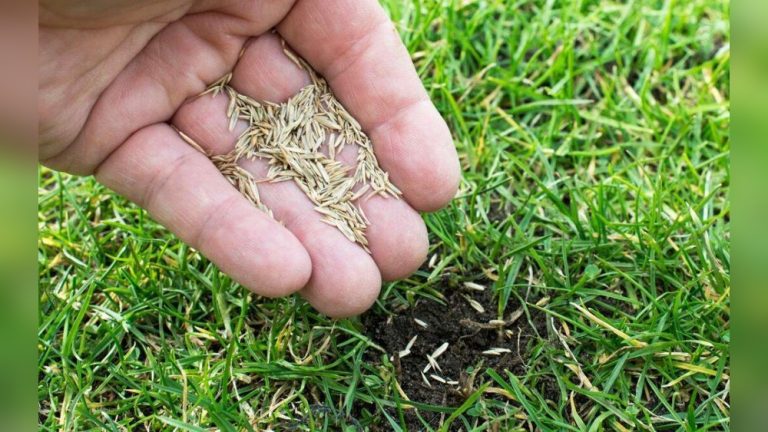
How to Direct Sow Cool-Season Crop Seeds
Direct sow cool-season crops when soil is workable and at least about 40°F. Sow hardy types about 4 to 6 weeks before the last frost date, and wait for about 50°F soil for slower germinators like beets and carrots. Planting into cold, wet soil can rot seed, stunt seedlings, and leave gaps. This guide covers which crops can go in now, which need warmer soil, and how to get depth, spacing, and timing right.
What you’ll need


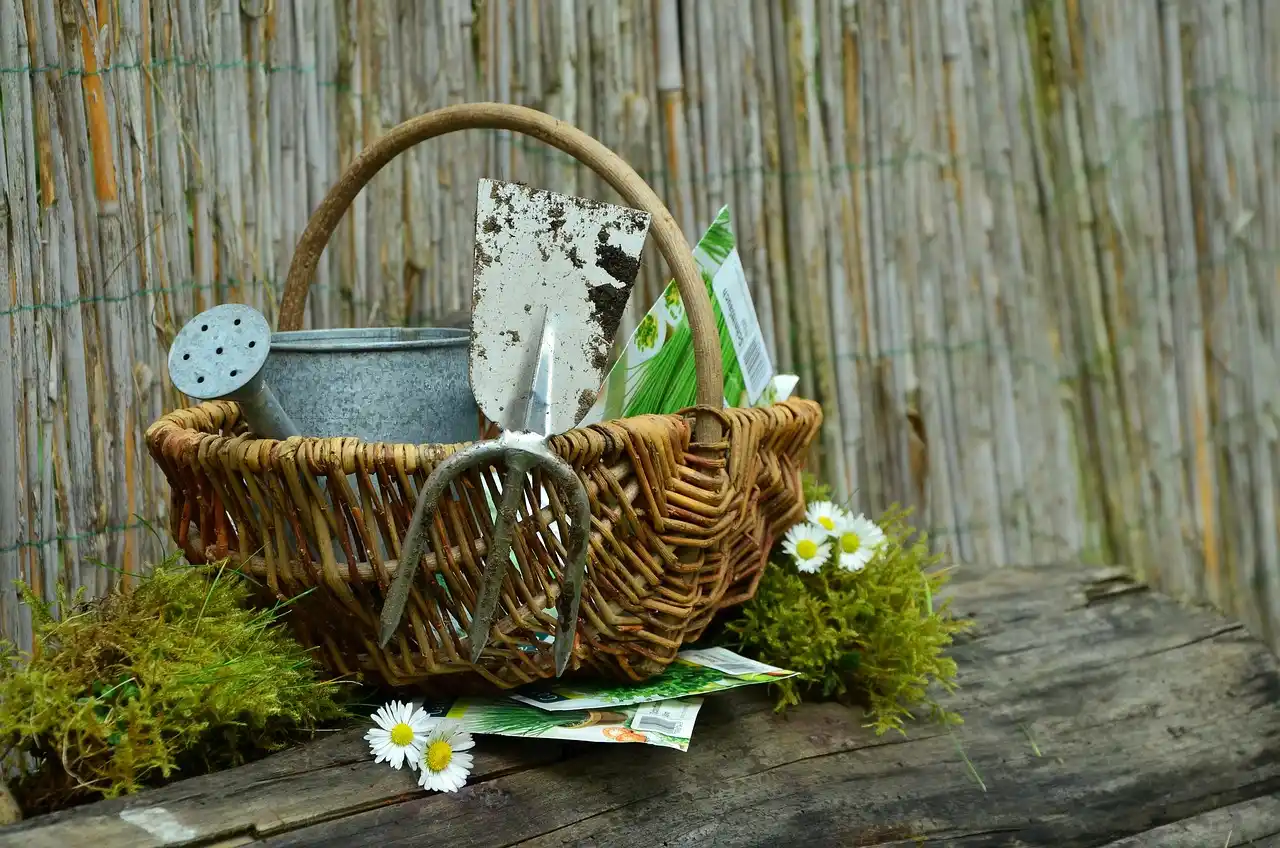
- Seed packets with sowing depth, spacing, germination time, and days to maturity
- Hand trowel or hoe
- Compost or other organic matter
- Watering can with a fine rose
- Row cover or frost cloth for surprise cold snaps
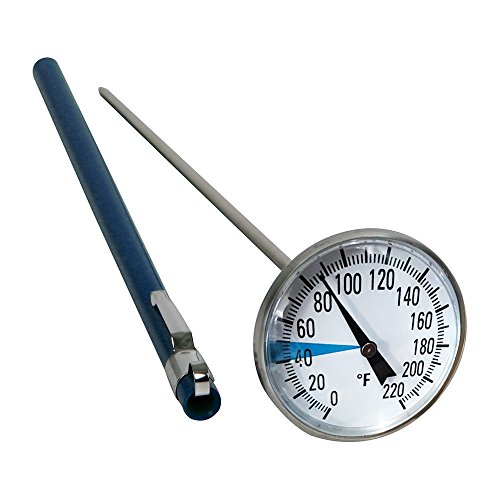
- Optional: a soil thermometer for checking bed temperature
When can you sow cool-season seeds?
Use the last frost date as your outdoor timing anchor, then check the seed packet for the crop’s temperature and maturity range. Many cool-season crops can go in before frost, but cold soil slows germination, so soil condition is safer than the calendar alone.
Read the packet first
Seed packets usually list the safe outdoor sowing temperature, germination time, and days to maturity. Those details matter more than a generic spring rule. If the packet says to sow under cool conditions, that crop can usually handle earlier outdoor planting than warm-season vegetables.
Compare soil temperature with crop needs
Cool-season seeds can sprout in cool soil, but very cold soil can delay emergence or cause seed loss. Lettuce and peas tolerate earlier sowing than beans or cucumbers. Beets and carrots usually wait for warmer soil than lettuce, even though both are cool-season crops.
Choose a spring or fall window
For spring, many cool-season crops go in 2 to 8 weeks before the last frost date, depending on the crop and your soil. For fall, count back from your first expected frost and give crops enough days to mature before hard cold arrives.
Should you direct sow or start indoors?
Direct sow short-season, root, and large-seeded crops when they dislike root disturbance or grow quickly outdoors. Start indoors when the crop needs a longer season, has a slow germination window, or benefits from an early start that cold soil would delay.
Choose direct sowing for these crops
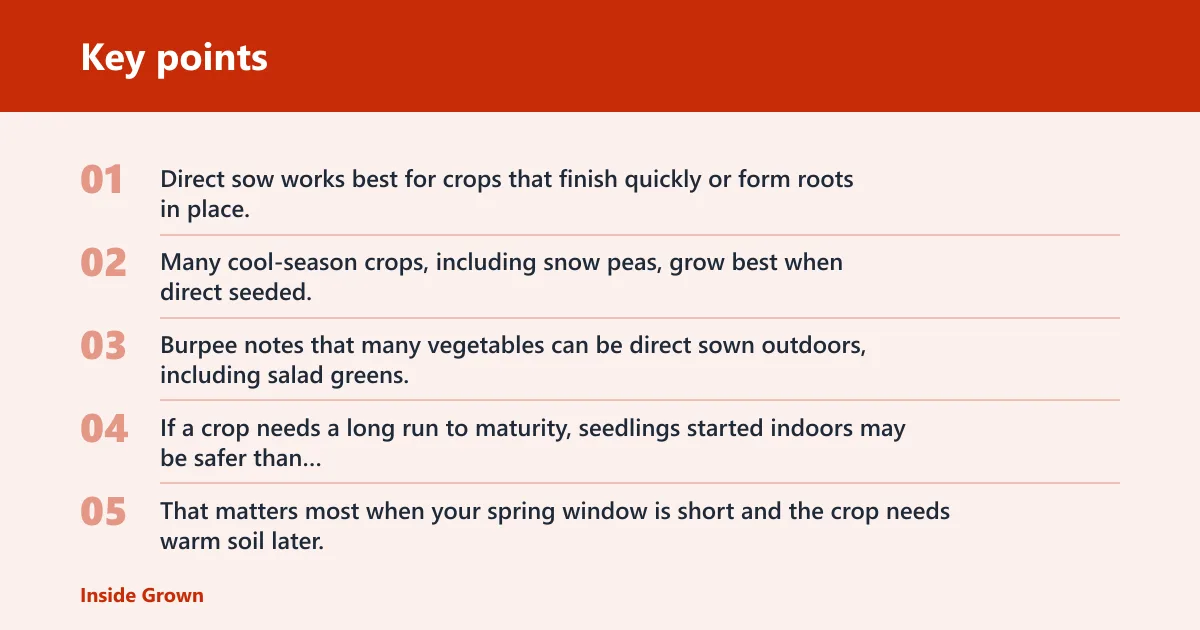
Direct sow works best for crops that finish quickly or form roots in place, including peas, lettuce, radishes, beets, carrots, and many salad greens. Many cool-season crops, including snow peas, grow best when direct seeded. Burpee notes that many vegetables can be direct sown outdoors, including salad greens, carrots, radishes, and beets.
Start indoors when the season is tight
If a crop needs a long run to maturity, seedlings started indoors may be safer than waiting on cold soil. That matters most when your spring window is short and the crop needs warm soil later, or when you want larger transplants ready as soon as the bed warms.
Use crop size and transplant sensitivity
Tiny seeds and root crops usually do better in place. Large seedlings can also dislike transplant shock, so direct sowing can build stronger roots and avoid the cost of trays and lights. The limit is simple: the crop still has to fit your soil temperature and frost window.
Clear the bed, sow at the packet depth, water gently, and thin after the first true leaves appear. Keep the soil evenly moist, not soggy, because crusted or waterlogged ground can stop emergence just as quickly as a hard frost can.
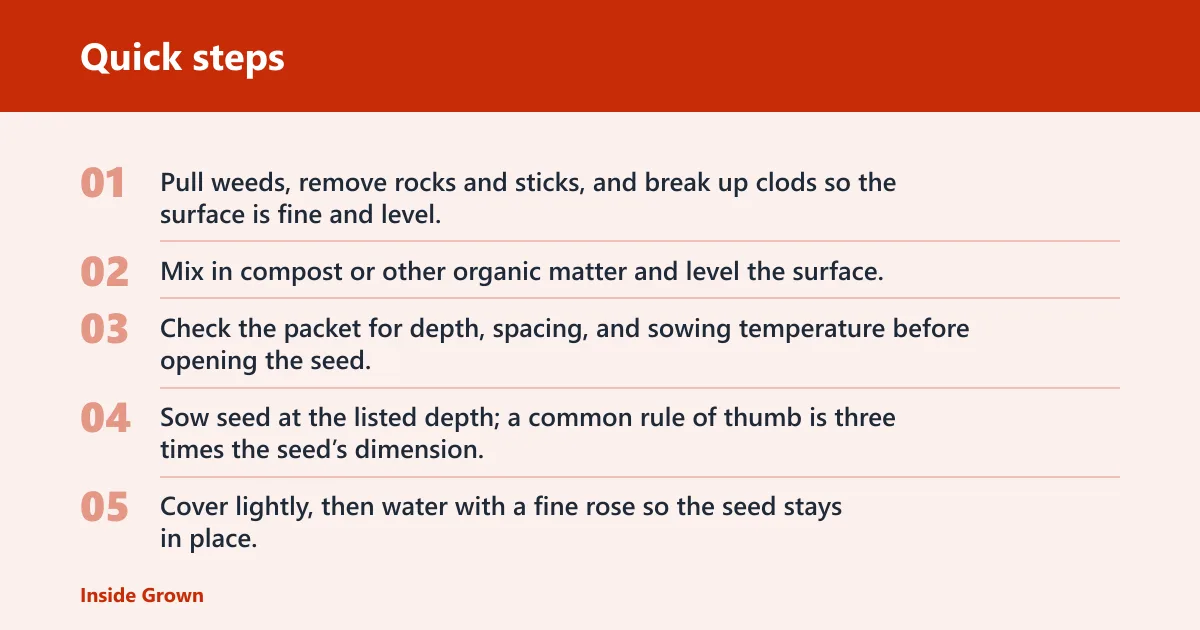
- Pull weeds, remove rocks and sticks, and break up clods so the surface is fine and level.
- Mix in compost or other organic matter and level the surface.
- Check the packet for depth, spacing, and sowing temperature before opening the seed.
- Sow seed at the listed depth; a common rule of thumb is three times the seed’s dimension.
- Cover lightly, then water with a fine rose so the seed stays in place.
- Keep the top layer damp until seedlings emerge, then thin after the first true leaves appear.
- Leave final spacing from the packet, not the initial sowing line.
Say your raised bed has a fine, level surface but the top inch dries quickly in wind. Sow lettuce shallowly, keep the top layer damp, and cover the bed with row cover until seedlings settle. That extra cover helps protect against a cold snap without packing the surface down.
Picture a heavy-clay bed after rain: if you sow into sticky, cloddy soil, seed can sit in wet pockets and fail. Wait until the bed crumbles cleanly, then loosen the top layer, add compost, and sow. The goal is a fine, well-drained seedbed, not a muddy one.
Cool-season sowing table
This table gives a practical starting point. Always let the seed packet override any general rule on depth, spacing, temperature, or days to maturity.
| Crop | Minimum workable soil temperature range | Sowing window relative to last frost | Sowing depth | Final spacing | Top failure risk |
|---|---|---|---|---|---|
| Lettuce | 40°F to 65°F | 4 to 6 weeks before | Surface-sow to 1/8 inch | 6 to 12 inches | Crusted soil or drying out before emergence |
| Peas | 40°F to 75°F | 4 to 6 weeks before | 1 to 1 1/2 inches | 2 to 4 inches | Rot in cold, wet soil |
| Kale | 45°F to 75°F | 2 to 4 weeks before | 1/2 inch | 12 to 18 inches | Cold-soil delay and slug feeding |
| Beets | 50°F to 80°F | 2 to 4 weeks before | 1/2 to 1 inch | 3 to 4 inches | Poor germination in cold soil |
| Radishes | 40°F to 70°F | 2 to 4 weeks before | 1/2 inch | 1 to 2 inches | Washout or overcrowding |
What can go wrong after sowing?
The most common failures are cold soil, crusted soil, washout, slugs, and frost snaps. If seeds sit too long in wet cold ground, they may rot or emerge unevenly. If a hard rain seals the surface, weak seedlings may never break through.
Cold soil and slow germination
If emergence is patchy after sowing in cold conditions, the soil may simply be too cool for that crop. Beets and carrots are especially sensitive to this. If the packet recommends warmer soil, wait rather than reseeding into the same cold bed.
Crusted soil and weak emergence
A crust can trap tiny seedlings under a hard surface. Break the crust gently with the edge of a hoe before more damage happens, then keep the top layer evenly moist. A light mulch is usually better after seedlings are established, not before germination.
Slug damage, washout, and frost snaps
Slugs chew tender seedlings overnight, especially in damp beds with heavy mulch nearby. Washout happens when watering is too forceful or rain is heavy right after sowing. If frost is forecast after emergence, add row cover or frost cloth overnight and remove it during the day if the weather warms.
Common mistakes
Most direct-sowing failures come from sowing too early, sowing too deep, skipping thinning, or letting the surface dry out. A quick correction now is usually easier than replanting a whole row later.
- Sow before the soil is workable. Wait until it crumbles and drains, then plant.
- Plant too deep or too shallow. Match the packet, and use the three-times-the-seed rule only as a backup.
- Skip thinning. Thin after the first true leaves appear, and leave the final spacing on the packet.
- Let the bed dry out. Keep the top layer evenly moist until seedlings are established.
- Ignore wildlife and weather. Sow a little extra seed to account for germination losses and wildlife damage, then protect with row cover if frost threatens.
Suppose a row of radishes germinates unevenly after a windy day. The likely issue is washout or drying at the surface, not a bad seed packet. Rewater gently, check for crusting, and reseed any gaps at the same shallow depth if the soil has not sealed over.
What seeds to sow now
Choose cool-season crops that fit your soil temperature and frost window right now. If the bed is still cold, start with peas, lettuce, radishes, and kale. If the soil is closer to 50°F, beets and carrots become better bets because they germinate more reliably in warmer ground.
For a mixed spring bed, direct sow the fastest cool-season crops first and leave warm-season crops for later. That keeps the bed productive without forcing every seed to fight the same cold soil conditions.
Frequently asked questions
How to sow seeds outdoors
Work the soil until it is fine and level, then sow at the packet depth and spacing. Water with a fine rose so seed stays put. If a hard frost is still possible, cover the bed with row cover or frost cloth after sowing and remove it once conditions improve.
What vegetable seeds can I sow now?
Cool-season vegetables are the first place to look: lettuce, peas, kale, beets, and radishes often fit early outdoor sowing. Check your last frost date and the packet’s soil temperature guidance before planting. If the soil is still very cold, hold back on slower germinators.
How deep should I plant direct sowed seeds?
A common rule of thumb is three times the seed’s dimension, but many tiny seeds stay near the surface. Lettuce can be surface-sown to 1/8 inch, while kale is often about 1/2 inch deep. Seed packets should always outrank a general depth rule.
When can I sow cool-season seeds outdoors?
Many cool-season seeds go outdoors 2 to 8 weeks before the last frost date, depending on the crop and soil temperature. Start with a workable bed that is at least 40°F for hardy crops, then wait for warmer soil for slower germinators such as beets and carrots.