How to Prepare Garden Soil for Direct Seeding
Prepare garden soil for direct seeding when the top 1 inch is crumbly, drains within a few hours after watering, and forms a loose ball that breaks apart with a tap. Bad seedbeds crust, wash out, or leave seeds too deep, which cuts germination and wastes seed. This guide covers a simple readiness check, soil prep steps, and fixes for heavy, sandy, or uneven beds.
What you’ll need


- Garden fork
- Rotavator or tiller, if the bed is compacted
- Rake
- Roller or a flat board for light firming, or your foot for foot treading
- Compost, aged manure, or sifted fallen leaves or yard waste
- Soil test kit or a lab test kit
- Lime, sulfur, or aluminum sulfate, only if the test calls for it
- Stiff gloves for pulling old roots, sticks, stones, and thatch
How do you test soil before sowing?
Take soil from several spots, then check pH and N-P-K before you add anything. A lab test gives the clearest result; a DIY kit can help with a quick check, but it is less exact. Use the numbers to match the bed to the crop, not the other way around.
Sample from multiple spots
Collect thin slices from at least 5 places across the bed, then mix them in a clean bucket. That cuts false readings from one wet patch, one old compost spot, or one compacted edge.
Read the results
Use the pH result first. Potatoes, for example, are commonly grown in the 5.2 to 6.0 range, while a pH above 7.5 is too alkaline and below 5.5 is too acidic for many crops. Check nitrogen, phosphorus, and potassium next, but do not add fertilizer blindly before sowing.
How should you amend the bed?
Add organic matter only when the soil lacks structure, holds water poorly, or tests low for nutrients. Work compost, aged manure, or sifted fallen leaves and yard waste into the top 2 to 3 inches, or mix them into the topsoil before raking smooth. If the bed already feels loose and the test looks balanced, leave it alone.
Use pH fixes only when needed
Apply lime to acidic soil and sulfur or aluminum sulfate to alkaline soil, and match the rate to the crop’s target range. For a crop with a narrow range, such as potatoes, the target matters more than a generic garden average. Do not guess from color or texture alone.
Know when not to amend right before sowing
Skip fresh, nutrient-rich compost immediately before direct sowing if it is still warm, uneven, or fluffy enough to shift after watering. Fresh organic matter can hold too much moisture in one spot, dry out in another, or bury seed too deep after settling. If the bed already has enough fertility, top-dressing is safer after seedlings are up.
How do you build a seedbed?
Direct-sown seeds need a finer, more even surface than transplant holes do. The goal is a fine crumbly top layer, firm enough to walk on lightly, with no large stones, sticks, roots, or clods that create air gaps around seed. For a new lawn seedbed, loosen soil 15 to 20 cm deep; for vegetable beds, loosen only as far as compaction requires.
- Remove old roots, sticks, stones, thatch, and dead grass.
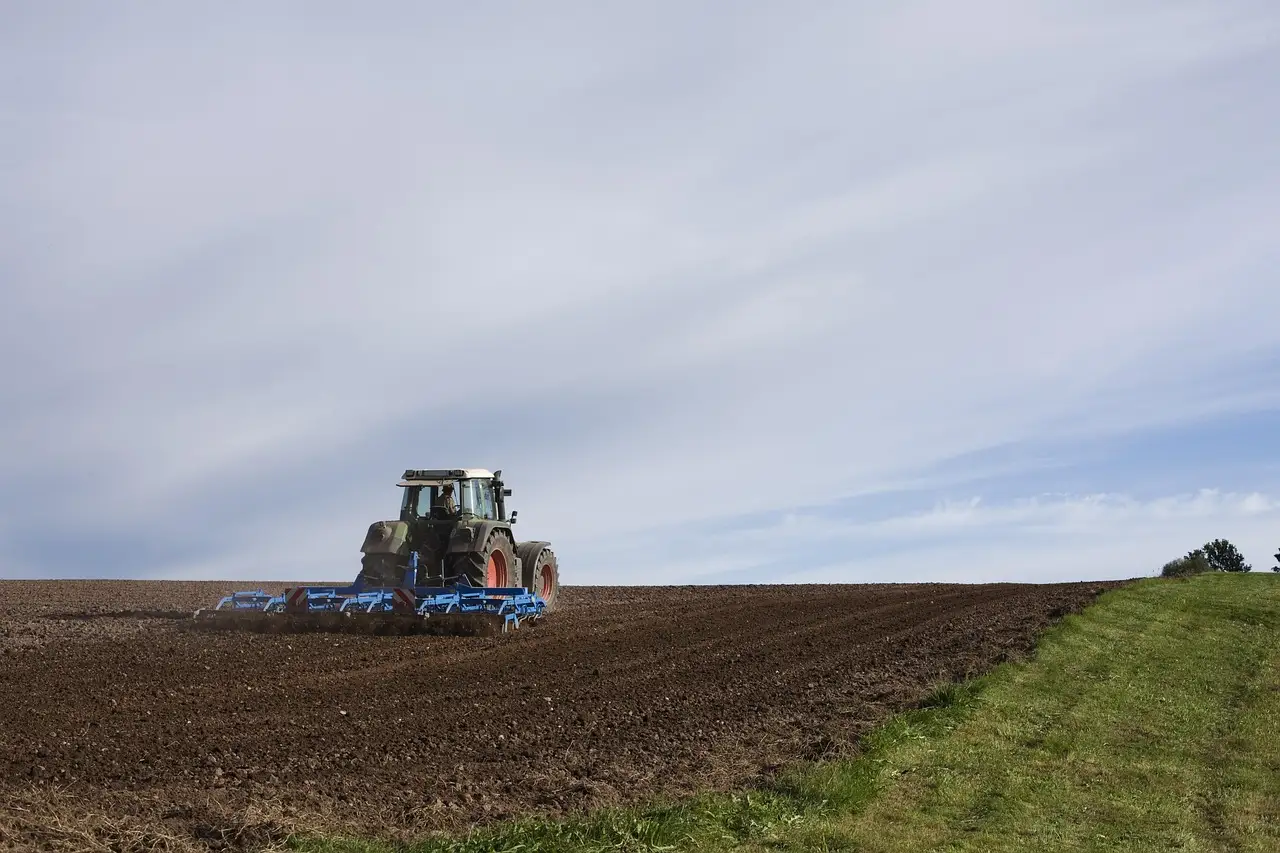
- Loosen compacted soil with a garden fork first, then use a tiller only where the soil is tight enough to resist the fork.
- Break large clods with a rake, but stop before the surface turns powdery.
- Firm the bed lightly with a roller, flat board, or foot treading so seeds stay in contact with moist soil.
- Rake the top layer to a fine tilth.
Match fineness to seed size
Tiny seeds need the finest surface and the shallowest cover. Medium seeds can sit under a slightly coarser layer. Large-seeded crops tolerate a rougher seedbed, but they still fail if buried under clods or pushed into loose, drying dust.
How do you adjust for clay, sand, and lawns?
Soil texture changes how water moves and how long nutrients stay near roots. Clay holds water and nutrients well but can seal at the surface. Sand drains fast and loses fertility faster. Silt sits between the two. Loam is the easiest for direct seeding because it balances drainage and retention better than the extremes.
Heavy clay
For clay, add organic matter and loosen the topsoil rather than working it when wet. A practical guide for new lawn beds recommends sharp sand or grit for heavy clay, but that is not a cure-all in vegetable beds. If the clay stays sticky and puddled after prep, a raised bed is the safer fallback.
Sandy soil
For sandy beds, add organic matter to slow drying and hold nutrients. Compost or aged manure works better than extra digging alone. If the bed still drains too fast after that, a raised bed with more composted topsoil gives you more control than repeated watering.
Lawn-style seeding
Lawn-style seeding needs a more uniform surface than most vegetable beds. Remove debris, rubble, large stones, and vegetation, then firm the soil until you sink no more than 1 cm. After that, rake again to a fine tilth and sow at the packet rate; one guide for grass seed uses 35 to 50 g per square metre.
Garden soil checklist
| Soil condition | What it looks like | What to do next | What not to do |
|---|---|---|---|
| Clay | Sticky when wet, hard when dry, may crust after rain | Add compost or aged manure, loosen with a fork, and stop if the bed starts to smear | Do not work it while wet or bury seed in clods |
| Sandy soil | Falls apart quickly, drains fast, dries on the surface | Mix in organic matter and firm the seed zone lightly | Do not rely on extra watering alone or add coarse sand |
| Wet soil | Shiny surface, footprints stay, crumbs smear instead of break | Wait for the top layer to dry enough to crumble before sowing | Do not till or tread on it now |
| Crusted soil | Hard cap on top, seed could not break through | Break the crust lightly with a rake, then recheck moisture | Do not sow directly into the crust |
| Newly amended soil | Loose, uneven, or newly mixed with compost | Wait for settling, then rake level and firm again | Do not sow immediately if the mix can shift and bury seed |
| Go / no-go | Go if the top 1 inch is crumbly, drains within a few hours, and forms a loose ball that breaks apart with a tap | Go to sow, water gently, and keep the top layer evenly moist | No-go if it smears, puddles, crusts hard, or sinks underfoot |
Common mistakes
Overworking the bed is one of the fastest ways to lose seed. Too much tilling turns soil into powder that seals over after watering, then crusts and blocks seedlings. Leave the soil with some crumbs, not flour.
Fresh compost can also cause trouble if it is added right before sowing. It may settle unevenly, hold too much moisture, or leave seeds at different depths. Use it earlier, or use a thinner surface layer and firm it before seeding.
Compaction after rain is another common failure. For example, a 2 m by 3 m vegetable bed is walked on while still wet. The surface can seal, the seed line can smear, and small seeds may never emerge. Wait for the top inch to dry to a workable crumb before you proceed.
If that didn’t work, try this next
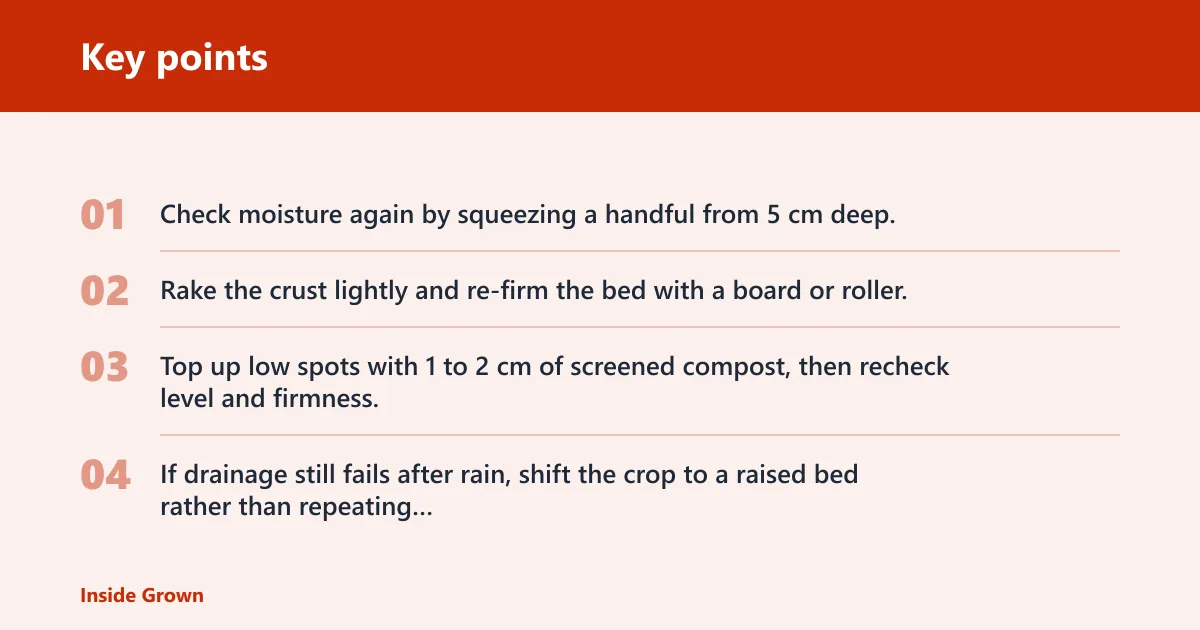
- Check moisture again by squeezing a handful from 5 cm deep; if it leaves a sheen or smear, wait.
- Rake the crust lightly and re-firm the bed with a board or roller.
- Top up low spots with 1 to 2 cm of screened compost, then recheck level and firmness.
- If drainage still fails after rain, shift the crop to a raised bed rather than repeating the same prep.
Prevention: keep foot traffic off the seedbed once it is raked and firmed. A path board or stepping stones stop a good bed from turning compacted before the first seedlings appear.
Frequently asked questions
How do I prepare soil for seeding?
Start with a soil test, clear debris, and judge the bed by texture and moisture, not the calendar. The best seedbed is crumbly on top, firm beneath, and free of clods. Add organic matter only where the soil needs it, then rake level and sow at the right depth.
How do I prepare garden soil for planting?
For direct seeding, prepare the top layer more carefully than you would for transplants. Test pH and nutrients, remove roots and stones, and firm the bed before sowing. If the soil is already loose and balanced, do less rather than more.
How do I prepare the soil for a garden?
Work from the existing soil texture. Clay needs loosening and organic matter; sandy soil needs moisture-holding material; loam usually needs only cleaning, leveling, and light firming. Keep a raised bed in reserve if the in-ground soil stays wet or stays too tight after prep.
How do I prepare soil for grass seed?
For lawn-style seeding, loosen soil 15 to 20 cm deep, remove rubble and vegetation, firm it until you sink no more than 1 cm, then rake to a fine tilth. A guide for grass seed uses 35 to 50 g per square metre, so evenness matters as much as fertility.
What should I add to soil before direct seeding?
Add compost, aged manure, or other organic matter only when the bed needs structure or the test shows low fertility. Use lime for acidic soil and sulfur or aluminum sulfate for alkaline soil, but only to match the crop’s target range. Skip last-minute additions if the bed is already ready.
Do I need to till soil before sowing seeds?
Not always. Light loosening with a garden fork is enough for many beds. Tilling is useful only when the soil is compacted or packed with old roots and debris. If the soil already crumbles and drains well, extra tillage can create dust and crusting instead of a better seedbed.