How to Read a Seed Packet Before You Plant Anything
Read a seed packet in this order: crop name and variety, sowing rate, planting depth, spacing, then timing for your frost dates; if one detail conflicts with your season, skip that packet. I have saved myself plenty of wasted seed by checking those lines first. Get it wrong and you crowd plants, sow too soon, or miss harvest before frost. This guide shows how I read each line before anything goes in the ground.
What a seed packet tells you first

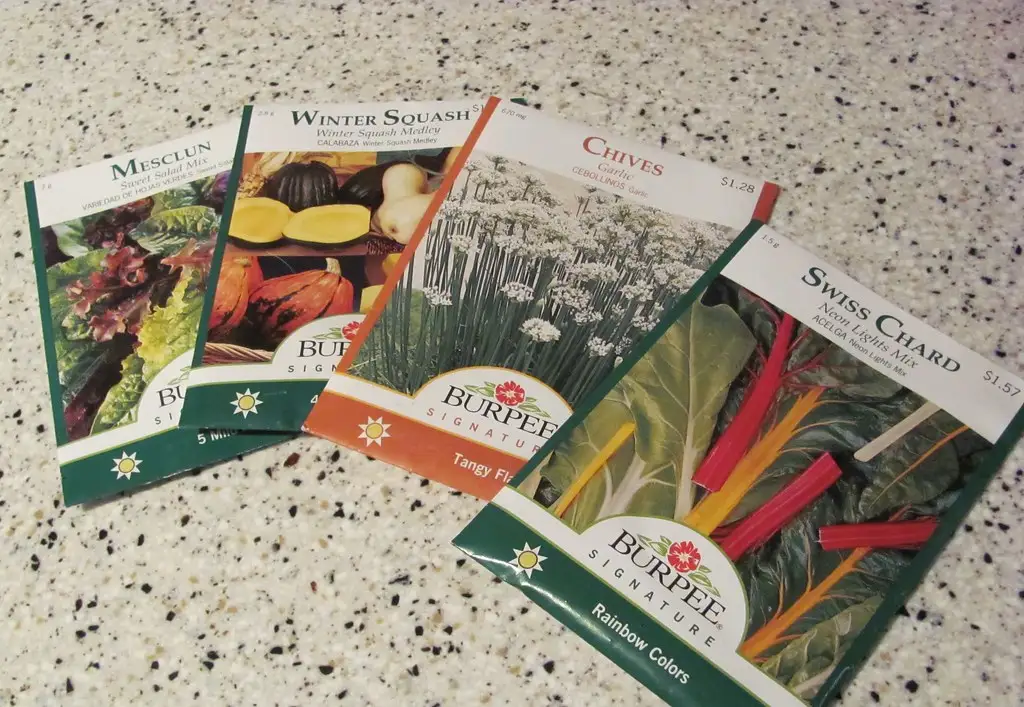
A seed packet is a planting sheet in package form. The front usually gives crop name, variety name, and seed type; the back usually gives timing, depth, spacing, and maturity. I read it in planting order, because the line that matters most is the one that tells you whether the seed fits your season.
Crop name vs. variety name
The crop name tells you what plant family you are buying, such as tomato, bean, or carrot. The variety name tells you which version, such as a specific shape, color, or maturity window. Two packets can both say tomato and still act very differently in the garden.
Annual, biennial, or perennial
Annual plants finish their full life cycle in one growing season. Biennials usually grow foliage the first year and flower the second. Perennials return for multiple years. That label helps you decide whether to replant every year and whether seed saving is a one-season task or a longer job. (en.wikipedia.org) (en.wikipedia.org)
F1 hybrid, open-pollinated, or heirloom
An F1 hybrid is a first-generation cross bred for specific traits, but saved seed from it will not usually grow true. Open-pollinated seed can reproduce the parent type more reliably if it is isolated well. Heirloom means a long-established open-pollinated variety, not a separate plant species.
Organic seed: what the label does and does not mean
Organic seed means the seed was produced under organic certification rules. It does not change what the plant becomes in your bed. A certified organic tomato still needs the same depth, spacing, and timing as the same tomato grown from conventional seed.
How do you use days to maturity?
Days to maturity tells you when harvest is expected if planting conditions are close to ideal. For transplanted crops, count from the outdoor transplanting date. For direct-sown crops, count from the outdoor sowing date. That number only helps if you compare it to your frost date and planting window.
Direct sowing vs. transplant timing
For crops started indoors and moved outside, the clock starts at transplanting, not at indoor sowing. That matters because a tomato labeled 65 days means 65 days after transplanting. A bean labeled 55 days means 55 days after sowing outdoors. Those are different clocks.
Counting back from your frost date
If a crop needs 65 days after transplanting and your frost date is near, count backward from the expected first frost. Add extra time if your site is cool or slow to warm. If the crop will not finish before frost, the packet should be marked for wait or replace, not plant now.
When a crop will not finish in time
Days to maturity is a planning tool, not a promise. A late start, short season, or cool weather can push harvest beyond frost. If the packet timing does not fit your season, choose a faster variety, transplant earlier, or skip the crop for that year.
How do I know how many seeds to plant per hole?
Start with germination rate, then adjust for age, moisture, and container size. The packet’s percentage is an ideal-condition estimate, not a guarantee. Most gardeners sow extra seeds per hole or cell to cover weak seed, then thin later if more than one sprouts.
How to read germination rate on a seed packet
A packet showing 85% germination means about 85 out of 100 seeds sprout under ideal conditions. That does not mean 85 out of 100 will sprout in a cold tray, packed soil, or dry mix. Lower-than-ideal conditions usually mean lower sprouting.
| Germination rate on packet | Practical sowing starting point | Use it when |
|---|---|---|
| 85–95% | 1–2 seeds per cell | Seed is fresh and conditions are steady |
| 70–84% | 2 seeds per cell | You want a backup seed in each cell |
| Below 70% | 3 seeds per cell | Seed is older or conditions are less predictable |
Why older seed changes the odds
Pack year tells you when the company guarantees germination, not when seed suddenly turns useless. A 2024 pack used in 2026 is two years old. Older packets may still sprout well, but viability often drops, so extra seeds per hole are a safer bet.
Should I sow 1, 2, or 3 seeds per cell?
Use 1 seed only when the packet rate is high and the seed is fresh, or when thinning is difficult. Use 2 seeds for most average packets. Use 3 seeds when the germination rate is lower, the seed is older, or the tray mix tends to dry out before sprouting.
What does planting depth on a seed packet mean?
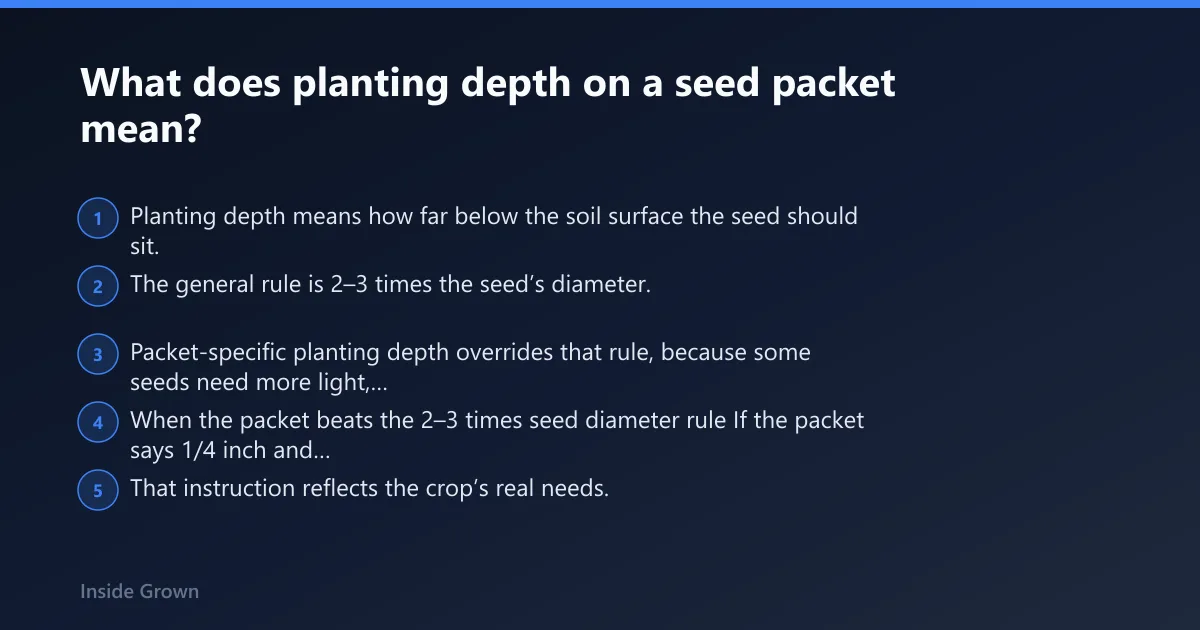
Planting depth means how far below the soil surface the seed should sit. The general rule is 2–3 times the seed’s diameter. Packet-specific planting depth overrides that rule, because some seeds need more light, less burial, or a very exact depth to sprout well.
When the packet beats the 2–3 times seed diameter rule
If the packet says 1/4 inch and the seed size seems to suggest more, follow the packet. That instruction reflects the crop’s real needs. The general rule is a backup when the packet does not give a number, not a reason to ignore printed directions.
Common shallow-sowing mistakes
Shallow sowing dries seed out fast, especially in warm weather or loose mix. Seeds that sit on top of the medium may sprout unevenly or fail completely. Another common error is covering tiny seed too deeply because the packet depth was read as a suggestion instead of a limit.
How do I use spacing instructions on a seed packet?
Spacing tells you how much room each plant needs after germination. Plant spacing and row spacing are separate measurements. Plant spacing is between plants in a row; row spacing is between rows. Some packets also give thin-to distances, which tell you how close to leave the strongest seedlings after thinning.
Plant spacing in the row
This is the distance from one plant to the next once the crop is established. Crowding cuts airflow and makes watering harder. For large crops, spacing can decide whether the canopy closes too soon and shades lower growth before harvest.
Row spacing between rows
Row spacing gives you access room for weeding, watering, and harvest. Narrow row spacing can work for short crops in small beds, but it also makes disease control and hand work harder. Wide rows can waste space if the crop is small and upright.
Thin-to distances and why they matter
Thin-to instructions usually tell you how many seedlings to leave after germination. That matters because many gardeners sow extra seed in each hole or short section, then remove the extras. If the packet says thin to a certain spacing, that is the spacing to aim for after thinning, not the crowded spacing used at sowing.
What does the packet date or packed-for year mean?
The packet year tells you the year germination is guaranteed, not a hard expiration date. Seed can remain viable after that, but the odds may drop. If the seed is older and you need full stands, treat the packet date as a prompt to test, reseed, or replace.
Packed-for year vs. expiration date
Some gardeners read the year as a discard date. That is too rigid. It is better to treat it as a viability checkpoint. If the packet is beyond its guaranteed year, the seed may still work, but the margin for error is smaller.
What older packets can still do
Older seed can still produce a good crop if storage was dry and cool. The risk is uneven emergence, which is a problem in small flats and direct-sown rows. Sparse stands can mean wasted bed space and patchy harvests.
When to replace seed instead of planting it
Replace seed when the packet is old, the germination rate is low, and the crop window is short. Replace it if a failed stand would cost a full season. For slow-germinating crops, old seed can turn a small mistake into a lost planting slot.
What seed packet details matter most before planting?

The most useful details are the ones that change your action: crop and variety, life cycle, seed type, germination rate, depth, spacing, days to maturity, and packet year. If any one of those points does not fit your season or space, do not plant on autopilot.
Seed packet decoding checklist
- Read crop name and variety. Decide whether this is the plant you actually want.
- Check annual, biennial, or perennial. Decide whether it matches your replanting plan.
- Check F1 hybrid, open-pollinated, heirloom, or organic seed. Decide whether saving seed matters for this crop.
- Read germination rate. Decide how many seeds per hole or cell to sow.
- Read planting depth. Use packet depth first, then the 2–3 times seed diameter rule only if no depth is given.
- Read spacing and thin-to instructions. Decide final plant spacing and row spacing.
- Read days to maturity. Count from transplanting for transplants, or from sowing for direct-sown crops.
- Check the packet year. Decide plant now, wait, or replace.
Plant now / wait / replace decision box
| Label | Plant now | Wait | Replace |
|---|---|---|---|
| Timing | Fits frost date and planting window | Season is too cold or too early | Crop will miss the season |
| Germination rate | Fresh seed and strong rate | Rate is fair, but conditions are risky | Rate is low and seed is old |
| Depth | Packet depth is clear and practical | Need to confirm crop-specific depth | Packet conflicts with crop needs |
| Spacing | Bed or pot can fit final spacing | Need to thin or rearrange space | Space is too tight for mature size |
| Packet year | Current or recent packet | Older packet, but worth a test sowing | Too old for a short-season crop |
Mini example: direct-sown versus transplanted crops
A bean packet that says 55 days is counted from sowing outdoors, so the planting date and harvest clock start together. A tomato packet that says 65 days is counted from transplanting, so a greenhouse start does not begin the outdoor maturity clock. Same label type, different planting decision.
What does everything on a seed packet mean?
A seed packet usually means crop identity, variety, life cycle, seed type, germination estimate, depth, spacing, maturity, and packet year. Each field answers a different planting question. The useful way to read it is front to back, then ask whether the packet fits your season, space, and seed shelf.
How do I know how many seeds to plant per hole?
Use germination rate as the starting point, then add a cushion for older seed or poor conditions. High-germination seed can go one or two per cell. Lower germination rates usually need two or three seeds per cell. Thin later so the strongest seedling keeps the space.
What does days to maturity mean on a seed packet?
Days to maturity is the time from planting reference point to expected harvest. For transplants, that reference is the outdoor transplant date. For direct-sown crops, it is the outdoor sowing date. It helps you decide whether the crop can finish before frost.
What does packed for 2026 mean on a seed packet?
Packed for 2026 means 2026 is the year the company guarantees germination, not the day seed becomes bad. If the packet is older, viability may be lower. A 2024 pack used in 2026 is two years old, so it deserves a closer look before planting.
Should I sow 1, 2, or 3 seeds per cell?
Choose the count based on germination percentage, seed age, and how hard it is to reseed if a cell fails. Fresh, high-germination seed can use one or two seeds. Average packets usually merit two. Lower-germination or older packets are safer with three per cell.
What does direct sow mean on a seed packet?
Direct sow means seed goes straight into the garden bed outdoors instead of being started indoors. That matters because days to maturity is counted from the sowing date for direct-sown crops. Beans are a common example, and their harvest clock starts when they go into the soil.
What seed packet details matter most before planting?
The details that change the planting decision are crop and variety, maturity, germination rate, depth, spacing, and packet year. If those do not fit your frost date, bed size, or seed age, the smartest move is often to wait or replace the packet rather than plant anyway.