How to Plant Vegetable Seeds in Containers
Use a container about 6 to 12 inches deep for most vegetables, sow seeds at a depth of about two to three times their width, and thin seedlings to the spacing listed on the packet. Skip those basics, and seeds dry out, rot, or crowd each other. This guide shows how to choose pot size, decide whether to start indoors or outdoors, and sow common vegetables crop by crop.
What you need before sowing

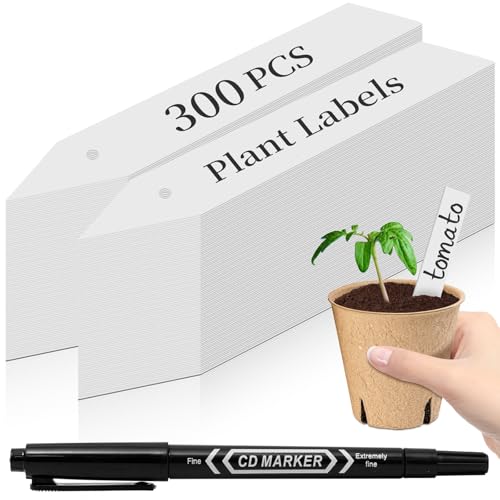
- A container with drainage holes and a saucer or tray
- Lightweight potting mix with good drainage and aeration
- Seeds for compact or dwarf varieties when space is tight
- Plant labels or markers
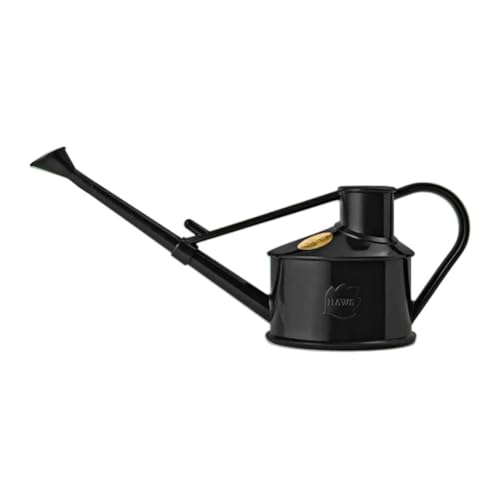
- A watering can with a fine rose or a gentle spray nozzle
- A trowel or small scoop
- Grow lights if you start seeds in a dim room
- A heat mat if you start warm-season crops indoors and the room is cool
Choose a spot with easy access for watering and harvest. Most vegetables need six to eight hours of direct sun each day, and full sun means six or more hours per day. Balconies, patios, porches, driveways, steps, and sidewalks can all work when the container fits the crop and the light is strong enough.
Which vegetables should you start?
Start with crops that match your light, pot depth, and patience level. Leaf lettuce, spinach, arugula, radishes, bush beans, cilantro, dill, chives, carrots, tomatoes, and peppers are common container crops, but they do not all follow the same sowing plan. Fast crops are easier for beginners; long-season crops need a head start.
Leaf lettuce, spinach, arugula, radishes, bush beans, cilantro, dill, and chives fit smaller containers and can be sown in short succession. Tomatoes, peppers, and eggplant need more time and usually do better when started indoors first.
Crop fit matters
Pick compact or dwarf varieties whenever possible. A dwarf tomato or compact pepper stays easier to support in a pot than a vigorous indeterminate type. For root crops, deeper containers matter more than width alone, because the root has to move downward without bending.
Should you sow indoors or outside?
Direct-sow fast crops that do not like root disturbance, and start slow warm-season crops indoors when they need more time than your season allows. The easiest rule is simple: if the packet says transplant carefully or the crop dislikes disturbance, start it in cells; if it sprouts and finishes quickly, sow it where it will grow.
Tomatoes, peppers, and eggplant often need indoor starting six to eight weeks before last frost. Beans, carrots, radishes, and many greens usually go straight into the final container. Use the packet timing and your local frost date to decide when to begin.
Low-light apartment setups
A bright windowsill can work for short-term germination, but weak light often produces stretched seedlings. If the room stays dim, add grow lights and keep them close enough for sturdy growth. A heat mat helps warm-season crops sprout faster when indoor temperatures are cool.
What size pot do you need?
Choose the pot for the mature crop, not the seedling stage. Most vegetables need a container 6 to 12 inches deep, while carrots, beets, and other roots need deeper containers. Tomatoes do better in larger containers, and tall plants need enough volume to stay stable and hold moisture longer.
Light-colored containers can reduce heat stress in hot sun. Dark pots absorb more heat, which can dry the mix faster and stress roots. Put the container where you can water it easily and harvest without moving it every day.
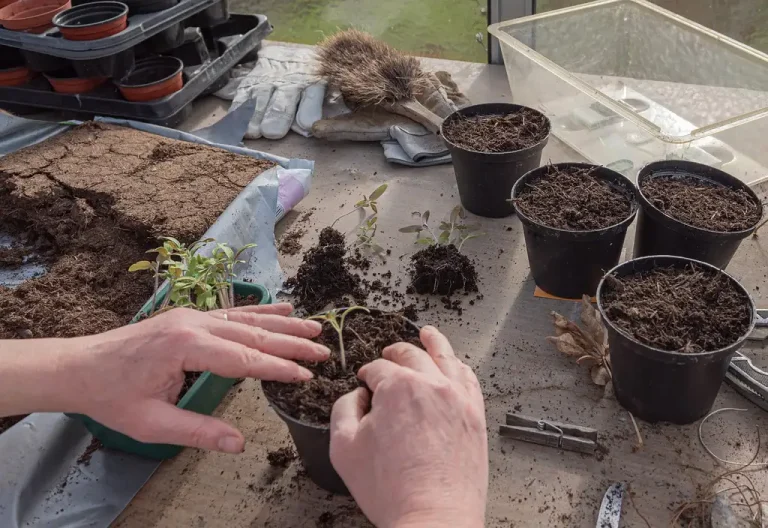
- Fill the pot with moistened potting mix, leaving about 1 inch of space at the top. The mix should feel damp, not soggy.
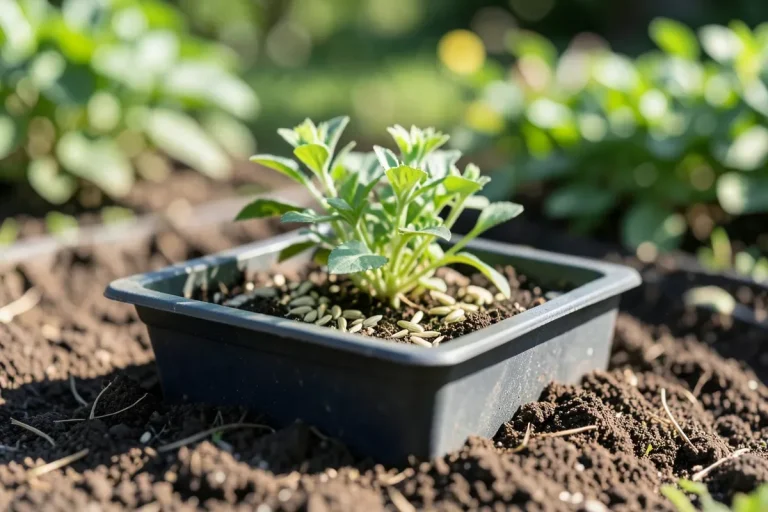
- Level the surface and make sowing holes or furrows at the packet depth. If there is no packet detail, use about two to three times the seed’s width.
- Drop in the seed count for the crop. Many small seeds need 2 to 3 seeds per spot; larger seeds may need 1 to 2.
- Cover lightly with mix, then press gently so the seed has contact with moisture and air pockets close around it.
- Water with a fine spray until the top layer is evenly damp. Stop before water runs from the drainage holes in a steady stream.
- Keep the surface evenly moist until germination. Recheck daily in warm weather, because containers dry faster than beds.
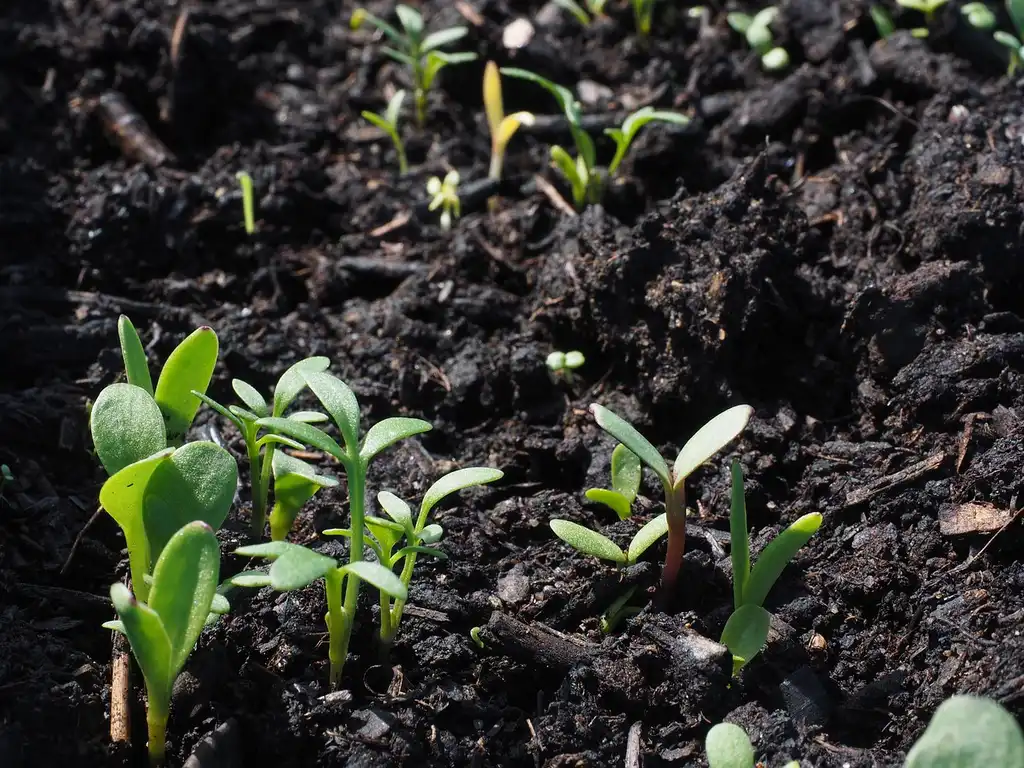
- Thin seedlings to the strongest plant or the spacing on the packet once true leaves appear. Clip extras at the soil line so you do not disturb roots.
Suppose you sow lettuce in a 10-inch pot on a sunny patio. If the top inch dries by afternoon, the seedlings can stall before they size up. A quick check morning and evening is enough to catch that drop early and water before the mix turns dusty.
A common first-timer mistake is sowing five bean seeds into one 6-inch pot because all of them sprout. That crowding quickly leaves thin stems and a weak canopy. Thin to the packet spacing as soon as the seedlings are large enough to handle.
Container seed sowing cheat sheet
Use this table to match depth, seed count, thinning, and starting method before you sow. The failure mode column points to the problem most likely to stop germination or slow growth in a small container.
| Crop type | Recommended pot depth | Sowing depth | Seeds per cell or spot | Thinning rule | Direct-sow vs start indoors | Common failure mode |
|---|---|---|---|---|---|---|
| Lettuce | 6-8 inches | Surface to 1/8 inch | 2-3 | Keep 1 strongest seedling per spot | Direct-sow | Covered too deeply, so seeds do not sprout |
| Spinach | 6-8 inches | 1/2 inch | 2-3 | Thin to 3-4 inches apart | Direct-sow | Hot soil slows germination |
| Radish | 6-8 inches | 1/2 inch | 1-2 | Thin to 2 inches apart | Direct-sow | Crowding makes small, split roots |
| Carrot | 10-12 inches | 1/4 inch | 2-3 | Thin to 2-3 inches apart | Direct-sow | Shallow or compacted mix bends roots |
| Beet | 10-12 inches | 1/2 inch | 1-2 | Thin to 3-4 inches apart | Direct-sow | Pot too shallow for root expansion |
| Bush beans | 8-10 inches | 1 inch | 1-2 | Thin to 4-6 inches apart | Direct-sow | Cold soil delays sprouting |
| Basil | 6-8 inches | 1/4 inch | 3-4 | Thin to 1 plant per spot or 8-12 inches apart | Start indoors or direct-sow in warm weather | Dry surface stops germination |
| Parsley | 6-8 inches | 1/4 inch | 3-4 | Thin to 1 plant per spot | Start indoors or direct-sow | Slow sprouting leads to dried-out seed |
| Tomato | 12 inches or deeper | 1/4 inch indoors | 1-2 per cell | Keep 1 seedling per cell | Start indoors | Insufficient light makes seedlings leggy |
| Pepper | 10-12 inches or deeper | 1/4 inch indoors | 1-2 per cell | Keep 1 seedling per cell | Start indoors | Cool conditions delay germination |
| Eggplant | 12 inches or deeper | 1/4 inch indoors | 1-2 per cell | Keep 1 seedling per cell | Start indoors | Slow start without steady warmth |
| Green onion | 6-8 inches | 1/4 inch | 3-5 | Thin to 1 inch apart | Direct-sow | Overcrowding gives thin stalks |
How do you care for seedlings in pots?
Water before the mix dries out, since containers lose moisture fast. Feed container vegetables with a balanced or slow-release fertilizer once they are established, and keep an eye on salt buildup from repeated feeding. In hot weather or small pots, daily watering may be necessary.
Fertilize lightly rather than piling on extra feed. Too much fertilizer can burn roots and leave white crust on the mix. A balanced fertilizer works for many crops; slow-release products can help keep feeding even through the season.
Watch for soggy mix, damping off, heat stress, and crowded seedlings. Soggy mix blocks oxygen around roots and can rot seeds. Damping off often follows poor airflow and wet surface conditions. If dark pots sit in strong sun, check moisture more often because the mix can heat up quickly.
If that didn’t work, try this next
When seedlings keep failing, fix the cause in this order: first check drainage holes, then check moisture, then check depth and spacing. A pot with no drainage traps water at the base, and a mix that stays wet for days can stop roots before they start.
- Move the container to a brighter spot if the seedlings are thin and leaning.
- Loosen the top half-inch of mix only if crusting is preventing water entry.
- Thin crowded seedlings right away, then recheck spacing after 3 to 5 days.
- Raise the pot on feet or blocks if water sits under it after watering.
Say your 12-inch tomato pot is on a dark balcony in afternoon sun and the top dries while the lower mix stays wet. That combination can stress seedlings fast. A lighter-colored pot or a shadier afternoon location reduces that heat spike without changing the crop.
Common mistakes to avoid
Using garden soil in containers is one of the fastest ways to get poor root growth. It packs down, holds water unevenly, and limits aeration. Use a lightweight potting mix instead, ideally one made with compost, coir, perlite, or pumice.
Skipping drainage holes is another serious error. Overwatering without runoff leaves roots starved for oxygen. Sowing too deep, skipping thinning, or crowding too many seeds into one pot can also stall the crop before it reaches usable size.
Too little sun is a slow failure. Most vegetables need six to eight hours of sunlight daily, and many will not size up well below that range. If the only available spot is partly shaded, reserve it for greens and a few herbs rather than tomatoes or peppers.
Frequently asked questions
How do I start a vegetable garden in containers?
Begin with one or two easy crops, a pot with holes, a free-draining mix, and a sunny place that is easy to water. Start with lettuce, herbs, or bush beans, then add deeper pots for carrots or tomatoes once you know how fast your space dries out.
What vegetables grow best from seed in pots?
Lettuce, spinach, radishes, bush beans, green onions, basil, parsley, carrots, tomatoes, and peppers all work well in containers when the pot depth matches the crop. The easiest choices for beginners are greens and herbs, because they germinate quickly and tolerate smaller pots better.
Can you plant vegetable seeds in potting soil?
Use potting mix, not heavy garden soil. A good mix stays light, drains well, and still holds enough moisture for germination. Many mixes include coir, compost, perlite, or pumice, which helps roots move through the container instead of packing into a dense layer.
How much sun do container vegetables need?
Most container vegetables generally need about six to eight hours of direct sun each day. Full sun means six or more hours per day. Greens and some herbs can manage with partial sun, but fruiting crops such as tomatoes and peppers usually need the brighter end of that range.